

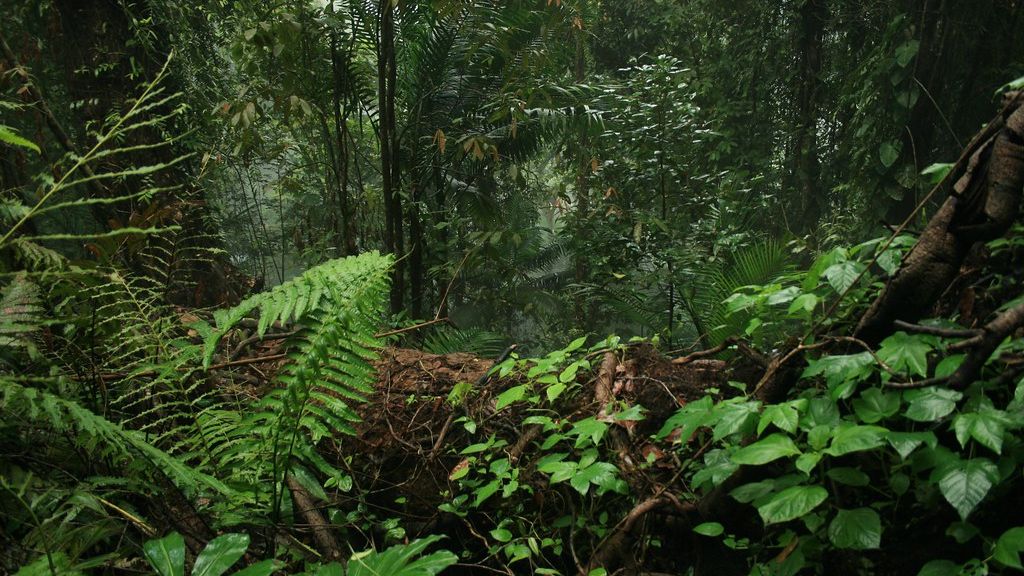
Ecuador’s Chocó region – Researchers have uncovered evidence that challenges decades-old assumptions about rainforest recovery. A comprehensive study revealed that animal communities in deforested areas often return within three decades, far sooner than the century or more scientists once predicted. This discovery highlights the resilience of tropical ecosystems amid ongoing degradation.[1][2]
Mobile Animals Lead the Charge
Teams of scientists monitored biodiversity across 62 plots in Ecuador’s lowland rainforests, comparing active pastures, cacao plantations, young secondary forests, and old-growth stands. The work spanned 16 taxonomic groups, from birds and bats to insects, frogs, mammals, trees, seedlings, and even soil bacteria. Mobile species such as pollinators and seed dispersers showed particular speed in reclaiming lost ground.[1]
Birds, bats, and bees recolonized regenerating areas early, often reaching levels close to those in undisturbed forests within years. Their high mobility allowed them to persist through disturbances and return rapidly, boosting abundance and diversity metrics above 90 percent of old-growth values after 30 years. Lead author Timo Metz, a postdoctoral researcher at the University of California, Los Angeles, noted the unexpected pace: “It’s been a huge surprise for all of us.”[3]
These animals played a pivotal role by dispersing seeds and pollinating plants, which in turn supported further regrowth. Frugivorous birds and bats, for instance, helped reinforce the recovery loop as vegetation reemerged.[2]
Recovery Trajectories Vary Widely
While abundance and species diversity recovered swiftly overall, species composition lagged behind, achieving about 75 percent similarity to old-growth forests after three decades. Median times to reach 90 percent recovery for composition ranged from 52 years in former cacao plots to 77 years in pasture sites. Trees and seedlings trailed animals, constrained by slower dispersal and longer life cycles.[1]
Soil bacteria presented a stark contrast, with extremely low return rates leading to recovery timelines stretching centuries. Nocturnal insects and leaf-litter arthropods also took longer, highlighting how less mobile or habitat-specific groups faced greater hurdles. The study modeled these patterns using chronosequences, fitting exponential curves to data from plots aged 1 to 38 years.[1]
| Taxonomic Group | Median Recovery Time (Composition, Years) | 30-Year Recovery (%) |
|---|---|---|
| Bees (Pollinators) | Short (high resistance/return) | >90 |
| Birds/Bats | Decades | ~80-90 |
| Trees/Seedlings | Longer (decades) | 75-80 |
| Bacteria | >800 | <30 |
Resistance to initial disturbance and return rates proved key, with the latter contributing up to 2.5 times more to overall recovery. Cacao legacies generally outperformed pastures, retaining more structure for recolonization.[1]
Why Prior Land Use Matters
Former cacao plantations offered a head start, with faster rebounds for most animals and plants compared to grazed pastures. These shaded agroforestry systems preserved elements like soil quality and remnant trees, easing the transition back to forest. Pastures, by contrast, stripped landscapes more severely, delaying progress.[2]
Proximity to intact forests amplified success, as species could spill over from reserves. The analysis drew from over 10,000 species and morphospecies, underscoring the breadth of the findings. Yet researchers cautioned that fragmentation and repeated clearing often interrupt this natural process.[1]
What Matters Now for Conservation
With 60 percent of tropical forests degraded, protecting secondary growth emerges as a low-cost strategy aligned with the UN Decade on Ecosystem Restoration. Mobile animals’ quick return accelerates biodiversity gains, but full compositional matches demand patience – decades, not years. Prioritizing cacao over pasture legacies and high-forest-cover landscapes could optimize outcomes.
Metz emphasized the shift in thinking: “The expectation was that the animals would need the forest to come first. But surprisingly, many of the animals recover much more quickly than the trees.” This asynchrony suggests regenerated forests may function differently initially, with potential rewiring of ecological interactions.[3][1]
A Hopeful Path Forward
The study, detailed in Nature, reframes restoration prospects without downplaying challenges. Secondary forests now cover about 70 percent of tropical forest area, positioning them as vital allies against biodiversity loss. Sustained protection could unlock their potential, turning cleared lands into thriving habitats once more.[1]
Researchers urge extending management timelines and leveraging natural processes where viable. As global efforts intensify, these insights offer measured optimism: rainforests possess remarkable capacity to heal, provided humans grant them time and space.

- Urban Coyotes Show Remarkable Adaptability, Learning to Thrive in City Environments - July 22, 2026
- Beavers Are Nature’s Engineers, Creating Vital Habitats for Other Wildlife Species - July 21, 2026
- The Recovery of the California Condor Offers Hope for Other Critically Endangered Birds - July 21, 2026