

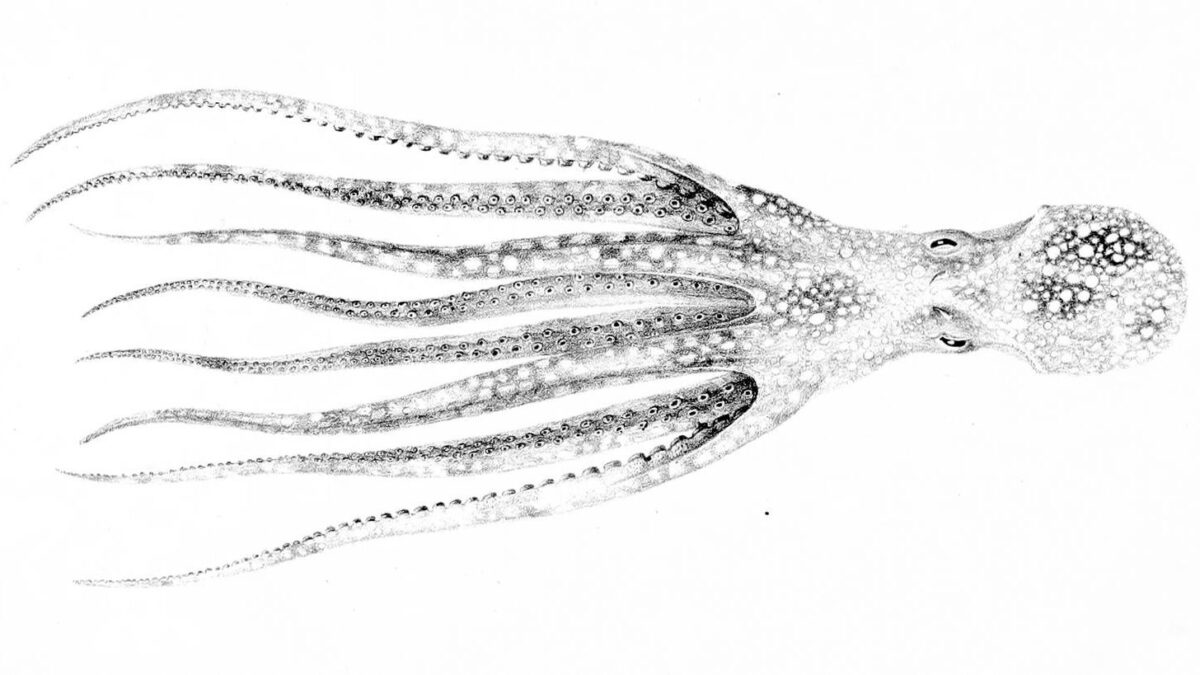
Researchers stumbled upon remarkably preserved fossil jaws encased in ancient rock, offering a glimpse into oceans teeming with life during the dinosaur era. These discoveries challenge the notion of early octopuses as elusive, fragile swimmers drifting through the depths. Instead, evidence points to formidable creatures that commanded the seas as top hunters. The findings reshape our understanding of cephalopod evolution over 100 million years ago.
The Unexpected Fossil Revelation
Scientists identified jaws fossilized within solid rock, a rare preservation that captured fine details long lost to time. These relics dated back to the Cretaceous period, when dinosaurs roamed land and vast marine ecosystems thrived below the waves. The jaws belonged to early octopuses, providing direct evidence of their physical capabilities.
Paleontologists noted the structures’ robust design, hinting at a lifestyle far removed from modern octopuses’ stealthy habits. Such preservation allowed experts to measure and analyze features that softer body parts rarely leave behind.
From Drifters to Dominant Predators
Traditional views portrayed ancient octopuses as soft-bodied wanderers, avoiding confrontation in the shadowy ocean realms. This new research overturns that image, positioning them as aggressive apex predators in prehistoric waters. The fossil evidence suggests they actively pursued and overpowered prey, much like sharks or large reptiles of the time.
The shift in perspective stems from the jaws’ size and strength, indicators of a predatory role rather than a passive existence. This revelation prompts a reevaluation of how cephalopods fit into ancient food webs.
Unpacking the Scale and Strength of These Ancient Giants
Estimates based on the fossil jaws indicate these octopuses could have reached lengths of up to 20 meters, dwarfing most modern species. Such dimensions would have made them colossal figures in the marine landscape, capable of tackling sizable prey with ease. The jaws featured powerful cutting edges, adapted for shearing through tough hides or shells.
Modern octopuses rely on beaks for feeding, but these ancient versions amplified that tool into a weapon of predation. Their bite force likely crushed bones and cartilage, securing meals in competitive environments. This prowess positioned them at the top of the food chain, influencing the behavior of other sea dwellers.
Comparisons to contemporary cephalopods highlight the evolutionary divergence. While today’s octopuses emphasize camouflage and intelligence, their forebears wielded raw physical power. The fossils bridge a gap in the record, filling in blanks about body plans from an era with limited soft-tissue remains.
Researchers caution that exact sizes remain estimates, drawn from jaw proportions and related species. Still, the evidence consistently supports a profile of oceanic supremacy rather than obscurity.
Implications for Cephalopod Evolution
These findings illuminate a pivotal chapter in octopus development, suggesting periods of gigantism tied to abundant prey and fewer rivals. During the dinosaur age, warmer oceans and high productivity may have favored such large-bodied predators. The discovery underscores how environmental shifts later favored smaller, more versatile forms.
Future studies could uncover more fossils, refining these insights. For now, the jaws stand as tangible proof of a fiercer octopus lineage, prompting questions about lost diversity in ancient seas.
As paleontologists continue to probe these hidden archives, the story of ancient octopuses evolves from myth to measurable reality. Their reign as sea rulers reminds us that the oceans’ past holds surprises capable of upending established narratives, urging deeper exploration of Earth’s watery history.

- Urban Coyotes Show Remarkable Adaptability, Learning to Thrive in City Environments - July 22, 2026
- Beavers Are Nature’s Engineers, Creating Vital Habitats for Other Wildlife Species - July 21, 2026
- The Recovery of the California Condor Offers Hope for Other Critically Endangered Birds - July 21, 2026