

Every autumn, billions of birds take to the skies with a precision that no GPS device can quite match. A young Bar-tailed Godwit, for instance, hatches on the tundra of Alaska and, when the season turns, embarks on a nonstop flight across the Pacific Ocean toward New Zealand – roughly 12,000 kilometers away – without a map, without a mentor, and without a single electronic aid. Billions of young birds, including warblers and flycatchers, terns and sandpipers, set out on similarly spectacular and dangerous migrations every spring, skillfully navigating the night skies without help from more experienced birds.
What guides them is one of the most quietly astonishing phenomena in all of biology. Birds detect the magnetic field generated by Earth’s molten core and use it to determine their position and direction, yet despite more than 50 years of research into magnetoreception in birds, scientists have been unable to work out exactly how they use this information to stay on course. The answers emerging from laboratories around the world are stranger and more beautiful than anyone first imagined.
What Magnetoreception Actually Means
Magnetoreception is a sense that allows an organism to detect the Earth’s magnetic field. Animals with this sense include some arthropods, molluscs, and vertebrates, among them fish, amphibians, reptiles, birds, and mammals. The sense is mainly used for orientation and navigation, but it may also help some animals to form regional maps.
Biologists have long wondered whether migrating animals such as birds and sea turtles have an inbuilt magnetic compass, enabling them to navigate using Earth’s magnetic field. Until late in the 20th century, evidence for this was essentially only behavioural: many experiments demonstrated that animals could derive information from the magnetic field around them, but gave no indication of the underlying mechanism.
Birds can use two kinds of information from the geomagnetic field for navigation: the direction of the field lines as a compass, and probably magnetic intensity as a component of the navigational “map.” That distinction matters. One component helps a bird know which direction is north. The other helps it understand roughly where on the planet it actually is.
Birds have populations of nerve cells in their brains that are triggered by magnetic fields, and cells in their inner ears capable of detecting magnetic fields by electromagnetic induction. In addition, they have iron-containing materials in their upper beaks. The fact that multiple systems seem to exist suggests the sense is deeply embedded in avian biology, not a recent evolutionary novelty.
The Quantum Chemistry Happening in a Bird’s Eye

Experimental evidence suggests something extraordinary: a bird’s compass relies on subtle, fundamentally quantum effects in short-lived molecular fragments known as radical pairs, formed photochemically in its eyes. The creatures appear to be able to “see” Earth’s magnetic field lines and use that information to chart a course between their breeding and wintering grounds.
In 2000, scientists proposed that cryptochrome, a flavoprotein in the rod cells in the eyes of birds, was the “magnetic molecule” behind this effect. It is the only protein known to form photoinduced radical pairs in animals. The function of cryptochrome varies by species, but its mechanism is always the same: exposure to blue light excites an electron in a chromophore, causing the formation of a radical pair whose electrons are quantum entangled, enabling the precision needed for magnetoreception.
There has been growing evidence that, in birds, the cryptochromes in their eyes are responsible for their ability to orient themselves by detecting magnetic fields. Birds can only sense magnetic fields if certain wavelengths of light are available, specifically blue light. This seems to confirm that the mechanism is a visual one, based in the cryptochromes, which may be able to detect the fields because of quantum coherence.
Cryptochrome maintains coherent radical pairs at body temperature, in a wet and noisy cellular environment surrounded by thermal vibrations that should destroy quantum states almost instantly. The quantum states in bird cryptochrome persist far longer than expected, long enough for Earth’s vanishingly weak magnetic field to measurably shift the chemistry. Evolution accomplished this through molecular architecture that physicists are still trying to reverse-engineer.
Cryptochrome 4a: The Key Protein Under the Microscope

A 2021 study published in Nature identified cryptochrome 4a, or Cry4a, as the specific protein most likely to be the magnetoreceptor. Cry4a is expressed at constant levels year-round in the retinas of European robins, unlike other cryptochromes that fluctuate with circadian rhythms. This is what you would expect from a sensor that needs to be available whenever the bird needs to navigate, regardless of time of day or season.
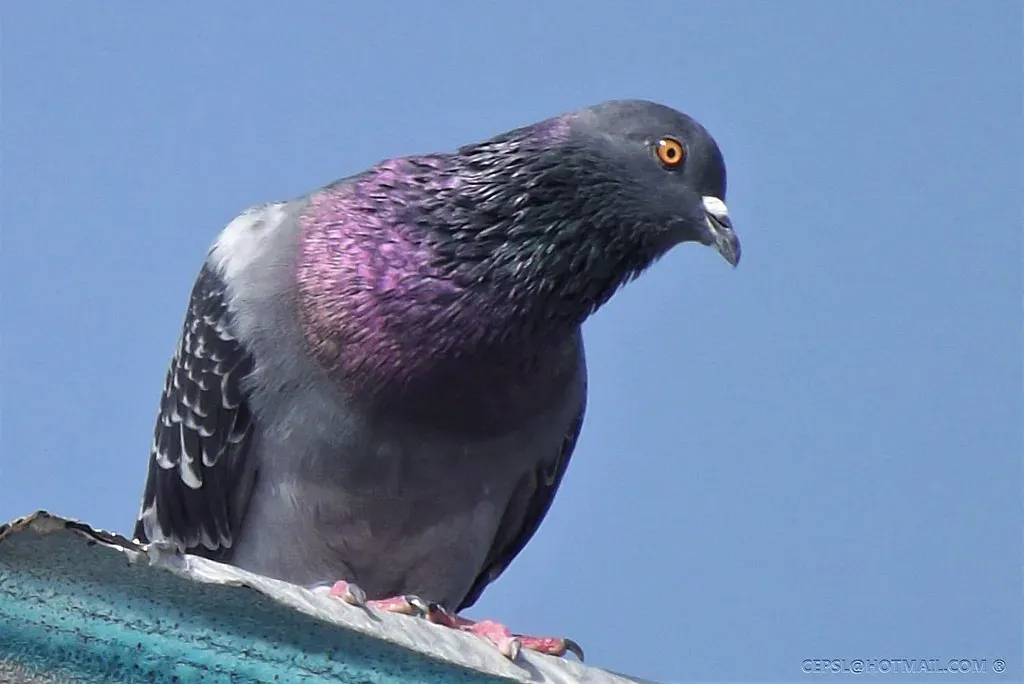
When researchers compared Cry4a from robins with the nearly identical Cry4a proteins from non-migratory birds such as pigeons and chickens, the robin version showed the largest magnetic sensitivity, a hint that evolution has optimized this specific protein for navigation in migratory species.
The Cry4a protein from the European robin, a migratory bird, is much more sensitive to magnetic fields than similar but not identical Cry4a from pigeons and chickens, which are non-migratory. These findings together suggest that the Cry4a of migratory birds has been selected for its magnetic sensitivity.
Notably, not only migratory birds navigate using a magnetic compass. Even resident birds that do not migrate in the spring and autumn have a magnetic sense and navigate using their internal magnetic compass. The ability appears to be far more widespread across bird species than researchers initially assumed.
The Inner Ear and the Beak: A Backup System or Something More?

A finding published in late 2025 added an entirely new dimension to how scientists think about avian magnetoreception, one that had actually been proposed back in the 1800s before being largely forgotten. Researchers had mainly hypothesized that birds’ magnetoreception works in one of two ways: either light-sensitive proteins in their eyes respond to magnetic fields, or tiny minerals in their beaks work like little compass needles.
In the late 1800s, the French naturalist Camille Viguier proposed an idea that would be dismissed and forgotten for more than a century. He speculated that birds and other animals could navigate with the help of Earth’s magnetic field, and that their magnetic sense originates in the inner ear.
Scientists found that the vestibular nuclei, a brainstem area that receives information from the inner ear, is activated by magnetic fields in pigeons. The signals then go to the mesopallium, a part of the brain that integrates sensory information, and also to the hippocampus, a key region for spatial orientation and navigation.
Magnetite particles in the upper beak could provide a coarse “map” sense, detecting the intensity and spatial gradient of the field to determine approximate position, while the cryptochrome compass provides the fine directional sense needed for orientation. The two systems would operate independently: one mechanical, one quantum. Whether both are necessary, or whether one is vestigial, remains an open question.
What Recent Research Is Changing and Why It Matters

Research found that Eurasian reed warblers use only Earth’s magnetic inclination and declination to determine their position and direction. This challenges the long-held belief that all components of Earth’s magnetic field, especially total intensity, are essential for accurate navigation.
In a carefully designed experiment, warblers were exposed to artificially altered magnetic inclination and declination values, simulating a displacement to a different geographic location while keeping the total magnetic intensity unchanged. Despite this “virtual displacement,” the birds adjusted their migratory routes as if they were in the new location, demonstrating compensatory behaviour. This response suggests that birds can extract both positional and directional information from magnetic cues, even when other components of Earth’s magnetic field remain unchanged.
Researchers at Western’s Advanced Facility for Avian Research explored a brain region called cluster N that migratory birds use to perceive Earth’s magnetic field. The team discovered the region is activated very flexibly, meaning birds have an ability to process or ignore geomagnetic information, just as you may attend to music when interested or tune it out when you are not.
Research has also shown that low-level radio-frequency interference can impair avian orientation in ways that are not easily visible but may carry real consequences for populations over time. This raises practical concerns about urban electromagnetic environments and the long-term wellbeing of birds navigating through increasingly noisy skies.
Conclusion

The story of how birds navigate using Earth’s magnetic field is still being written. Each decade brings a new layer of explanation: behavioral studies first, then biochemistry, then quantum physics, and now neural mapping at the brain level. What the science confirms is that avian magnetic navigation is not a single, simple trick. It’s a layered, redundant system refined over millions of years, one that operates through quantum chemistry, inner-ear physics, and brain integration simultaneously.
There is ongoing interest in exploring how the natural designs found in these biological systems can inform technological applications. Understanding how birds fine-tune their magnetoreception methods may lead to advanced sensors in various fields, from medicine to navigation technologies.
There is something genuinely humbling about a small songbird crossing a continent at night, guided by quantum reactions unfolding inside its eyes at room temperature, reading a planetary field with precision that the most advanced human instruments still struggle to replicate. Science keeps narrowing in on the mechanism. The bird, for its part, has never needed to understand it.

- Pangolins Face Critical Threats, Making Them the World’s Most Trafficked Mammal - June 25, 2026
- Tornado Alley: Where the Worst Twisters Form in the U.S. - June 25, 2026
- 8 States With the Most Tornadoes in The US - June 25, 2026