

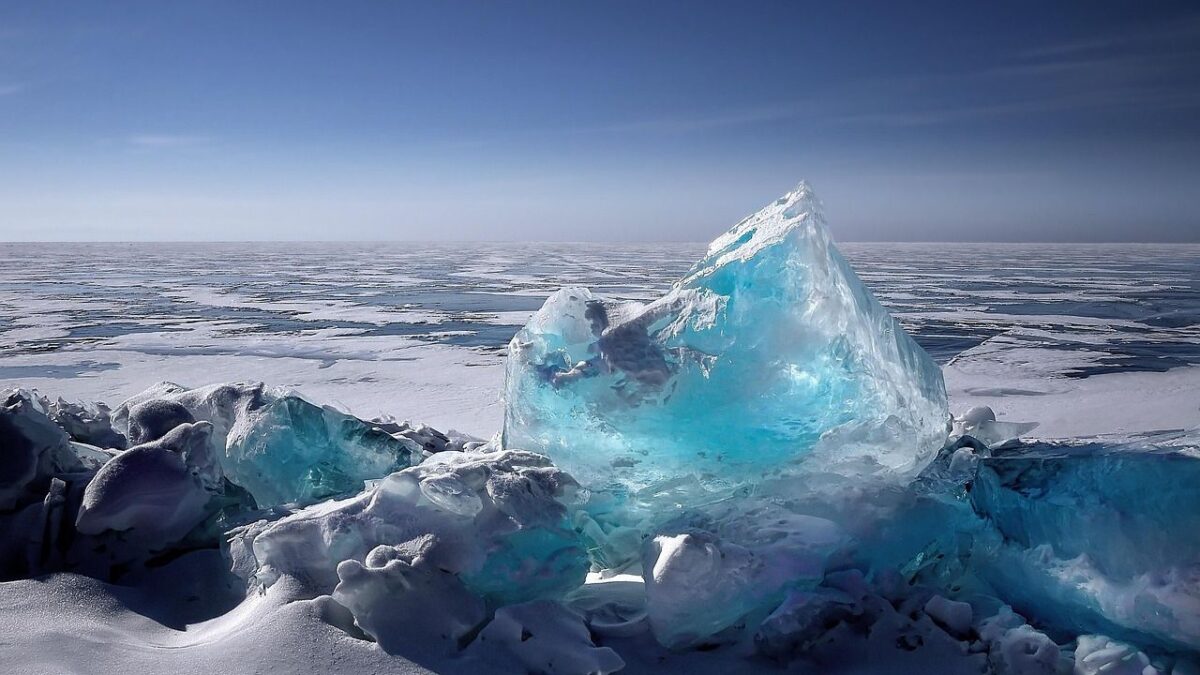
Buffalo sits in one of the snowiest corners of the United States, yet the ground beneath the city carries evidence that this was not always the case. Faint, west-moving grooves etched into the landscape point to a period when icebergs and glacial ice traveled in the opposite direction from today’s prevailing winds. These plowmarks, formed between roughly 12,000 and 17,000 years ago, span about five thousand years and suggest the region once experienced a reversed pattern of lake-effect snow.
Reading the Marks Left by Ancient Ice
The scratches themselves are subtle but consistent. They run from east to west across parts of western New York, cutting through older glacial deposits. Researchers interpret them as the work of icebergs or ice shelves that once floated or slid across the area when the Great Lakes basin was still adjusting after the last glacial maximum. Because the grooves point westward, they record ice movement driven by winds or currents that differed sharply from the westerly flow that now dominates winter weather in the region.
That directional difference matters. Modern lake-effect snow forms when cold air crosses the relatively warm waters of Lake Erie and drops heavy snow on the eastern and southeastern shores. If ice once moved the other way, the atmospheric setup that produces today’s snowbelt must have been inverted for centuries at a time. The marks therefore serve as a physical record of a climate configuration that no longer exists.
What the Five-Millennia Window Tells Us
The plowmarks cover a long stretch of the late Pleistocene and early Holocene. During those millennia the Laurentide Ice Sheet was retreating, the Great Lakes were taking their modern shapes, and regional wind patterns were still settling into their current form. The consistent westward orientation across such an extended interval indicates the reversed flow was not a brief anomaly but a persistent feature of the climate at the time.
Scientists note that the exact trigger for the reversal remains uncertain. Changes in the position of the jet stream, the presence of lingering ice to the north, or shifts in the temperature contrast between land and water could all have played a role. What the scratches make clear is that the atmospheric conditions capable of driving ice westward existed long enough to leave a lasting signature on the landscape.
Placing the Finding in a Broader Climate Context
Evidence of past climate variability helps place today’s weather patterns in perspective. Buffalo’s reputation for lake-effect snow is well earned, yet the geologic record shows that the same physical setting can produce very different outcomes when large-scale circulation changes. The ancient plowmarks add one more data point to the growing picture of how sensitive Great Lakes snowbelts can be to shifts in wind direction and temperature gradients.
Similar markings have been documented in other parts of the former ice sheet’s path, but the Buffalo-area features stand out because they directly contradict the modern snowbelt orientation. This contrast underscores how much the regional climate has evolved since the ice sheets withdrew.
Looking Ahead from the Distant Past
The scratches left by those long-ago icebergs do not predict future snowfall totals, yet they illustrate that the Buffalo snowbelt is not a fixed geographic feature. It is the product of a particular alignment of winds, water temperatures, and atmospheric circulation that has changed before and could change again. Understanding those earlier configurations gives researchers a clearer baseline against which to measure both natural variability and any long-term shifts driven by rising global temperatures.
In the end, the west-moving plowmarks serve as quiet reminders that the dramatic winter scenes familiar to Buffalo residents today are only one chapter in a much longer story of climate and ice.
