

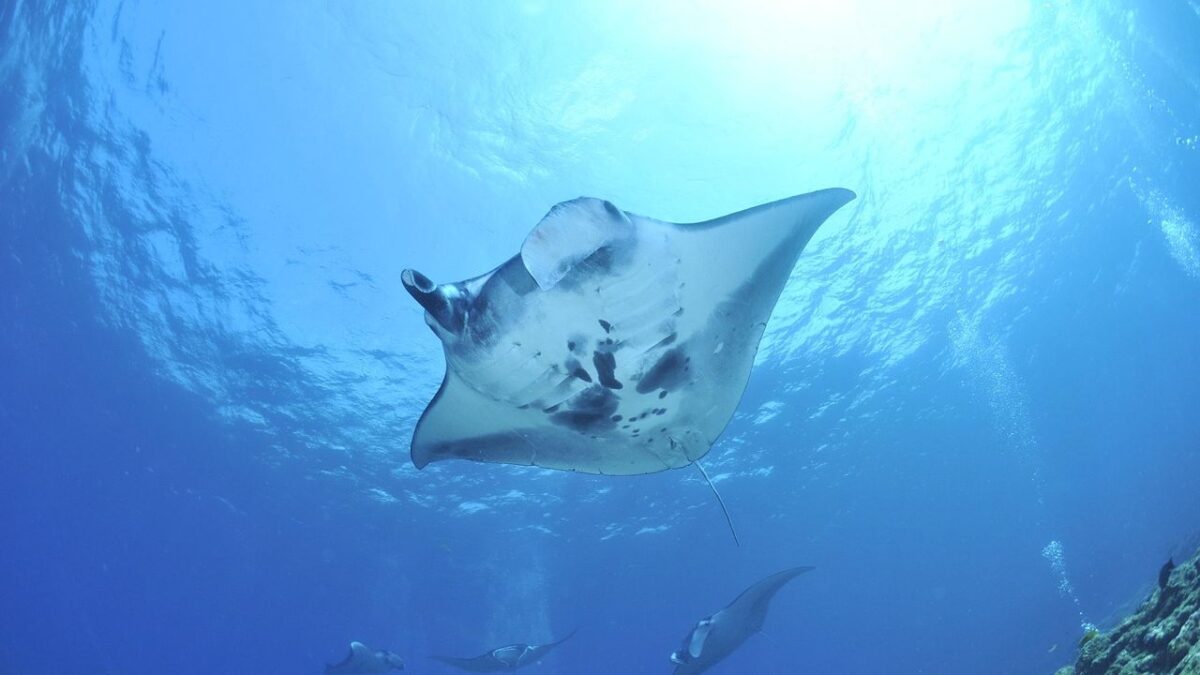
Marine biologists have begun to document a striking example of how some smaller fish species interact with manta rays in the open ocean. These fish enter and remain inside the cloaca of the much larger rays, an opening that handles reproduction and waste elimination. The observation has prompted fresh questions about survival tactics in vast marine environments where protection is often scarce.
Details of the Observed Behavior
Researchers have recorded instances in which the fish position themselves within the cloaca for extended periods. The cloaca provides a confined space that appears to shield the smaller animals from external threats. Scientists have noted that the fish show no signs of harming the host ray during these stays.
The behavior stands out because it involves an intimate part of the ray’s anatomy. Field observations indicate that the fish may enter and exit the cloaca as the ray moves through different water columns. This pattern suggests a deliberate choice rather than accidental contact.
Possible Advantages for the Fish
One clear benefit appears to be shelter from predators that would otherwise target small fish in open water. The cloaca also places the fish near the ray’s path, which often leads through areas rich in plankton and small particles. Such positioning could supply incidental feeding opportunities without requiring the fish to forage independently.
Another potential gain involves reduced energy expenditure. By riding along inside the ray, the fish avoid constant swimming against currents. Researchers emphasize that these advantages remain hypotheses until longer-term tracking confirms how often and for how long the fish remain in place.
What Remains Unknown
Scientists still lack detailed data on whether the rays experience any change in swimming efficiency or health from hosting the fish. It is also unclear how widespread the behavior is across different manta ray populations and geographic regions. Additional underwater recordings and tagging studies will be needed to clarify these points.
Current findings rest on a limited number of direct observations, leaving room for variation that future work may reveal. The interaction adds one more layer to the complex web of relationships that sustain ocean ecosystems.
Broader Context for Marine Research
Discoveries like this one underscore how much remains hidden even in well-studied species such as manta rays. They also illustrate the value of patient, non-invasive observation techniques that allow animals to behave naturally. Continued monitoring could refine understanding of how such associations influence population dynamics over time.
Ultimately, the behavior reminds researchers that survival strategies in the sea often rely on unexpected partnerships rather than solitary effort alone. Further documentation will help place this example alongside other known cases of marine commensalism.

- 25 Hummingbird-Friendly Garden Tips That Will Bring These Tiny Birds Back Again and Again - July 30, 2026
- 10 Most Powerful Native American Spirit Animals and What They Mean. - July 30, 2026
- 12 Signs of Stomach Ache in Dogs - July 30, 2026