

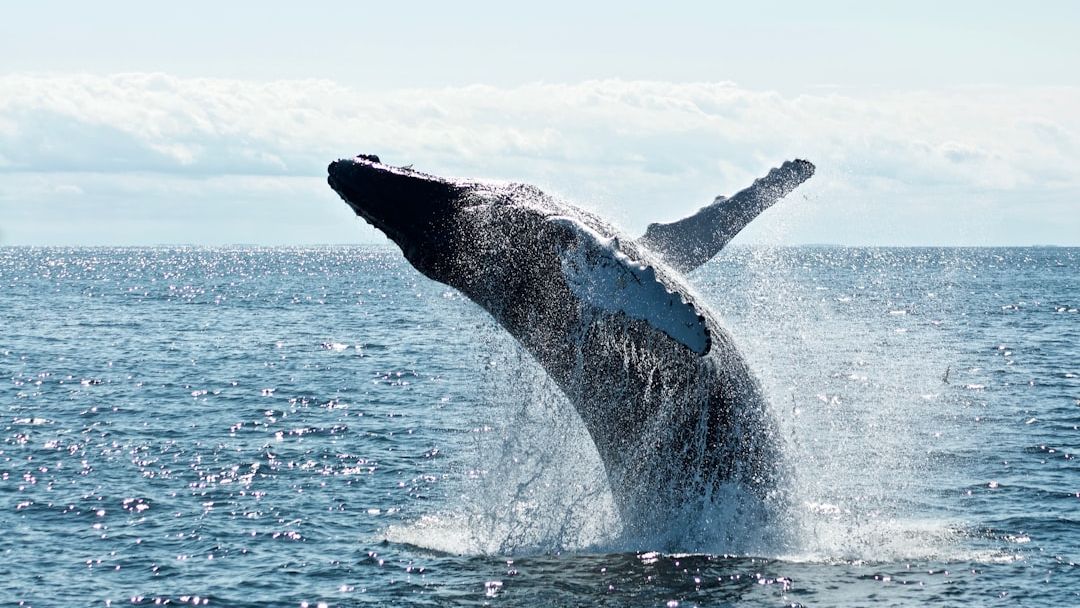
Humpback whale breaks migration record with 15,000 kilometer ocean journey – Image for illustrative purposes only (Image credits: Unsplash)
A humpback whale has traveled at least 15,100 kilometers between breeding grounds in Australia and Brazil, establishing the longest confirmed migration for any individual of its species. Researchers identified the journey through separate sightings of the same animal, which crossed vast stretches of open ocean in both directions. The discovery also includes a second whale that covered more than 14,000 kilometers on a similar route, underscoring how little is still known about the full range of these animals.
Details of the Documented Travels
The primary whale was first observed in Australian waters and later identified in Brazil, with the total distance calculated from the two confirmed locations. Scientists determined the minimum path length by measuring the shortest feasible ocean route between those points. The second whale followed a comparable pattern, though its exact distance fell slightly below the new record. Both cases involved movements that connect distant populations previously thought to remain more isolated.
These findings emerged from photo-identification and genetic matching techniques that allow researchers to recognize individual whales across years and oceans. The journeys appear to represent round-trip migrations rather than one-way movements, though the precise timing and path remain unclear from the available sighting data alone.
How Researchers Confirmed the Distances
Confirmation relied on matching distinctive markings and DNA samples collected at each location. Such methods have become standard for studying wide-ranging marine mammals where continuous tracking devices are difficult to maintain. The 15,100-kilometer figure represents a conservative estimate based on the straight-line ocean distance, meaning the actual path the whale swam could have been longer if it detoured around currents or feeding opportunities.
Earlier records for humpback migrations typically involved shorter routes along coastlines or within single ocean basins. The new observations demonstrate that some individuals can link breeding areas separated by entire ocean widths, a capability that challenges previous assumptions about population boundaries.
Implications for Conservation Efforts
Understanding these extended movements helps conservation groups identify critical habitats that span multiple countries. Protection measures focused on one breeding ground may now need to account for animals that also rely on distant feeding areas. International cooperation becomes essential when individual whales routinely cross such large distances.
The data also highlight gaps in current knowledge about how often these long journeys occur and which environmental factors influence them. Continued monitoring will be required to determine whether the observed travels represent rare events or more common behavior that has simply gone undetected until now.
What Remains Unknown
Researchers still lack continuous tracking data that would reveal the exact route, duration, and any stops the whales made during their travels. It is unclear whether the animals followed predictable seasonal patterns or responded to specific ocean conditions. Future studies using satellite tags or expanded sighting networks could fill these gaps, but such work faces logistical and funding challenges in remote ocean regions.
The findings add to a growing body of evidence that humpback whale populations maintain more fluid connections than once believed. This flexibility may offer resilience against changing ocean conditions, yet it also means conservation strategies must adapt to protect animals across broader geographic scales.

- 3 North American Snakes That are a Garden’s Best Friends - July 26, 2026
- Remembering Sirius, The K9 Hero of 9/11 Who Fell in The Line of Duty - July 26, 2026
- 15 of the Most Beautiful Towns in the World - July 26, 2026