

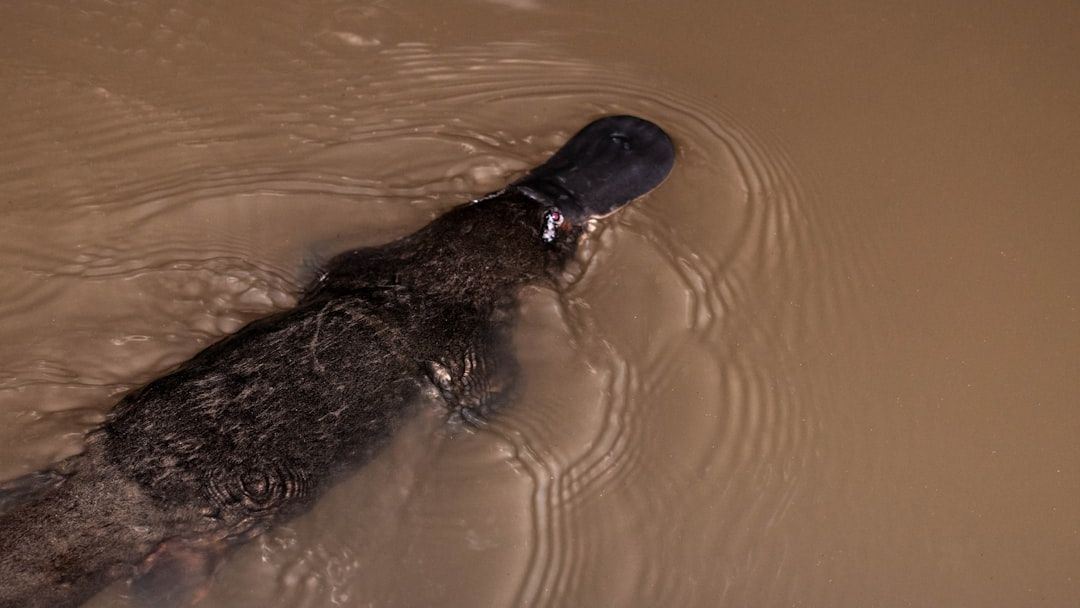
An Australian icon, the platypus is struggling – and scientists still lack answers – Image for illustrative purposes only (Image credits: Unsplash)
Along the eastern rivers of Australia, the platypus moves through its world at twilight, sensing prey through electrical signals on the riverbed. This semiaquatic mammal remains one of the planet’s most unusual species, yet its numbers and long-term prospects stay difficult to pin down. Researchers continue to track how habitat changes and extreme weather events affect its survival.
Distinct Traits Set the Platypus Apart
The platypus stands out among mammals for laying eggs while also nursing its young. Males carry venomous spurs, and the animal maintains a body temperature around 32 degrees Celsius. It relies on electroreception to locate larvae, shrimp, and small crayfish in the sediment. These features reflect an ancient lineage shared with only four other egg-laying mammals worldwide. Such adaptations suit the platypus to specific river environments along Australia’s east coast. The species spends much of its time submerged and feeds mainly at dusk and dawn. Its elusive habits make direct observation rare, which adds to the challenge of understanding its daily needs.
Population Estimates Carry Significant Uncertainty
Current figures place the total number near 50,000, according to an assessment completed more than a decade ago. That evaluation already described the population as declining and labeled the count a best estimate rather than a firm total. Experts now question whether even that range holds true today. Gilad Bino, who leads the University of New South Wales Platypus Conservation Initiative, has expressed doubt about the accuracy of existing data. Platypuses prove hard to locate and count because they remain hidden for long periods. Without updated surveys, conservation planning rests on incomplete information.
Environmental Pressures Increase Extinction Risk
Recent analysis published in the journal Australian Mammalogy examined how multiple threats interact. More frequent droughts can dry out the waterways the animals depend on. Wildfires can sweep through surrounding vegetation, while sudden floods may trap individuals inside their burrows before they can escape. These combined scenarios elevate the overall risk of extinction for the species. Human activities that remove riparian vegetation and expand development along riverbanks further reduce suitable living space. The research emphasizes that responses must address both habitat quality and specific local risks rather than treating threats in isolation. The study calls for earlier intervention based on detailed mapping of vulnerable areas. Without such steps, the cumulative effects of weather extremes and land-use changes could accelerate losses in regions where the platypus still persists.
Targeted Actions Could Improve Outcomes
Effective protection requires coordinated efforts to restore riverbank vegetation and limit further encroachment. Monitoring programs that account for the animal’s secretive behavior would help track changes more reliably. Scientists stress that waiting for clearer population data may leave too little time for meaningful recovery measures. Key points for moving forward include:
– Updating population surveys with methods suited to elusive species.
– Mapping high-risk zones for drought, fire, and flood impacts.
– Prioritizing habitat restoration in core river systems.
– Integrating climate projections into long-term planning. These steps could reduce uncertainty and support more precise conservation work. Continued research into the platypus’s responses to changing conditions remains essential. The species has survived for millions of years, yet current pressures test that resilience in new ways.

As a little kid, I fell in love with nature, wildlife, and animals. Living in the USA, South Africa, Italy, China and Germany gave me the opportunity to discover the world's Wildlife. My favorite animals are Mountain Gorillas, Siberian Tigers, and Great White Sharks.
I'm a certified PADI Open Water Diver, went to Everest Base Camp and Trekked Gorillas in Uganda. I hold a Master of Science in Economics and Finance.
Please send any feedback to feedback@animalsaroundtheglobe.com
- 16 Dog Breeds That Get Along Best with Kids - July 26, 2026
- The Battle Over Wild Horses Where They Live and Why It is Controversial - July 26, 2026
- 16 Creatures Now Thriving in Urban U.S. Cities - July 26, 2026