
There’s a particular kind of silence that creeps up on you slowly. You don’t notice it the first year, or even the second. But at some point you realize the garden that used to ring with chirping and fluttering every morning has gone eerily quiet – and you can’t remember exactly when it happened. The birds you assumed would always be there simply aren’t anymore.
Most people still believe the sparrows and thrushes and finches of their childhood are out there somewhere, just visiting other gardens. But experienced birders and decades of long-term survey data tell a much harder story. The disappearance is real, it’s measurable, and the reasons behind it are both maddening and preventable. Here are 13 once-guaranteed garden visitors – and the honest explanation for where they went.
#13 – House Sparrow: The Bird That Built Cities With Us
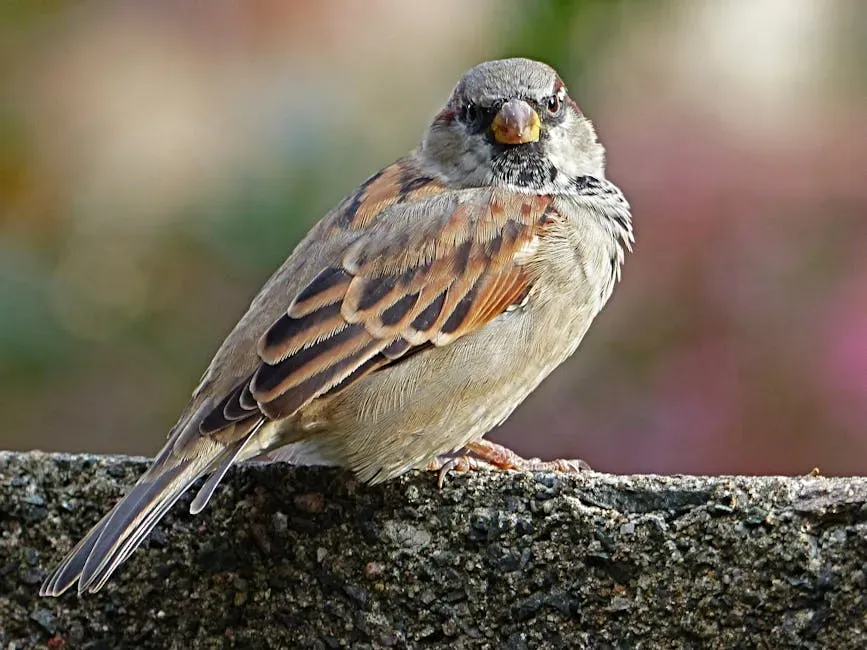
For most of human history, house sparrows were so woven into everyday life that nobody thought to count them. They nested in the gaps of old brick walls, squabbled under café tables, and followed farming communities across continents. Their numbers seemed self-replenishing – as reliable as roof tiles. Then, somewhere between the 1970s and today, they crashed. In parts of central London and other major cities, populations fell by more than 60%. The feeder that used to need refilling every two days now sits untouched for a week.
The causes stack grimly on top of each other. Modern buildings are sealed too tightly for nesting. Pesticide use stripped away the invertebrates that adult sparrows feed to their chicks – and without insect protein in those first critical days, chicks simply don’t survive. Weed seeds vanished from tidied verges and herbicide-treated gardens. Even the humble dust bath, essential for feather maintenance, disappeared as gardens converted to decking and paving. Experienced birders point to house sparrows as the single clearest signal that something has broken at the heart of everyday garden ecology.
Fast Facts
- UK house sparrow numbers fell by an estimated 71% between 1977 and 2008 – and numbers are still dropping in England.
- Since 1970, almost 30 million house sparrows have vanished from the UK.
- The species is now on the UK Red List of Birds of Conservation Concern.
- Urban and city populations have declined by 60%; rural England numbers have nearly halved.
- House sparrows topped the RSPB Big Garden Birdwatch for 21 consecutive years – yet remain in serious decline.
#12 – Common Starling: A Murmuration That’s Slowly Unraveling
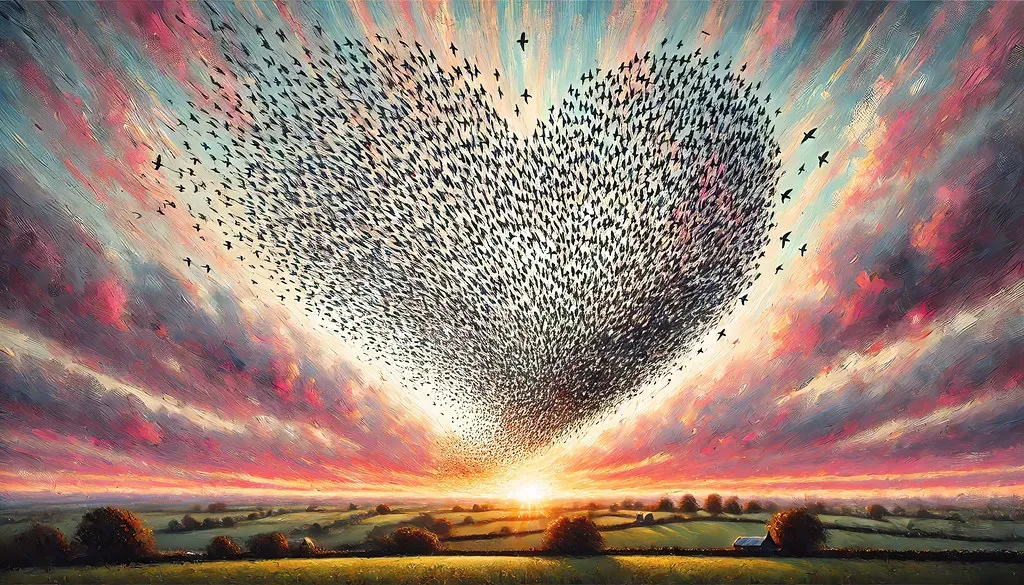
If you ever watched a starling murmuration – that shape-shifting cloud of thousands of birds banking and folding against a winter sky – you were watching one of the natural world’s great spectacles. It can feel impossibly abundant. Which makes the numbers even harder to swallow: UK breeding starling populations have fallen by more than 60% since the mid-1990s. The winter flocks still arrive, but they’re shadows of what they were, and far fewer birds are staying behind to breed.
The collapse tracks almost perfectly with the loss of permanent pasture. Starlings feed by probing soft ground for leatherjackets – the larvae of crane flies – and they need open, grazed grass to do it. As old meadows were ploughed, drained, or converted to hard-wearing ryegrass monocultures, the leatherjacket population crashed with them. Nesting sites in old buildings were sealed off. Urbanization replaced lawns with hard surfaces. The birds that do breed now struggle to find enough food close enough to the nest to raise a full brood. Experienced observers say watching a lawn that used to host 40 probing starlings now host just three is one of the loneliest sights in modern birdwatching.
#11 – Song Thrush: The Breakfast Snail-Smasher Is Going Silent
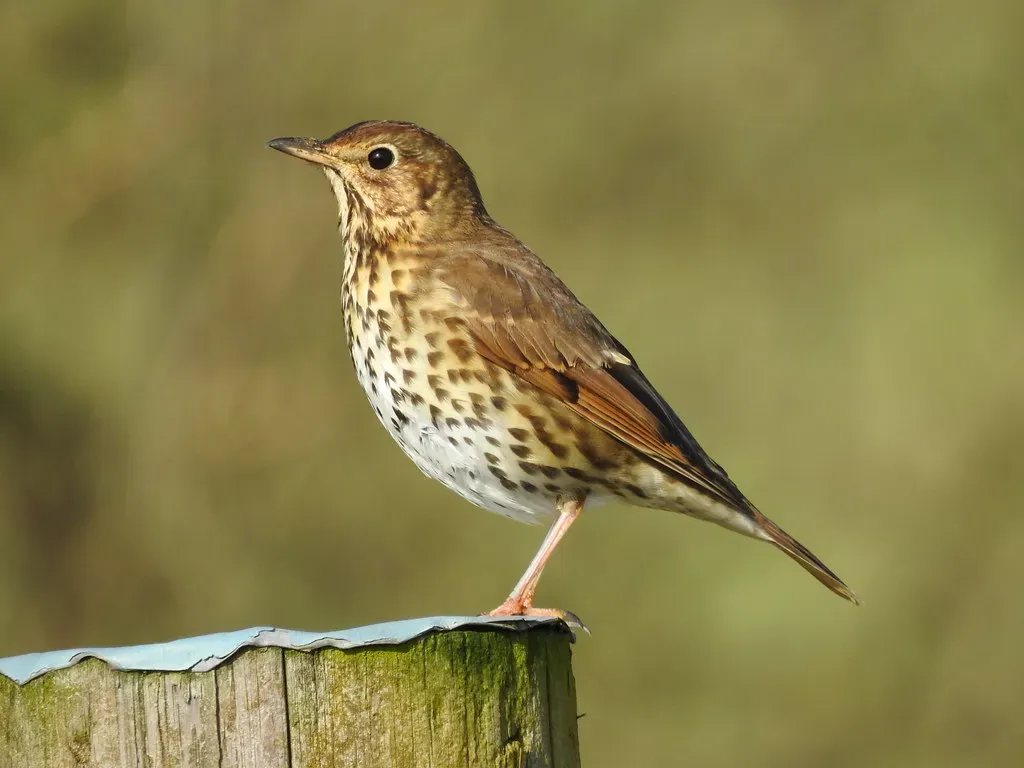
There was a time when the sharp crack of a snail shell against a garden stone was part of the morning soundtrack – unmistakable evidence that a song thrush had set up a workspace in your beds. They were methodical, loyal to their favorite anvil stones, and utterly indifferent to human presence. Gardeners loved them partly because they loved snails, making them a natural alternative to pellets. That relationship is quietly dissolving. Song thrush populations have dropped by around 50% across large parts of their range since the 1970s.
The reasons go deeper than just snail availability. Song thrushes are ground hunters that need loose, moist soil and dense, tangled undergrowth. The modern obsession with clean garden edges – clipped hedges, cleared leaf litter, bark-chipped beds – eliminates the micro-habitats they depend on. Dry summers reduce earthworm availability during critical breeding windows. Metaldehyde and ferric phosphate slug pellets kill the very prey they’re hunting, and secondary poisoning is suspected in some declines. Birders who’ve monitored the same territories for 20 years describe the silence where thrushes once sang as one of the most personal losses in their experience.
Worth Knowing
- Song thrushes are anvil users – they return to the same stone repeatedly to smash snail shells, a behavior unique among British garden birds.
- They require moist, loose topsoil to hunt earthworms; extended dry spells during spring and summer are increasingly cutting off this food source.
- Slug pellets – even modern ferric phosphate versions – are suspected of secondary poisoning when thrushes eat contaminated prey.
- Dense, weed-free bark-chip beds and hard borders offer almost no foraging value for ground-hunting thrushes.
#10 – Greenfinch: Killed by Kindness at the Feeder
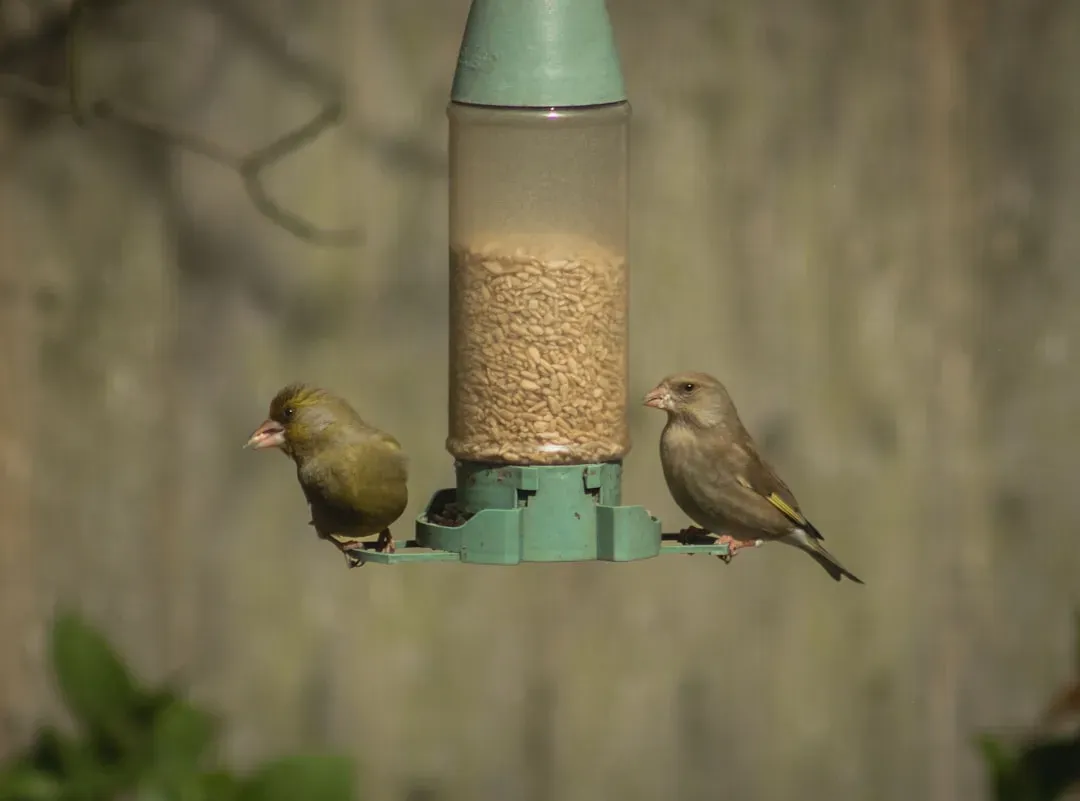
Greenfinches were the bold, chunky regulars that dominated sunflower heart feeders through the 1990s and early 2000s. Big enough to hold their ground against sparrows, bright enough to stop you in your tracks, they seemed bulletproof. Then trichomonosis arrived. The disease – caused by a microscopic parasite, Trichomonas gallinae – spreads easily through contaminated food and water, and communal garden feeders turned out to be perfect transmission points. Infection causes a lesion in the throat that prevents swallowing. Birds literally starve with a full feeder in front of them. Since the Big Garden Birdwatch began in 1979, greenfinch numbers have dropped by over 65%, representing a loss of more than two million individual birds.
What makes this particularly painful is the role of well-intentioned garden feeding in spreading the outbreak. The birds that survive tend to be those that feed briefly and alone – not the gregarious communal feeders greenfinches naturally are. The RSPB now advises cleaning feeders and moving them to a new position at least once a week, changing water daily, and stopping feeding entirely for at least two weeks if a sick bird is spotted. Some ornithologists believe the greenfinch’s sociable nature, one of the things that made it so delightful to watch, became a structural vulnerability when disease entered the picture. Recovery is happening slowly in some areas but the nationwide population has not rebounded – greenfinches are now on the UK Red List.
Quick Compare: Feeder Habits That Help vs. Harm
- ✅ Clean feeders weekly and move them to a fresh spot each time
- ✅ Change water daily using fresh tap water only
- ✅ Use tube feeders rather than flat-surface bird tables, which accelerate disease spread
- ✅ Pause seeds and peanuts between May and October when trichomonosis spreads fastest
- ❌ Never leave old, damp food to accumulate – it is the parasite’s ideal environment
- ❌ Never ignore a sick bird – one infected visitor can turn a busy feeder into a disease hotspot
#9 – Chaffinch: The Song That Used to Define Spring
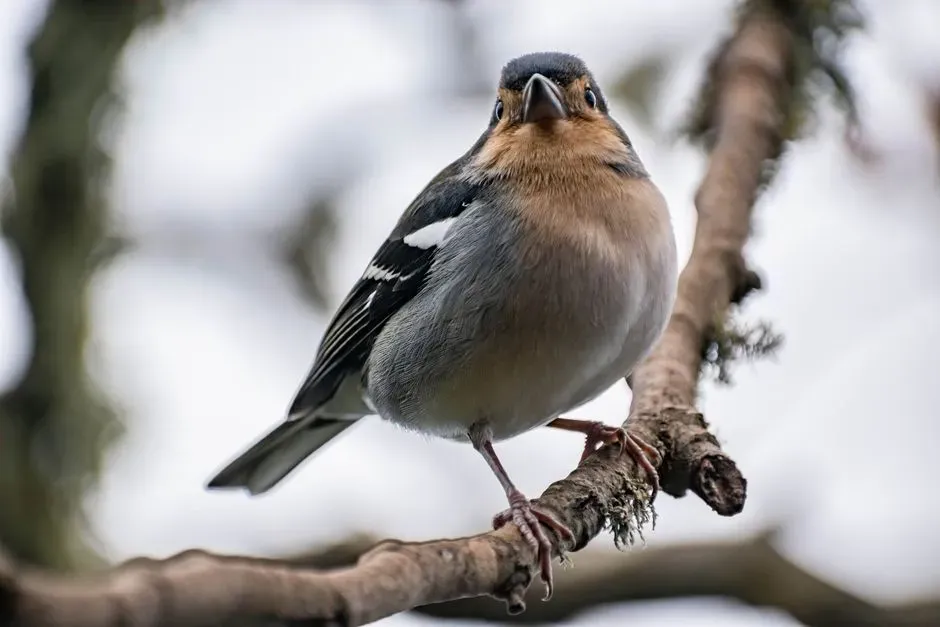
Ask anyone over 50 to describe a spring morning in a British garden and there’s a good chance the chaffinch’s cascading, rattling song is somewhere in the memory. It was simply always there – territorial males in every hedgerow, females picking through leaf litter beneath the feeders. It felt as fixed as the season itself. But chaffinch breeding populations have declined steadily for two decades, and unlike some declines that cluster around obvious single causes, the chaffinch is being squeezed from multiple directions at once.
Trichomonosis – the same disease devastating greenfinches – has now crossed into chaffinch populations with serious effect, with chaffinches dropping by 37% between 2011 and 2021 alone. Simultaneously, herbicide-treated farmland fields have removed the weed seeds that once sustained huge winter flocks. The beech mast years that used to draw thousands of chaffinches into woodlands are increasingly unpredictable. Some experienced birders make an uncomfortable but defensible argument: that poorly maintained garden feeding stations, overloaded with birds and rarely cleaned, may actually be accelerating the spread of disease faster than the feeding is helping. It’s one of the sharper ironies in modern garden birdwatching.
#8 – Eurasian Blackbird: Still Here, But Not Really Thriving
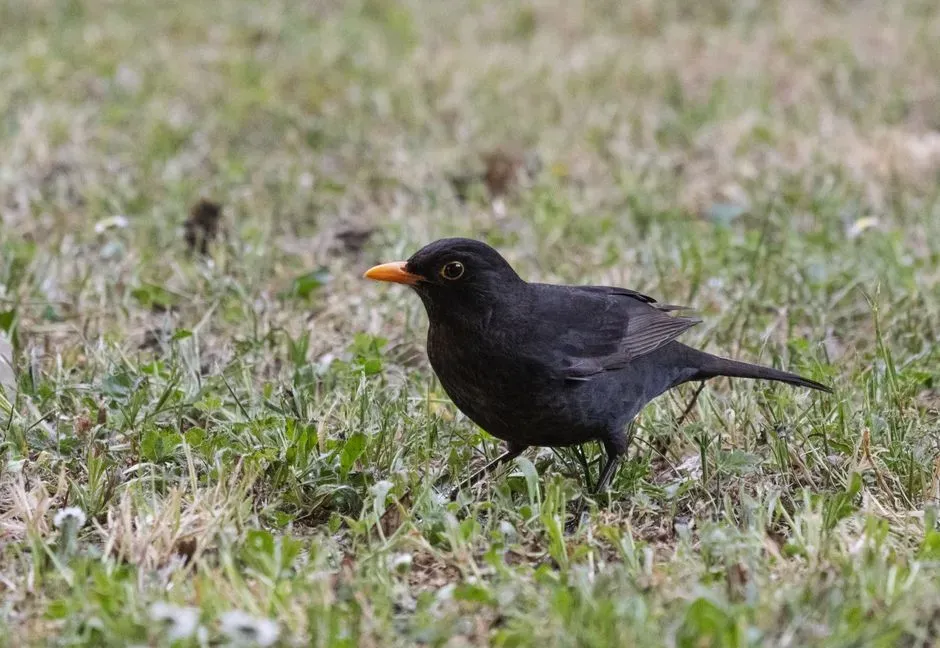
The blackbird is probably the species that most people would pick as proof that garden birds are doing fine. They’re still visible. They still sing at dusk with that rich, unhurried fluency. But visible and thriving are not the same thing, and long-term monitoring data has been quietly showing declining breeding success in suburban gardens for years. The blackbird is masking a slow deterioration behind a confident public performance.
The pressures are cumulative. Cat predation is now estimated to account for tens of millions of bird deaths annually in the UK, and ground-nesting blackbirds are disproportionately affected. Hedgerow removal reduced safe nesting structure. Increasingly dry spring and summer soils cut worm availability during the period when adults are feeding large broods. Denser, faster-growing garden plants look lush but often lack the insect life of older, slower hedges. Long-term monitoring outside the wetter western regions shows consistent downward trends in breeding pairs. Experienced birders note that people rarely realize the blackbird population is thinning because the individuals left are simply more visible, filling a garden where there used to be three or four pairs.
#7 – Dunnock: The Bird Nobody Noticed Until It Was Gone
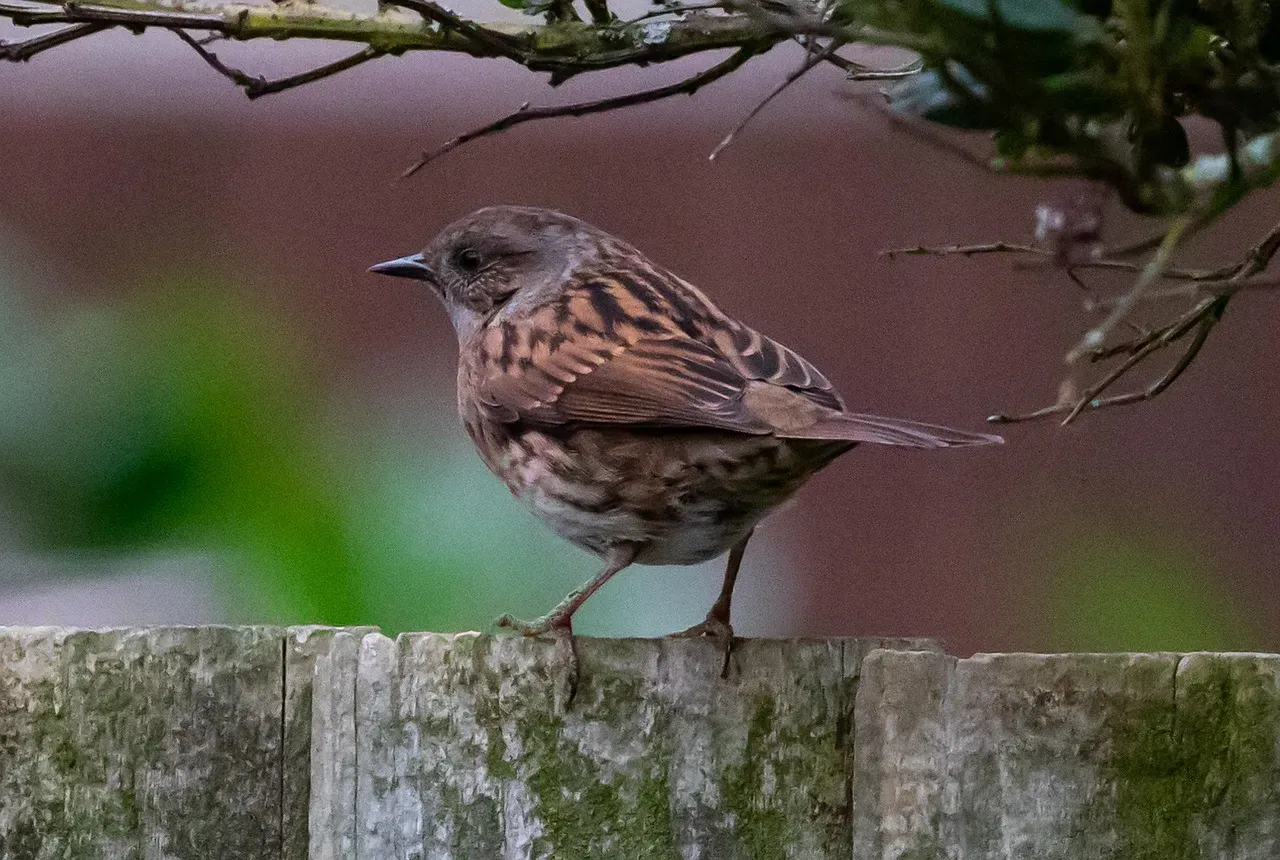
The dunnock built its entire survival strategy around being overlooked. Mouse-brown, ground-hugging, forever creeping through the base of a hedge with its characteristic shuffling walk – it was easy to dismiss as a sparrow that couldn’t quite commit to being interesting. But quietly, in thousands of gardens, it performed an irreplaceable ecological function: harvesting the tiny insects, spiders, and seeds that accumulated in the tangle of undergrowth at ground level. It was the unseen maintenance crew of the garden floor.
When hedges started disappearing, or getting cut hard to the ground in autumn just as dunnocks needed winter cover, the impact was immediate. Pesticide loads reduced the ground invertebrates that form their diet. Dense evergreen ground cover – the kind that looks neat but hosts almost nothing – replaced the messy, productive tangles they depend on. Experienced birders describe the dunnock as a sentinel species: one of the first birds to vanish when a garden loses its ecological complexity, and one of the last to return when habitat improves. Its absence is a signal most garden owners never register, which is precisely what makes it so telling.
At a Glance: What Garden Birds Actually Need
- Messy corners – leaf litter, log piles, and bramble patches provide food and shelter for dunnocks, wrens, and thrushes
- Thick hedgerows – not box-cut walls of green, but dense, layered growth that offers nesting, insect life, and winter berries
- Loose, moist topsoil – critical for earthworm and invertebrate hunters year-round
- Minimal pesticide use – every insecticide application depletes the food chain that garden birds depend on
- Undisturbed ground cover – autumn hedge-cutting and border clearing removes the very cover birds shelter in through winter
#6 – Tree Sparrow: The Farmland Cousin That Almost Vanished
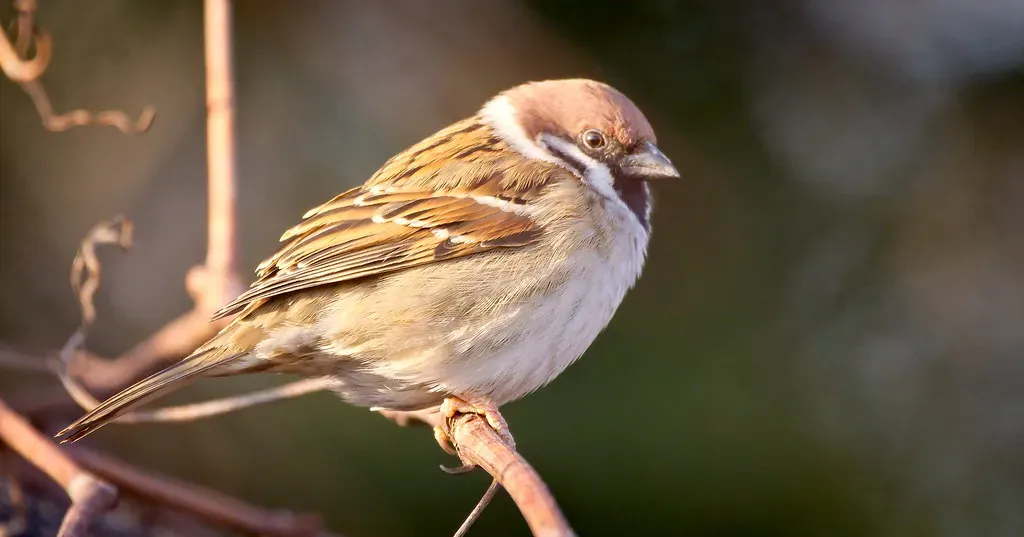
While the house sparrow’s decline shocked people because they saw it happening in cities and suburbs, the tree sparrow’s collapse was quieter and more complete. Tree sparrows were always more closely tied to farmland edges, orchards, and rural gardens than their urban cousins, and that habitat specificity left them uniquely exposed when agricultural intensification accelerated. In parts of their former range, populations crashed by over 90% between the 1970s and the early 2000s. Ninety percent. For a bird that was once common across lowland England, that number is staggering.
They suffered the same seed and invertebrate losses that hurt house sparrows, compounded by the removal of old orchards and traditional farm buildings that provided nesting sites. Competition with house sparrows where the two species overlapped put additional pressure on already-stressed populations. Conservation nest-box schemes have helped in targeted areas – some reserves have rebuilt local colonies from almost nothing – but the wider farmland context hasn’t changed enough to allow a genuine recovery. Most garden observers outside core farmland areas will now go years without seeing one. Experienced birders who do find tree sparrows describe it with a particular intensity, the way you might describe rediscovering something you’d assumed was permanently gone.
#5 – Bullfinch: The Beautiful Bird That Needed Messiness to Survive
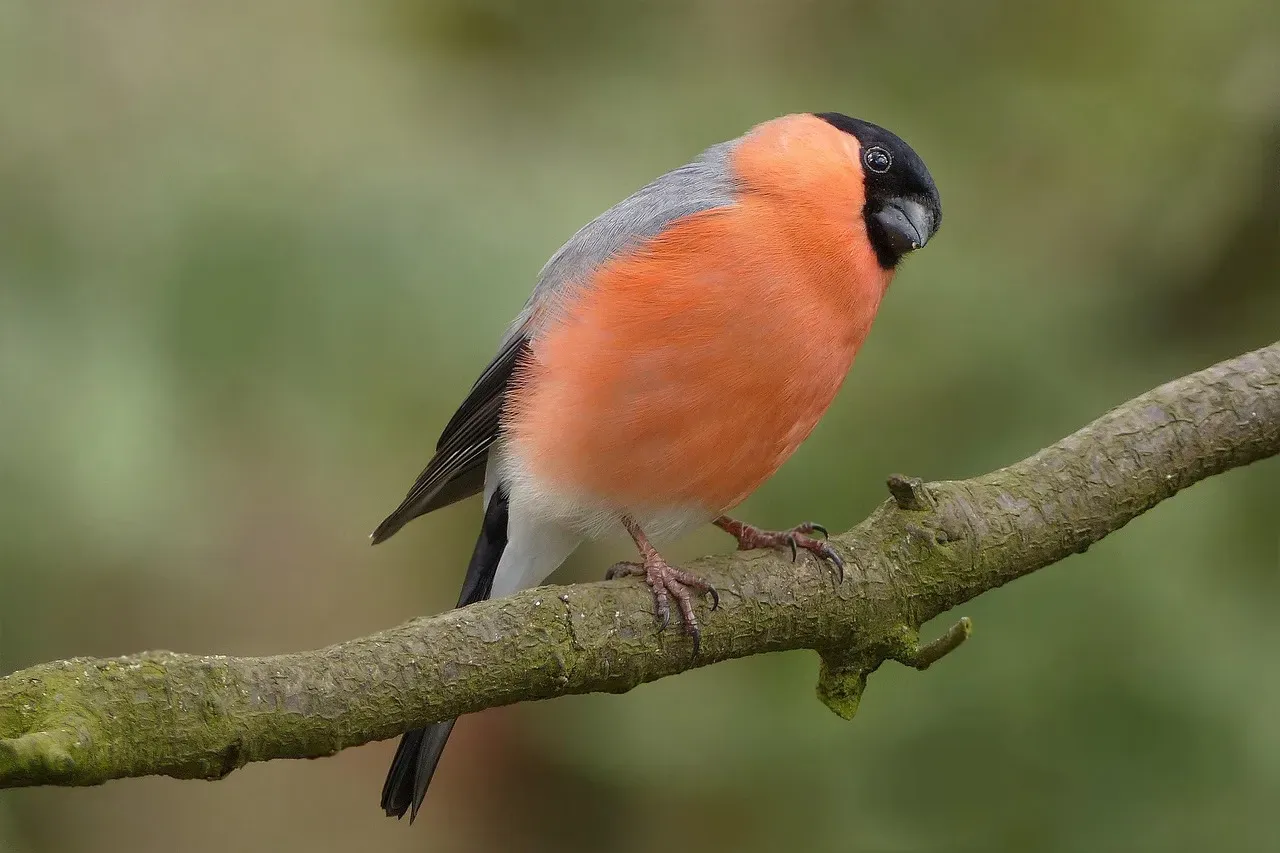
Few garden birds carry the visual impact of a male bullfinch: that extraordinary salmon-pink breast, the jet-black cap, the way it sits heavy and deliberate on a branch as if it owns the space. They were regular visitors to older, less managed gardens – particularly those with fruit trees or thick scrub margins – and gardeners tolerated their habit of systematically stripping fruit buds because they were simply too beautiful to resent. That tolerance is being tested less and less often now, because the bullfinch itself is becoming a rarity in most garden settings.
Their UK population has declined by roughly 40% over recent decades, and the cause connects directly to the aesthetics of modern gardening. Bullfinches need dense, scrubby habitat – bramble patches, thick hedgerows, untrimmed woodland edges – for both nesting and winter shelter. The landscaping trend toward open, sculptural gardens with defined sightlines removes exactly the cover they rely on. They don’t adapt well to exposed environments and won’t nest where they feel visible. Trichomonosis is now also suspected of affecting bullfinch populations through the same feeder transmission routes that devastated greenfinches. Experienced birders note that gardens which still host bullfinches regularly tend to share one characteristic: they look, to a casual observer, like they need a bit of tidying up. That untidiness is the point.
#4 – Linnet: A Finch That Farmed Itself Out of Existence
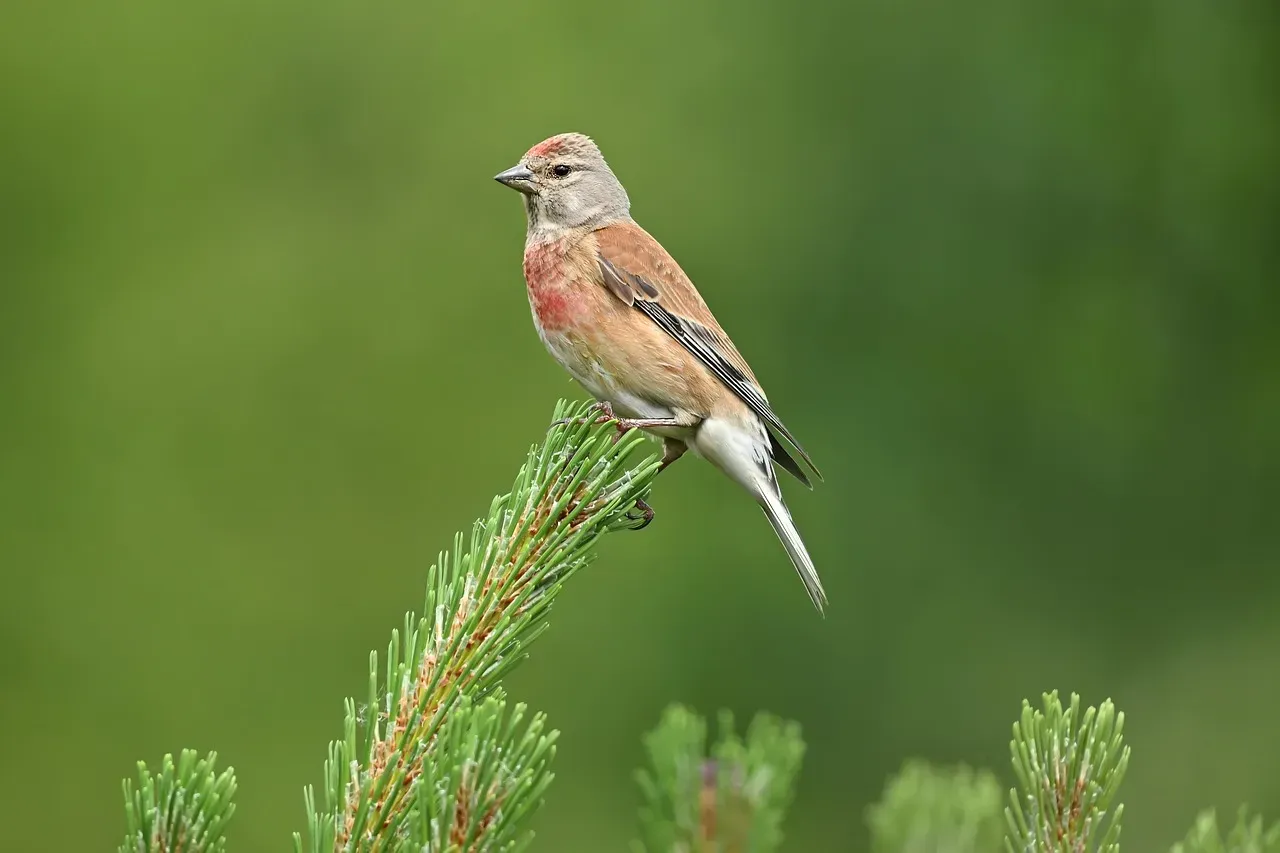
Linnets were birds of weedy, sun-warmed margins – the kind of rough ground that used to exist between fields, along roadsides, and at the edges of larger gardens where bramble and dock and thistle were allowed to seed out. In autumn and winter they gathered in flickering, fast-moving flocks that twisted through the air with a collective intelligence. The males in spring breeding plumage carried a crimson cap and breast that made them one of the more striking small birds in the open countryside. They felt abundant in a way that made their subsequent decline almost incomprehensible.
Herbicide use is the bluntest explanation. The systematic elimination of arable weeds from farmland throughout the 1980s and 1990s removed the seed-rich habitats that linnets depended on for both breeding and winter survival. Set-aside land, when it existed, provided temporary relief, but policy shifts reduced it. Garden habitat loss compounded the problem – the messy corners and neglected margins where linnets foraged were precisely the spaces that tidy-garden culture targeted. Farmland and garden survey records both show sustained population drops across their range. Experienced birders describe the linnet as a cautionary example: a bird so ordinary it was never considered threatened, right up until the moment it was.
#3 – Yellowhammer: The Hedge That Used to Sing
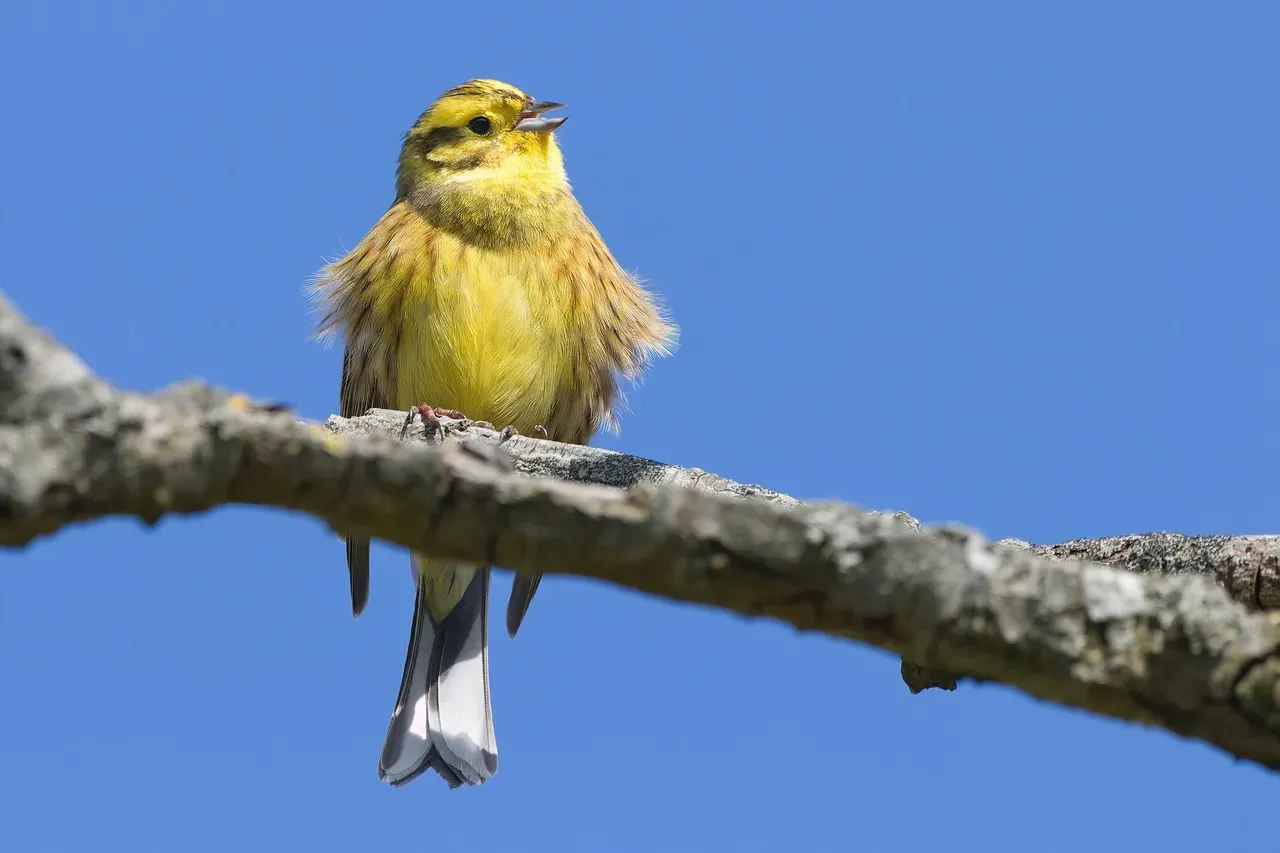
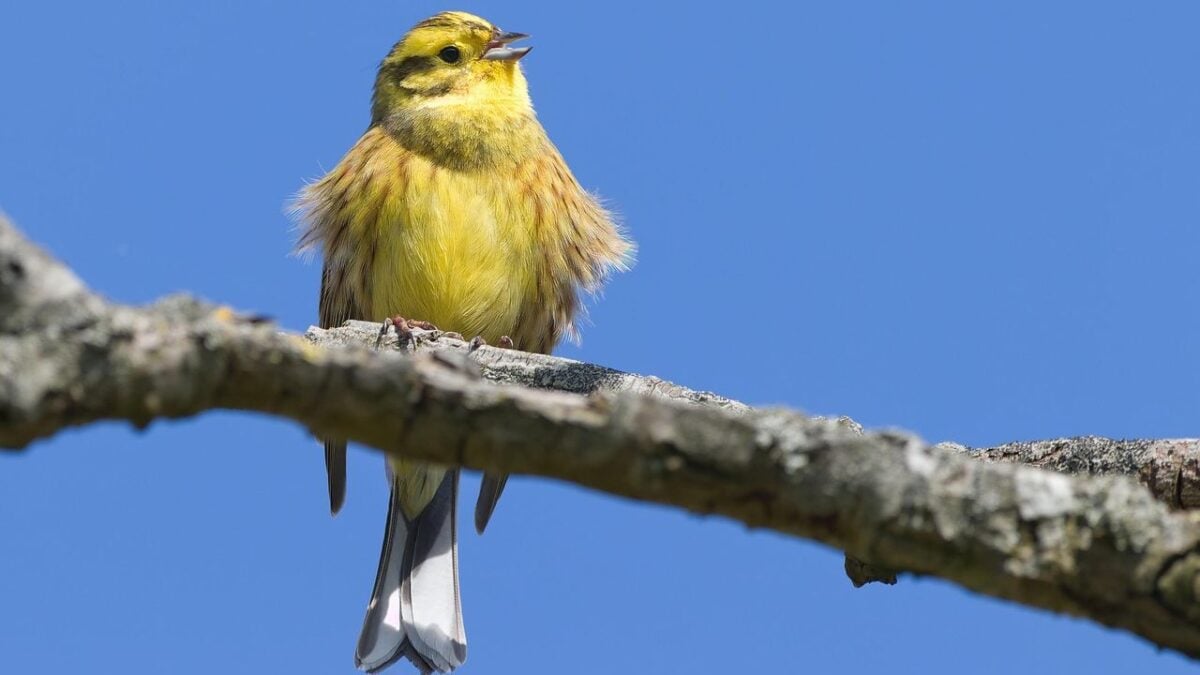
The yellowhammer’s song – traditionally rendered as “a little bit of bread and no cheeeeese” – was so common across the British countryside that it became part of the cultural wallpaper, the kind of sound you stopped hearing because it was always there. Every overgrown roadside hedge, every weedy field margin, every farm track with a little rough ground alongside it seemed to have its resident male singing from the topmost twig. The yellow was almost aggressive in its intensity, like a streak of early-morning sun had decided to stay in one place and make noise.
Intensive agriculture effectively dismantled the yellowhammer’s entire ecosystem. They need cereal stubbles left through winter for feeding, insect-rich field edges for raising chicks, and tall, thick hedgerows for nesting – three things that modern arable systems systematically reduced. Long-term UK breeding bird data records yellowhammer as one of the most severely declining farmland species, with a 75% long-term decline recorded between 1995 and 2024. Some experienced birders argue with visible frustration that current agricultural subsidy systems still financially reward the farming practices most directly responsible for these losses, creating a policy contradiction that has never been honestly resolved. The yellowhammer’s decline is not a mystery. It’s a choice.
Why It Stands Out
- The yellowhammer holds the grim distinction of being among the greatest long-term declines of any UK breeding bird – down 75% since 1995 in survey data.
- It needs three things modern farming mostly no longer provides: winter stubbles, insect-rich margins, and tall thick hedges.
- Its song was so ubiquitous it was used as a cultural reference point across centuries of British rural writing – now largely silent across its former range.
- Unlike some farmland birds, its decline is not slowing – and conservation groups argue current subsidy policy still rewards the wrong farming choices.
#2 – Skylark: When the Sky Went Quiet
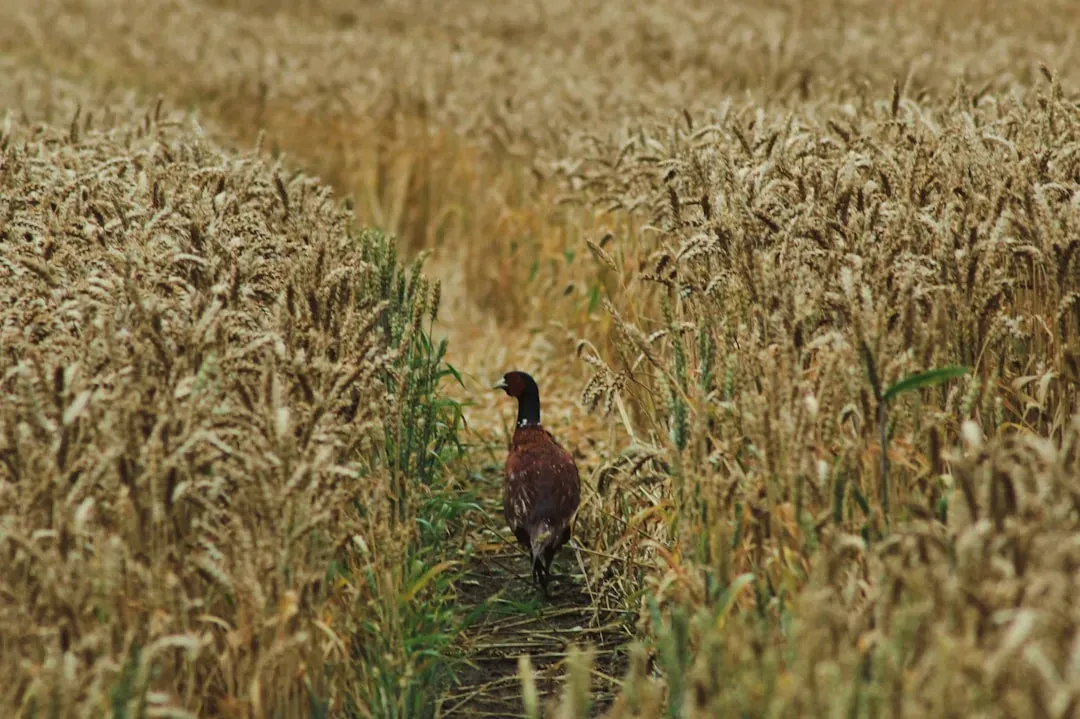
There’s an argument that no bird in British culture has been more written about, painted, or romanticized than the skylark. Shelley’s “Blithe Spirit.” Vaughan Williams’ ascending strings. The skylark became shorthand for something pure and timeless about the English landscape – a small brown bird climbing almost vertically on song, invisible against the sky, filling the air with music. The emotional weight attached to it made its decline feel almost personal when the data confirmed it. The UK skylark population declined by 75% between 1972 and 1996, and the total number of breeding birds roughly halved from 6 million to 3 million between 1968 and 1995 alone.
The mechanism is precisely understood and almost brutally simple. Skylarks nest on the ground in open arable and grassland, and they need to raise multiple broods across a long season. In spring-sown crops, skylarks can raise two or three broods – but in autumn-sown winter wheat, most stop nesting by late May as the crop grows too tall and dense for ground access, allowing just one brood. That single switch in farming practice is considered the primary driver of the population collapse. Conservation “skylark plots” – small bare gaps left in crop fields – have shown promise in raising local breeding densities, and some agri-environment schemes support them. But uptake has been inconsistent and the broader habitat picture hasn’t recovered. The skylark’s story is one of the clearest demonstrations that even a bird once found in almost every parish can slip toward genuine scarcity without most people noticing until it’s far too late.
We have driven away the birds with the way we grow our food, and we keep pretending it’s a mystery.
Mark Cocker, Birds Britannica
#1 – Goldfinch: The Comeback King With a Hidden Problem
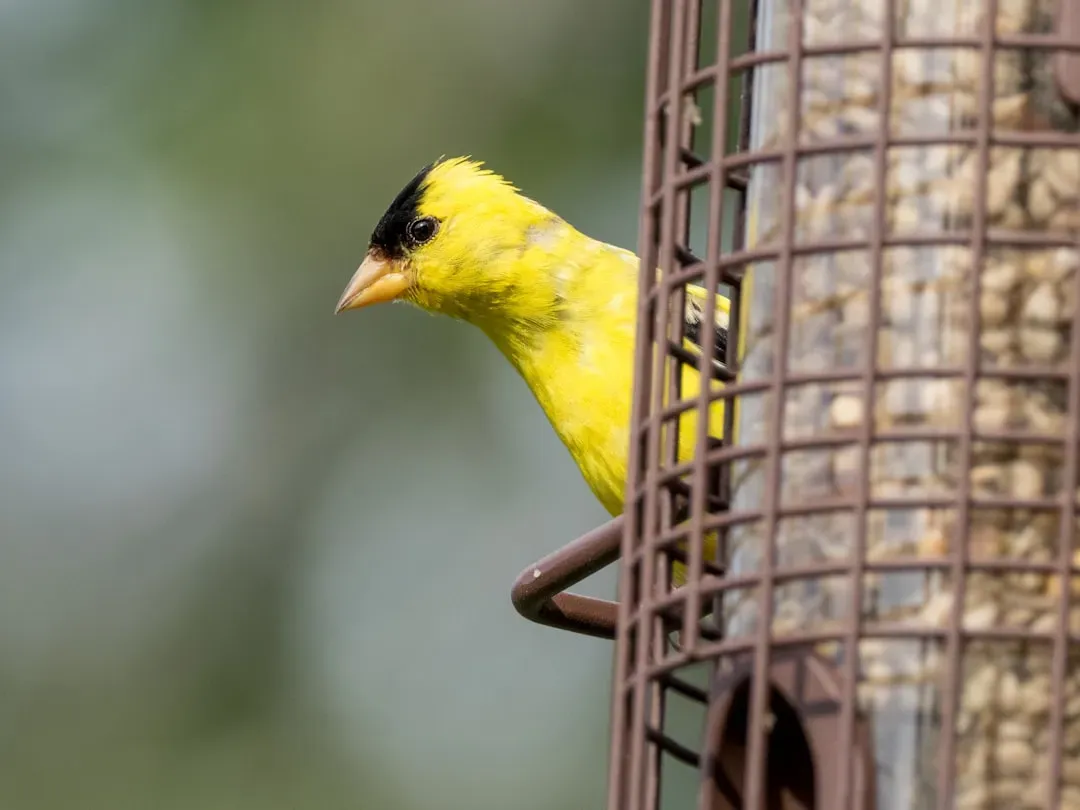
Here’s the twist in the story: the goldfinch looks like a conservation success. Over the past two decades, garden goldfinch sightings have increased significantly, driven largely by the widespread adoption of nyjer seed feeders and sunflower hearts. The RSPB Garden Birdwatch consistently records them in more gardens than ever before. They’re charismatic, unmistakable – that red face, the gold wing-bar catching the light – and they visit in small, twittering groups called charms. It feels like proof that garden feeding works. Experienced birders, however, look at the full picture and feel something more complicated.
Goldfinches at garden feeders are, in part, a displacement story. The wild seed sources they evolved to exploit – teasels, thistles, knapweed, and other tall, seeding plants across open farmland and rough ground – have contracted sharply as habitats have been tidied and sprayed. Breeding populations in the wider countryside have not recovered proportionally to the garden increase. Trichomonosis is now spreading into goldfinch populations following the same transmission routes that devastated greenfinches. Long-term data reveals they are not immune to the insect loss and habitat pressure affecting other finches; the feeder numbers are simply masking a more fragile national picture. The goldfinch tops this list not because its situation is the worst, but because it illustrates the most dangerous illusion of all – that a bird visiting your garden means it’s doing fine.
The Uncomfortable Truth Nobody Wants to Hear
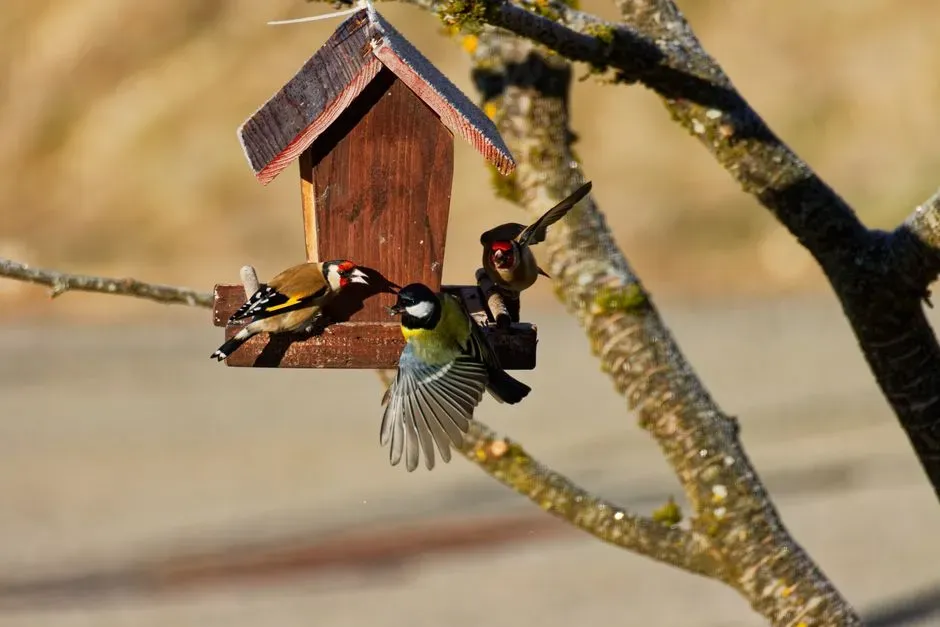
Strip away the nostalgia and the beautiful field guides and the RSPB Christmas appeals, and the same short list of causes appears behind almost every single decline on this list: industrial farming that stripped landscapes of seeds, insects, and structure; pesticide use that collapsed invertebrate populations from the ground up; habitat simplification that turned messy, productive countryside into biological deserts that look green but function as dead space; disease accelerating through communal feeding points; and a cultural obsession with tidiness that targeted exactly the rough edges and dense tangles that birds need most. None of this is inevitable. All of it involves choices made by policy, by industry, and yes, by individual gardeners who equate a clean lawn with a good one.
Experienced birders who’ve monitored the same patches for 30 years aren’t alarmist by nature – they’re among the most careful, evidence-driven observers in any field. When they describe the change as profound and accelerating, it’s worth taking seriously. The birds on this list aren’t rare species tucked away in remote habitats; they were the everyday texture of ordinary gardens across the country. Losing them isn’t just an ecological statistic. It’s the slow erasure of something most people haven’t quite realized they miss yet – but will. Leave a corner wild. Let the hedge grow. Clean the feeder. It’s not nothing.
At a Glance: Small Actions That Actually Help
- Leave a wild corner – even 1 square meter of nettles, thistles, or long grass feeds a chain of insects, seeds, and birds
- Clean feeders weekly and move them each time; change water every day during warmer months
- Pause seeds and peanuts from May to October – this is when trichomonosis spreads fastest at communal feeders
- Let hedges grow tall and thick – a clipped, low hedge is almost biologically useless for nesting birds
- Drop the slug pellets – secondary poisoning affects thrushes, hedgehogs, and other natural pest controllers
- Report sick birds to the Garden Wildlife Health project at gardenwildlifehealth.org to help researchers track disease spread
