
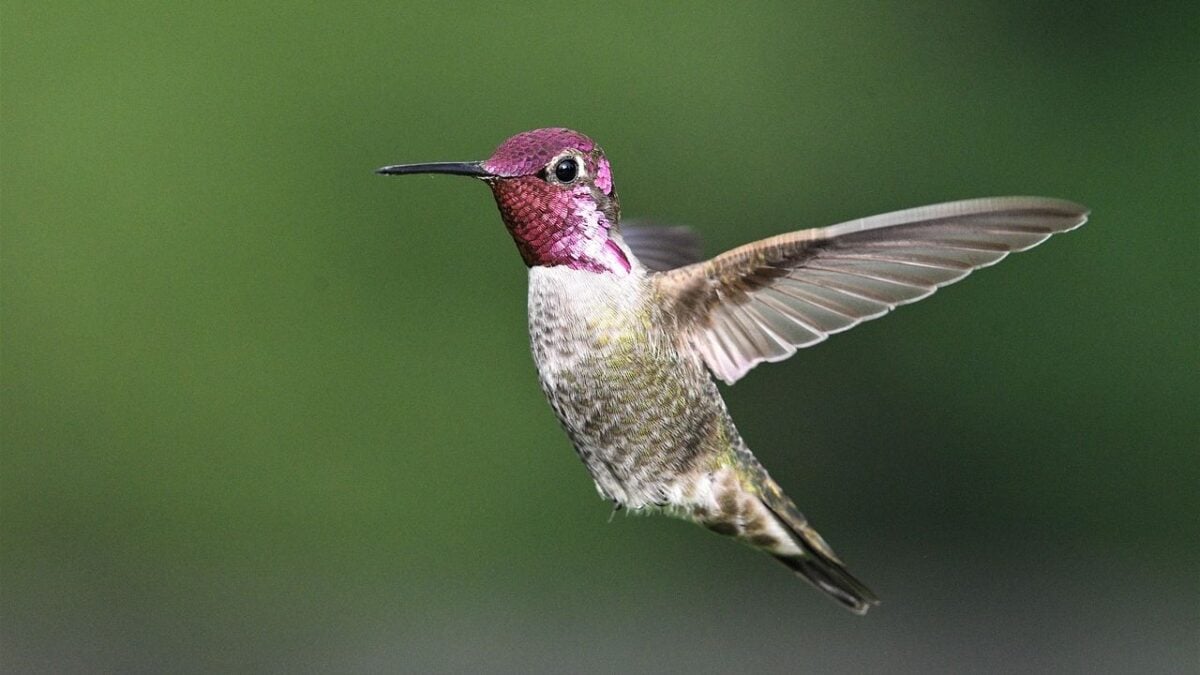
You’ve watched them hover at your feeder for three seconds, flash that impossible green, and vanish. Sweet little things, right? Except what you just witnessed was the polished public performance – the equivalent of a celebrity walking a red carpet. What happens the moment they dart behind the hedgerow is a completely different story: fake deaths, solo ocean crossings, ultraviolet visions, and territorial feuds that would embarrass a mob boss.
Field researchers who spend actual hours tracking these birds describe behaviors so strange they sound invented. Most gardeners never log enough quiet, patient time to witness any of it. That’s exactly what this list is for. Fourteen things hummingbirds do when the yard clears out – and a few of them will genuinely change how you look at that tiny blur on your lantana.
#1 – They Slip Into a Death-Like Torpor Every Night
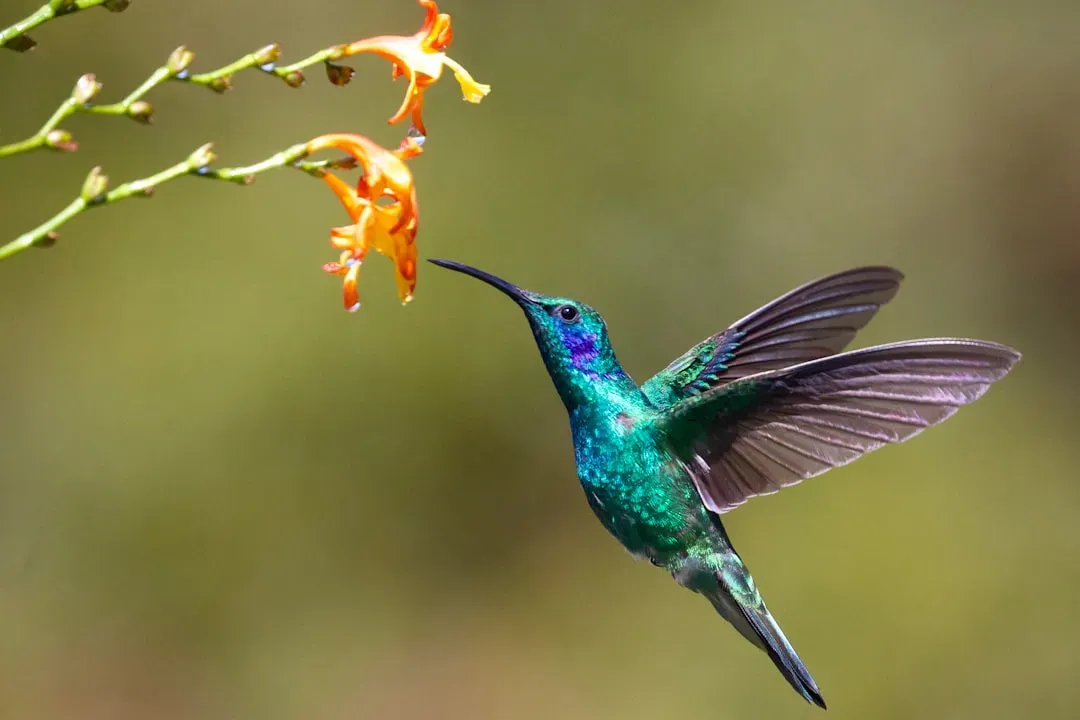
Every single night, the hummingbird you watched zip around your garden essentially shuts itself off. Not the way you fall asleep – more like pulling a plug. Their metabolism crashes by up to 95 percent, body temperature drops from around 105°F to as low as 50°F, and their heart rate plummets from over 1,200 beats per minute down to somewhere between 50 and 180. To anyone who stumbled across one in this state without knowing what it was, the bird would look stone cold dead.
That’s not an exaggeration. Torpid hummingbirds have been found hanging upside down from branches, slumped sideways on twigs, completely unresponsive to sound or movement nearby. People have cupped them in their hands and rushed them inside convinced they’d found a casualty. The whole thing is a survival necessity – at their metabolic rate, a full night of normal sleep would burn through every calorie they have, and they’d starve before sunrise. Torpor is the only reason they’re still alive come morning. The slow, almost cinematic revival at dawn – the tiny body shuddering back to full speed – is one of the most remarkable things in backyard nature, and almost no one ever sees it.
Fast Facts: Hummingbird Torpor
- Heart rate drops from 1,200+ beats per minute in flight to as low as 50 bpm during torpor
- Body temperature can fall nearly 50°F from its normal active level of around 105°F
- Breathing rate plunges from ~245 breaths per minute to just 6 – breathing may briefly stop entirely
- Metabolism slows by up to 95%, burning roughly 50x fewer calories than when awake
- Most hummingbirds wake 1 to 2 hours before sunrise, triggered by tiny wing-muscle vibrations
#2 – They Cross the Gulf of Mexico Alone, Nonstop
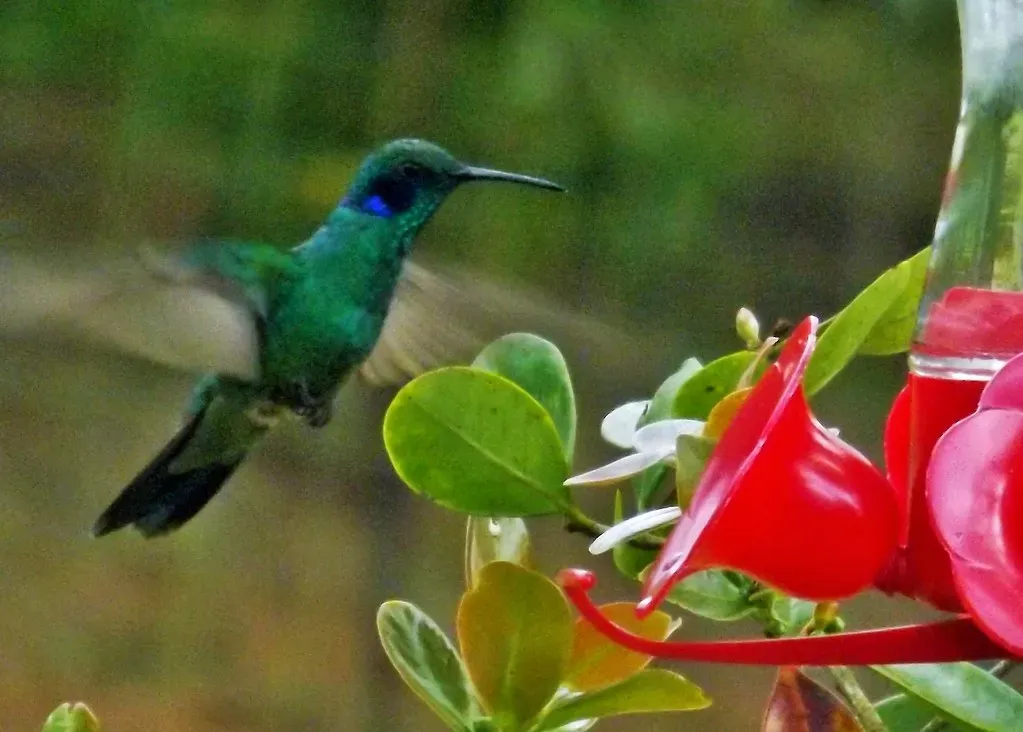
Ruby-throated hummingbirds weigh about as much as a penny. They also routinely fly over 500 miles of open ocean without stopping, sleeping, eating, or drinking. Once, twice a year. Alone. No flock, no leader, no safety in numbers – just one tiny bird reading wind patterns over the Gulf of Mexico and committing to a crossing that takes roughly 18 to 22 hours of continuous flight. They bulk up beforehand, nearly doubling their body weight in fat, and then burn almost all of it before landfall.
What makes this even harder to wrap your head around is that they follow the same invisible routes year after year, returning to the same stopover shrubs, the same backyards, the same feeders. Scientists still don’t fully understand the internal navigation system driving this – there are competing theories involving magnetic fields, star patterns, and landmark memory, but no clean consensus. The bird that showed up at your feeder last May quite possibly just survived a solo transoceanic endurance flight that would physically destroy most other animals its size. It came back to your yard specifically. That’s not random.
#3 – They Fly Backward, Sideways, and Briefly Upside Down
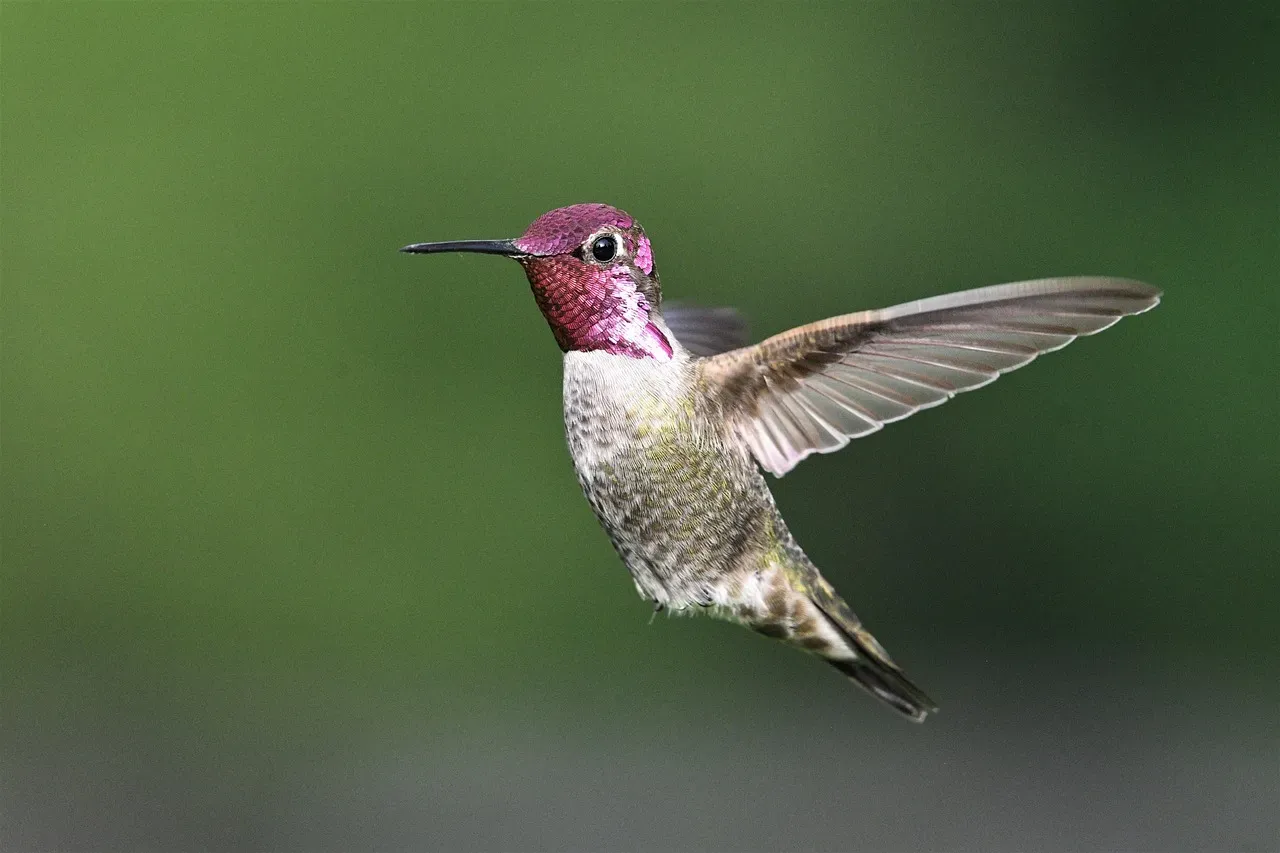
Hummingbirds are the only birds on earth capable of sustained backward flight, and they do it casually, the way you’d reverse a few steps in a hallway. The secret is in a shoulder joint architecture found in no other bird – their wings rotate in a full figure-eight pattern that generates lift on both the upstroke and the downstroke simultaneously. Every other flying bird only gets meaningful lift going one direction. Hummingbirds get it both ways, which is why they can hover motionless, reverse, strafe sideways, and even flip briefly upside down without losing control.
The frustrating thing for anyone who wants to actually watch this is how fast it happens. The aerial acrobatics you’d be most amazed by – the sharp reversals during a chase, the split-second upside-down recovery from a near-collision – play out in fractions of a second at or above eye level. By the time your brain registers something unusual, the bird has already corrected and moved on. Slow-motion video footage of hummingbird flight still surprises ornithologists who’ve studied them for decades. In real time, you’re just watching a blur with an attitude.
#4 – They Wage Relentless, Exhausting Territory Wars
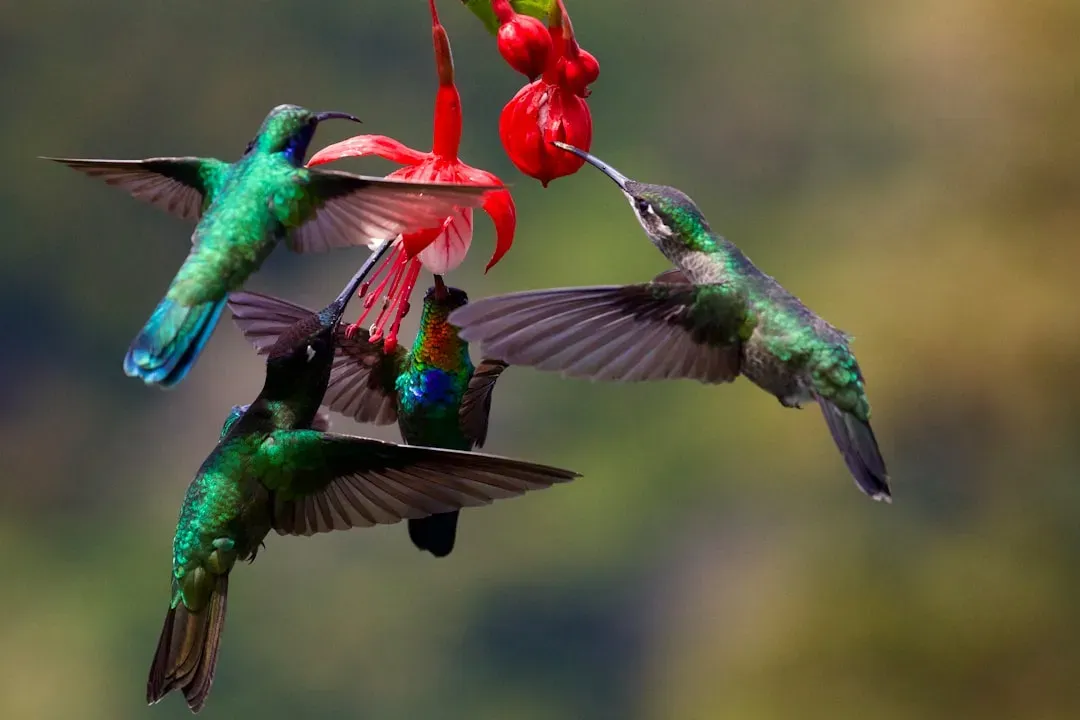
That one hummingbird dominating your feeder isn’t just being greedy. It has mentally drawn a property line around every flower and sugar source in a defined radius, and it will spend a significant portion of its waking life enforcing that boundary against all challengers. The dive-bombs, the high-speed chases, the sharp chittering you hear from across the yard – that’s not play. That’s combat. Beaks get used as weapons. Throat feathers get grabbed. These confrontations happen dozens of times a day.
The social reality underneath all that beauty is genuinely cutthroat. A dominant bird will sit on a high perch with a clear sightline over its territory – almost like a watchtower – and launch interceptions the moment any rival appears. Females are just as aggressive as males when a nest is nearby. Some individuals become so fixated on territorial defense that researchers have observed them spending more energy on patrol and combat than they recover from the resources they’re protecting. It’s irrational, almost compulsive, and it means the peaceful hovering you see at the feeder is constantly interrupted by a private war happening just outside your line of sight.
At a Glance: The Territorial Playbook
- Stage 1 – Warning sounds: Loud, rapid chittering signals the territory is taken
- Stage 2 – Body display: The defender puffs up and flares its gorget to look larger
- Stage 3 – Bluffing charge: A high-speed lunge intended to force retreat without contact
- Stage 4 – Physical pursuit: A full chase, sometimes covering hundreds of yards
- Feeder reality: One aggressive bird can attempt to monopolize an entire row of feeders
#5 – Males Perform Death-Defying Courtship Dives
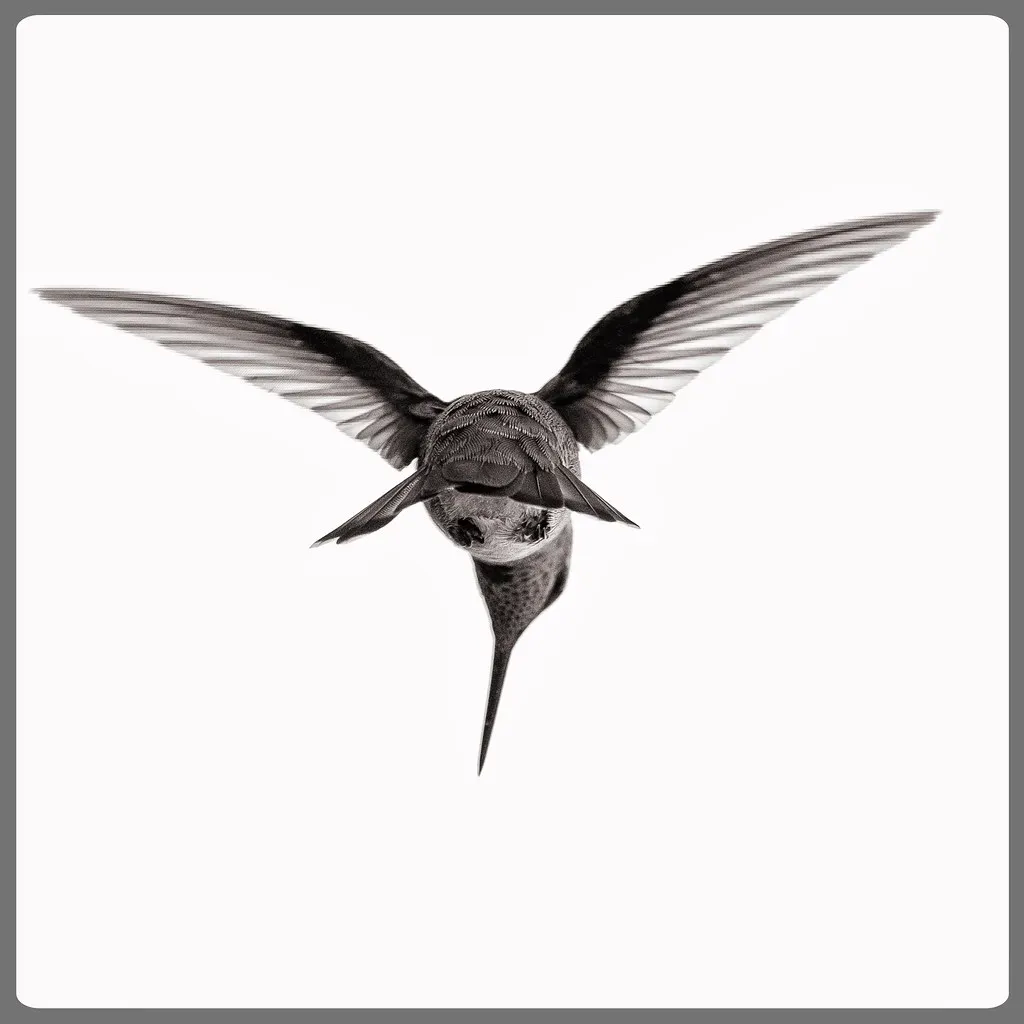
When a male hummingbird wants to impress a female, he doesn’t sing from a branch. He climbs to heights of up to 100 feet, then drops into a steep, screaming U-shaped dive at speeds that can exceed 50 miles per hour – making him, relative to body length, one of the fastest diving animals on the planet. At the lowest point of the arc, specialized tail feathers spread and vibrate against the rushing air, producing a sharp, explosive chirp that carries surprisingly far. Then he pulls up, climbs again, and repeats.
The female watches from a hidden perch, and she is genuinely evaluating. Researchers studying Anna’s hummingbirds documented that females orient their position to maximize the visual impact of the male’s iridescent gorget – the flash of color at the throat – during the dive. She’s not just passively observing; she’s actively judging the geometry of the performance. These displays happen in specific clearings, often at the same location repeatedly, and almost always when no humans are close enough to disturb the ritual. Most gardeners have no idea these aerial performances are happening twenty feet above their compost bin.
#6 – They Build Nests From Spider Silk That Stretch as the Chicks Grow
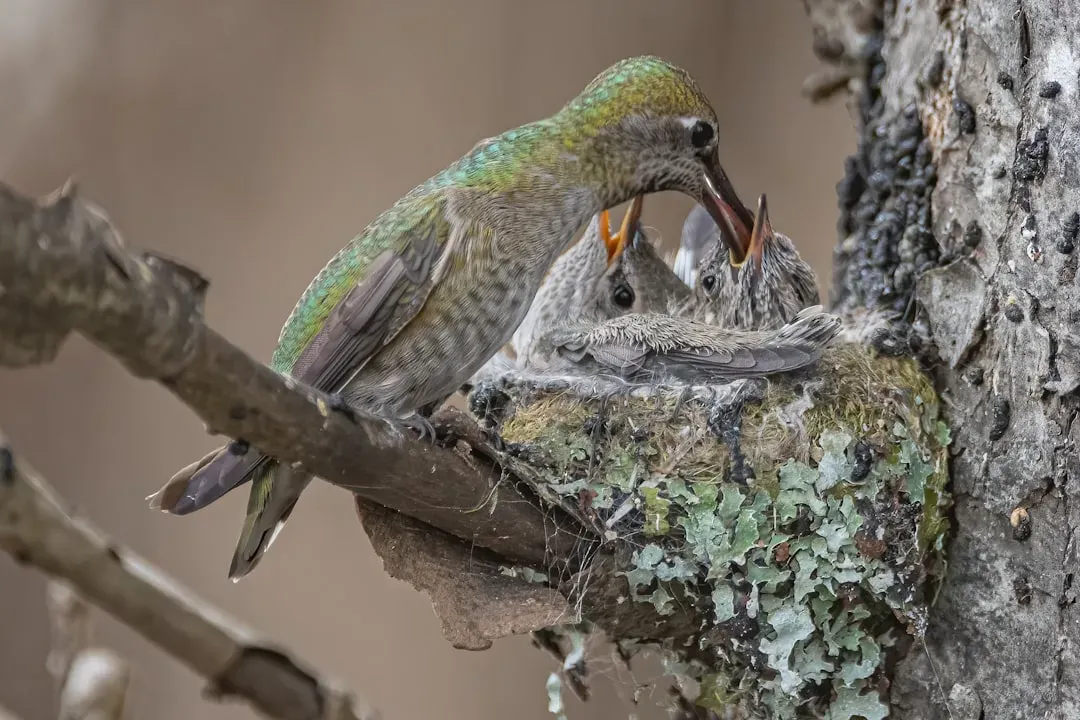
The hummingbird nest is one of the most improbable engineering achievements in the animal kingdom. It starts thimble-sized – roughly 1.5 to 2 inches wide – and the female constructs it almost entirely alone, making hundreds of trips for materials over 5 to 10 days. She uses plant fibers held together with actual spider silk harvested from active webs. The silk isn’t just glue. It’s elastic, and pound for pound it’s considered five times stronger than steel. As the chicks hatch and grow, the entire nest expands to accommodate them without tearing apart, the way a knit fabric stretches. No other common backyard bird builds anything like it.
The exterior gets camouflaged with lichen, moss, and bits of bark pressed carefully into the silk so the whole structure looks like a natural knot on the branch. She’ll place it on a thin, downward-sloping limb or even a wire – spots that feel precarious to us but are nearly invisible to predators scanning from above. Most people walk directly underneath active hummingbird nests without any awareness. Researchers doing nest surveys frequently describe the disorienting experience of spending an hour searching a small area before suddenly seeing one appear right in front of them. The camouflage is that good.
#7 – They Run a Calculated Foraging Schedule Based on Flower Memory
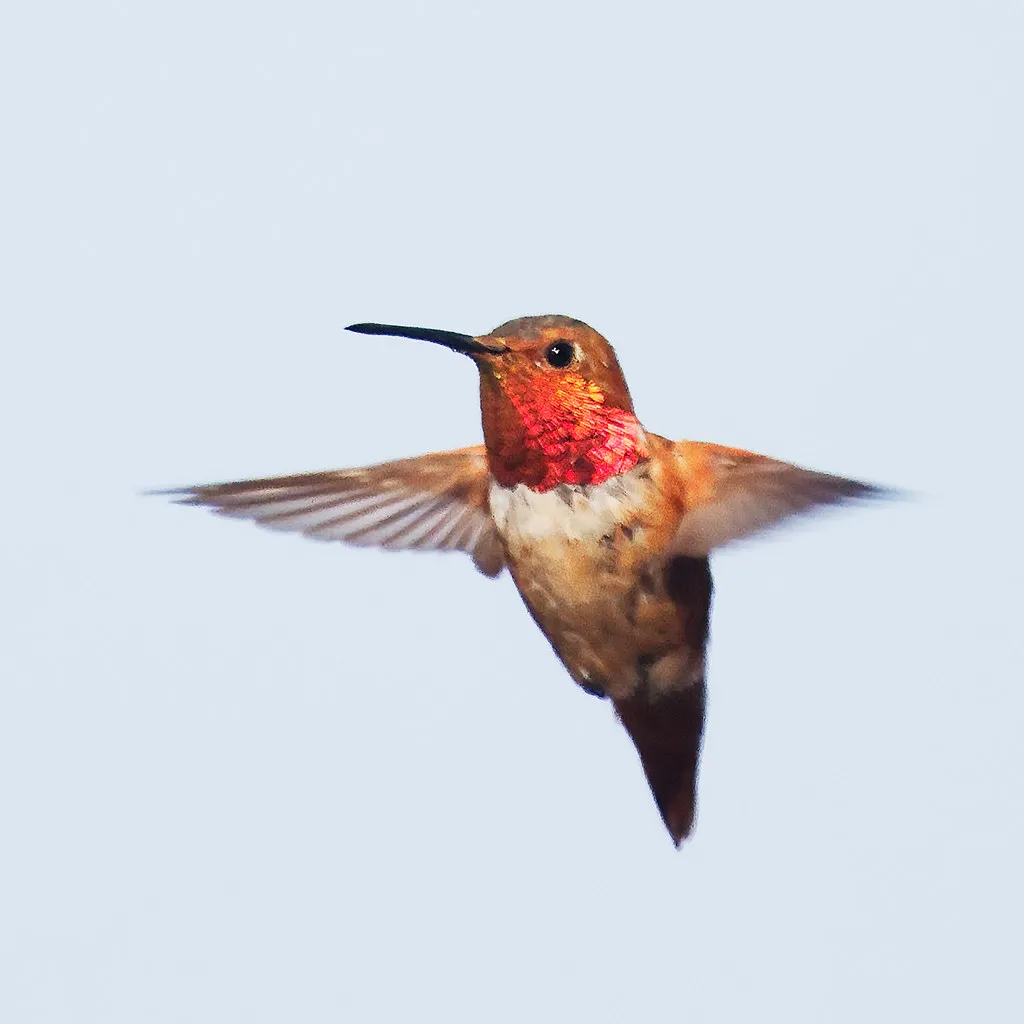
Hummingbirds don’t wander randomly from flower to flower. They maintain what researchers call “trap-lining” – a memorized circuit of individual flowers visited in sequence at calculated intervals based on each flower’s nectar replenishment rate. A hummingbird working your garden has mentally catalogued which flowers refill fastest, in what order to visit them for maximum yield, and roughly how long to wait before returning to each one. This isn’t instinct in the vague sense. It’s specific, updated, location-based memory operating across hundreds of individual plants.
What’s more remarkable is that this mental map persists across years. Banded hummingbirds returning from migration have been documented visiting the same individual feeders and flowers they used the previous season – and adjusting their routes based on what’s currently blooming versus what’s spent. Their spatial memory has been compared favorably to some primates in controlled studies. The bird at your feeder right now isn’t just thirsty. It’s on a schedule, and your feeder is one stop on a precisely optimized route that exists entirely inside a brain smaller than the tip of your finger.
Worth Knowing: What Your Feeder Looks Like to a Hummingbird
- Your feeder is a known stop on a mental route updated daily – not a random find
- The bird likely knows your feeder’s refill schedule better than you think it does
- Flowers that look identical to you may signal very differently under ultraviolet light
- Spatial memory in hummingbirds has been favorably compared to some primates
- Returning migrants often visit the same individual feeders on nearly the same calendar dates each year
#8 – They Hunt Spiders and Steal From Webs
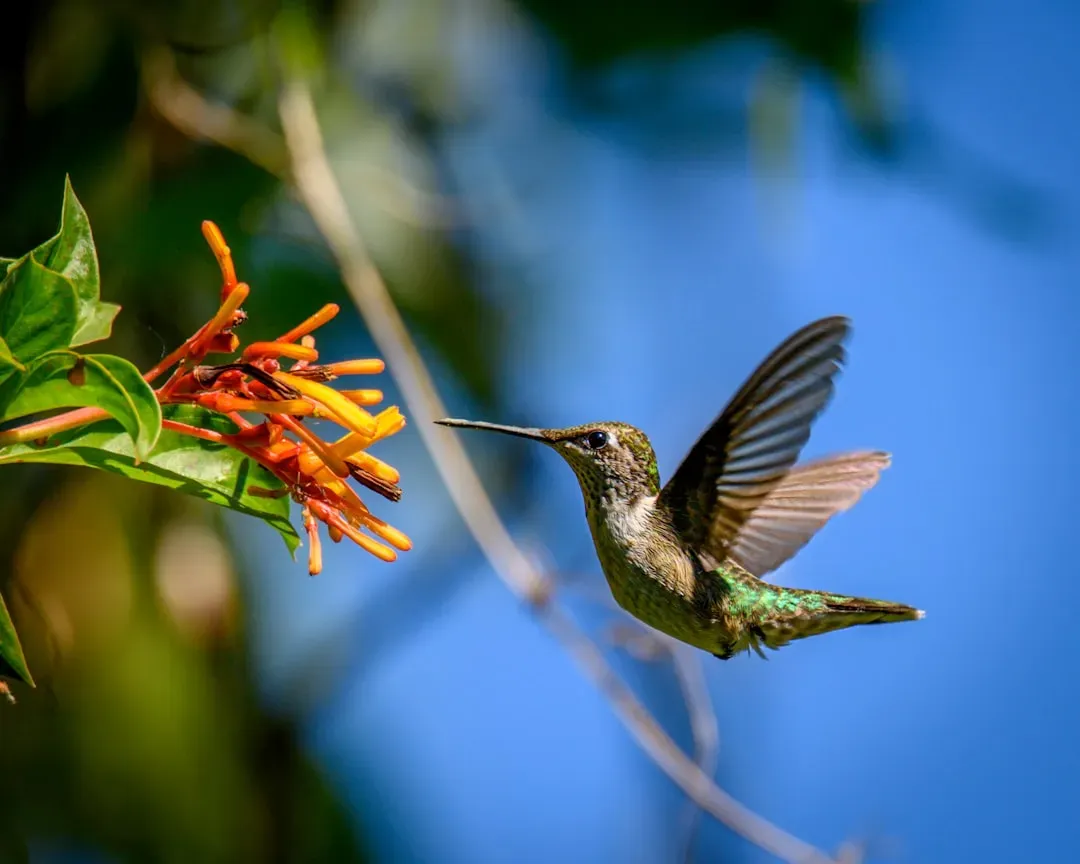
The nectar reputation is accurate but incomplete. Hummingbirds are active predators, and during breeding season especially, insects and spiders make up a substantial portion of their diet – some estimates put protein sources at 25 to 80 percent of intake depending on the season and individual. They hawk flying insects mid-air with the same precision they use at flowers. They pluck spiders directly from webs. They glean tiny invertebrates from the undersides of leaves. That delicate hovering motion you associate with feeding? It works just as well for hunting.
The detail that tends to stop people cold: they use the same long, forked, nectar-lapping tongue to handle prey. A quick flick, a trap, and the insect or spider is gone. This protein intake is non-negotiable – without it, females can’t produce viable eggs, and chicks fed only sugar water don’t survive. The pure-nectar image of the hummingbird is a projection of what we notice most easily. In the dense foliage where no one is watching, there’s a small, efficient hunter working the leaf litter and web lines with the same intensity it brings to your feeder.
#9 – They Recognize Individual Humans and Will Fly Right at Your Face
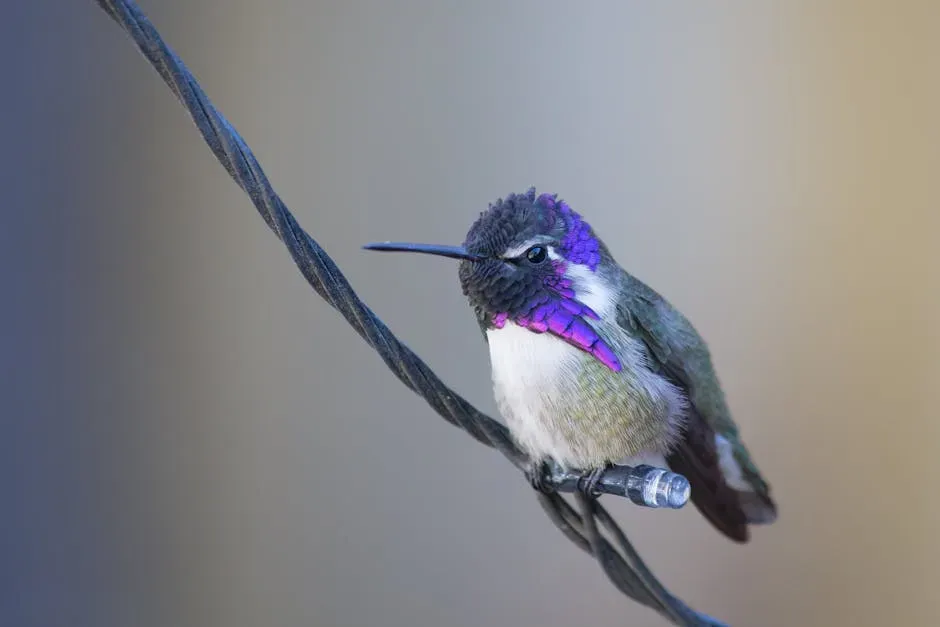
If a hummingbird has ever hovered two inches from your nose, locked eyes with you, and held there for a long, unsettling moment before darting off – that wasn’t random. Hummingbirds can recognize and distinguish individual human faces, and they use that ability practically. A person who reliably fills a feeder gets filed as a resource. A person who approaches the nest gets filed as a threat. The bird hovering at your face is making an active assessment, not performing a cute moment for your Instagram.
There’s a boldness to this behavior that surprises most people, given how small and delicate the birds appear. Some individuals become genuinely persistent – following a specific person around the yard, hovering near an empty feeder while the person is in view as if demanding service, repeatedly approaching the same face day after day. Researchers studying recognition in birds have noted that hummingbirds show unusually strong individual identification relative to their brain size. The shyness people expect simply isn’t there once the bird has decided you’re useful. You’ve been catalogued. Act accordingly.
#10 – They Bathe in Mist, Dew, and Wet Leaves Instead of Birdbaths
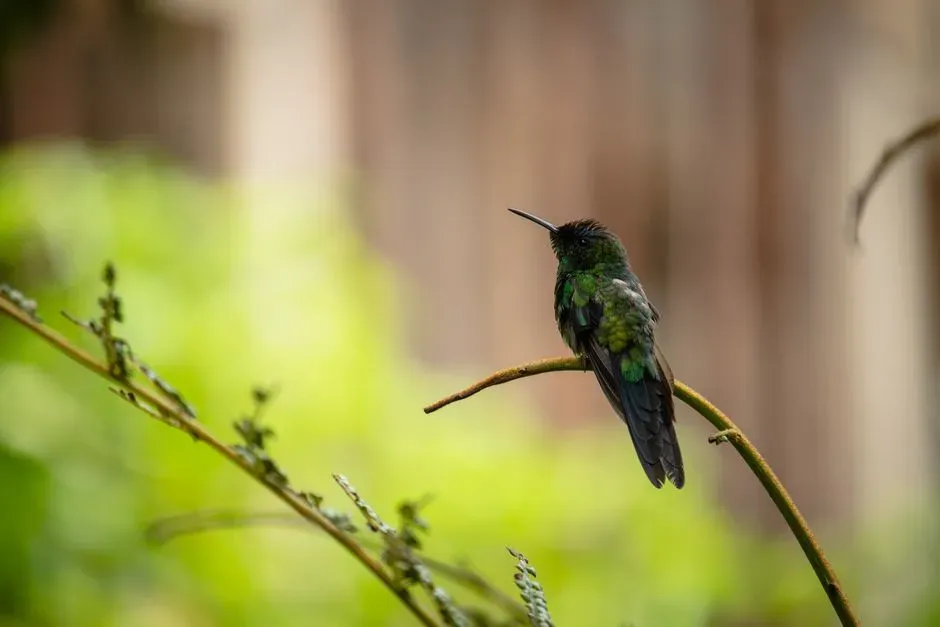
Put out a traditional birdbath and a hummingbird will probably ignore it. Their bathing method is adapted to their flight mechanics: they prefer to fly directly through fine mist, rub their bodies against rain-soaked leaves, or hover into the spray of a garden sprinkler. Some have been observed landing briefly in damp grass and shimmying to work moisture through their feathers before lifting back off. It looks playful. It’s also functionally critical – clean, well-maintained feathers are survival equipment for a bird that depends on aerodynamic precision.
The behavior tends to happen in the early morning when dew is still heavy, or right after rainfall, which means it almost always plays out when the yard is quiet and no one is paying attention. Gardeners who’ve installed misting attachments near their gardens sometimes describe hummingbirds becoming almost ritualistic about the mist – arriving at predictable times, working through the spray repeatedly, then perching nearby to preen before moving on. It’s one of the more intimate behavioral windows you can get into their daily routine, and it’s hiding in plain sight every dewy morning.
#11 – Their Wings Make Communication Sounds, Not Just That Familiar Hum
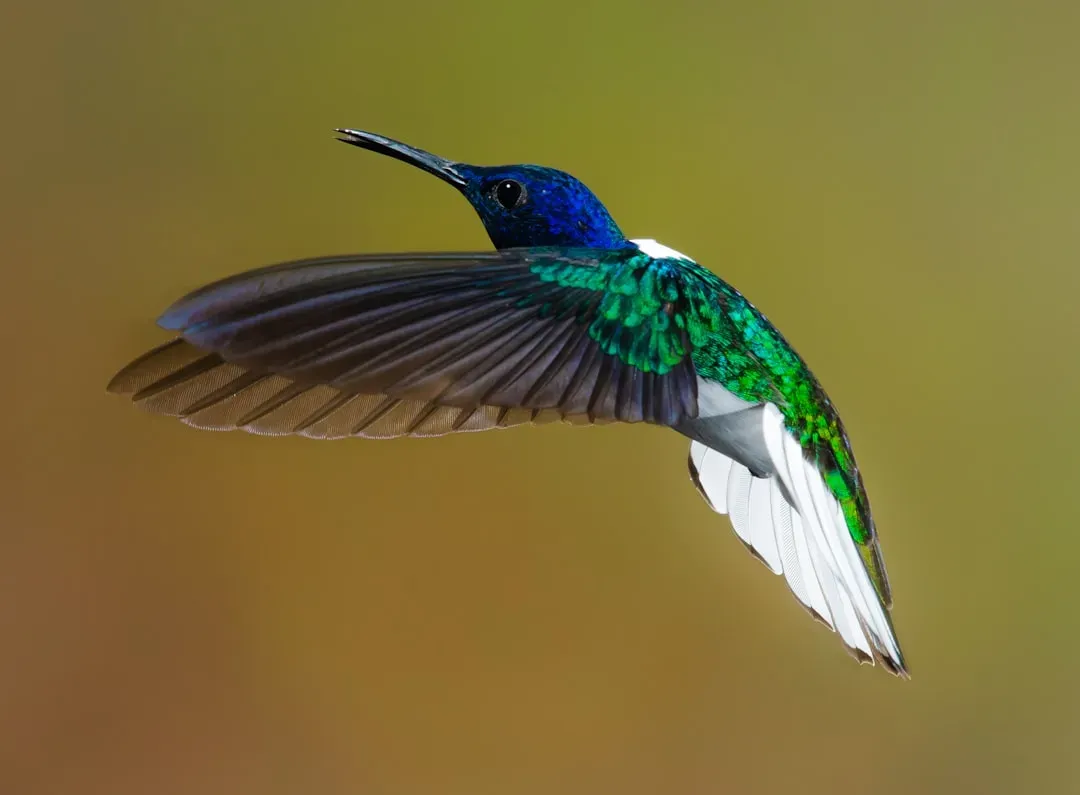
The hum that gives hummingbirds their name is the baseline – wing beats running at 70 to 80 times per second in level flight, producing that familiar low drone. But the acoustic range goes well beyond that. During dives, wing beat frequency can spike dramatically higher. And crucially, specific sounds during courtship displays in several species don’t come from the voice box at all – they’re produced by air rushing through specialized outer tail feathers that are shaped and stiffened for exactly this purpose.
Anna’s hummingbirds were the subject of a well-documented study showing the males’ courtship dive chirp is generated entirely by tail feather acoustics, not vocalization. The bird’s throat is essentially silent during the loudest part of the display. This means what sounds like a call is actually an instrument – a feather-based sound effect deployed at a precise moment in the dive for maximum impact on the watching female. Most gardeners hear the hum and think they understand what they’re hearing. The full acoustic picture is considerably stranger and more deliberate than it appears.
#12 – They Live Almost Entirely Solitary Lives – and That’s by Design
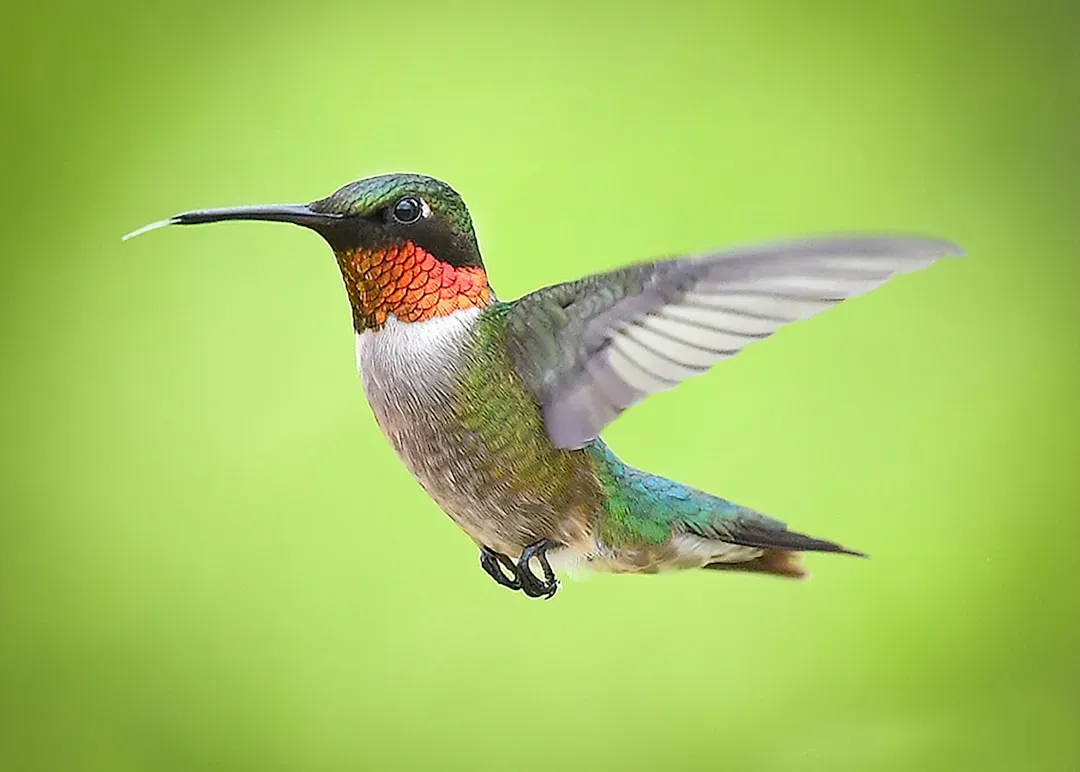
Hummingbirds don’t flock. They don’t roost together. They don’t have social hierarchies or cooperative feeding groups. Outside of the brief, often hostile encounter that constitutes mating, each hummingbird operates as a completely independent unit – its own territory, its own map, its own nightly torpor spot, its own migration timetable. Two hummingbirds in the same yard aren’t neighbors. They’re rivals tolerating proximity at the edge of their respective boundaries, and often not even that.
This solitary architecture runs so deep that males typically provide zero parental care after mating – in many species, the male actively chases the female away from his territory immediately after the encounter. There’s no pair bond, no shared nest, no coordinated defense of offspring. Everything about their biology is optimized for self-sufficiency in a way that’s unusual even among birds. The garden full of hummingbirds people imagine – multiple birds visiting peacefully, some kind of shimmering community – is almost entirely a fantasy. What’s actually happening is a collection of individual survival operations that occasionally overlap at the same food source, usually with conflict.
#13 – Females Raise the Young Completely Alone, Under Impossible Pressure
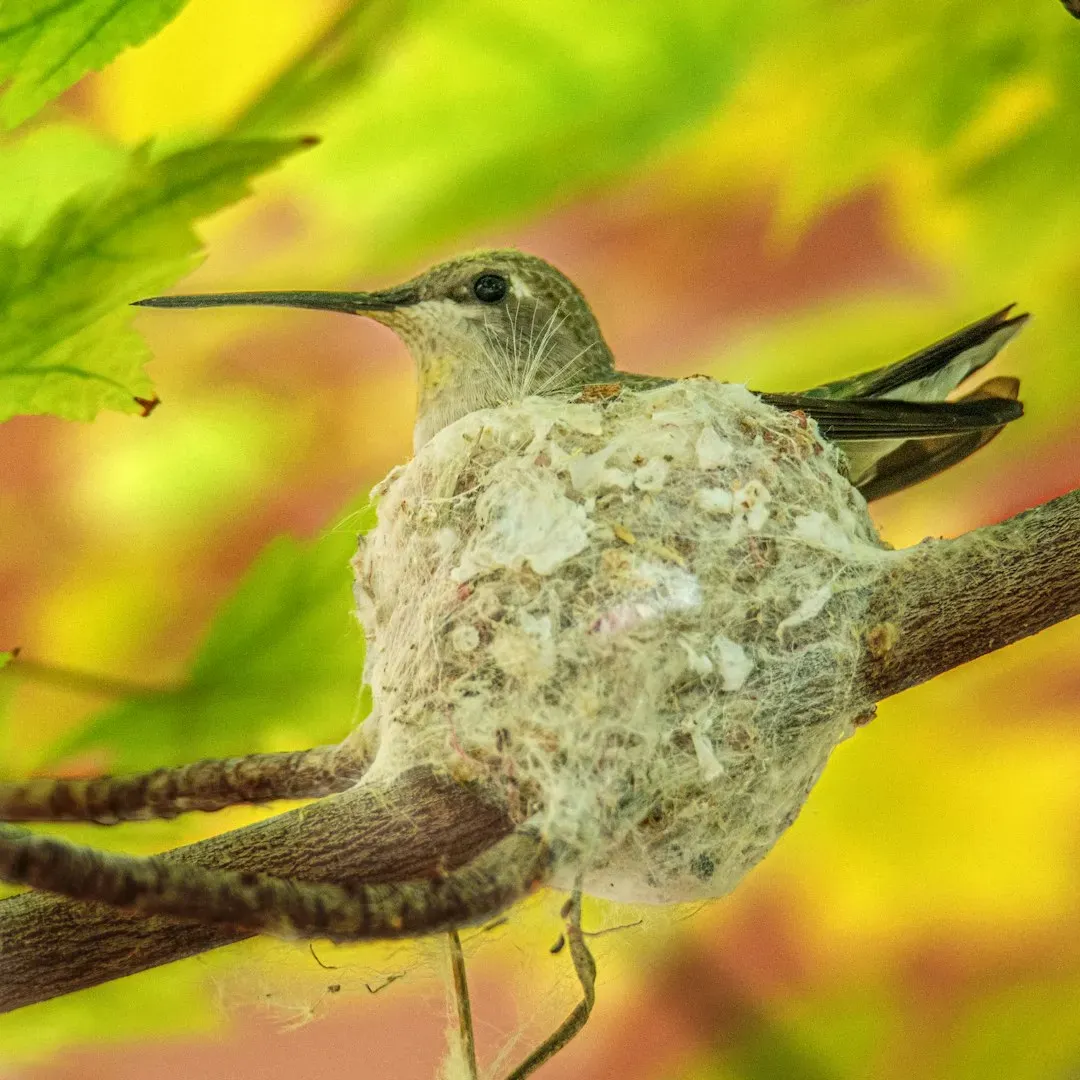
After the male disappears, the female builds the nest from scratch, incubates two eggs roughly the size of navy beans, and then feeds the chicks by hovering over the nest and pumping regurgitated nectar and insect matter directly into their open beaks – a process she repeats hundreds of times each day. She does all of this while simultaneously defending the nest site, maintaining her own feeding schedule to stay alive, and watching for predators. There is no help coming. This is the full picture of hummingbird parenthood for roughly half the species involved.
The metabolic math of solo parenting at hummingbird scale is brutal. A nursing female needs to sustain her own energy demands – already among the highest of any warm-blooded animal by body weight – while also producing enough food to double and then triple the body mass of two chicks in a matter of weeks. Researchers who monitor nests describe the female’s daily routine as essentially continuous: feed, hunt, feed chicks, defend perimeter, repeat, with a torpor shutdown overnight that has to be timed carefully enough that the chicks don’t get too cold. That tiny bird you see as a garden decoration is running one of the most demanding solo parenting operations in the vertebrate world.
Quick Compare: What the Female Does vs. What the Male Does
| Task | Female | Male |
|---|---|---|
| Nest construction | ✅ All of it | ❌ None |
| Egg incubation | ✅ All of it | ❌ None |
| Feeding the chicks | ✅ Hundreds of times daily | ❌ None |
| Territory defense (nest) | ✅ Alone | ❌ None |
| Migration | ✅ Solo | ✅ Solo – departs first |
#14 – They See Ultraviolet Light and Navigate a World Invisible to Us
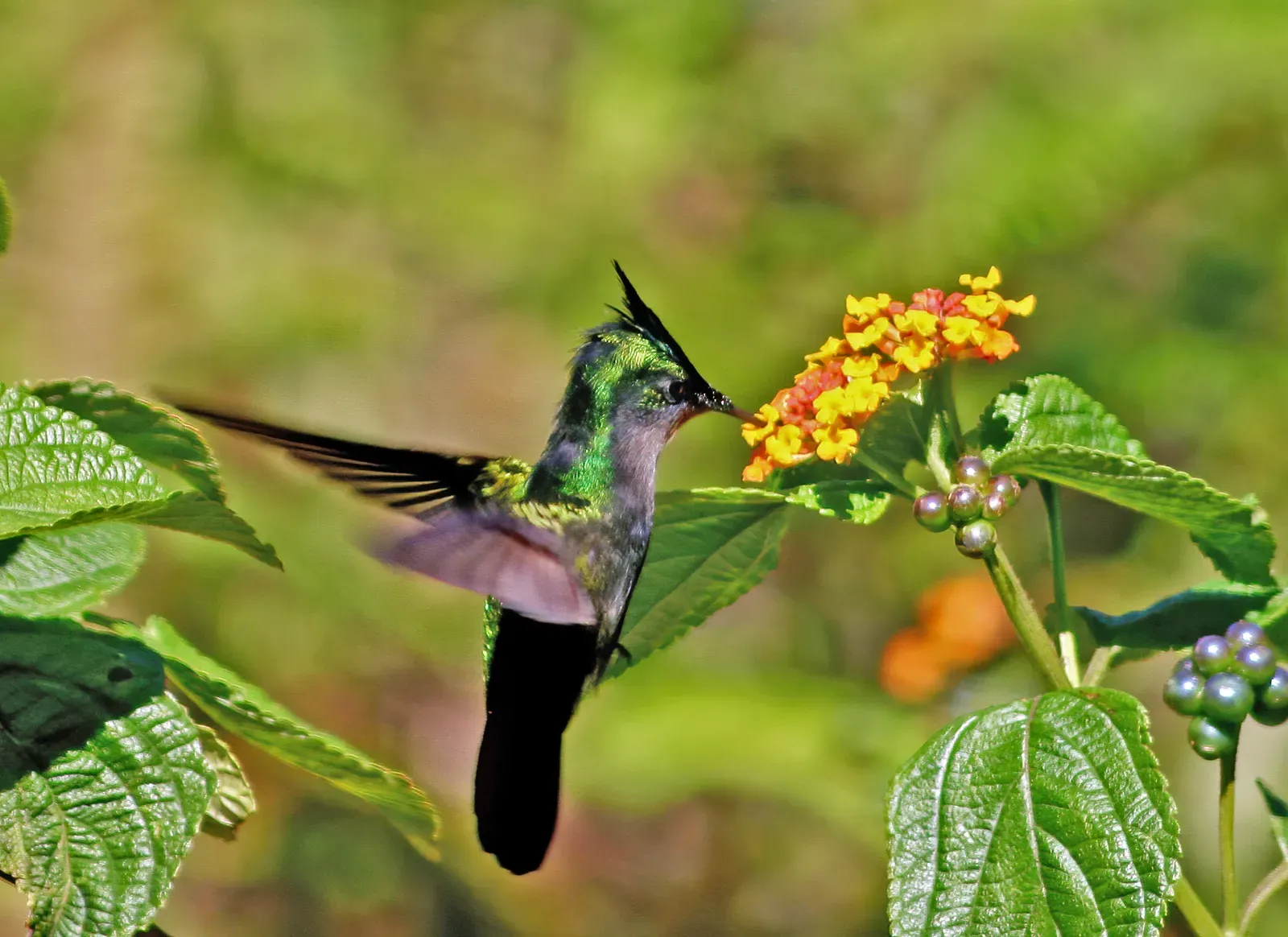
Hummingbird eyes contain a fourth type of color receptor that humans don’t have, giving them sensitivity into the ultraviolet spectrum. Many flowers that appear plain or uniformly colored to us display elaborate UV patterns – nectar guides, landing marks, contrast signals – that are essentially neon signs to a hummingbird. The flower your bird just visited may have looked like a simple red bloom from where you were standing. From the bird’s perspective, it was a lit-up advertisement with directional arrows.
At the same time, hummingbirds have almost no sense of smell – they navigate this visually rich, UV-saturated world entirely through sight and memory, with scent contributing almost nothing. Their reality is simultaneously more vivid and more strange than ours in ways that are genuinely hard to imagine. It also explains some practical things: why feeder color and placement matter more than most people realize, why certain flower varieties get ignored despite seeming identical to us, and why a hummingbird can appear to make what looks like a random choice that is actually a precise response to visual information we simply cannot see. They’re not living in your garden. They’re living in a different version of it entirely.
Here’s the thing about hummingbirds that I keep coming back to: we’ve spent decades treating them as decorative – feeder trinkets, garden accessories, the living equivalent of a wind chime. But everything the research actually shows points to creatures operating at a level of complexity, independence, and physical extremity that most of us never credit them with. A bird that enters near-death every night and revives itself, crosses an ocean alone twice a year, raises offspring in total isolation, and perceives a world layered with colors we can’t see – that’s not a decoration. That’s something genuinely wild sharing your backyard, running its own life on its own terms, mostly out of sight. The least interesting thing about a hummingbird is how pretty it is.

- Your Dog Understands More Than Just Your Words – Here’s How - July 31, 2026
- 10 Surprising Benefits of Having Birds in Your Backyard - July 31, 2026
- The Crow’s Mind: How These Birds Use Tools Better Than Some Humans - July 31, 2026