
Most people assume a deer freezing in the beam of your headlights is just a dumb animal making a terrible decision. It’s one of the most repeated jokes in wildlife folklore – the hapless, blank-eyed creature standing in the road while two tons of metal hurtles toward it. But here’s the thing: that deer isn’t being stupid. It isn’t frozen with awe. And it almost certainly can’t even properly see you. The reality involves million-year-old survival code, an eye structure that has no human equivalent, and a neurological response so sophisticated that scientists study it to better understand human trauma.
What you’re about to read flips everything you thought you knew about that locked, glassy stare. Some of it is genuinely unsettling. One detail – buried in section six – implicates the very headlights flooding new cars right now. And by the end, the punchline everyone’s been laughing at for decades starts to feel a lot less funny.
#1 – Deer Eyes Are Built for a World That Never Had Headlights
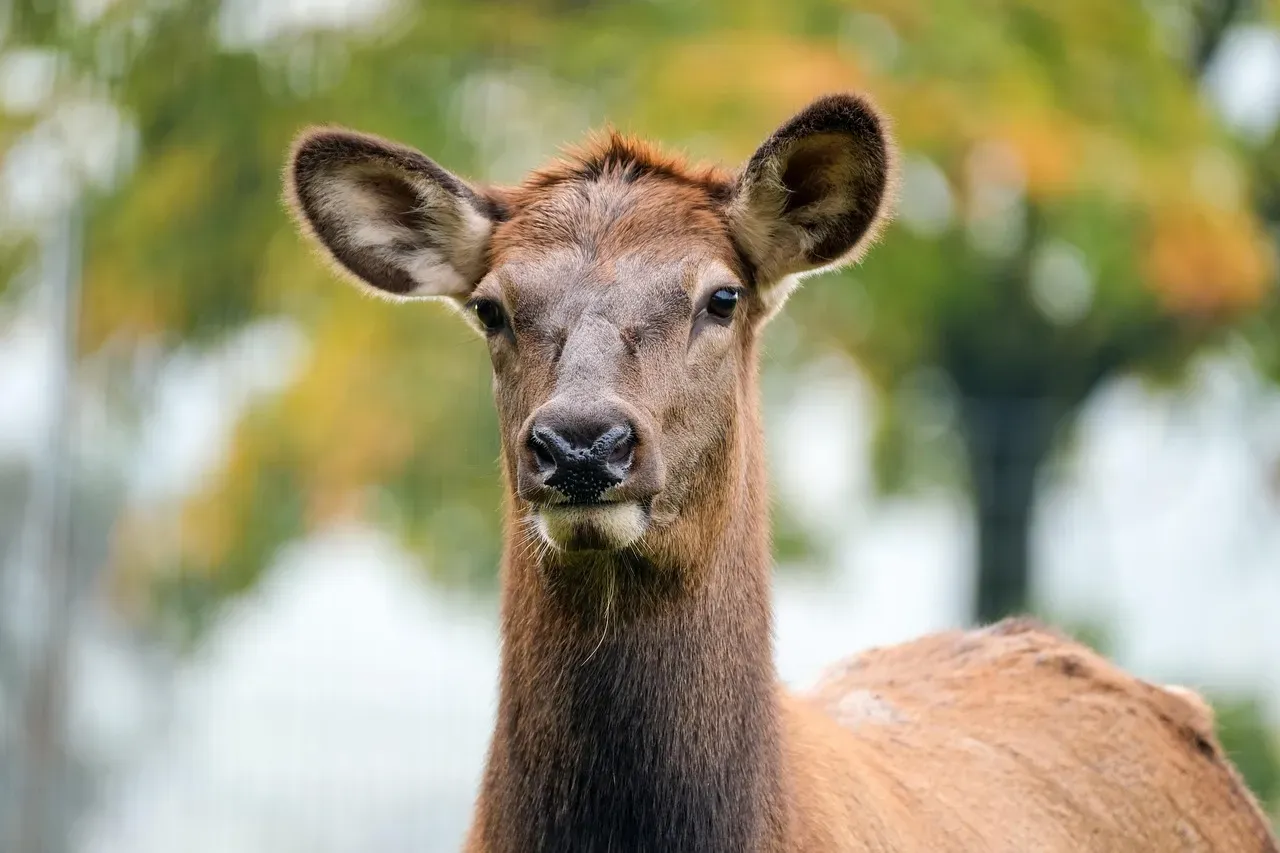
Deer are crepuscular animals – their entire visual system is precision-engineered for the low-light margins of dusk and dawn, when forests shift from gold to shadow and predators begin to move. This is not a flaw or an accident of nature. It is a masterpiece of biological design, honed over millions of years in conditions where seeing better than your predator in near-darkness was the difference between survival and becoming something’s dinner.
Unlike human pupils, a deer’s pupils are elliptical and can dilate so dramatically they nearly cover the entire width of the eye, pulling in every available photon of dim light. That design makes them extraordinary creatures of shadow. The problem is it was never built for a four-lane highway at midnight. When those pupils are wide open and a pair of modern headlights swings around a bend, the deer’s visual system doesn’t adapt – it gets absolutely overwhelmed. Think of it as someone pointing a stadium floodlight directly into your eyes from five feet away in a pitch-black room. Your brain wouldn’t know what to do either.
Fast Facts
- Deer are crepuscular – naturally most active at dawn and dusk, not in full darkness or full daylight.
- Their elliptical pupils can dilate to cover nearly the full width of the eye, maximizing dim-light absorption.
- Deer have a higher concentration of rod cells (night-vision cells) than humans, but fewer cone cells (color and detail cells).
- They also lack a UV filter in the eye – meaning they can detect ultraviolet light that humans simply cannot see.
- Deer collisions occur 14 times more frequently in the two hours after sunset than before it.
#2 – There’s a Biological Mirror Inside Their Eyes, and That’s What You’re Actually Seeing
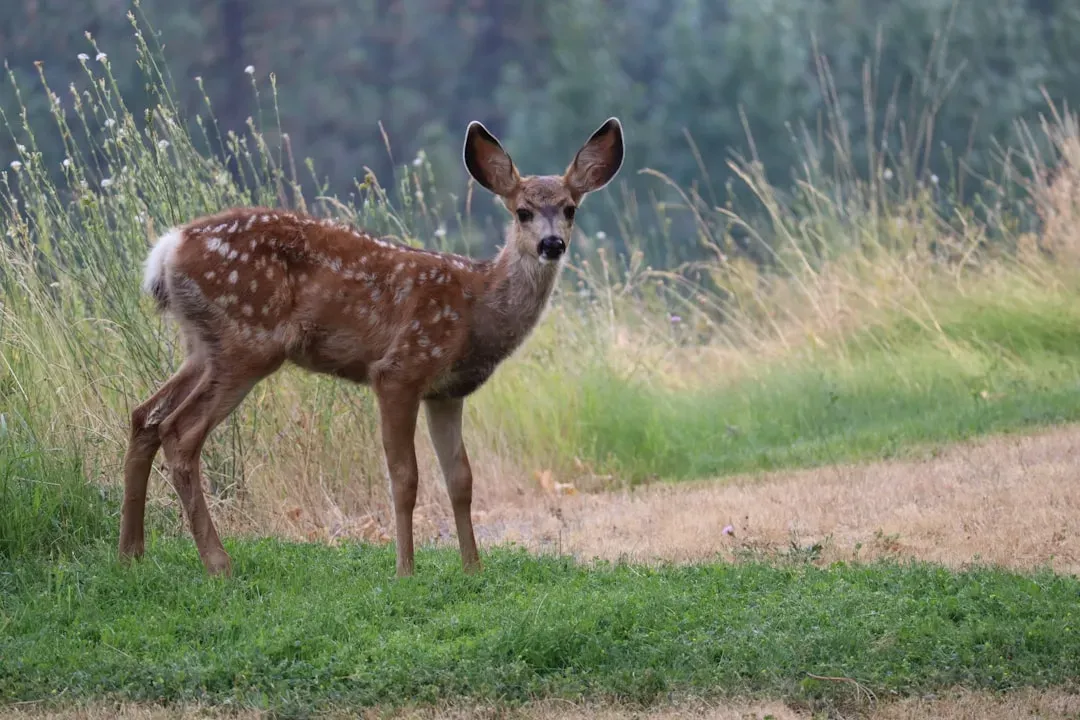
Here’s the piece most people driving past a frozen deer have absolutely no idea about. Behind the deer’s retina sits a reflective membrane called the tapetum lucidum – a layer shared by cats, dogs, and other animals built for low-light life. That ghostly, glowing stare you see from behind the wheel? It isn’t the deer watching you. It’s your own headlights bouncing straight back at you from a biological mirror. You’re essentially staring at yourself.
The tapetum lucidum works by reflecting light back across the retina a second time, effectively doubling its exposure to incoming light – some estimates suggest it can boost light sensitivity by up to 50%. Under normal low-light conditions, this is a genuine superpower. But car headlights are not normal low-light conditions. That same reflective layer that lets a deer navigate a dark forest floor turns a headlight beam into a cascading flood of reflected glare with nowhere to go. The more sensitive the eye, the more catastrophic the overload. The deer’s greatest visual asset becomes its biggest liability the moment your high beams hit.
At a Glance: The Tapetum Lucidum
- What it is: A reflective membrane sitting behind the retina – Latin for “bright tapestry.”
- How it works: Light that isn’t absorbed on the first pass bounces back through the retina for a second chance at detection.
- Sensitivity boost: Studies suggest up to 50% more light reaching photoreceptors compared to eyes without it.
- Who has it: Cats, dogs, deer, horses, cattle, many fish, some sharks – not humans.
- The irony: Under headlights, this night-vision superpower becomes the source of complete visual overload.
#3 – That “Stare” Is Actually Temporary Blindness, Not Fascination
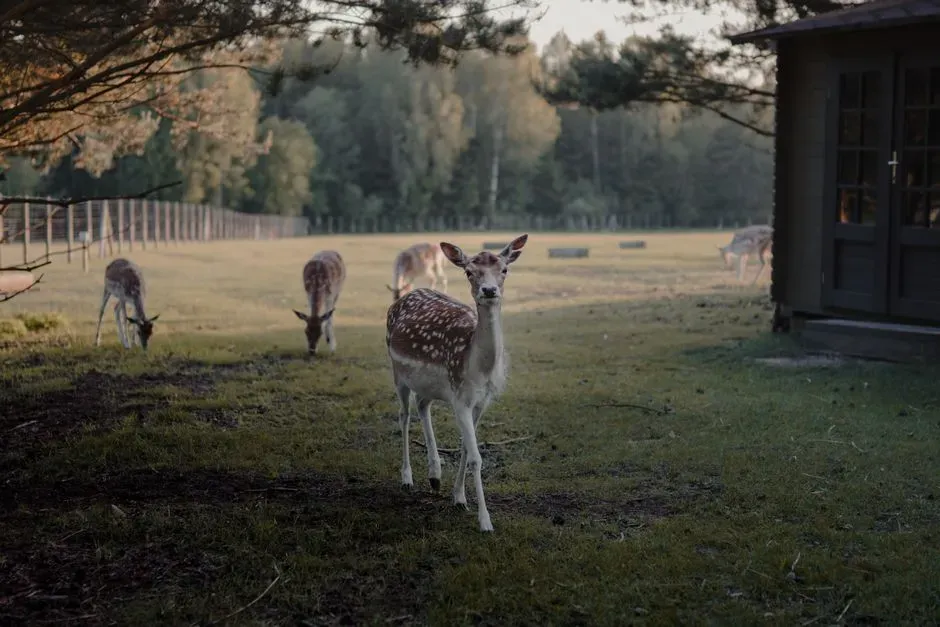
This is where most people’s assumptions collapse completely. The deer isn’t staring at you – it genuinely cannot see you. Those wide-open pupils, already tuned for dim light and backed by a reflective membrane, are slammed with a sudden burst of high-intensity light they have no mechanism to filter. The result is immediate, total glare blindness. What looks from outside the windshield like a calm, curious gaze is actually a visual system that has momentarily crashed.
Picture waking up in a completely dark room and someone firing a camera flash directly into your open eyes from two feet away. For a few disorienting seconds, you can’t see anything – just a burning, shapeless white. You wouldn’t sprint in any direction. You’d stop moving until your vision returned. That is exactly what the deer is doing, and it is the only rational response available to an animal that has been suddenly struck blind. The freeze isn’t a choice made from ignorance. It’s the only logical option left when you can’t see the thing that’s threatening you.
#4 – The Freeze Response Is Ancient Survival Programming, Not Panic
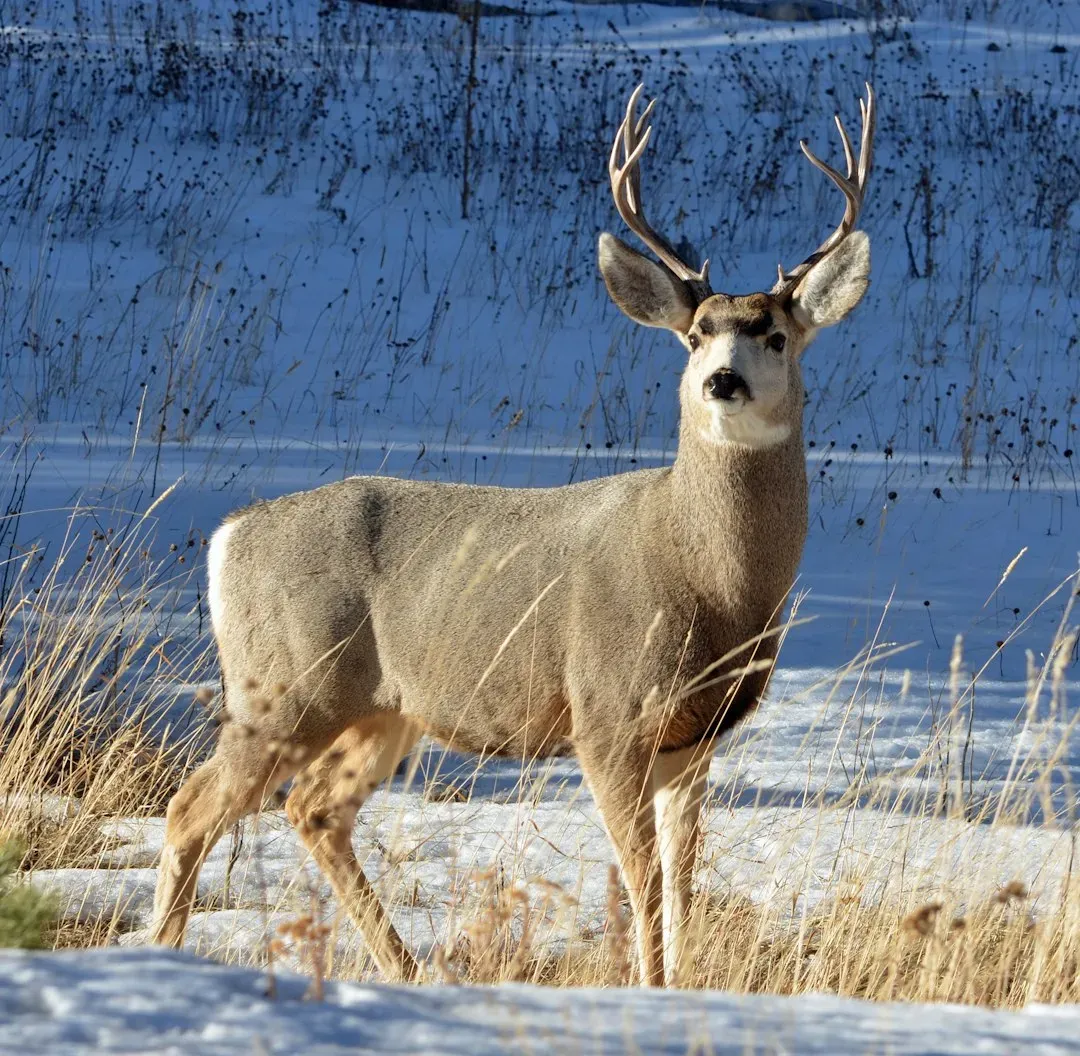
Even if the blindness cleared instantly, the deer still might not run – and that surprises people more than anything else. The answer lies in evolutionary programming that predates the existence of roads by millions of years. In the wild, the most dangerous predators a deer faces – wolves, mountain lions, coyotes – are all motion-triggered hunters. They track movement. A deer that goes completely still, blending into the visual noise of a dark treeline, becomes genuinely difficult to locate. Stillness, in that context, is not weakness. It is strategy.
Freezing also gives the deer a critical window to process other sensory data. With vision compromised, it falls back on hearing and smell – both of which are dramatically sharper than ours – to assess whether the threat is moving closer, whether there’s a safe escape route, and how fast it needs to commit to one. The tragedy on the modern road is that a strategy refined over millennia to defeat apex predators is completely useless against a vehicle doing 60 mph. The deer’s instinct isn’t broken. It’s just running a program written for a world that no longer exists around it.
Worth Knowing: What Freezing Actually Buys the Deer
- Predator confusion: Motion-triggered hunters like wolves and mountain lions lose tracking ability when prey goes still.
- Sensory reboot: Freezing lets the deer redirect to hearing and smell – both far sharper than human equivalents.
- Threat assessment time: The pause creates space to identify an escape route before committing to a direction.
- Energy conservation: Stillness preserves explosive muscle energy for a burst sprint if flight becomes viable.
#5 – Tonic Immobility: When the Brain Shifts Into an Entirely Different Gear
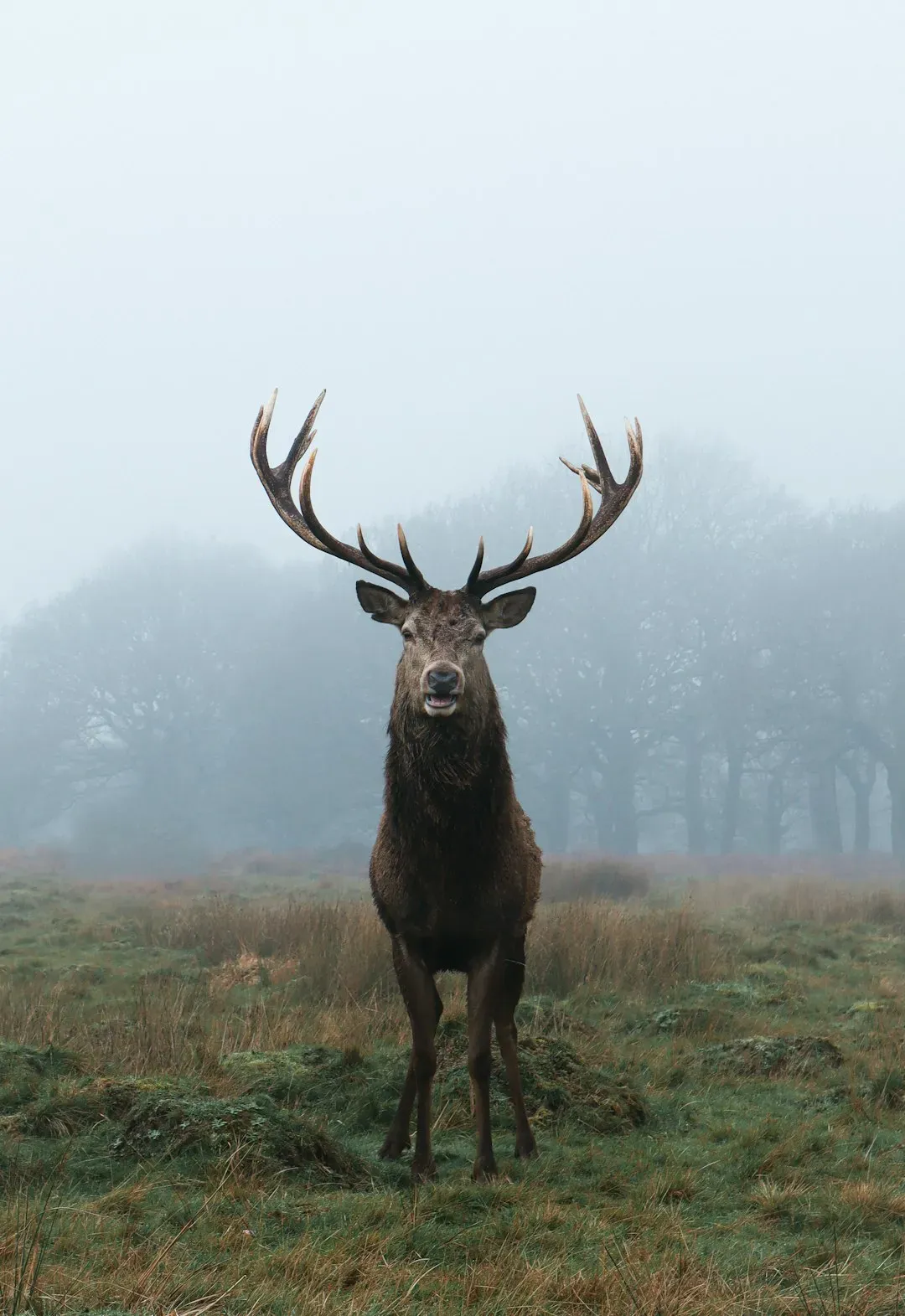
There’s a deeper layer to this freeze that most wildlife coverage skips entirely. When faced with blinding headlights, deer can enter a state called tonic immobility – not merely choosing to stand still, but a measurable physiological shutdown triggered by the perception of an inescapable threat. This is the nervous system making a calculated last-resort decision: if you can’t fight and you can’t flee, collapse into stillness so completely that you disappear.
The numbers behind this response are genuinely staggering. White-tailed deer fawns can drop their heart rate from roughly 155 beats per minute down to 38 beats per minute – a reduction of nearly 75% – and sustain that state for up to two minutes. The parasympathetic nervous system essentially hits a hard brake on the animal’s entire physiology. Researchers who study tonic immobility in animals have noted striking parallels to the freeze response observed in human trauma survivors. The deer isn’t clueless. Its entire body is executing a last-resort emergency protocol that evolution coded into its DNA long before the first road was ever paved.
The stress response in wildlife is not fundamentally different from what we see in humans facing perceived inescapable danger. The biology is older than any of us.
Dr. Temple Grandin, animal behavior researcher
#6 – Modern LED Headlights Are Making This Problem Measurably Worse
Here’s the detail almost nobody is talking about, and the science on it is quietly damning. The automotive industry has spent the last decade aggressively transitioning to LED headlights – approximately 86% of new vehicles now ship with them standard. Compared to traditional halogen lights, which emit more warm, orange-red light at longer wavelengths, LED headlights skew heavily toward short-wavelength blue light. That distinction matters far more than most drivers realize.
Deer photoreceptors have peak sensitivity in the blue range of the visible spectrum – the exact range that LED headlights now produce in abundance. In practical terms, the headlights flooding new vehicles off the assembly line right now are precisely tuned to the wavelengths that hit deer hardest. Researchers have found that headlights expressing longer wavelengths would likely reduce the severity of glare-induced blindness in deer, potentially preventing a meaningful number of the roughly 2.1 million annual deer-vehicle collisions in the US. The automotive industry has been notably slow to act on that finding. Brighter, bluer, and more dangerous to wildlife – those three things arrived together in the same upgrade.
Quick Compare: Halogen vs. LED Headlights and Deer Vision
- Halogen light wavelength: Orange-red range (620–750 nm) – a spectrum deer eyes are less sensitive to.
- LED light wavelength: Blue range (380–500 nm) – the exact peak sensitivity of deer photoreceptors.
- Deer cone sensitivity peaks: 450–460 nm (blue) and 537 nm (yellow-green) – aligning almost perfectly with LED output.
- Market penetration: 86% of new vehicles now ship with LED headlights as standard.
- Research verdict: Longer-wavelength headlights would likely reduce visual overload in deer – yet the industry has not acted on this.
#7 – The Real-World Cost of a Frozen Deer Is Staggering

People treat “deer in the headlights” as a punchline. The data tells a brutally different story. Roughly 2.1 million deer-vehicle collisions occur in the US every year, producing more than $10 billion in economic damage and accounting for approximately 59,000 human injuries and 440 human deaths annually. To put that in perspective: deer kill more Americans each year than sharks, alligators, bears, and venomous snakes combined. The joke has a body count.
And if you encounter a frozen deer on the road, the instinct to swerve hard is one of the most dangerous responses you can choose – more people are killed or seriously injured swerving to avoid deer than by hitting them directly. The counterintuitive but scientifically grounded response is this: brake steadily, turn off your headlights, and use your horn. Removing the headlight beam gives the deer’s overwhelmed visual system a chance to reboot. The horn triggers the motion-based escape reflex that the freeze response suppressed. You’re not surrendering the road. You’re reversing the exact conditions that caused the animal to shut down in the first place.
Fast Facts: Deer Collisions by the Numbers
- ~2.1 million deer-vehicle collisions occur in the US annually.
- $10 billion+ in total economic losses each year; average repair claim in high-risk regions hit $5,620 in 2024.
- October–December account for 41% of all annual collision claims – peak is November, during deer mating season.
- West Virginia is the riskiest state; drivers there face 1-in-40 annual odds of an animal collision claim.
- Do NOT swerve. Staying in your lane and braking firmly is safer than swerving, which risks hitting other vehicles or losing control.
- Deer whistles don’t work. No scientific evidence supports car-mounted deer deterrent whistles.
The Uncomfortable Conclusion Nobody Wants to Say Out Loud
The deer frozen in your headlights is not dumb, suicidal, or mesmerized. It is temporarily blind, neurologically overwhelmed, and executing a survival program that was never designed for asphalt and internal combustion. Its elliptical pupils, tapetum lucidum, and tonic immobility reflex form a package of evolutionary brilliance – one that is simply, brutally mismatched to a world of six-lane highways and high-intensity blue LEDs.
Here’s the opinion worth sitting with: we have spent decades laughing at an animal for “being stupid” while simultaneously designing headlights that are scientifically optimized to overwhelm its vision, failing to update road infrastructure in high-collision corridors, and treating 440 annual human deaths as an acceptable background statistic. The deer isn’t the problem. It’s doing exactly what millions of years of survival pressure built it to do. We built the road through its habitat, aimed the blinding light at its face, and then made the animal the punchline. If automakers can engineer adaptive high beams that dim for oncoming drivers, they can absolutely explore wavelength adjustments that stop turning deer eyes into a liability. The question is whether anyone with the power to change it will bother to care.

- 15 Little-Known Facts About DNA That Control More Than You Think - August 10, 2026
- 10 Things Cats Never Forget About Their Owners - August 10, 2026
- 8 Ways Cats Show They're Worried About You - August 10, 2026