
Most people scatter some birdseed, maybe hang a feeder, and assume the birds that show up are just passing through – strangers borrowing the yard for a season. But a handful of species are doing something far more deliberate. They’re choosing your yard. Bonding with one partner. And coming back to the exact same branch, nest box, or pond edge year after year like they signed a lease you never knew about.
What makes these birds genuinely remarkable isn’t just the loyalty – it’s the specificity. Not the same general neighborhood. The same tree. The same ledge. The same weathered platform over the same backyard water. Some of these pairs will outlast your car, your roof renovation, and possibly your mortgage. Here are the ten backyard birds that take commitment to a level most humans would find humbling.
#10 – American Crows Form Unbreakable Family Ties Most Birders Completely Miss
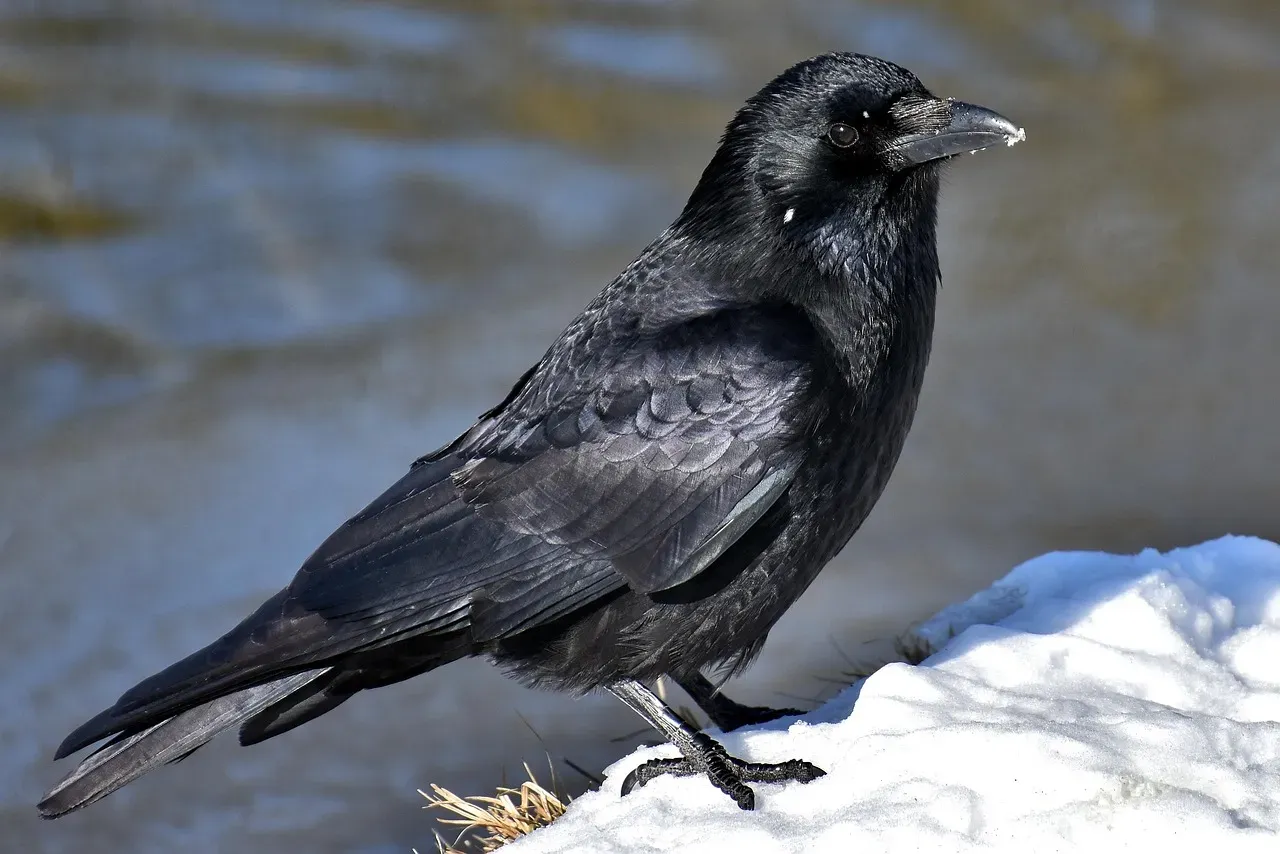
Crows don’t just mate for life – they build something closer to a dynasty. Bonded pairs return to the same backyard territory and often the same nesting tree year after year, sometimes for decades. What sets them apart from nearly every other bird on this list is that their offspring from previous years frequently stay behind to help raise the next brood. Your yard doesn’t just host a pair of crows. It hosts a family operation.
Their site fidelity runs so deep that disrupting a crow nest can trigger years of targeted harassment from the entire extended family. These birds can recognize individual human faces – research has confirmed it – and they hold grudges with impressive consistency. Threaten their nest once and they’ll remember your face, your walk, even your hat. Earn their trust, though, and you’ve quietly gained one of the most intelligent, watchful, and loyal presences a backyard can have.
Fast Facts
- American crows are socially monogamous cooperative breeders – pairs form large family groups that stay together for many years.
- Family units can include up to 15 individuals, with offspring from prior seasons staying on to help raise younger siblings.
- Studies confirm crows can recognize and remember individual human faces – and pass that information to other family members.
- Their brain-to-body ratio is comparable to that of great apes, giving them problem-solving intelligence estimated at the level of a 7-year-old child.
- Crow intelligence includes tool use, strategic thinking, and the ability to communicate through distinct vocal dialects.
#9 – Mourning Doves Choose the Same Perch and Keep Coming Back Every Spring
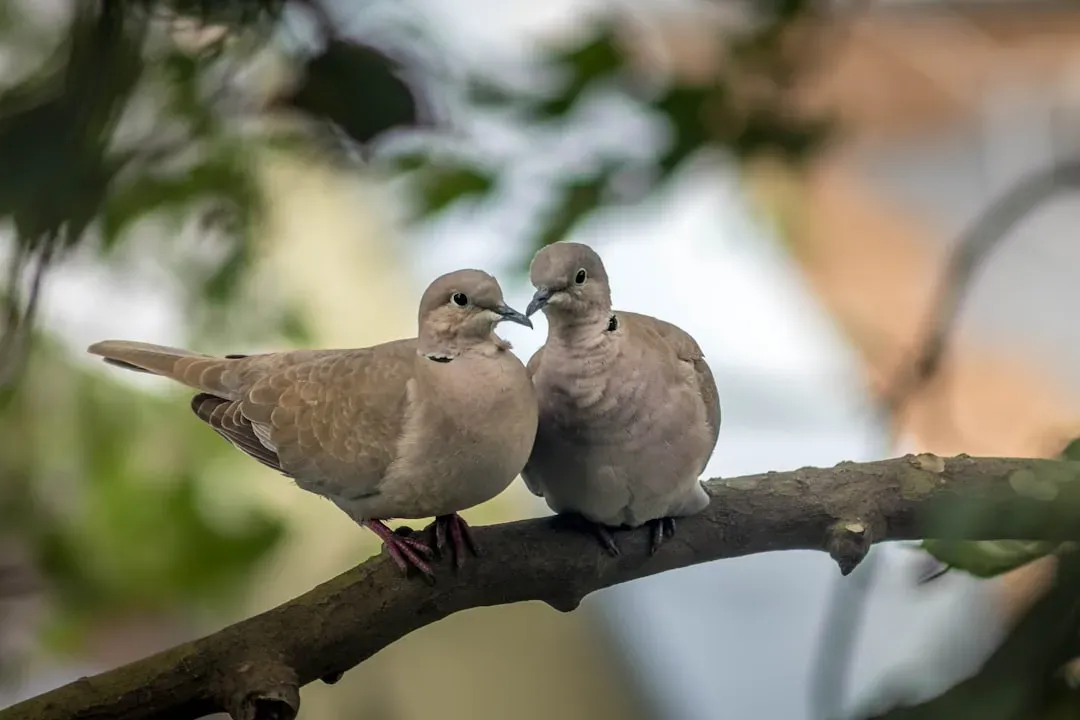
Mourning doves carry a reputation as gentle, almost melancholy birds – and their mating behavior matches that quiet loyalty. Bonded pairs return to the same low branch, platform, or feeder ledge season after season, often rebuilding on the same flimsy nest structure they used the year before. At dawn, paired doves coo to each other in a call-and-response that becomes as predictable as the season itself once a pair has settled in your yard.
What surprises most people is how durable these bonds are even after failure. A nest lost to rain, wind, or a predator doesn’t break the pair – they simply rebuild, often in the same spot. The male courts the same female again, she accepts, and the cycle continues. Their “divorce rate” is remarkably low precisely because they don’t abandon what works. A reliable feeder in your yard isn’t just a food source to them – it’s a landmark that anchors the relationship.
#8 – Canada Geese Treat Your Pond Like Inherited Property
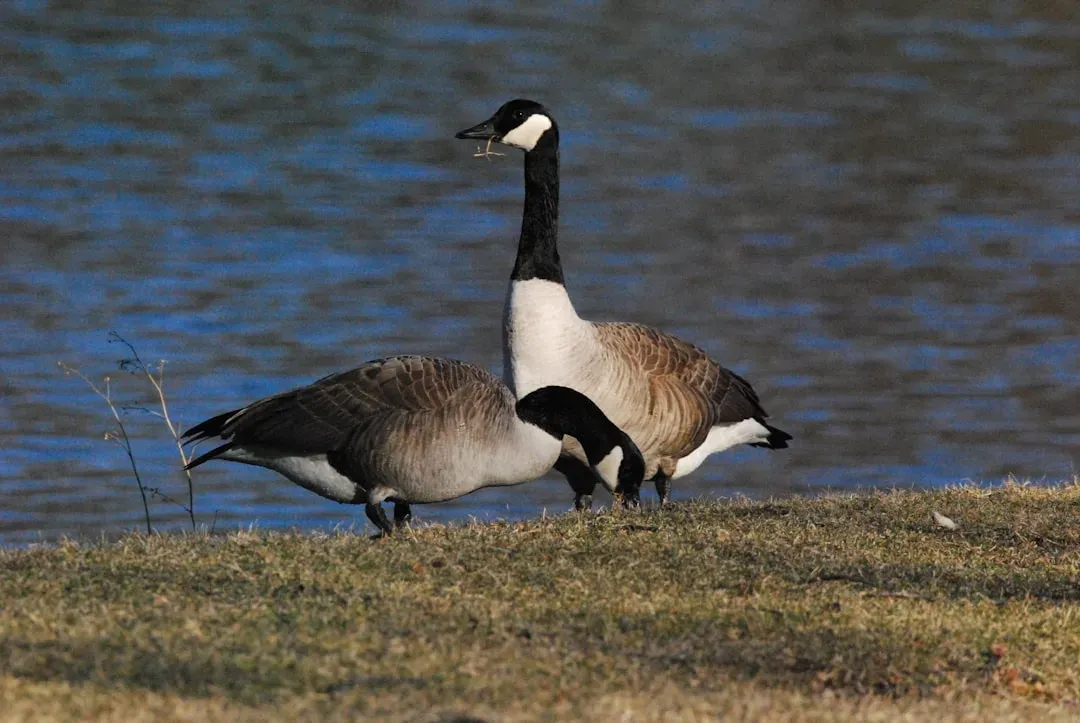
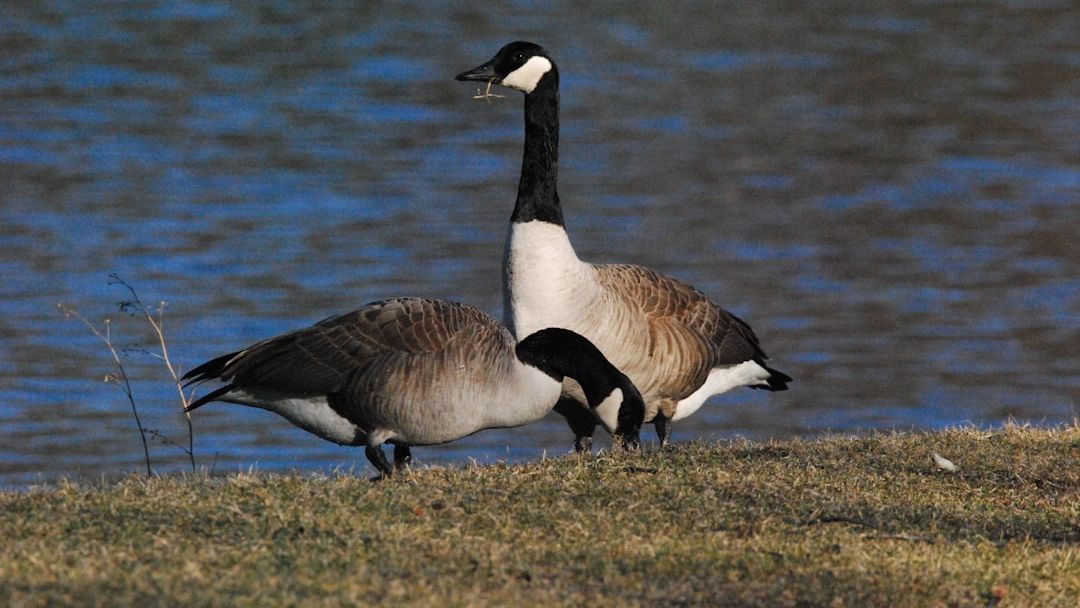
Canada geese have a reputation problem. They’re loud, territorial, and aggressively protective of their space – which is exactly why their lifelong pair bonds are so easy to overlook. But bonded pairs return to the same backyard pond, drainage basin, or yard-adjacent water feature with the kind of certainty that feels almost personal. The female selects the nest site; the male guards it like he owns the deed. They raise their goslings together in the same spot, and then they leave for winter – and come back to the exact same patch of grass the following spring.
The numbers behind their loyalty are genuinely striking. In established pairs, the “divorce” rate sits below five percent – and most separations happen only after repeated breeding failures. A Canada goose pair that successfully raises goslings in your yard one spring has a better than 95 percent chance of returning together the next year. That’s not wandering wildlife. That’s a resident family with strong opinions about your lawn.
At a Glance
- Pair bond: Lifelong; divorce rate below 5% in successful breeders.
- Nest site: Female selects and returns to the same elevated or water-adjacent spot annually.
- Clutch size: 4 to 9 eggs, laid one every 1 to 2 days; incubation takes 28 to 30 days.
- Guard duty: The male stands watch continuously while the female incubates – no days off.
- Post-hatch: Goslings are taken to water almost immediately after hatching and raised communally.
#7 – Barn Owls Reuse the Same Nest Box for a Decade or More
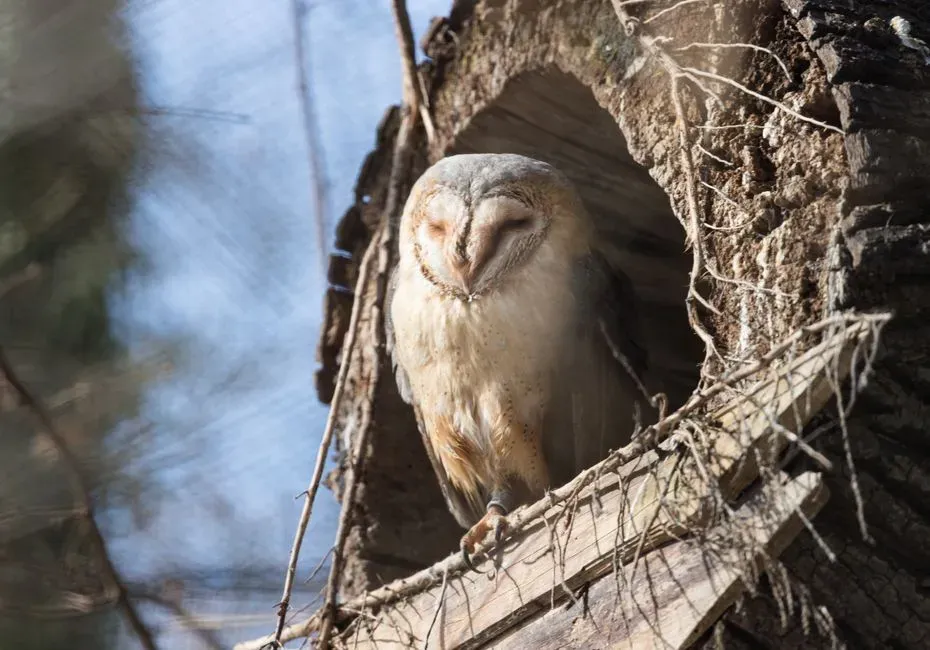
Put up a barn owl nest box in the right spot and you’re not just attracting a visitor – you’re potentially hosting the same bonded pair for the next ten to fifteen years. Barn owls form stable partnerships and return to the identical box or barn crevice with extraordinary consistency. The female often stays close to the site year-round while the male hunts the familiar surrounding territory, learning every fence line, field edge, and rodent runway by heart.
Their commitment to a single site is one of the strongest of any bird in North America. Documented cases of pairs occupying one nest box for over a decade aren’t rare – they’re almost expected in undisturbed habitats. For anyone willing to install a proper box and leave it alone, barn owls offer one of the most reliable return arrangements in backyard birding. And the side benefit – natural rodent control across the surrounding area – is something no trap or poison can replicate.
#6 – Ospreys Rebuild on the Same Platform Every Single Year
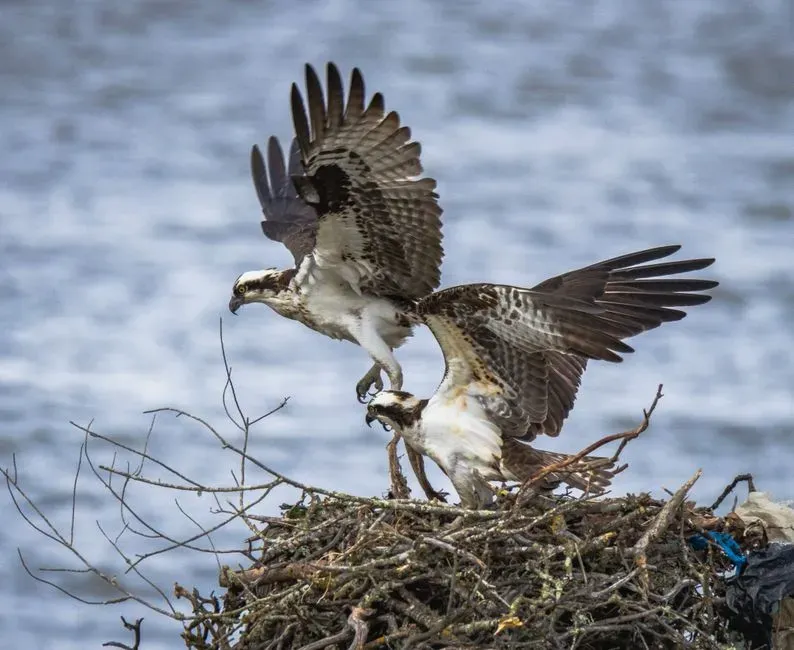
Ospreys are not subtle birds. Their nests are massive, their arrivals are loud, and their territorial displays are hard to miss. Bonded pairs return to the exact same platform, pole, or dead-tree crown near water each spring, often traveling thousands of miles from their wintering grounds in Central and South America to land within feet of where they nested the year before. They repair the existing structure, add new sticks and grass, and get back to work like no time passed at all.
What makes ospreys especially compelling is the way they split and reunite. The male and female often migrate separately and overwinter in different locations – yet they both return to the same nest site on overlapping schedules, arriving within days of each other year after year. The nest becomes the anchor of the relationship. One famous osprey female returned to the same nest at a Scottish loch for 24 consecutive years. Some platforms have supported the same pair, or successive generations of the same lineage, for twenty years or more. If you live near open water and install a proper osprey platform, you’re not just building a bird structure. You’re potentially starting a family legacy.
Quick Compare: Osprey Loyalty by the Numbers
- Migration distance: Some individuals travel over 160,000 miles in a lifetime of seasonal journeys.
- Solo travel: The male and female migrate independently – yet converge on the same nest each spring.
- Nest return rate: A Massachusetts platform study found approximately 95% of nesting pairs returned to breed in subsequent years.
- Nest growth: Pairs add material annually; established osprey nests can weigh up to 400 pounds.
- Site fidelity: Ospreys also return to the same stopover roosting trees during migration – not just the nest itself.
#5 – Bald Eagles Claim the Same Nest Tree and Add to It Every Year
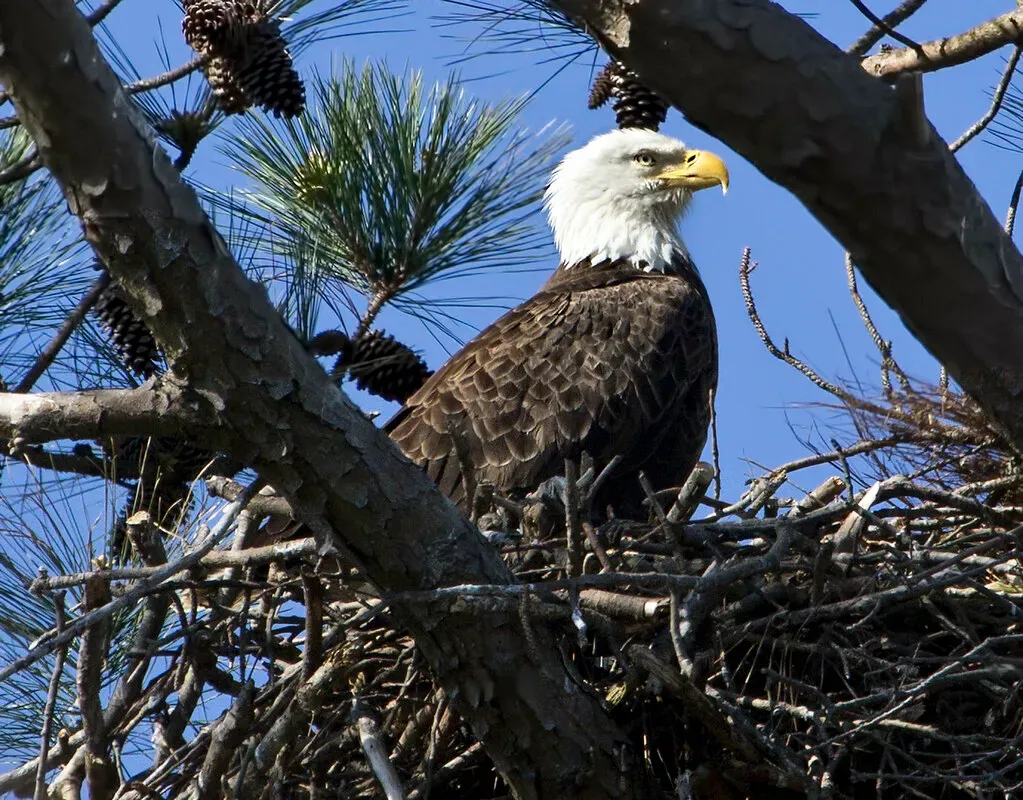
Bald eagles don’t just mate for life – they build monuments to it. Bonded pairs return to the same nest tree season after season, adding sticks, branches, and soft material each year until the structure becomes genuinely enormous. The largest recorded bald eagle nest – found in St. Petersburg, Florida – measured 9.5 feet wide, 20 feet deep, and weighed nearly 6,000 pounds. This isn’t casual habit. It’s deliberate investment in a place that has proven itself worth returning to.
The pair briefly separates during winter, sometimes ranging hundreds of miles apart, but they converge back on the same nest tree in early spring with reliable consistency. Their site fidelity is among the highest of any North American raptor – one nest in Vermilion, Ohio was used continuously for 34 years before the tree finally gave way under the weight. In backyards or rural properties near large bodies of water, a towering conifer or cottonwood that hosts an eagle nest isn’t just a tree anymore. It’s the center of a partnership that may well outlast the people watching it.
Eagles mate for life, which from a human perspective is both admirable and a little sobering.
David Attenborough
#4 – Mute Swans Guard Their Yard With a Devotion That Borders on Fierce
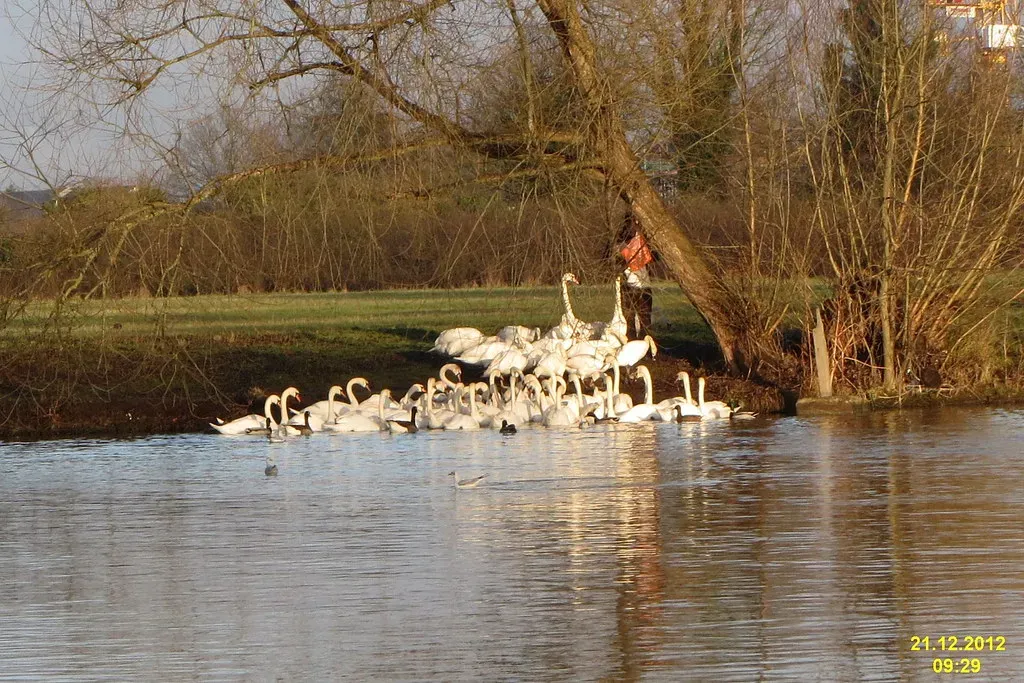
Mute swans are one of the most visually striking birds a backyard pond can attract, and their loyalty matches their presence. Bonded pairs return to the same stretch of water, the same sheltered bank, the same cattail edge year after year. They raise their cygnets together in that identical territory, with the male – called a cob – defending the perimeter with a territorial intensity that surprises anyone who underestimates a bird with a six-foot wingspan.
Long-term studies put the divorce rate among successfully breeding mute swan pairs at less than 3 percent – among the lowest of any bird species studied. A mute swan pair that successfully raises young on your property has every reason to return – and very little reason to leave. Over years, they become fixtures of the yard in the truest sense, their seasonal return as expected as the first warm week of spring. Few backyard birds command a space with quite the same combination of elegance and absolute territorial conviction.
#3 – Rock Pigeons Commit to the Same Ledge or Roof With Quiet Faithfulness
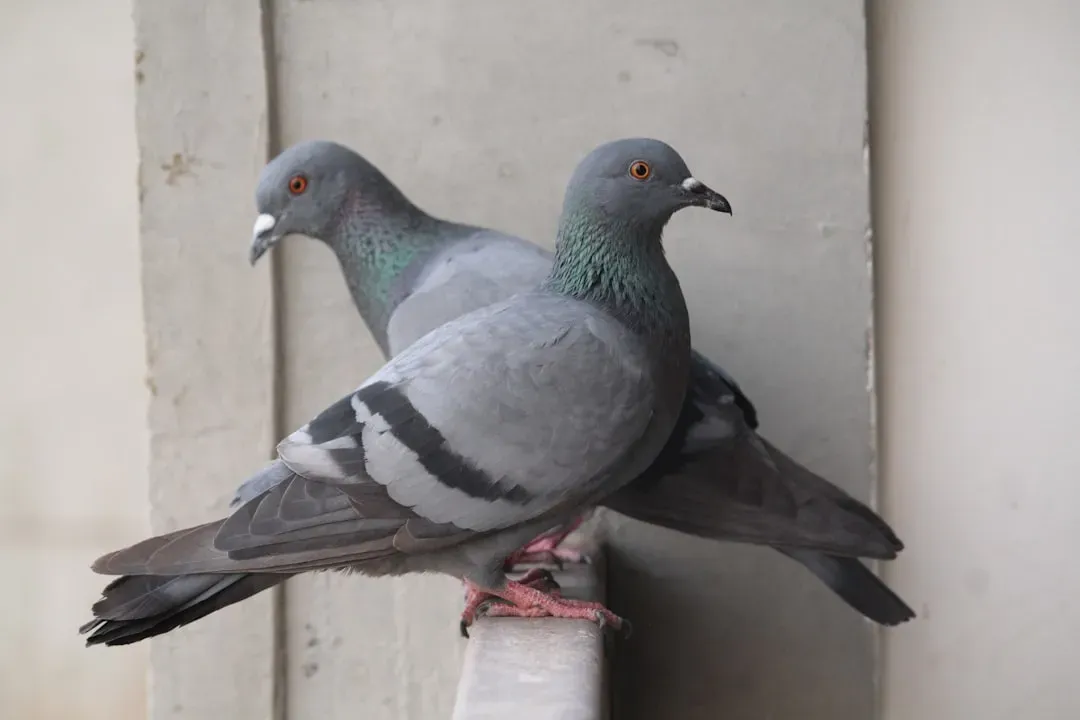
Rock pigeons get dismissed constantly – too common, too ordinary, too associated with city grime to be taken seriously as remarkable birds. But strip away the bias and what you find is a species with genuine, documented pair fidelity and an attachment to specific nest sites that rivals far more celebrated birds. Bonded pairs share incubation duties at the same ledge, rooftop corner, or sheltered overhang, season after season. They recognize each other’s calls. They choose each other specifically, not by default.
Their adaptability is what makes them so successful in residential settings, but that same adaptability masks how deliberate their site choices actually are. A pair that settles on your roof or garage ledge isn’t there by accident – they’ve evaluated the site, found it sufficient, and committed to it as a long-term home base. It’s easy to overlook the faithfulness in a bird you’ve been trained to ignore. But watch a mated pair of rock pigeons tending their nest together on the same ledge for the third consecutive year, and the ordinariness starts to look a lot like something else.
#2 – Eurasian Collared-Doves Settle Into a Yard and Rarely Leave
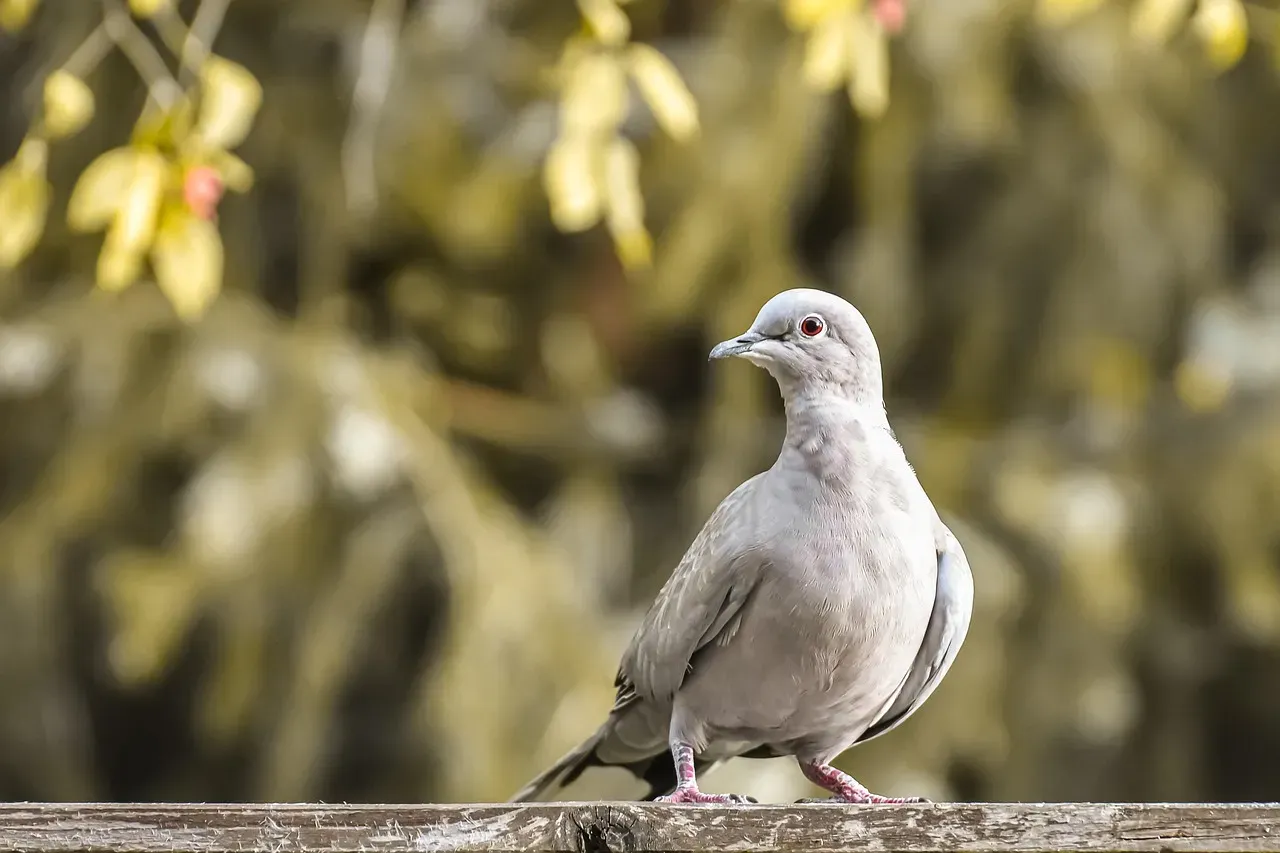
Eurasian collared-doves have spread across North America with quiet, steady determination since arriving in the 1980s, and wherever they establish themselves, they tend to stay. Bonded pairs return to the same backyard feeder area and the same nesting tree with high consistency, raising several broods per year with the same partner. Their three-note cooing becomes one of those yard sounds you stop consciously hearing – until it’s gone, and the absence feels surprisingly significant.
What distinguishes collared-doves from their mourning dove cousins is the sheer productivity of their bond. A committed pair can raise five or six broods in a single warm season, using the same nesting locations repeatedly throughout the year rather than just in spring. Their pair bonds are durable across multiple years even as their range continues to expand, meaning a yard that attracts one settled pair effectively gains a resident couple – not a seasonal guest. Once they claim your feeders, they tend to act like the arrangement was their idea all along.
Worth Knowing
- Eurasian collared-doves first established themselves in North America in the 1980s and have expanded their range to nearly every U.S. state.
- A bonded pair can produce up to 5 or 6 broods per warm season – far more than most backyard songbirds.
- Unlike many migrants, collared-doves are largely year-round residents once settled, reinforcing their bond across all four seasons.
- Both parents share incubation duties and feed chicks “crop milk” – a nutrient-rich secretion unique to doves and pigeons.
- Their repetitive three-note coo is one of the easiest bird calls to learn, making them a perfect entry point for new backyard birders.
#1 – Whooping Cranes Represent Something Deeper Than Loyalty
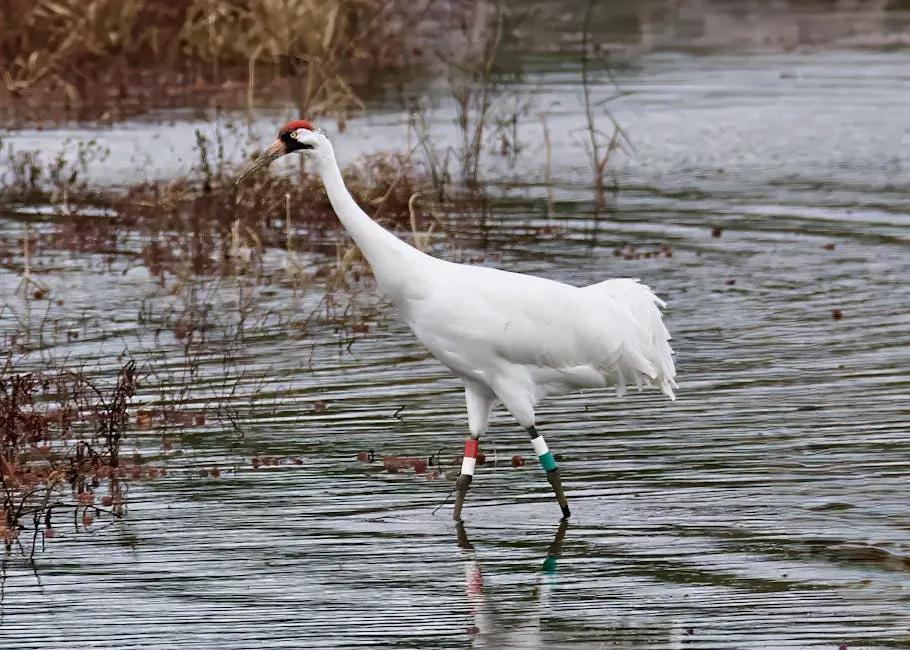
Whooping cranes are among the rarest birds in North America, and their mating behavior carries a weight that goes beyond biology. Bonded pairs perform elaborate, synchronized dances – leaping, calling, bowing – to reinforce their bond before each nesting season. They return to the same wetland or yard-adjacent habitat with site fidelity that conservation biologists describe as exceptional even among long-lived birds. When a pair finds a place that works, they treat it as permanent.
The survival story of the whooping crane is inseparable from the strength of these pair bonds. Successful couples almost never separate, maintaining their partnership across decades of migration, harsh winters, and the specific pressures of being a critically endangered species clawing its way back from the edge. Spotting a pair near your property isn’t just a birding moment – it’s a reminder of what loyalty and site fidelity look like when the stakes are genuinely high. These birds have been faithful to each other and to their places through everything. That’s not just animal behavior. That’s something worth paying attention to.
Here’s the honest conclusion: the birds on this list expose something most of us prefer not to examine too directly. These animals – crows, doves, swans, eagles – have figured out that returning to what works, staying with who you’ve chosen, and defending the place you’ve built together is not a limitation. It’s a strategy. It produces more offspring, more successful seasons, more decades of thriving in the same space. Scientists confirm that established pairs consistently outperform newly formed ones – more coordination, less wasted energy, better results. Meanwhile, we redesign our yards every few years, move every seven, and wonder why things feel unstable. The birds that mate for life and return to the same yard aren’t doing it out of sentiment. They’re doing it because it works – and they’ve known that far longer than we have.

- Your Beloved Pet’s Final Gift: Understanding and Honoring Their Memory - August 10, 2026
- These Zodiac Signs Are Most Likely to Believe in Parallel Realities - August 10, 2026
- How to Understand Your Dog’s Body Language More Accurately - August 10, 2026