
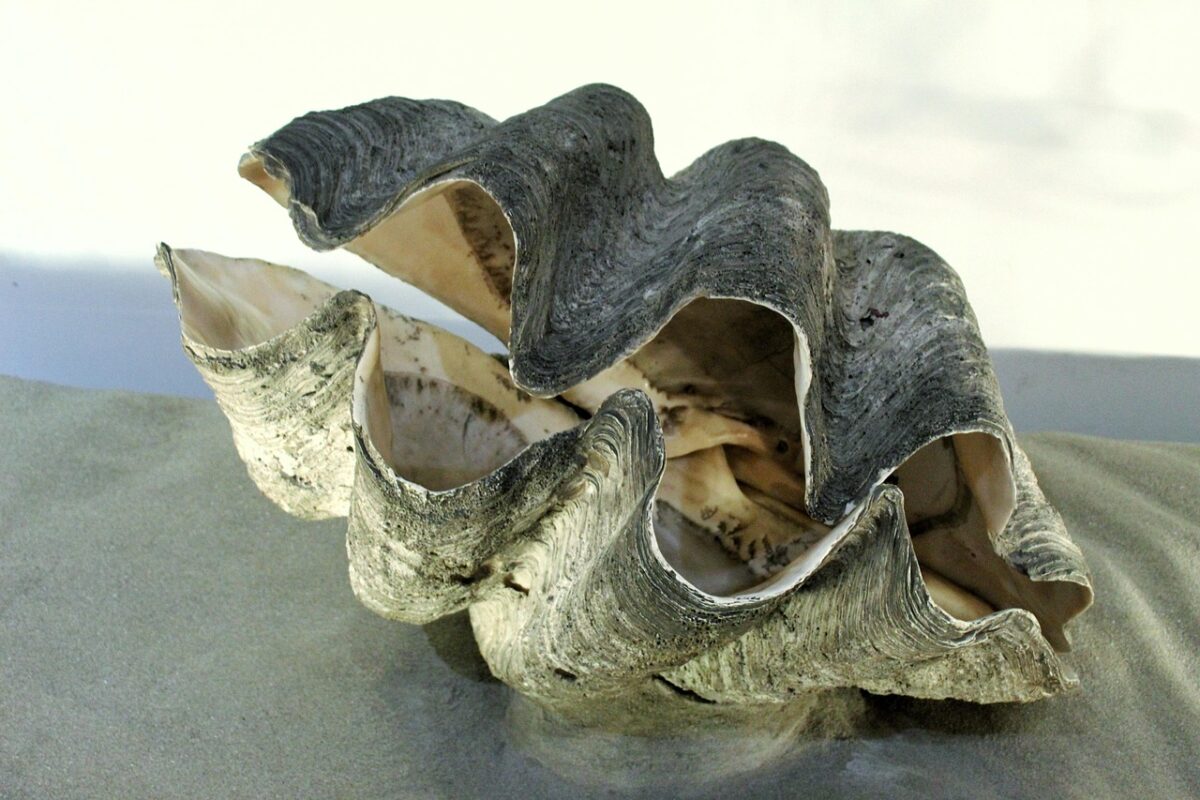
Giant clams are among the ocean’s most fascinating creatures, often shrouded in myths and misconceptions. Beyond their impressive size, these mollusks possess a range of surprising traits that challenge our understanding of marine life. Let’s dive into ten will leave you in awe.
They Can Weigh as Much as a Grand Piano
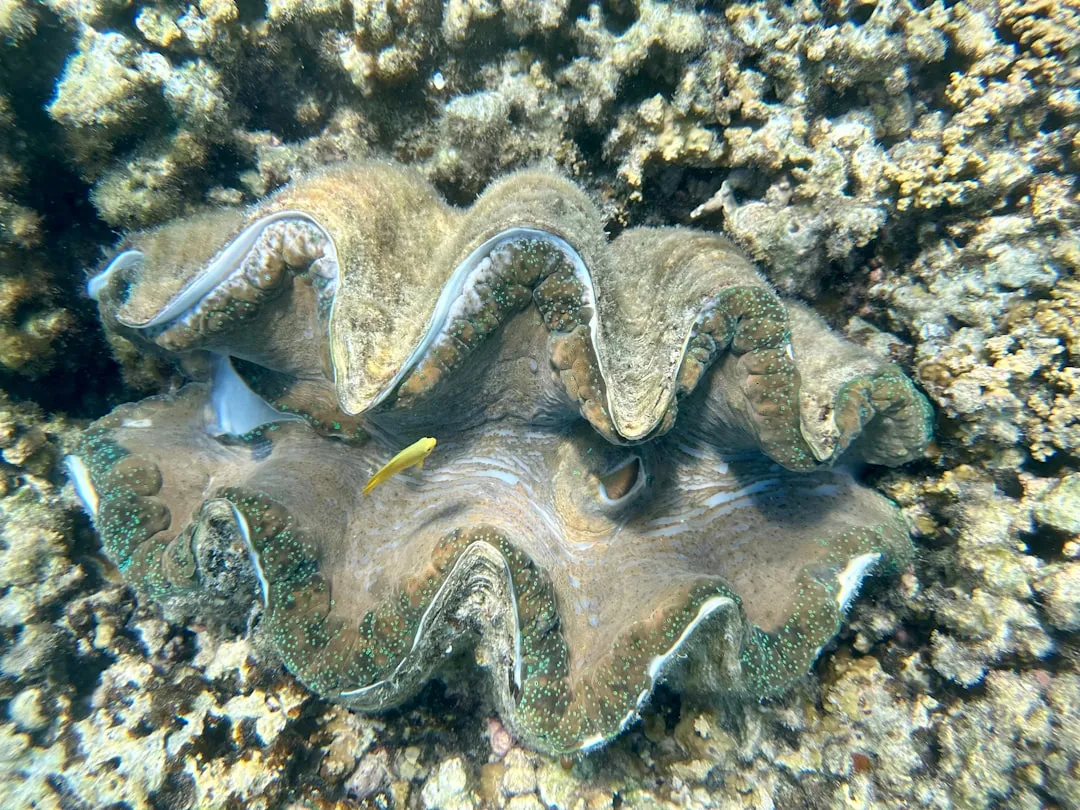
When we think of clams, we often picture small, handheld shells. However, the giant clam (Tridacna gigas) shatters this image. These marine behemoths can grow up to 4.5 feet in length and weigh over 500 pounds, making them the largest living bivalve mollusks on Earth.
Their massive size isn’t just for show; it plays a crucial role in their survival. Anchored firmly to the reef, their weight deters potential predators and provides stability in the dynamic ocean environment.
They Are Nature’s Living Solar Panels
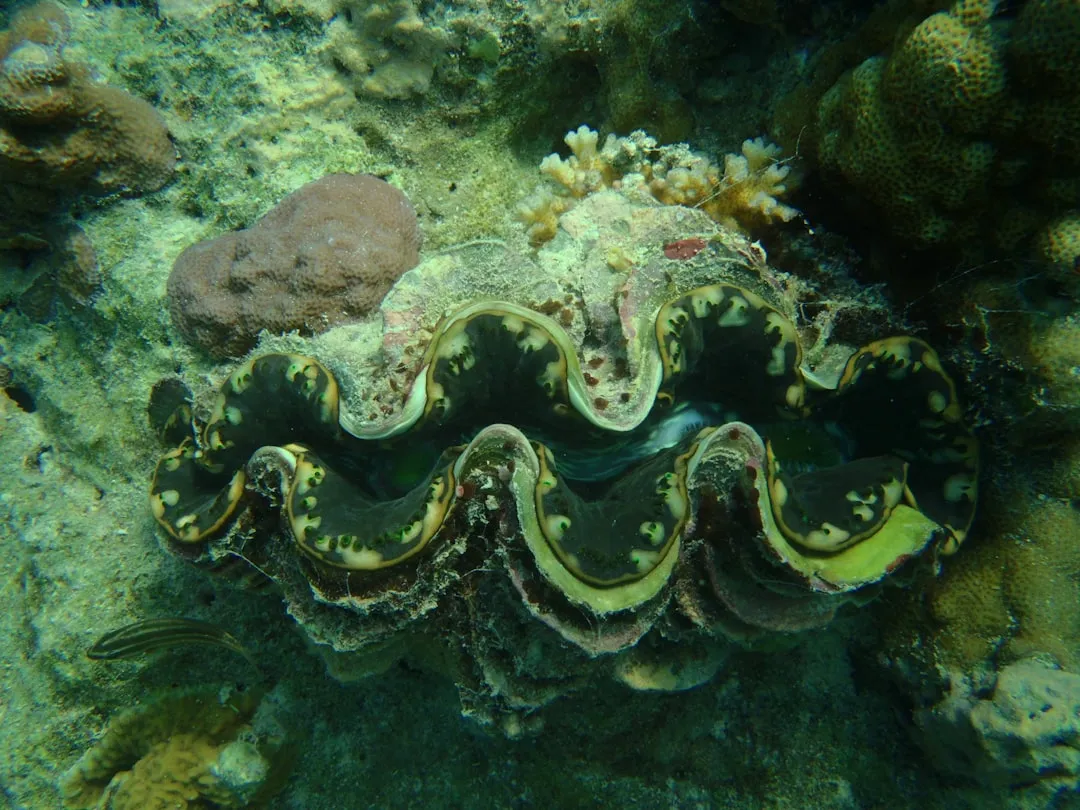
Giant clams have a unique partnership with tiny algae called zooxanthellae. These algae reside within the clam’s tissues, performing photosynthesis and producing nutrients that the clam utilizes. In return, the clam offers the algae a safe habitat and access to sunlight.
This symbiotic relationship allows giant clams to thrive in nutrient-poor waters. By harnessing solar energy, they can grow to their enormous sizes without relying solely on filter-feeding.
They Exhibit a Kaleidoscope of Colors
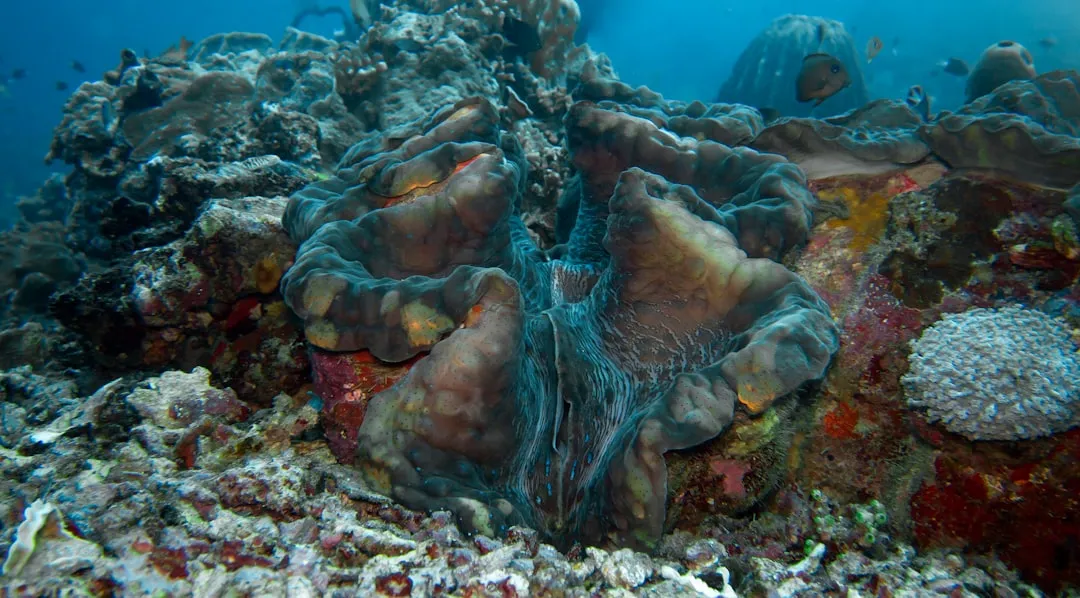
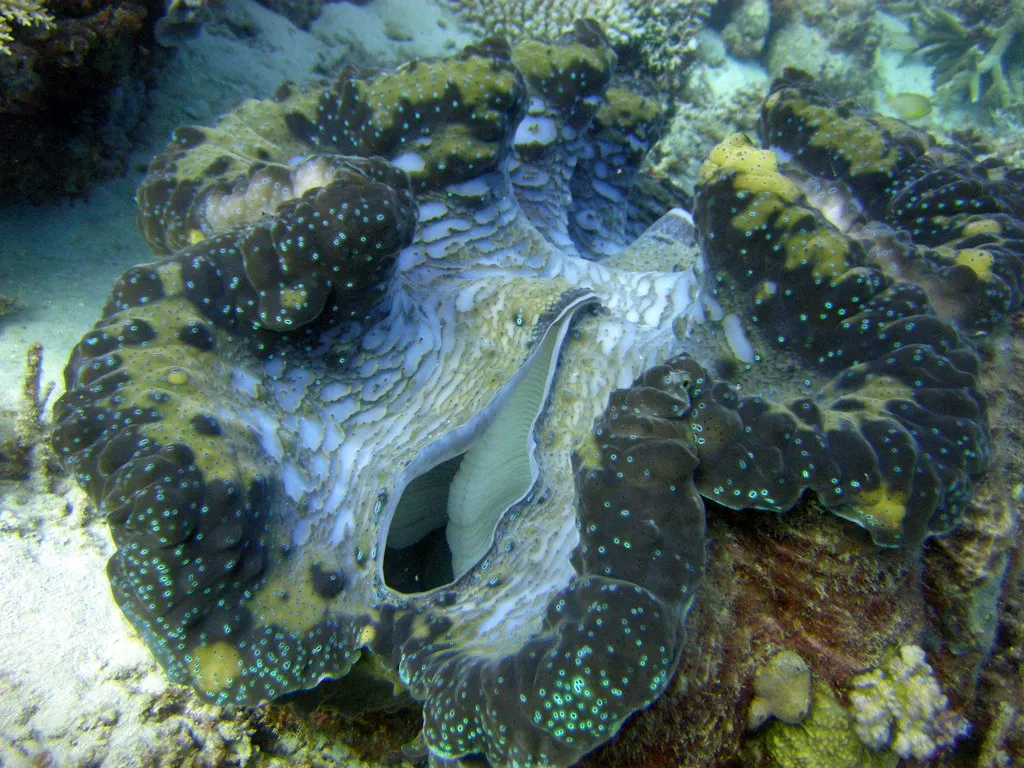
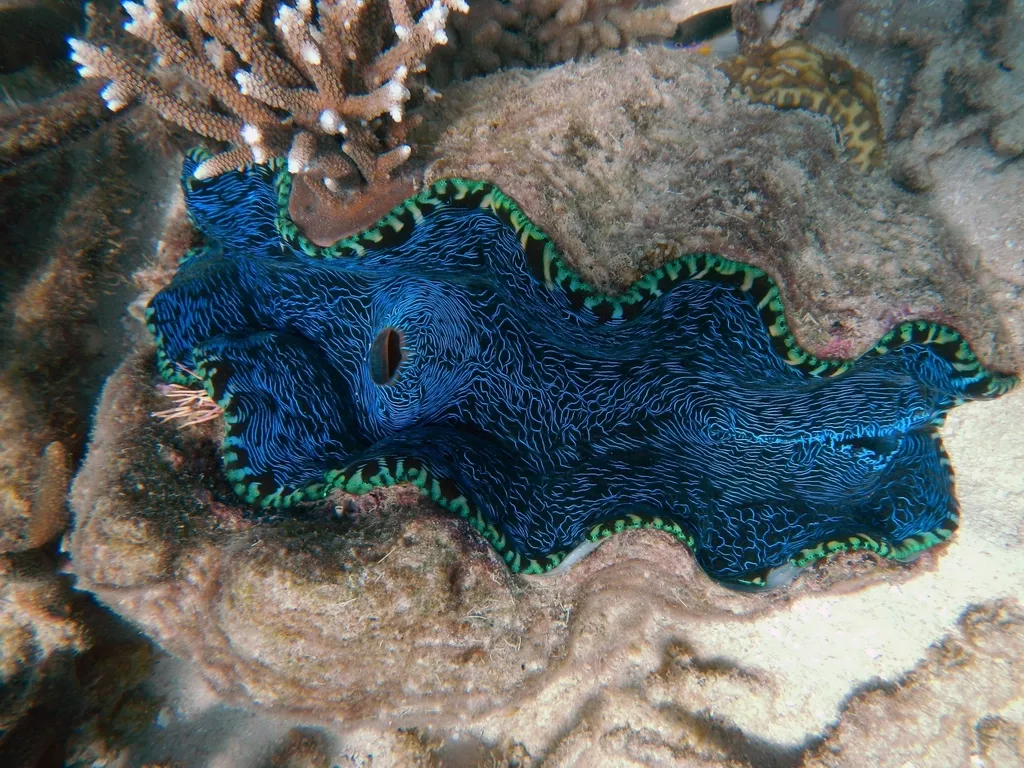
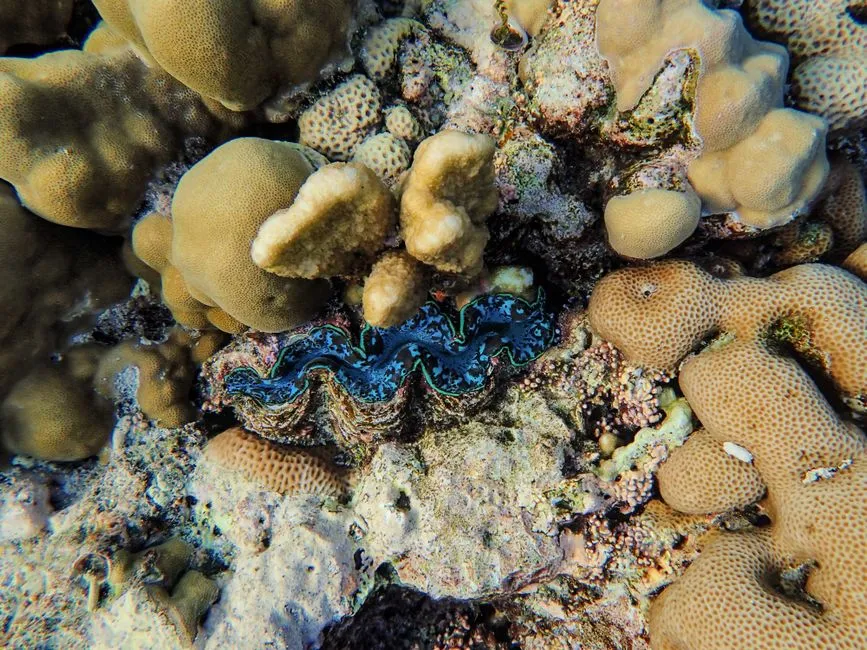
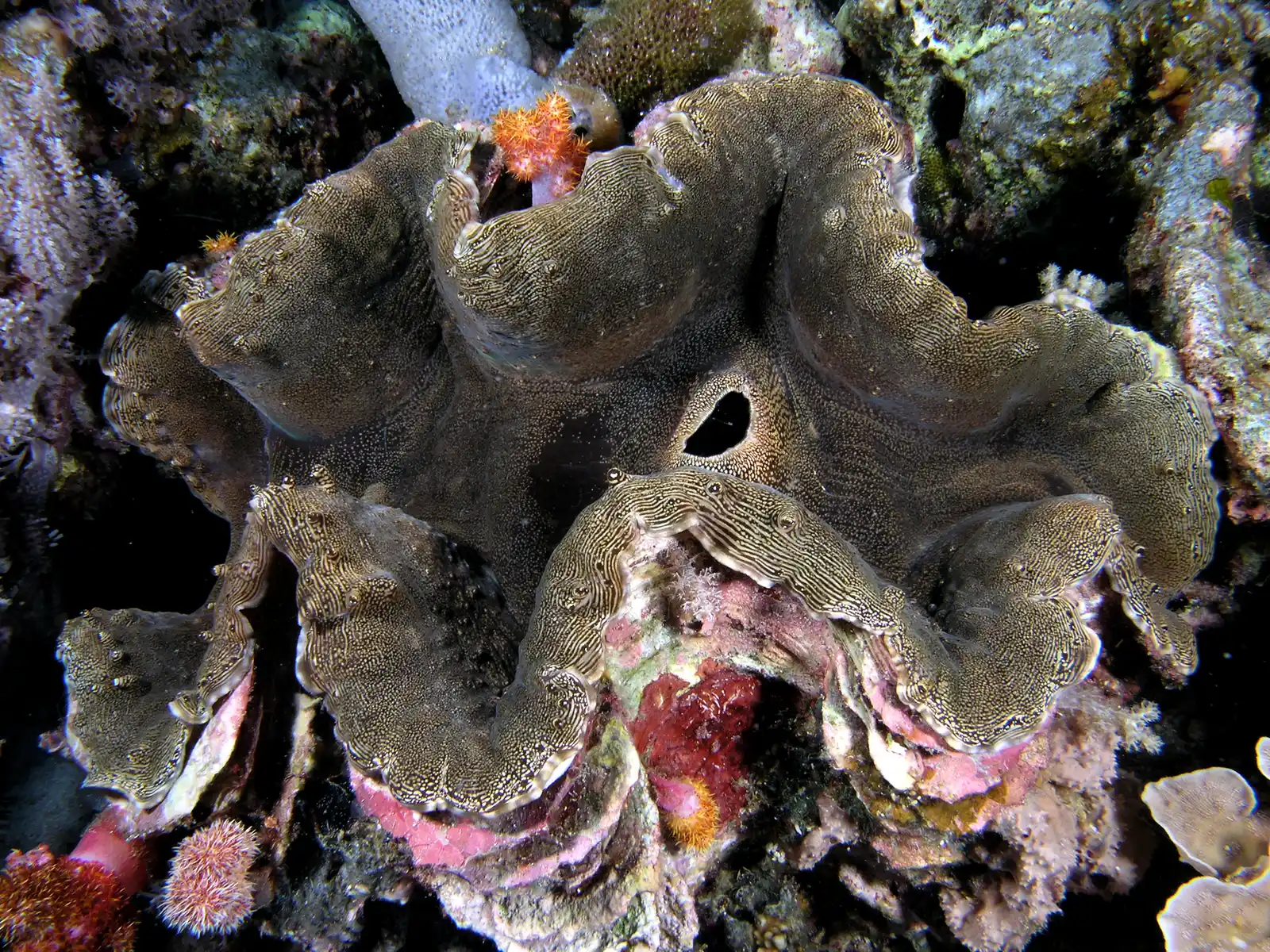
One of the most mesmerizing aspects of giant clams is their vibrant mantles, which can display a dazzling array of colors, including blues, greens, yellows, and browns. These colors result from the interaction between the clam’s pigments and the symbiotic algae within their tissues.
This coloration isn’t just for aesthetics; it plays a role in protecting the clam from harmful UV rays and may also help in camouflaging them within the reef environment.
They Have a Built-In Alarm System
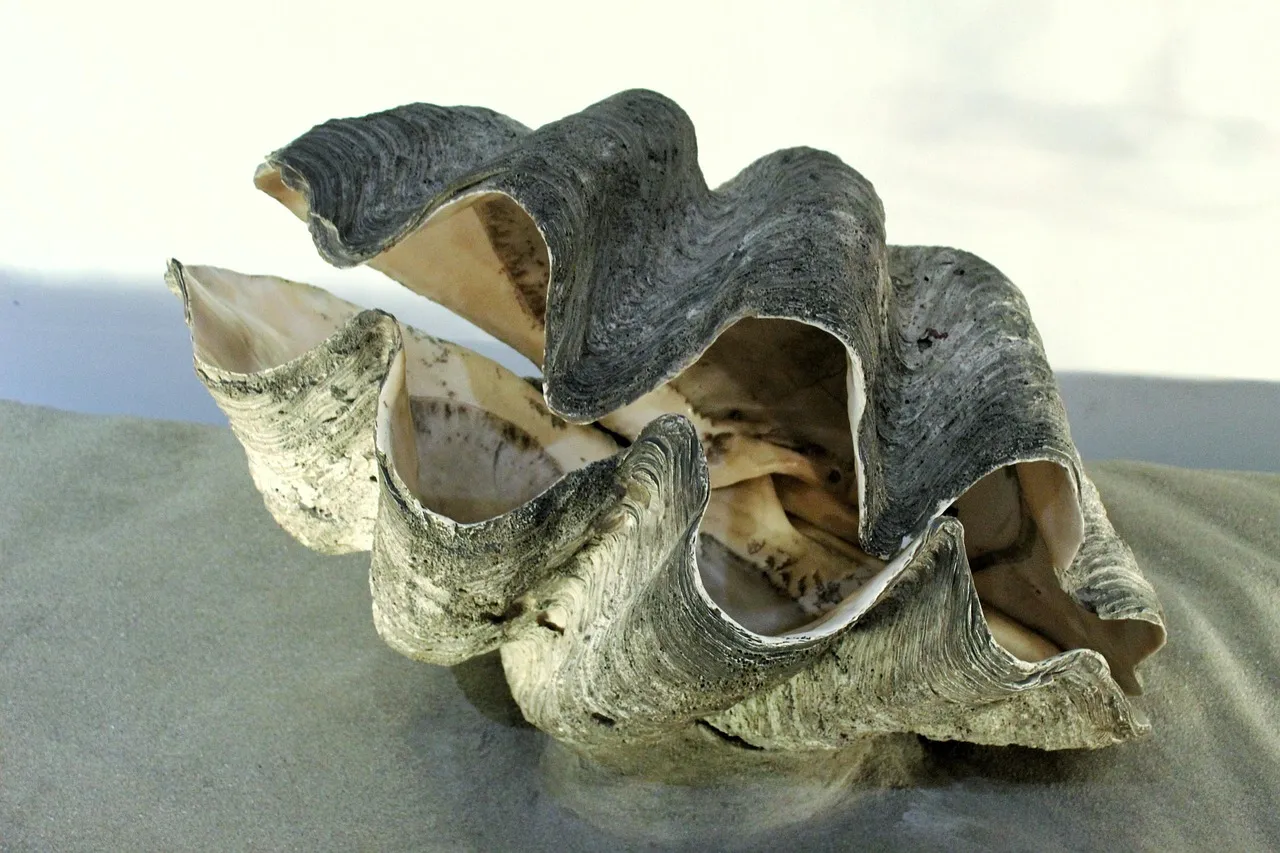
Despite lacking a centralized nervous system, giant clams are equipped with hundreds to thousands of tiny eyespots on their mantles. These simple eyes can detect changes in light and movement, allowing the clam to respond to potential threats by retracting its mantle and closing its shell.
This rudimentary visual system helps them avoid predation and adapt to their surroundings, showcasing nature’s ingenuity in even the simplest forms.
They Are Not the Man-Eaters of Legend
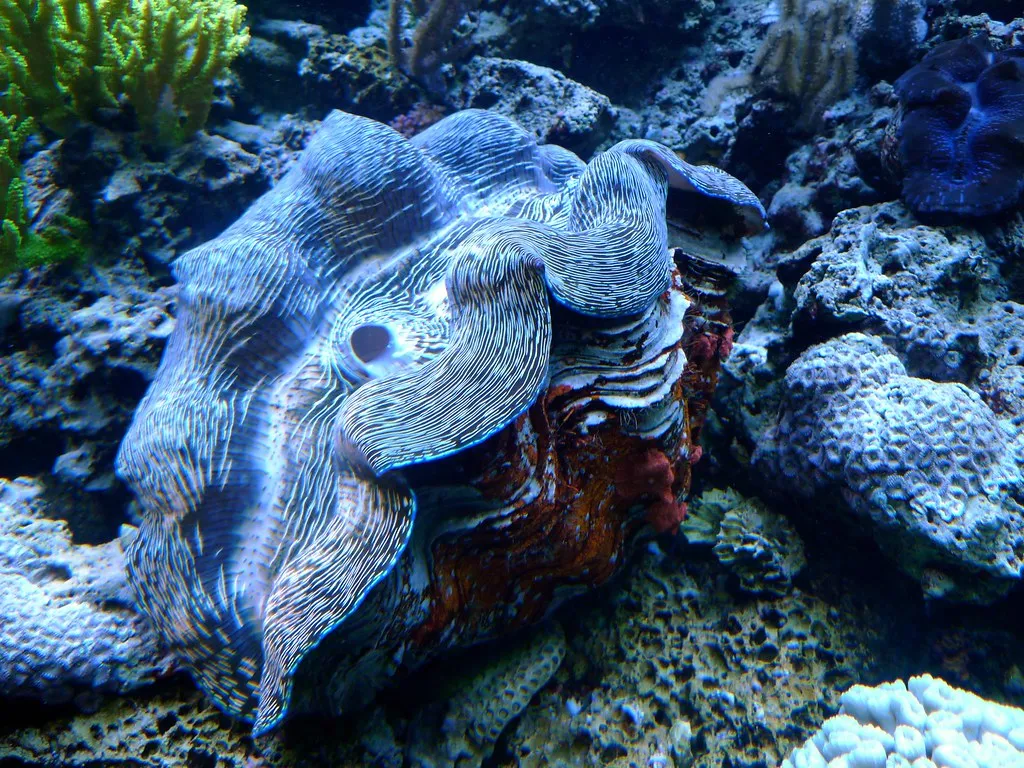
Tales of giant clams trapping and drowning unsuspecting divers have been passed down through generations. However, these stories are purely mythical. Giant clams close their shells slowly and lack the strength to trap a human. There are no documented cases of giant clams causing human fatalities.
In reality, they are passive creatures that pose no threat to humans, emphasizing the importance of dispelling such myths to protect these vulnerable species.
They Can Live for Over a Century
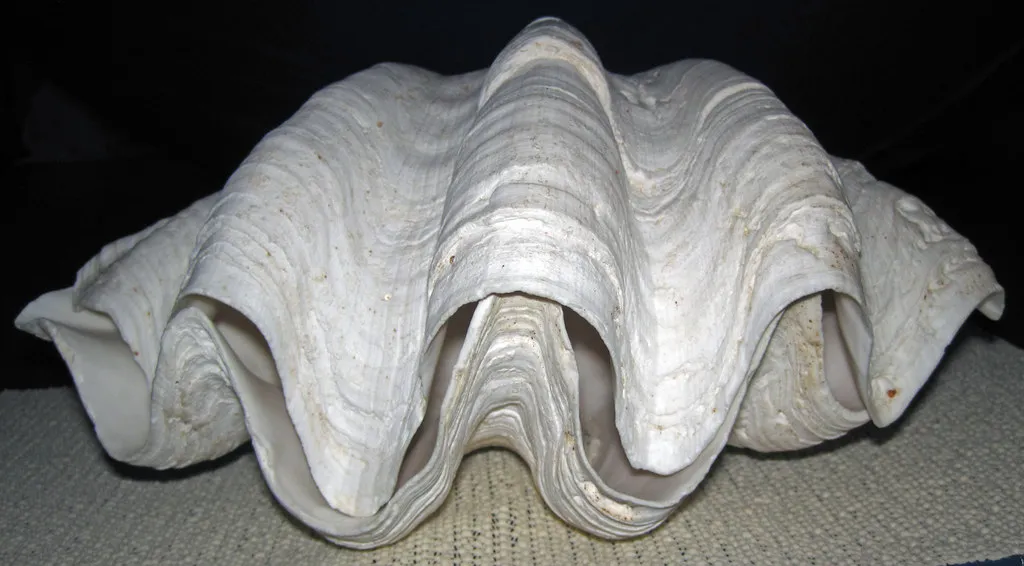
Giant clams are among the longest-lived invertebrates, with lifespans exceeding 100 years. Their longevity is attributed to their slow growth rates and the stable environments of coral reefs.
This extended lifespan allows them to play a significant role in their ecosystems over many decades, contributing to reef health and stability.
They Start Life as Tiny Drifters
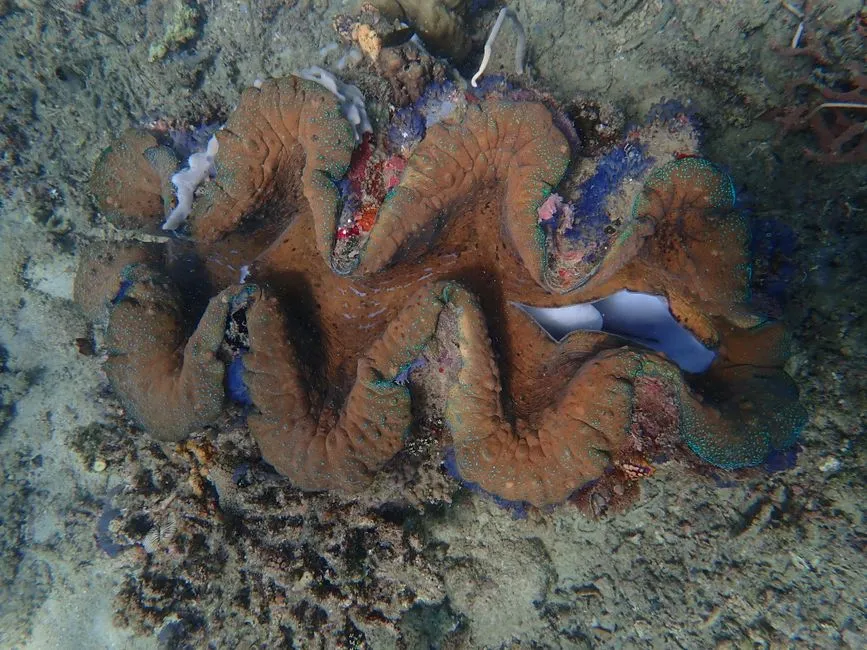
Despite their massive adult size, giant clams begin their lives as microscopic larvae, drifting in the ocean currents. After a few weeks, they settle onto a suitable substrate, where they remain for the rest of their lives.
This dramatic transformation from free-swimming larvae to stationary giants highlights the remarkable adaptability and resilience of these creatures.
They Are Hermaphrodites with a Twist
Giant clams possess both male and female reproductive organs, a condition known as hermaphroditism. However, they cannot self-fertilize. Instead, they release sperm and eggs into the water column, relying on external fertilization.
This reproductive strategy increases genetic diversity and enhances the survival chances of their offspring in the vast ocean environment.
They Are Environmental Indicators
The health and presence of giant clams are indicators of reef ecosystem health. Their decline often signals environmental stressors such as overfishing, pollution, or climate change impacts.
Protecting giant clams, therefore, contributes to the overall conservation of coral reef habitats, which are vital for marine biodiversity.
They Face Threats from Overharvesting
Giant clams have been overharvested for their meat and shells, leading to significant population declines. Their slow growth and late sexual maturity make them particularly vulnerable to overexploitation.
Conservation efforts, including aquaculture and marine protected areas, are crucial to ensuring the survival of these magnificent mollusks for future generations.
Conclusion
Giant clams are not just oceanic curiosities; they are vital components of marine ecosystems with complex behaviors and relationships. Their impressive size, vibrant colors, and unique biological traits challenge our perceptions and highlight the wonders of marine life. Protecting these gentle giants is not only about preserving a species but also about maintaining the health and diversity of our oceans. So, next time you think of clams, remember: there’s more to them than meets the eye
