

Tigers, the largest of the big cats, are renowned not only for their striking appearance but also for their solitary nature. Unlike lions, which thrive in social prides, tigers lead predominantly independent lives. This article delves into twelve lesser-known traits that underscore the tiger’s solitary existence.
They Are Hardwired for Lone Living From Habitat Itself
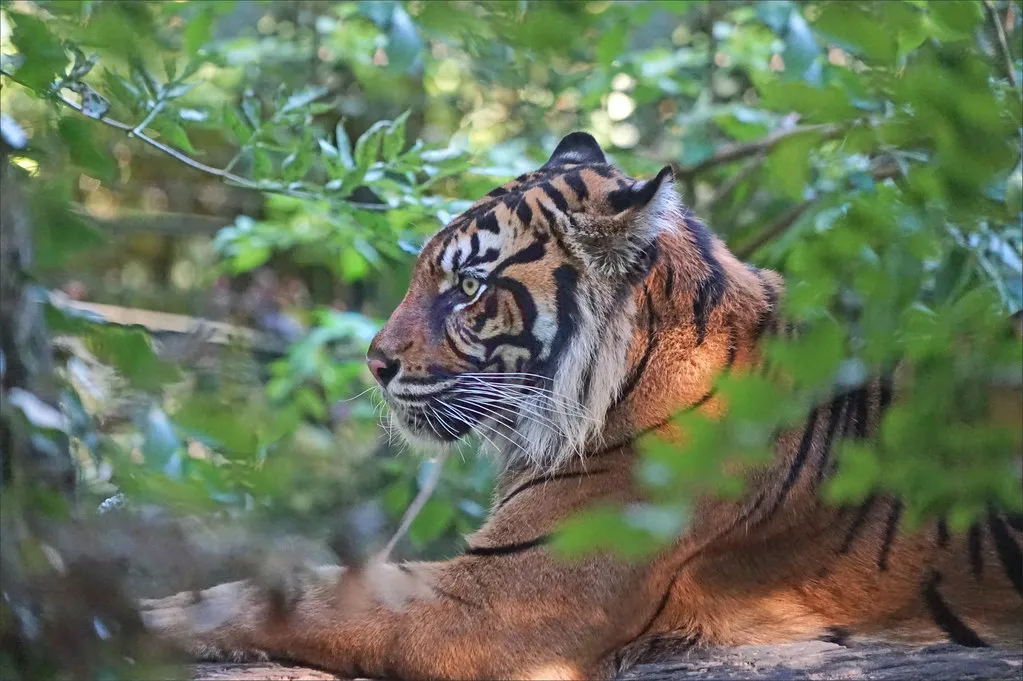
Tigers inhabit dense forests and heterogeneous habitats across Asia, environments that naturally favor solitary living. In these settings, visual contact is limited, and prey is often scattered, making group hunting inefficient. This ecological setup has driven tigers to adopt a solitary lifestyle, minimizing competition and maximizing hunting success.
In contrast, lions dwell in open savannas where prey congregates in large herds, facilitating cooperative hunting. The tiger’s environment, with its dispersed prey and limited visibility, inherently supports a solitary existence.
Their Vast Territories Are Designed for One Occupant

Adult tigers establish expansive territories that vary in size based on prey availability and geographic location. In regions with abundant prey, such as Ranthambhore, India, male territories can range from 5 to 150 square kilometers. In areas with scarce prey, like Siberia, territories may span 800 to 1,200 square kilometers.
These vast territories ensure that each tiger has sufficient resources to survive without competition. Sharing such large areas would lead to resource depletion, making solitary living a necessity for survival.
Their Scent-Marking System Replaces Social Contact

Despite their solitary nature, tigers have developed complex communication methods to establish and maintain territories. They use scent marking, vocalizations, and visual signals to communicate with other tigers. Scent marks, which contain pheromones and other chemical compounds, convey information about the tiger’s identity, sex, age, and reproductive status.
By marking territorial boundaries more heavily than interior areas, tigers minimize unplanned encounters, effectively replacing the need for direct social contact.
They Are Masters of the Stalk-and-Ambush Hunt, Alone

Tigers employ a “stalk and ambush” hunting strategy, relying on stealth and surprise to capture prey. They typically stalk prey from behind, closing in to within 25 meters before making a final, swift attack. This method is highly effective for a solitary hunter but would be compromised by the presence of additional tigers.
Their padded paws allow for silent movement through dense foliage, and their striped coats provide excellent camouflage, both essential for successful solitary hunting.
Their Night Vision Makes Them Self-Sufficient After Dark

Tigers are primarily nocturnal hunters, possessing night vision six times better than that of humans. This enhanced vision allows them to hunt effectively in low-light conditions without the need for assistance. A layer of cells called the tapetum lucidum behind the retina reflects light, amplifying available light and enabling tigers to see in dim conditions.
This adaptation ensures that tigers can operate independently after dark, further reinforcing their solitary nature.
They Feed Alone and Guard Their Kills Jealously
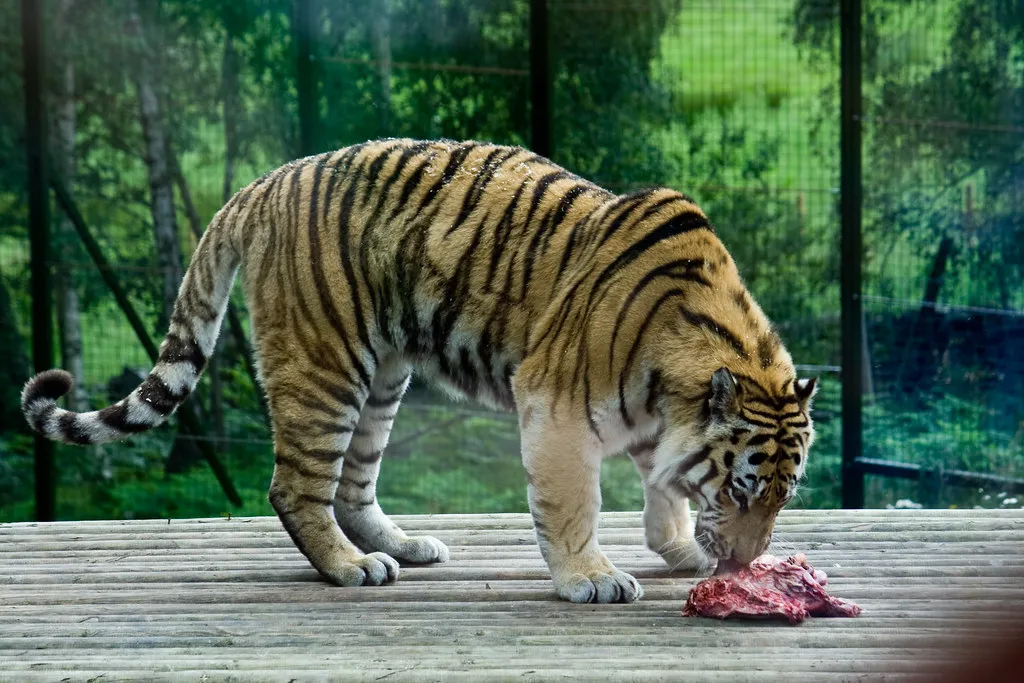
After a successful hunt, tigers prefer to feed alone, consuming large portions of their kill without competition. They can eat between 20 and 30 kilograms in one sitting and may return to a large carcass over several days. To protect their food, tigers often cover the remains with soil and leaves, deterring scavengers and other predators.
This behavior ensures that the energy expended during the hunt is fully rewarded, without the need to share with others.
They Communicate Through Roars That Travel for Miles

Tigers use powerful roars to communicate over long distances, with sounds carrying up to 3 kilometers. These vocalizations serve to establish territory, attract mates, and deter rivals. Each tiger has a distinct vocal signature, allowing for individual identification without direct contact.
This form of communication is well-suited to their solitary lifestyle, enabling interaction without physical proximity.
Even Their Social Interactions Stay Minimal and Purposeful
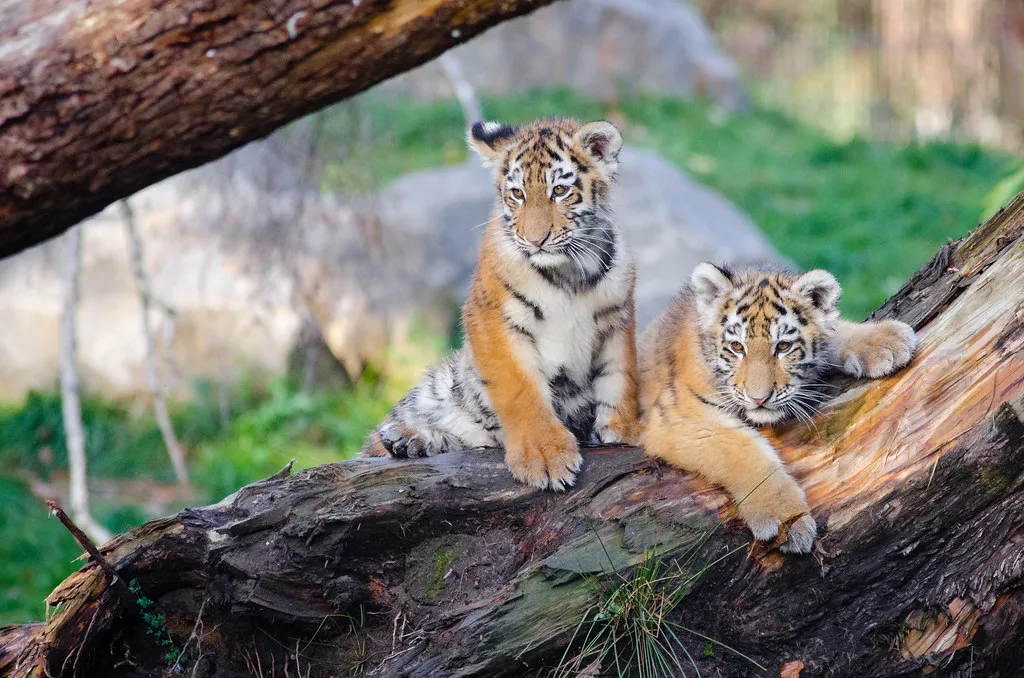
While tigers are predominantly solitary, they do engage in brief social interactions for mating and rearing young. Mating pairs come together for a few days before separating, and mothers care for their cubs until they are independent, usually around two to three years old. These interactions are limited and serve specific biological purposes, reinforcing the tiger’s solitary nature.
Once cubs reach maturity, they disperse to establish their own territories, continuing the cycle of solitary living.
They Have a Unique Social Structure Among Big Cats

Unlike lions, which live in structured prides, tigers have a unique social structure characterized by solitary territories that may overlap. Males often have territories that encompass those of several females, leading to occasional interactions. However, these interactions are typically brief and related to mating or territorial disputes.
This structure allows tigers to maintain independence while ensuring reproductive success.
They Exhibit Minimal Parental Involvement from Males

Male tigers do not participate in rearing their offspring. After mating, males leave the females to raise the cubs alone. This lack of paternal involvement is consistent with their solitary nature and territorial behavior.
The responsibility of teaching cubs to hunt and survive falls solely on the mother, who nurtures them until they are capable of independence.
They Adapt Their Activity Patterns to Avoid Humans

In areas with human activity, tigers have adapted by becoming more nocturnal to avoid encounters. This shift in behavior minimizes the risk of conflict and allows tigers to maintain their solitary lifestyle even in human-dominated landscapes.
By adjusting their activity patterns,
