
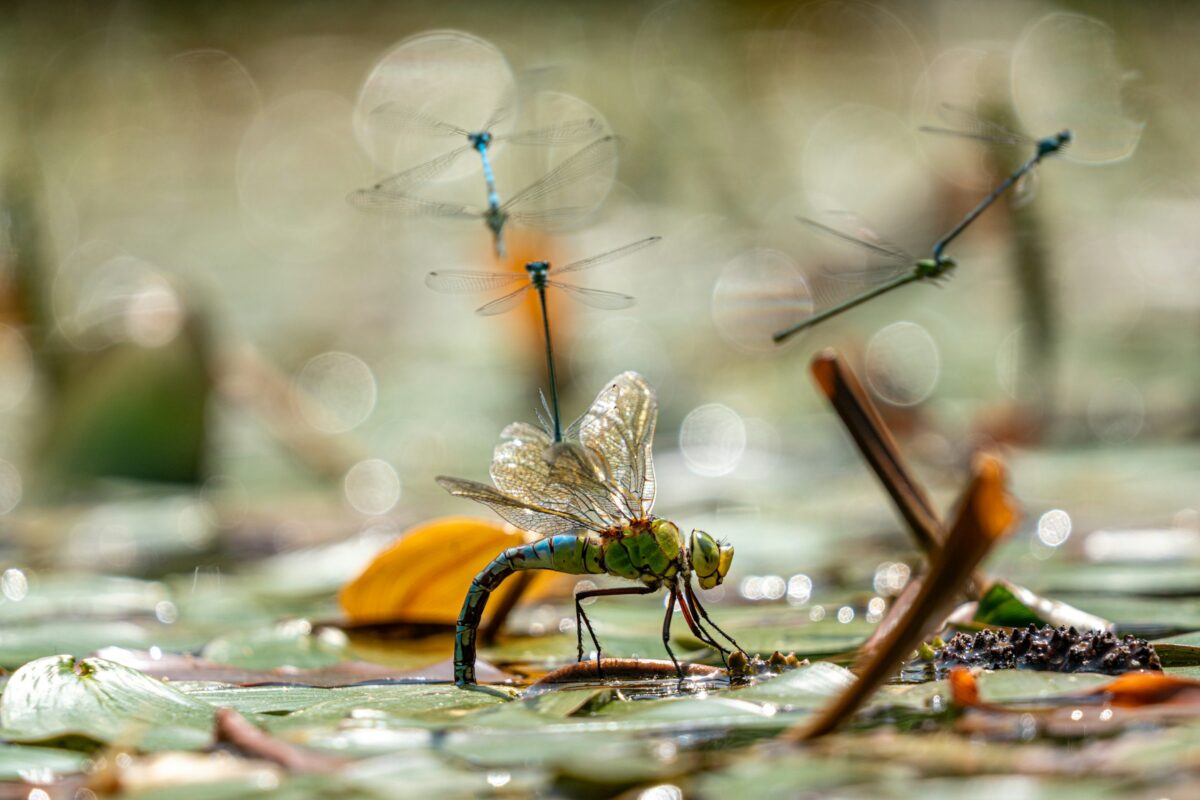
You step outside one afternoon and the air looks different. Dozens, maybe hundreds, of dragonflies are cutting through the yard in tight loops, wings catching the light like something out of a nature documentary. It’s the kind of moment that makes you stop mid-step, phone half raised, wondering if you’re witnessing something rare or something completely ordinary that you just never noticed before.
The most likely reason: they’re hunting
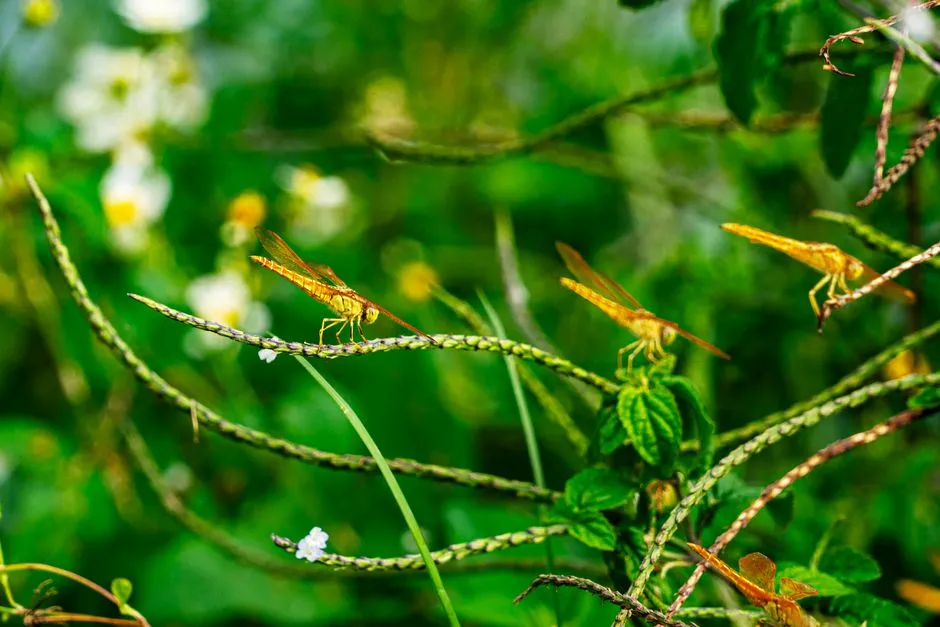
Before anything mystical or dramatic, there’s a much simpler explanation waiting in the grass. Seeing a swarm of dragonflies in your yard usually means one thing, lots of insects for them to eat, since dragonflies gather in large numbers when there’s an abundance of prey, especially mosquitoes, gnats, and termites. That sudden cloud of dragonflies is essentially a mobile buffet line, following whatever smaller insects happen to be swarming that day.
Dragonflies have been known to travel long distances to eat swarms of winged ants which emerge in late spring and early summer after a few days of rain, and they also love eating winged termites. So if your neighborhood just got soaked by a storm, or if a termite colony nearby decided it was time to swarm, you’ve essentially rung the dinner bell. It’s not personal, and it’s not permanent. It’s just efficient predation happening at eye level in your own backyard.
Two very different kinds of swarms
Entomologists who actually study this behavior break dragonfly swarms into two distinct categories, and knowing the difference changes how you read the scene. Dragonfly researchers know that dragonflies swarm, and that there are two different kinds, static feeding swarms where the dragonflies fly repeatedly over a well-defined area close to the ground, usually feeding on clouds of small insects, and migratory swarms of hundreds to millions of dragonflies flying in a single direction, often fifty to a hundred feet above the ground. One is a lunch stop. The other is a journey.
Telling them apart is mostly a matter of direction and height. If the dragonflies seem to be looping over the same patch of lawn without going anywhere, you’re watching a feeding swarm. If they’re all moving steadily in one direction, riding higher above the trees, you may have stumbled into something closer to a mass migration passing through on its way south or north.
A sudden hatch near the water
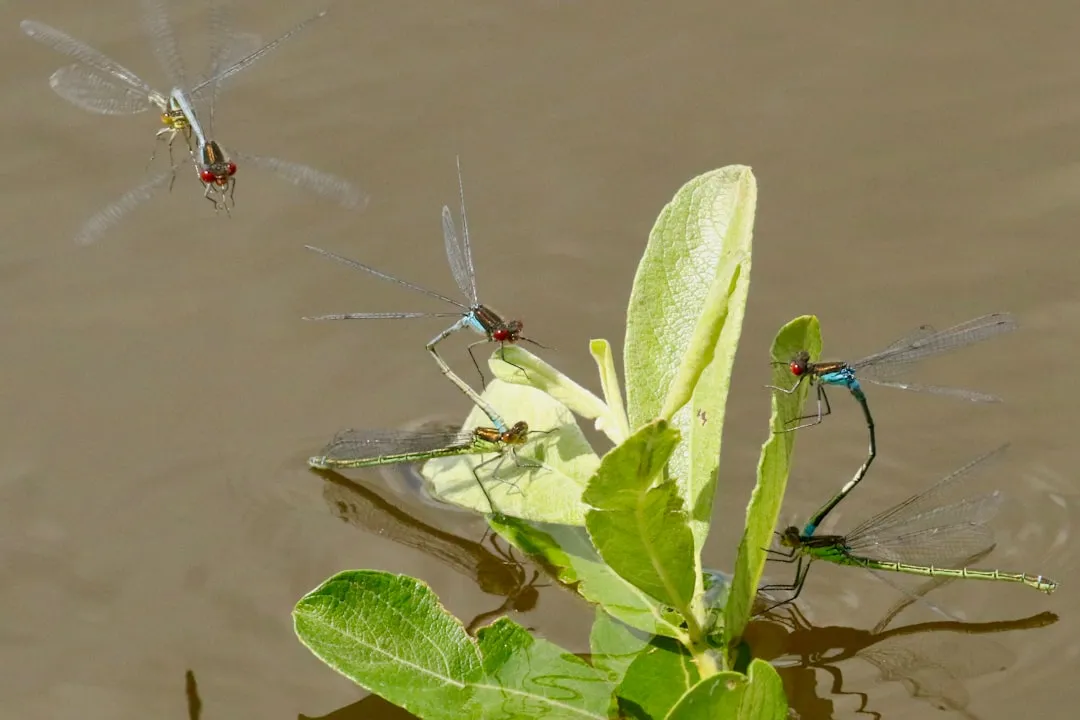
If your property backs onto a pond, creek, or even a poorly drained low spot, there’s another explanation entirely tied to biology rather than appetite. Dragonflies spend the first year of their lives as nymphs living underwater before maturing into flying insects, so if you live near a natural water source and see a sudden large group of dragonflies, it’s likely because there was a big molting of new adults in your area. In other words, the swarm didn’t arrive from somewhere else. It grew up right there, underwater, out of sight.
This kind of mass emergence tends to happen after conditions line up just right, warm water, healthy nymph populations, and a calm stretch of weather for the newly winged adults to dry out and take flight. It can look almost theatrical when it happens all at once, dozens of insects lifting off the water’s surface within the same window of a few days. If you’ve got a backyard pond, this is one of the more likely and least dramatic answers.
The green darner’s long-distance commute
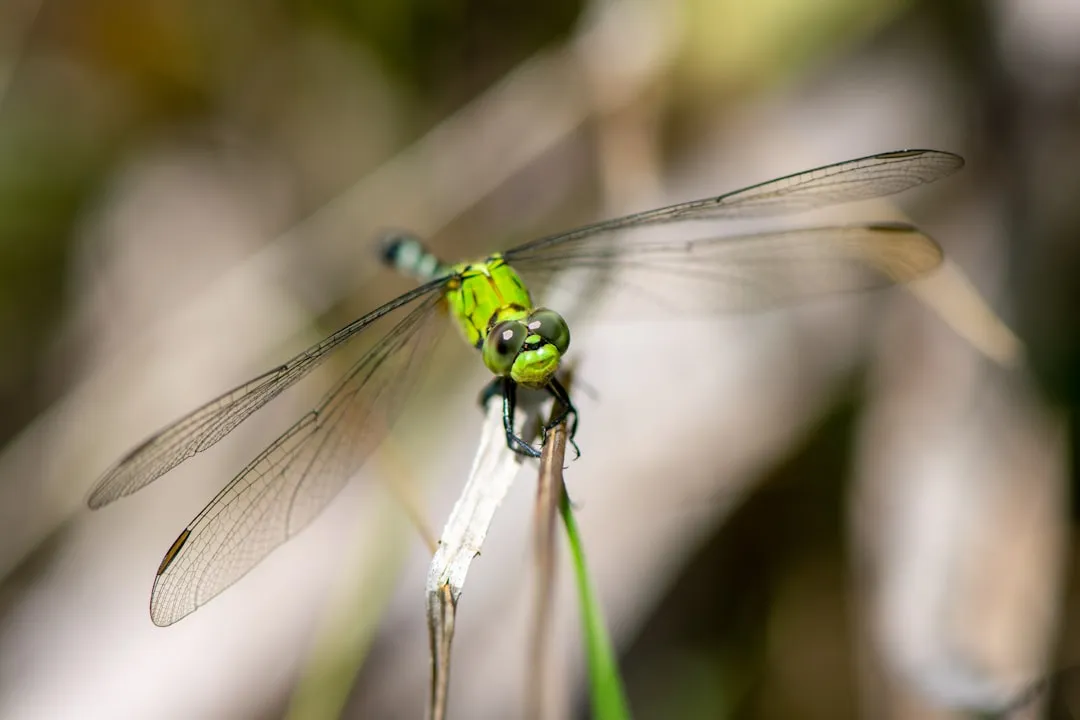
Among the roughly several thousand dragonfly species worldwide, only a small number actually migrate, and in North America the green darner is the poster child for the behavior. Only one species, the green darner, migrates according to the Purdue University Cooperative Extension Service, wintering in the southern United States, Caribbean, and Mexico before flying north in spring, breeding, and having the newly hatched adults move back south in August and September. No single dragonfly makes the whole round trip. It’s a relay race spanning generations.
As migration patterns go, the green darner’s has more in common with monarch butterflies than, say, birds. If you happen to live along a river corridor, coastline, or ridge line during the right week in late summer, you may catch this migration passing directly through your yard. It’s brief, it’s unpredictable, and it’s honestly one of the more underappreciated wildlife spectacles happening in plain sight every year.
Storms, mowing, and other disturbances
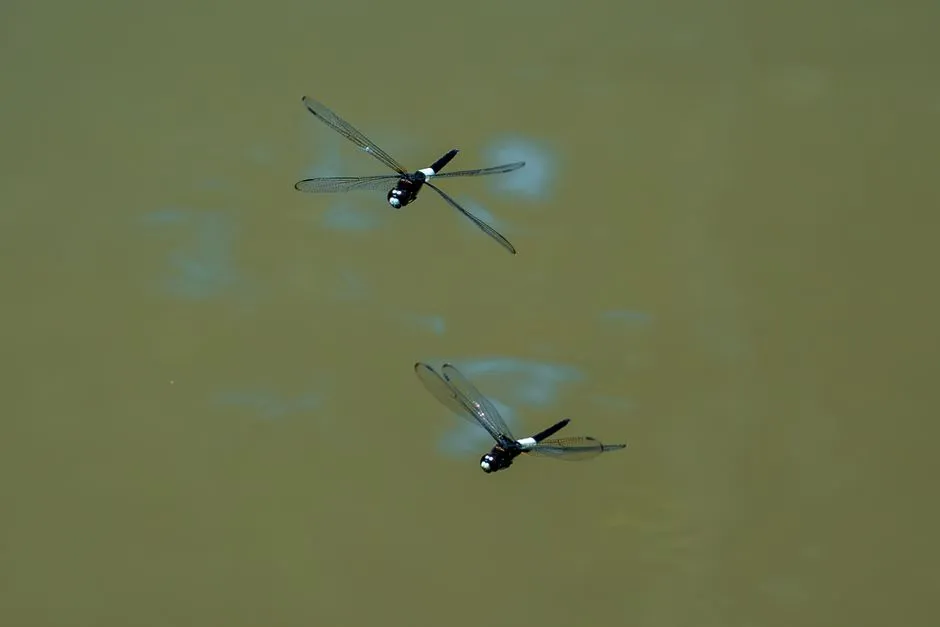
Weather plays a bigger role in swarm behavior than most people assume, and it’s not just about rain producing more bugs. Static feeding swarms tend to form in areas where disturbances have occurred, such as exceptionally strong winds, severe thunderstorms, floods, or wildfires, because when a disturbance moves through an area, millions of small insects become suddenly displaced, and floods in particular can increase breeding habitat for some insects, resulting in population explosions. Dragonflies are quick to capitalize on that chaos.
Even something as mundane as running a lawnmower can trigger a small-scale version of this. Anytime you get fires or floods or big storms or even people mowing their lawns, it kicks up a bunch of little insects that the dragonflies will take advantage of. So if you notice dragonflies appearing right after you cut the grass, that’s not a coincidence. You just stirred up their next meal without meaning to.
A quiet form of pest control
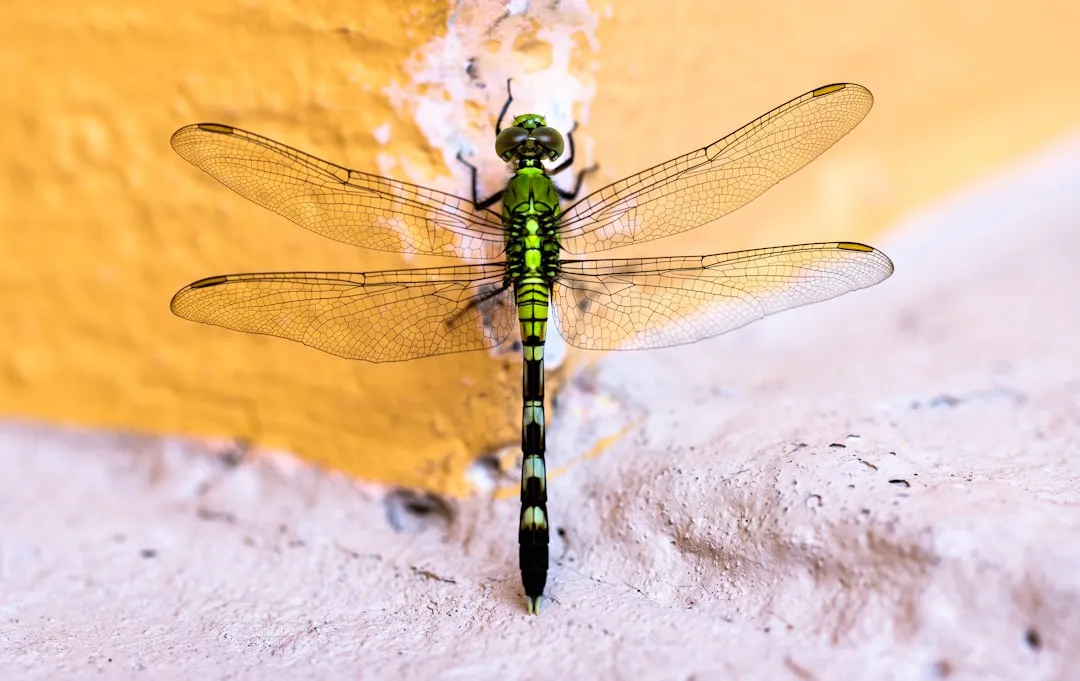
Whatever triggered the swarm, there’s a practical upside worth appreciating rather than worrying about. Dragonflies are some of the most beneficial insects found in the backyard garden, eating prey species like mosquito larvae while also controlling dangerous fly species like black flies. A yard full of dragonflies is, in a very literal sense, a yard getting a free pest management service.
They also pose essentially zero risk to people, despite their size and the slightly intimidating buzz of a large group in flight. Contrary to a couple of popular myths, dragonflies don’t sting and they don’t bite, and they’re not particularly interested in people. Occasionally in very dense swarms they’ll bump into someone by accident, but that’s clumsiness, not aggression. If anything, a dragonfly-heavy yard is a sign that the local ecosystem, water quality included, is doing something right.
What people have long believed it means
Beyond the entomology, dragonflies carry a long cultural weight that partly explains why a sudden swarm feels significant rather than just biologically interesting. Across various folk traditions in Japan, Native American communities, and parts of Europe, dragonflies have historically been associated with change, adaptability, and even messages from the natural or spirit world, largely because of their sudden appearance and equally sudden disappearance. None of that carries scientific backing, but it says something about how humans respond to a creature that seems to arrive out of nowhere and vanish just as fast.
It’s worth holding both truths at once here. The biological explanation, feeding, emerging, migrating, is well documented and grounded in real observation. The symbolic reading is older, softer, and impossible to verify, yet it persists because a yard full of dragonflies genuinely does feel like a small, fleeting event worth noticing. Both readings can coexist without one canceling out the other.
Final thoughts
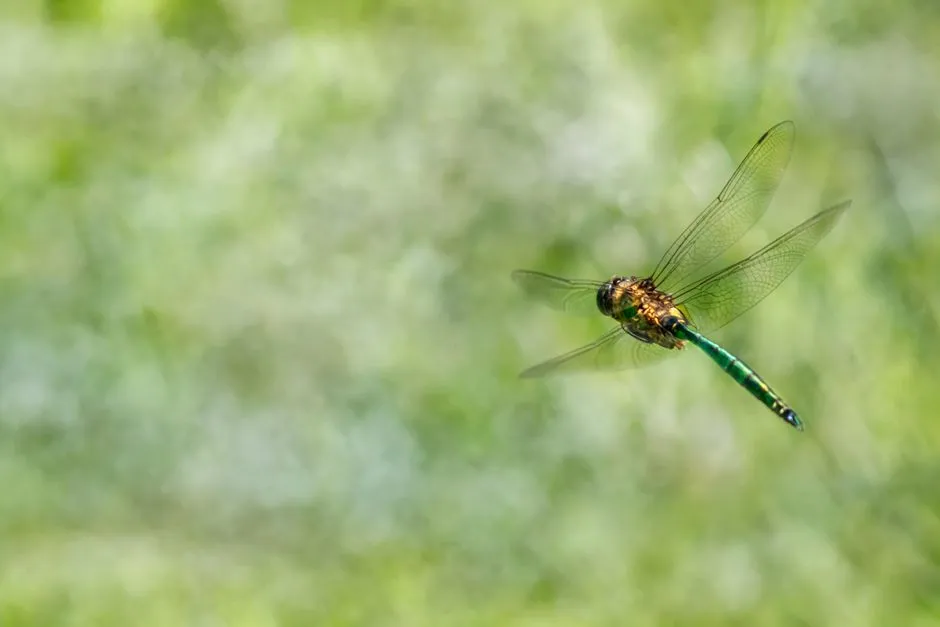
Dragonfly swarms remain one of those backyard phenomena that science has only partially figured out, and that’s honestly part of the appeal. Researchers openly admit these events are hard to study because they’re brief, unpredictable, and easy to miss entirely if you happen to be indoors that afternoon. My own take, for what it’s worth, is that this is exactly why a sudden swarm deserves a few minutes of actual attention rather than a quick photo and a shrug.
Most likely you’re watching a feeding frenzy tied to a recent rain, a fresh hatch, or a lawn you just mowed. Occasionally, if the timing and geography line up, you might be catching a sliver of a migration that stretches across multiple states and multiple generations of insects. Either way, it’s a genuinely good sign for your yard, not a warning sign, and it’s over almost as quickly as it started. Take the moment while it lasts.
