
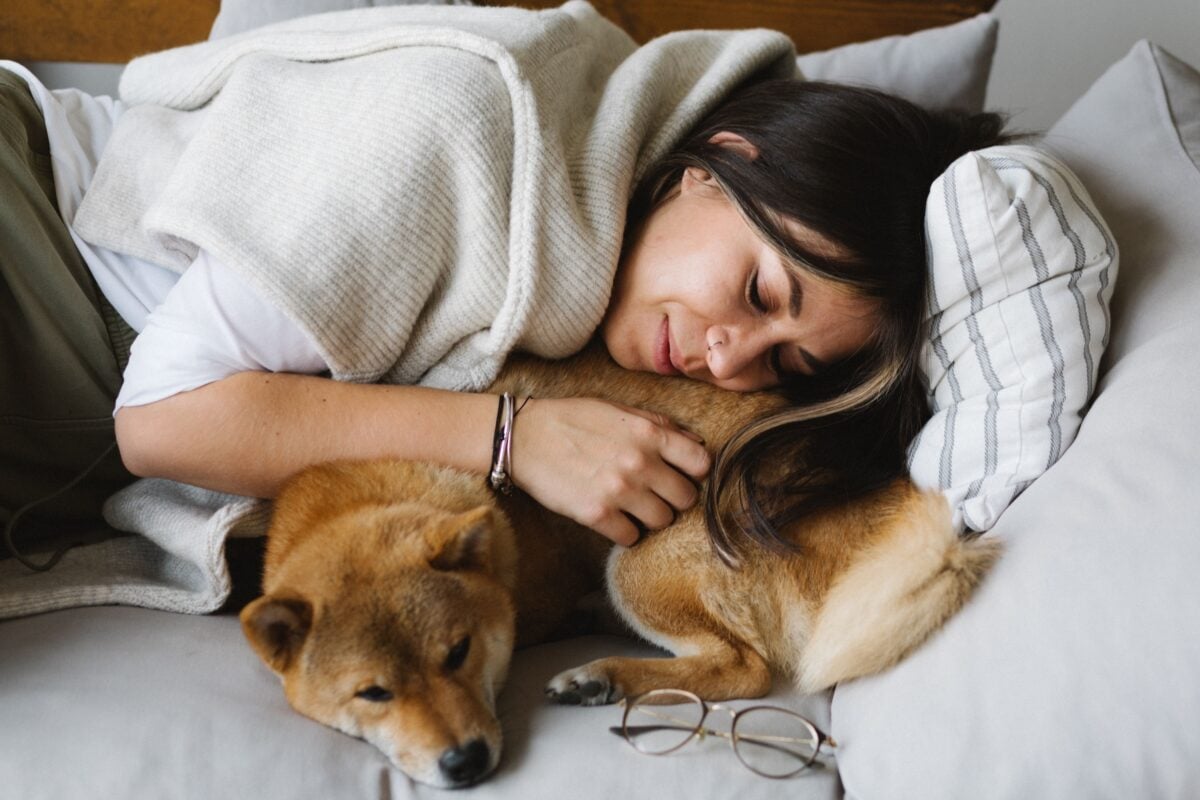
Most people assume a senior dog just “slows down” at the end – sleeps more, eats less, fades quietly into the background. But talk to enough owners who’ve actually lived through it, and you’ll hear the same eerie, tender story over and over: in the final weeks, their old dog didn’t fade. It leaned in. Hovered closer. Stared longer. Started acting less like a dying animal and more like a tiny, devoted therapist working its last shift.
It sounds like wishful thinking – grief looking for meaning where there’s only biology. And honestly, some of it is biology: shifting brain chemistry, fading senses, pain quietly rewriting old habits. But vets, behaviorists, and longtime dog owners keep describing the exact same patterns, in dogs who’ve never met each other, in homes states apart. Here are 16 of them – starting with the one almost every owner recognizes the second they read it.
#1 – The Sudden “Velcro Dog” Phase
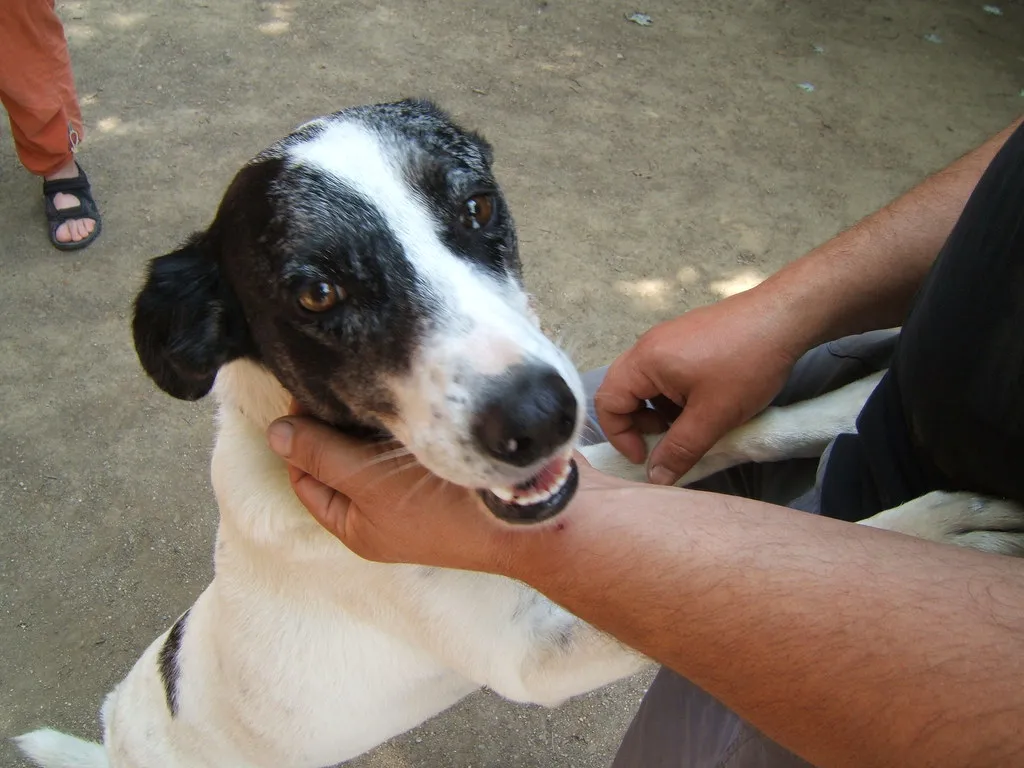
Some senior dogs, even the ones who spent a decade ignoring you unless food was involved, suddenly turn into what owners call a “Velcro dog.” They follow you from room to room, press against your legs, and seem to panic if you’re out of sight for more than a minute.
Vets will tell you it’s a mix of age-related anxiety, cognitive decline, and a stronger pull toward their one safe person as the rest of their world shrinks. You become their anchor, not because they’re needy, but because you’re the only thing that still makes sense to them. Owners often realize only later that this clinginess wasn’t a burden – it was a kind of hand-holding, and their dog was doing it as much for comfort as for company.
#2 – Quietly Leaning Their Weight Against You
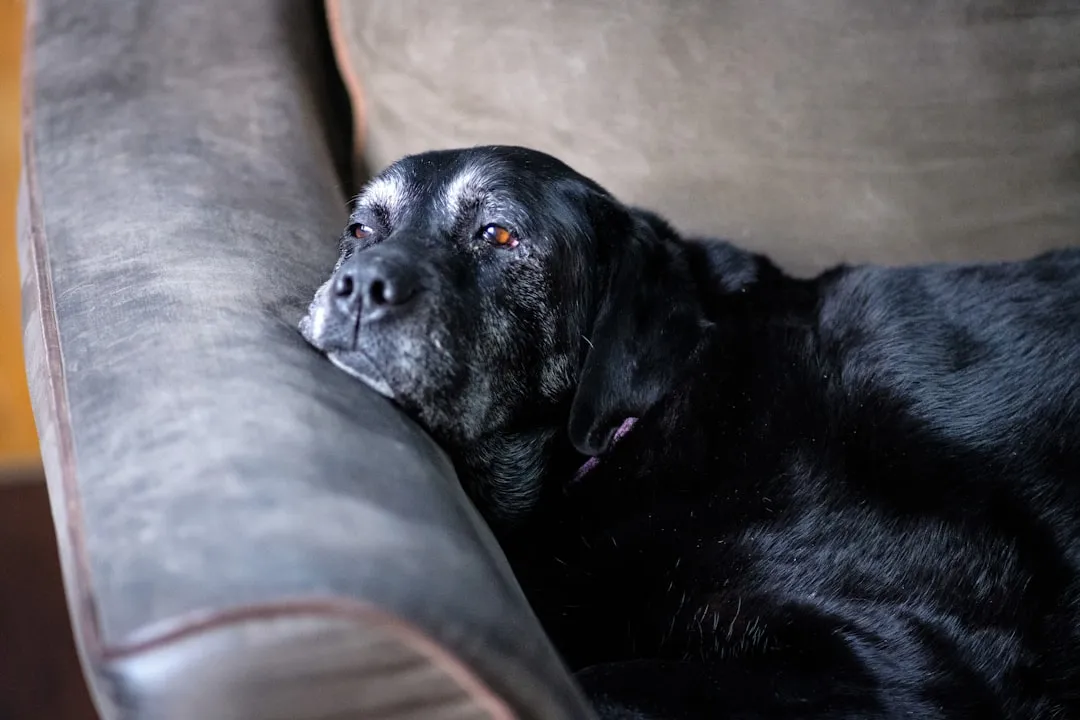
The classic “dog lean” usually reads as casual affection, but in senior dogs it starts to feel different – heavier, slower, more deliberate. They’ll stand or sit beside you and press their full weight into your leg, hip, or shoulder, and just stay there.
That kind of deep, still contact releases calming hormones in both of you, similar to a weighted blanket. It’s pressure therapy with fur and a heartbeat attached. In the final weeks, a lot of owners notice their dog stops bouncing or wiggling altogether and just leans, sometimes for long, silent stretches that feel almost meditative – like the dog is saying, without a sound, “I’ve got you. We’re okay.”
#3 – Staring Deeply Into Your Eyes
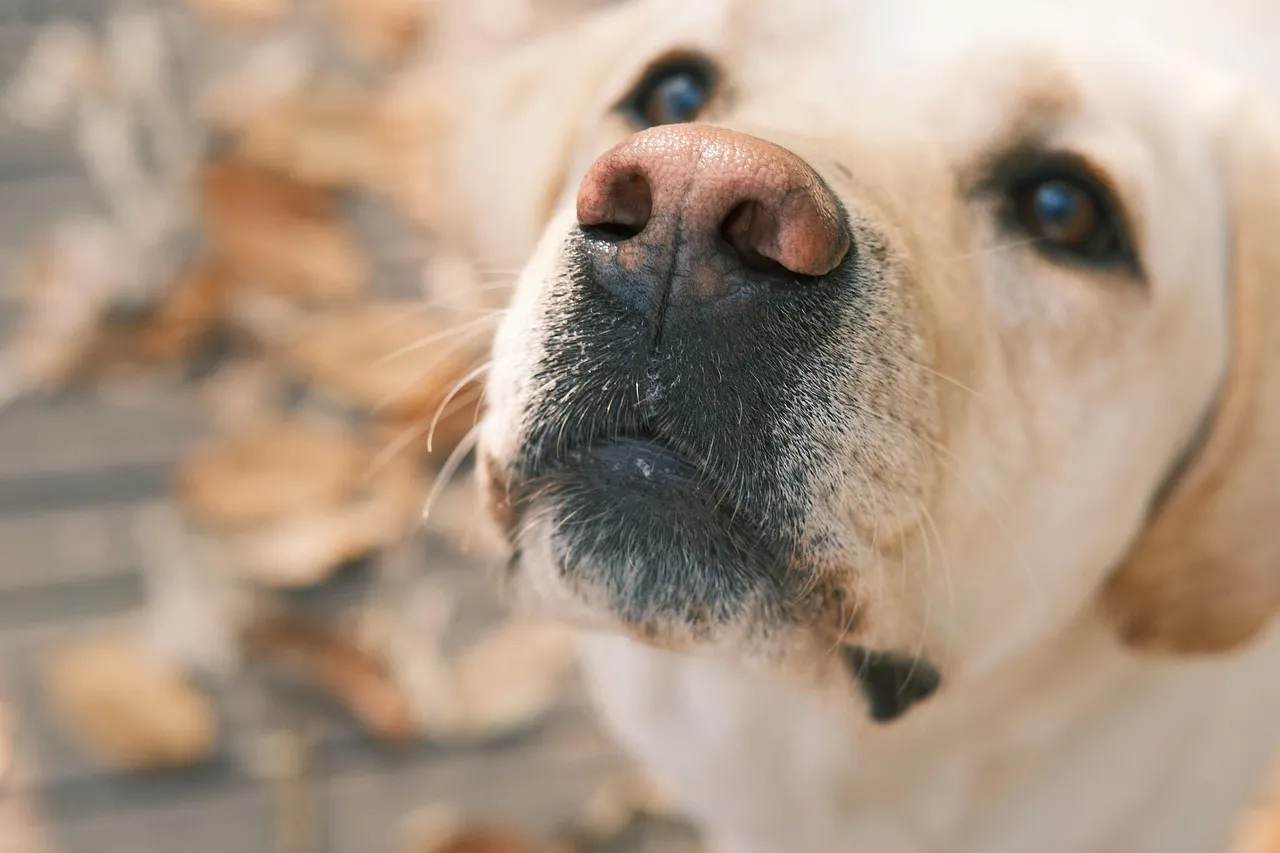
Eye contact with dogs isn’t just cute – there’s real science behind it. When humans and dogs hold a soft, mutual gaze, both release oxytocin, the same bonding hormone that ties parents to their kids.
Senior dogs close to their families often ramp up this lingering eye contact in their last weeks, and owners describe moments that feel almost unnerving: no toy, no treat, just the dog sitting quietly, watching, like it’s studying your face. Behaviorists chalk it up to reassurance-seeking and reading your micro-expressions. Emotionally, it feels like being memorized – like one long, wordless thank-you that some people find unbearably sweet and others find impossible to sit through without crying.
Fast Facts
- A well-known 2015 study found that dogs who shared longer eye contact with their owners produced bigger oxytocin surges in both species than dogs with shorter, casual glances.
- The same researchers tested hand-raised wolves the same way and found no gaze-triggered oxytocin loop at all – suggesting this bonding trick evolved specifically in dogs.
- Scientists describe it as a two-way loop: the dog’s gaze raises the owner’s oxytocin, and the owner’s gaze raises it right back in the dog.
#4 – Choosing to Sleep Closer Than Ever
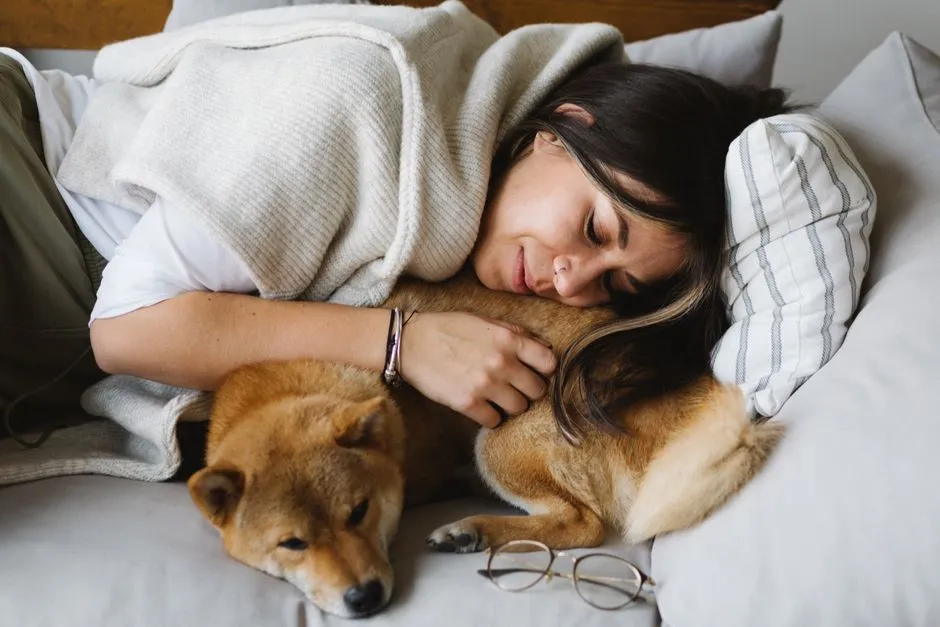
Dogs who spent a decade insisting on the couch or their own bed sometimes change the rules entirely at the end. They’ll drag themselves into your bedroom, curl against your side, or camp at your feet every single night – and for an older body already fighting pain and broken sleep, that’s not a small effort.
Part of it is practical: your scent, warmth, and breathing help them feel safe. But many owners describe something closer to ritual, as if the dog is standing guard one last time, settling in with a kind of purpose they never showed before. Some vets say we’re reading too much into it. Plenty of others admit they’ve watched it happen too many times to call it a coincidence.
#5 – Bringing You “Gifts” They Can Barely Carry
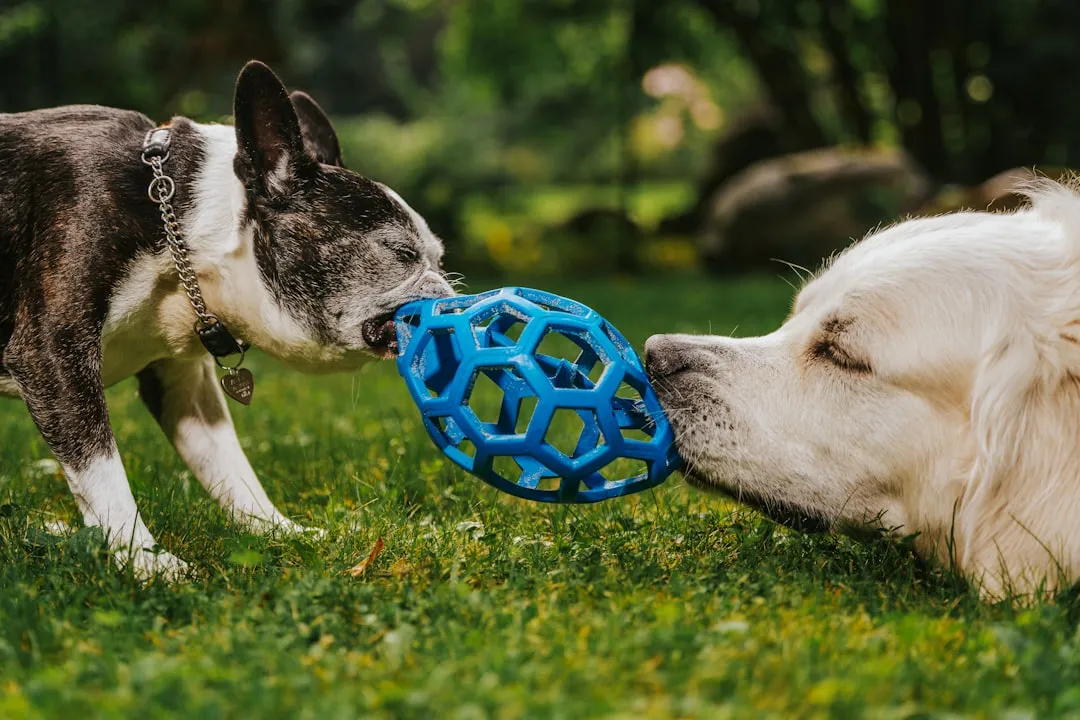
Not every senior dog stops playing entirely. Some, with aching joints and almost nothing left in the tank, will still drag over a favorite toy and gently drop it near you – not to play, just to deliver it, then lie back down.
Owners often read this as their dog offering up their most treasured possession, a small, final act of sharing. Behaviorally, it might be leftover retrieving instinct or a bonding ritual you’ve both repeated for years. But the timing can feel brutal in the best way – a toy ignored for months suddenly reappears in your lap during the hardest week of your life. Trainers call it habit resurfacing. The families living it call it unmistakably intentional.
#6 – Forcing You Into a Routine, On Purpose or Not
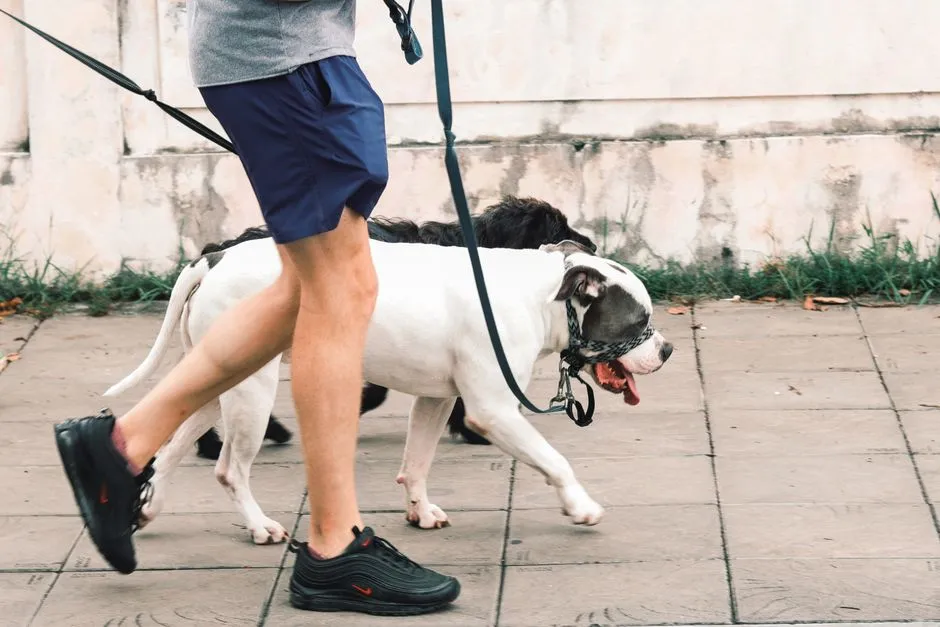
Dogs quietly run more of our lives than we admit, and in the final weeks, senior dogs often get almost militant about it. They still nudge you at mealtime, still demand the nightly walk even if it’s only to the mailbox, still bark until you get off the couch at the “usual” hour.
It’s frustrating in the moment – until you realize what it’s actually doing. By dragging you out of bed or toward the door, they’re forcing you to eat, move, and keep some kind of structure during a brutal stretch of time. Grieving owners say it constantly afterward: “If it weren’t for him, I wouldn’t have left the house at all.” Call it accidental if you want. It still works like a coping plan you never had to write.
#7 – Becoming Strangely Gentle With “Their” Humans
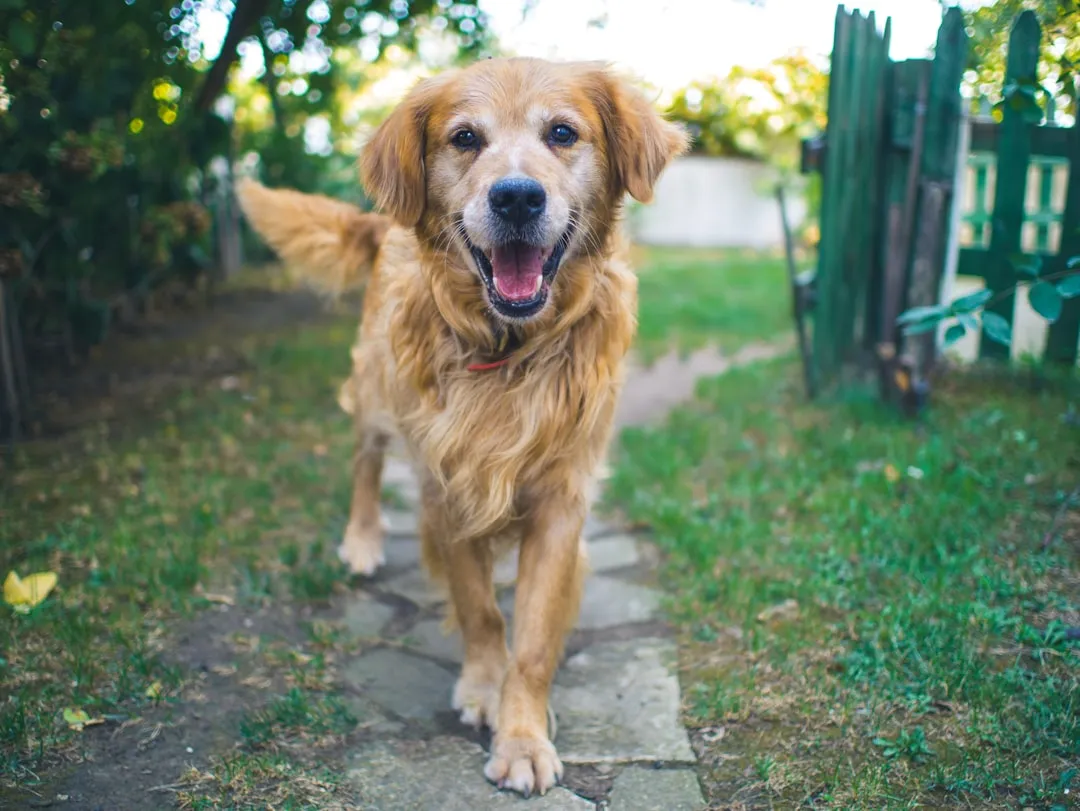
Some senior dogs get crankier as they age, but plenty do the opposite around their own family – they go soft. Less mouthing, less shoving, more careful footwork around you and the kids.
Part of that is just biomechanics: arthritis, muscle loss, and fatigue naturally slow a dog down, and slow can look a lot like deliberate tenderness. But owners consistently describe a different kind of calm settling over their dog – like the dog is trying hard not to cause trouble, just to be easy, pleasant company while everything else in its body is falling apart. Some people call it saintly. Others call it heartbreaking. Either way, it feels like your dog quietly trying to make things less hard for you.
Worth Knowing
- Osteoarthritis affects roughly 80% of dogs over age eight, quietly reshaping how playful, mouthy, or physical a senior dog can comfortably be.
- Because cartilage has no nerve endings, joint pain can build for months before an owner ever notices limping or obvious stiffness.
- Vets stress that arthritis pain is often very manageable with treatment, so a dog’s “gentler” personality shift isn’t always the illness talking – sometimes it’s simply untreated joint pain.
#8 – Checking On Each Family Member, One by One
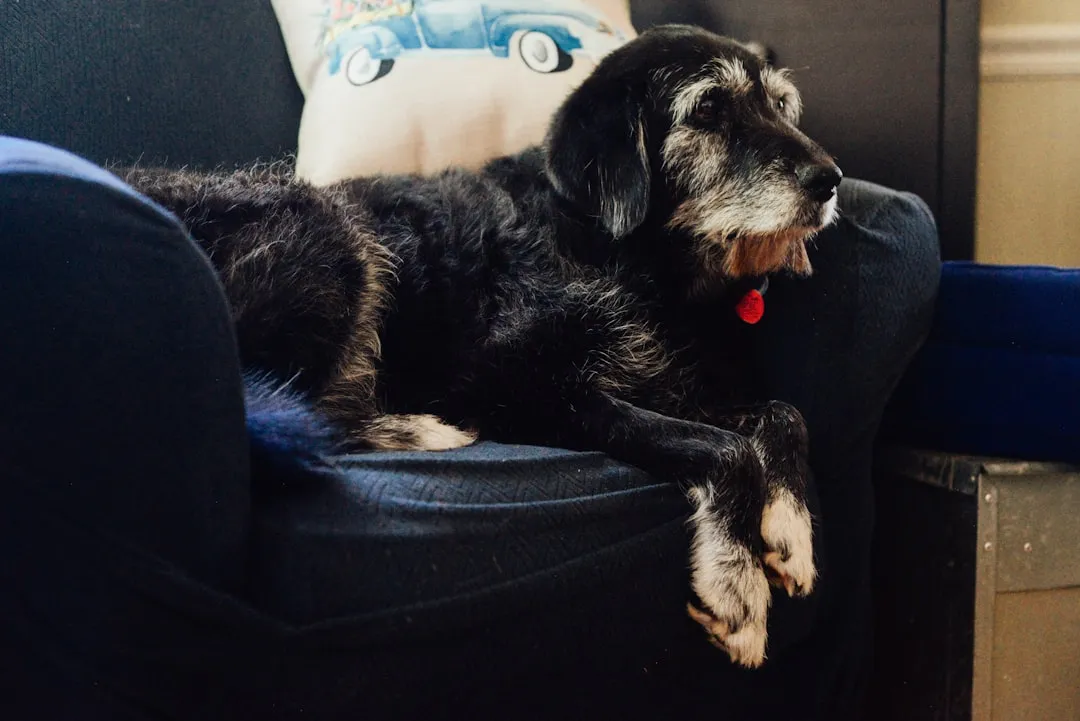
One of the most reported, most unsettling patterns: in the final weeks or days, some senior dogs start doing “rounds.” They move slowly from person to person – spouse, kids, even the cat – and linger a little longer with each one.
Science offers a tidy explanation: comfort-seeking from familiar scents and voices, or just short bursts of energy replacing long play sessions. Emotionally, though, it feels like inspection and farewell rolled into one. Some owners swear their dog said goodbye person by person. Skeptics call it confirmation bias. But even the skeptics usually admit the timing is impossible to shake off.
#9 – Comforting You When You Cry
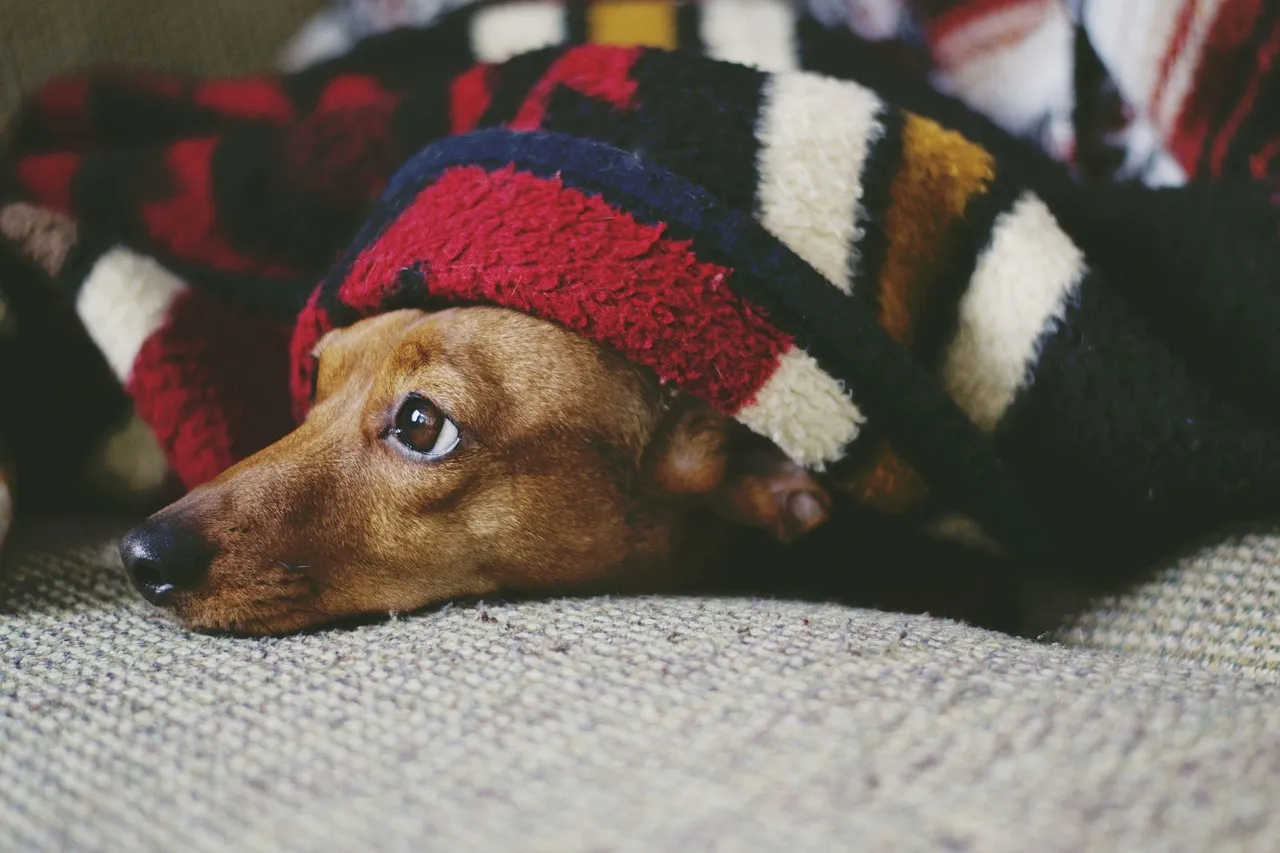
Ask enough grieving owners and you’ll hear the same story: at some point they finally broke down, and their sick, exhausted dog – sometimes barely able to stand – still dragged itself over to lick their face, nuzzle in, or rest a paw on their arm.
Dogs are known to pick up on distress vocalizations and changes in tone, and researchers describe this as dogs approaching to reduce their own stress or seek social contact. Families don’t experience it that clinically, though. They feel unmistakably, personally comforted – like their dog spent its last bit of energy specifically on calming them down. Call it emotion contagion if you want the science. It still feels like mercy.
#10 – Guarding the Entryways Like It’s Their Final Job
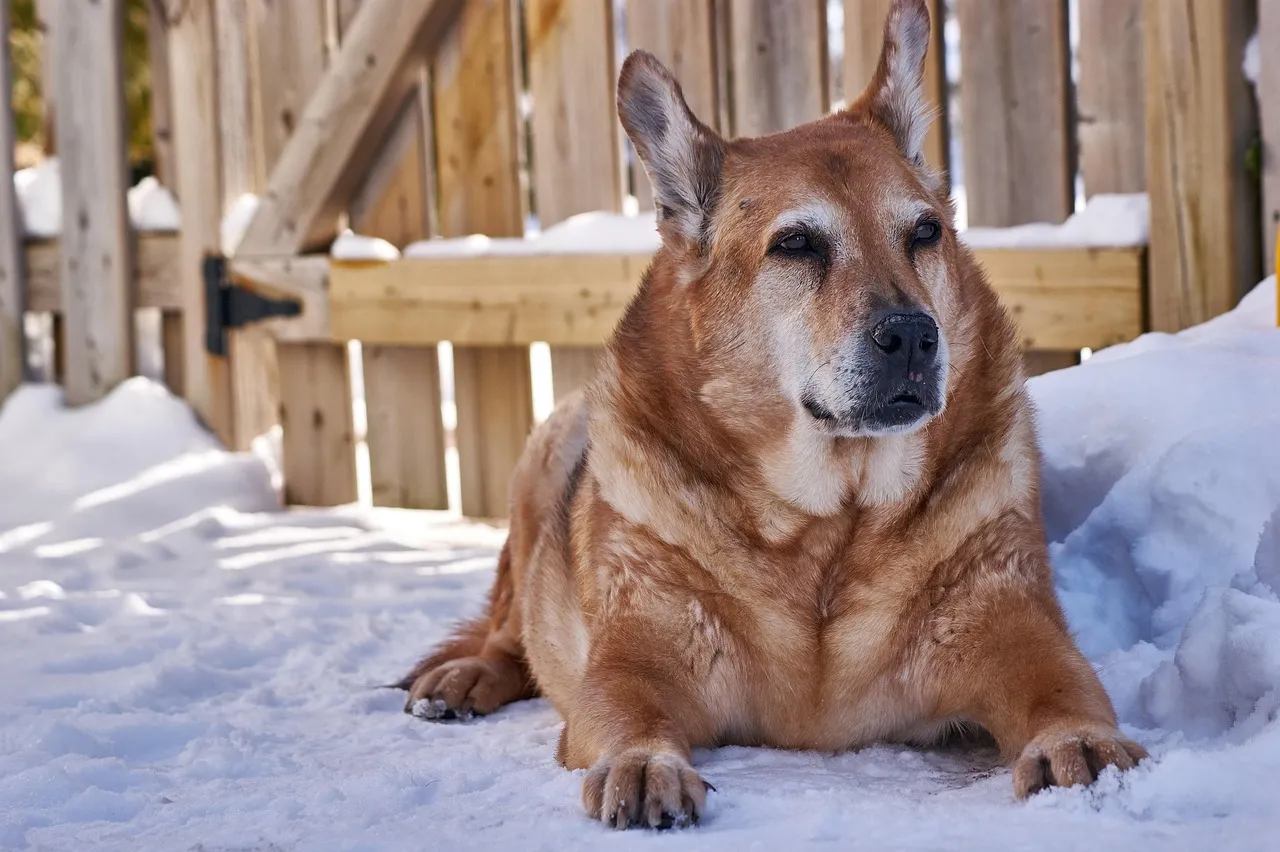
Even slow, confused senior dogs often keep one eye on the doorways, the hallway, the front window – as if they’re still technically on patrol. In the final weeks, a lot of them will position themselves somewhere they can see the entrance and simply watch.
They nap more, but they still startle awake at footsteps or a knock, as if the job doesn’t come with a retirement date. Biologically, it’s instinct – dogs are wired to alert and guard. But when your old dog, who struggles just to stand, still hauls itself to the door at a strange noise, it stops feeling like instinct and starts feeling like devotion. Vets call it habit. Owners call it their dog’s last act of service.
#11 – Offering Soft, Slow Tail Wags Just for You
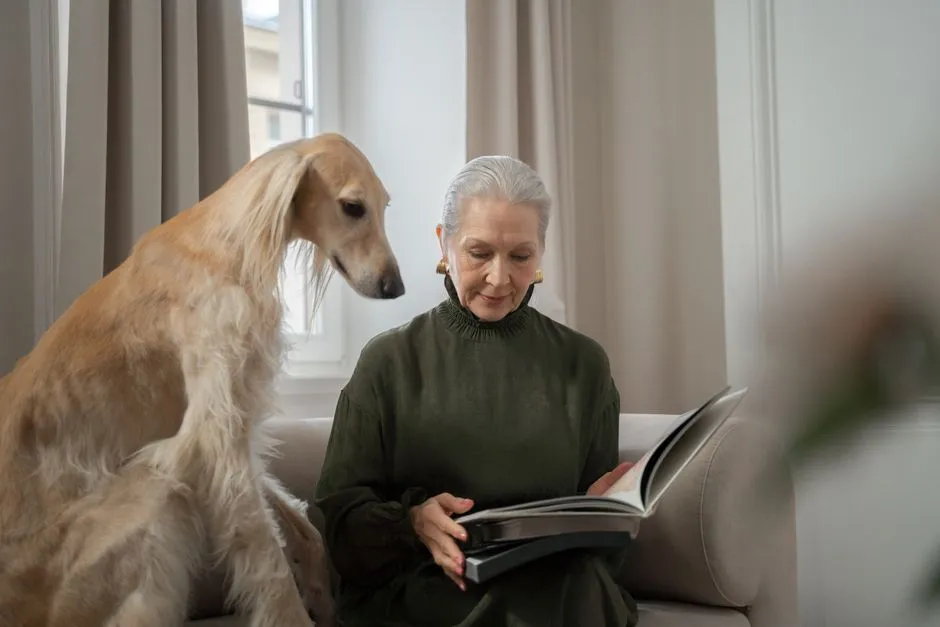
Once illness sets in, the big, whole-body helicopter wag usually disappears first. But a lot of owners notice something smaller replace it – a slow, side-to-side tail wag that only shows up when one specific person walks into the room or says their name.
Physically, it’s energy conservation; big movements simply cost more than a worn-out body can spare. Emotionally, those tiny wags become huge. No one else in the house gets that response – the bond narrows down to one laser-focused point. Critics call it reflex. The people who’ve watched that tired tail move just for them tend to disagree, permanently.
Quick Compare
- Normal aging: Naps more and moves slower, but still eats, greets you, and follows a fairly normal daily rhythm.
- Comfort-seeking shift: Suddenly seeks constant physical contact and resists being left alone, even for a few minutes.
- Normal aging: Tail wags still scale with excitement – a big greeting still gets a big wag.
- Comfort-seeking shift: Wags shrink down to small, private gestures saved for one specific person.
#12 – Letting Themselves Be Handled Without a Fight
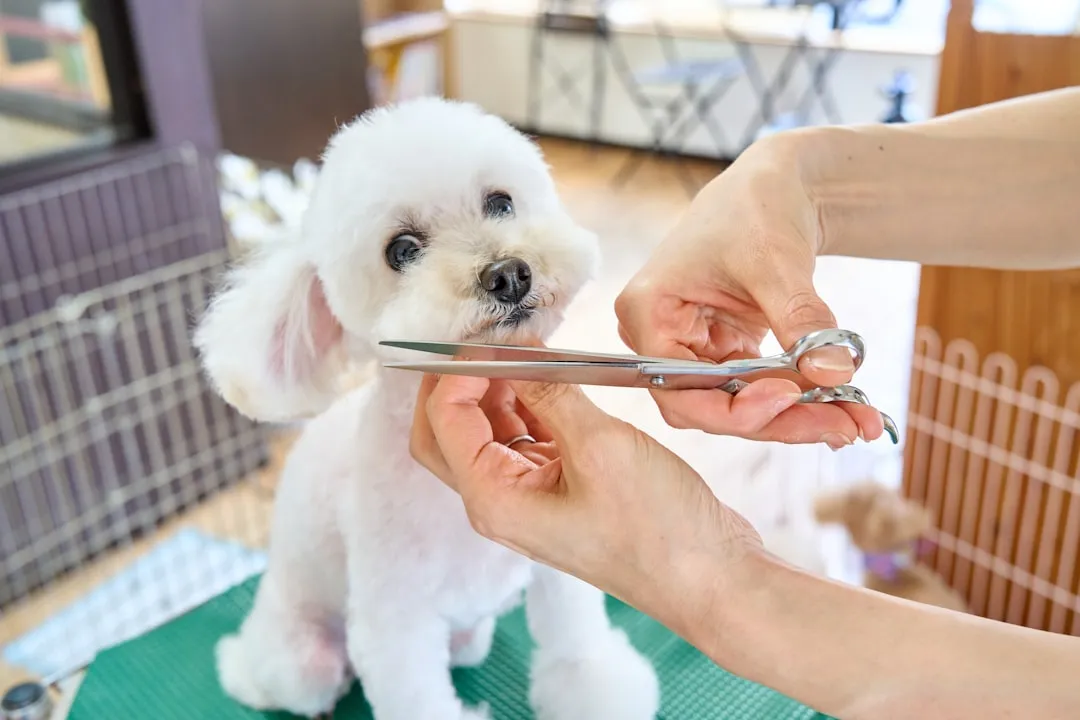
This one’s a little controversial. Dogs who spent years hating nail trims, baths, or vet visits often tolerate all of it far better at the end – letting you lift them, clean them, or give medicine with almost no protest.
Part of that is simple weakness; their threshold for fighting back has dropped along with everything else. But here’s where owners get wrecked: it often feels like a decision, as if the dog thought, “Fine, I’ll let you help now,” because it sensed how hard you were trying. Maybe that’s over-romanticizing a physical decline. Countless families report the exact same shift anyway – the battles stop, and quiet cooperation takes their place.
#13 – Seeking Out the One Struggling the Most
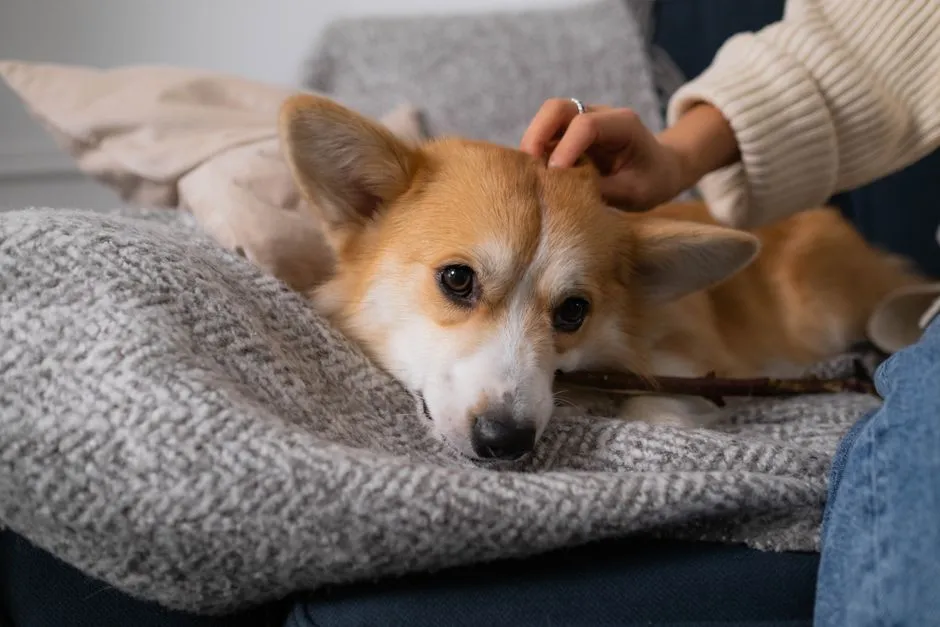
This detail sparks the most debate, but families describe it constantly: the dog starts spending more time near whichever person is struggling hardest – the teenager having a brutal year, the partner with anxiety, the one who keeps crying in the bathroom where nobody’s supposed to notice.
Dogs are remarkably good at reading stress, tone of voice, and posture, and researchers would call this gravitating toward high-emotion people rather than deliberately “choosing” who needs them. But ask the people it happened to, and it never once felt random. It felt like being chosen for extra time.
#14 – Soaking Up Sun and Inviting You to Sit
Owners of senior dogs often notice a sudden obsession with one exact spot – a sunny patch on the floor, the porch step, a warm corner of the yard. The dog spends more and more time there, and starts looking back at you like it’s asking you to join.
The physical explanation is simple: warmth eases stiff, aging joints, so the sunbathing itself isn’t symbolic. The invitation is what gets people – you sit “just for a minute” and end up there for half an hour, talking to your dog or crying into its fur while you both just breathe. That small ritual of shared sunlight quietly turns into a living vigil, and somehow it teaches you how to be still.
At a Glance
- Hospice-experienced vets often describe a temporary rally near the end – a sudden burst of appetite, energy, or playfulness after weeks of decline.
- That rally is usually driven by short-term shifts in pain, inflammation, or adrenaline, not an actual recovery.
- Many owners are gently encouraged to treat any unusually good day as a gift to enjoy, not a reason to second-guess hard decisions.
#15 – Having One Last “Good Day” That Feels Like a Gift
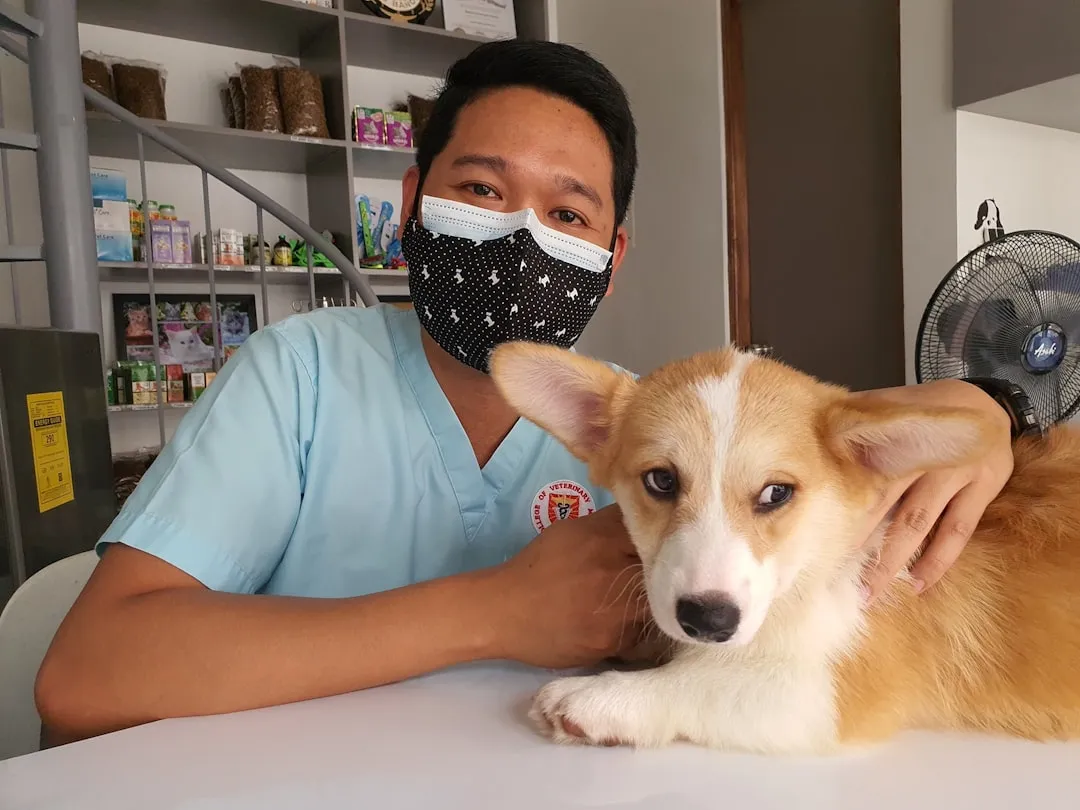
Ask any vet and they’ll mention it almost immediately: the “last good day” is so common it’s practically a rule. A dog who’s been lethargic for weeks suddenly rallies – eats well, asks for a walk, wags more, maybe even plays like its old self for an afternoon.
Physiologically, this is usually a temporary swing in pain, inflammation, or adrenaline, not a real recovery. Emotionally, it’s devastating and precious at the same time – a final glimpse of the dog your family remembers from before the illness took over. Vets warn against reading too much into it, but plenty also admit how often it shows up right before a sharp decline. Either way, that day usually becomes the memory people hold onto for years.
#16 – Slipping Away Only When You Finally Step Out
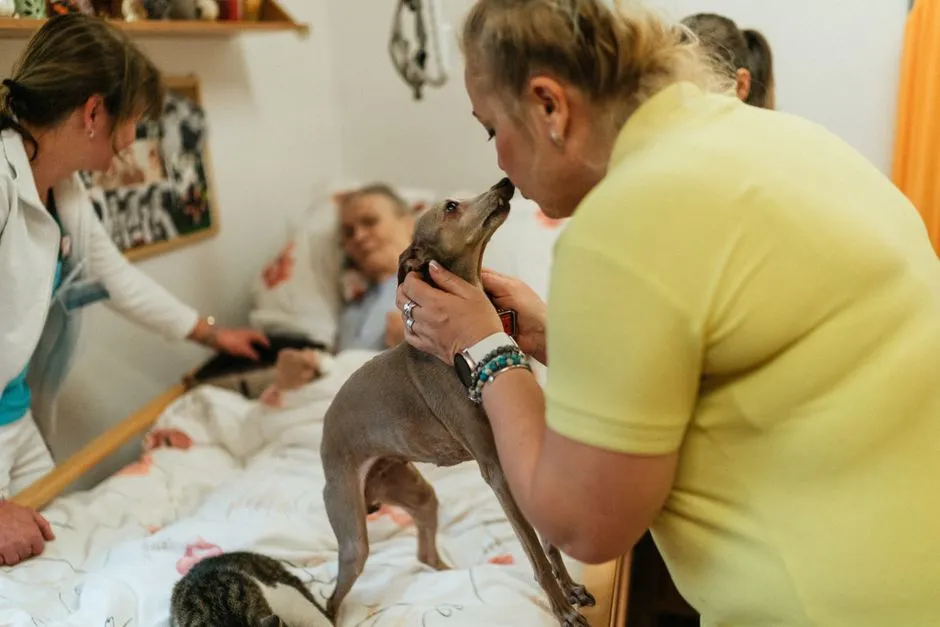
This is, hands down, the most divisive pattern in the whole list. Countless families report that their dog didn’t pass while being held – it happened in the five minutes they left the room, or the hour they stepped out to shower or grab food.
It can feel like a cruel twist, like missing the exact moment you fought so hard to be present for. But vets and hospice workers see it often enough to almost expect it. One explanation is pure biology – dying is stressful, and a quiet, calm room can make it easier to let go. The other explanation, one plenty of owners fiercely believe, is that their dog simply didn’t want them to watch, or knew they’d never leave otherwise. True or not, it fits everything dogs have always done for us: protecting us, even in the moment it breaks our hearts the most.
The Bottom Line
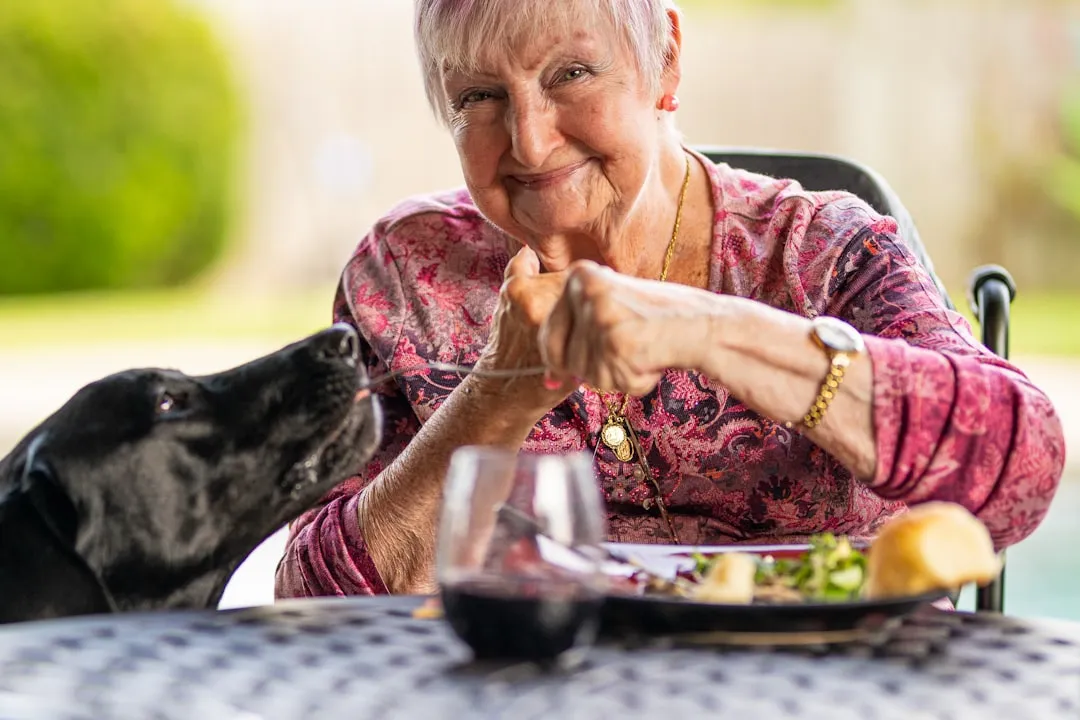
Senior dogs don’t turn into psychic little angels with supernatural foresight. What actually happens is simpler and somehow more moving: they become hyper-focused on the handful of things that always mattered most – your scent, your voice, your routines, your presence in the room.
Science can explain plenty of what looks like “signs” – shifting pain levels, changing brain chemistry, fading senses rewriting old habits. But no amount of biology fully explains why old dogs spend their last weeks doing exactly what they always did: comforting us, guarding us, choosing us, right up until their bodies simply won’t let them anymore. Call that romanticizing if you want. After a lifetime of loyalty like that, dogs have earned a little myth and magic. Which of these did your dog show you – and which one will you never, ever forget?

- 16 Ways Senior Dogs Try to Comfort Their Families in the Weeks Before They Go - August 5, 2026
- 15 Things Dogs Do in Their Final Weeks That Most Owners Only Understand in Hindsight - August 5, 2026
- 10 Powerful Guard Dog Breeds Known For Their Unwavering Loyalty And Protective Instincts - August 4, 2026