

#1 The temperature shift in the sand

Long before a hatchling breaks the surface, it’s already responding to heat. Nocturnal emergence has been widely documented across marine and freshwater turtles, and has long been suggested as an adaptive behavior that reduces risks of heat stress and predation. Researchers have found that it isn’t just the absolute temperature that matters, but how quickly it’s changing near the surface of the nest.
The most plausible thermal factor appears to be the change of temperature at superficial sand depths, with hatchling emergence inhibited when subsurface sand temperatures were increasing, a mechanism likely to ensure predominantly nocturnal hatchling emergence regardless of sand albedo, seasonality or latitude. In other words, the sand itself acts like a built in thermometer, and the hatchlings are reading it before they ever move a muscle.
#2 The rustle and vibration of siblings

Sea turtles never dig alone. It has been known for some time that sea turtle hatchlings work together to dig their way out of the nest, with advantages including speeding up escape from the nest, predator dilution, and shared energy use during digging. That cooperative digging seems to be triggered by movement, not conscious coordination.
Once one of the hatchlings decides it is time to continue, its digging will trigger its siblings to do the same. It’s a chain reaction of tiny flippers scratching against sand, each nudge setting off the next, until the whole clutch is climbing together toward the surface at roughly the same time.
#3 The cool dark of night
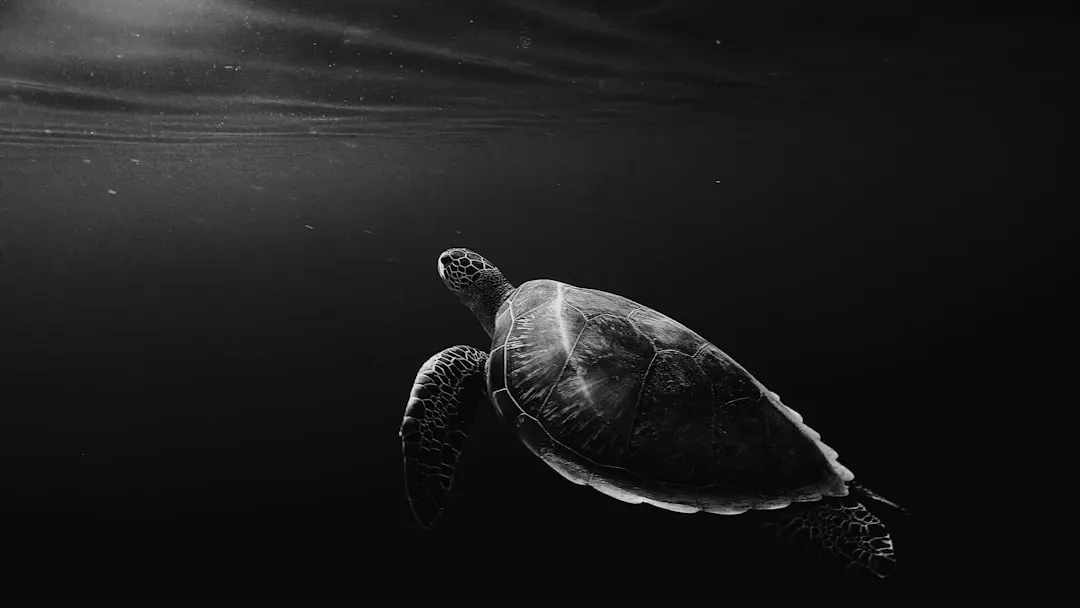
Timing is everything for a hatchling, and darkness plays a starring role. Hatchlings nearly always emerge from their nests at night. Data collected on Florida beaches backs this up in striking detail.
Emergence times are normally distributed, with the vast majority of sea turtle hatchlings emerging at night with a peak between 23:00 and 24:00 hours for loggerheads in Florida. The reasoning is practical rather than poetic. Hatchlings are clever in avoiding high temperatures, since emerging during daylight under the hot sun can cause heat exhaustion and greater exposure to predators, so most hatchlings emerge after the sand cools in the late afternoon or at night, or during cool cloudy days.
#4 The brightness of the horizon
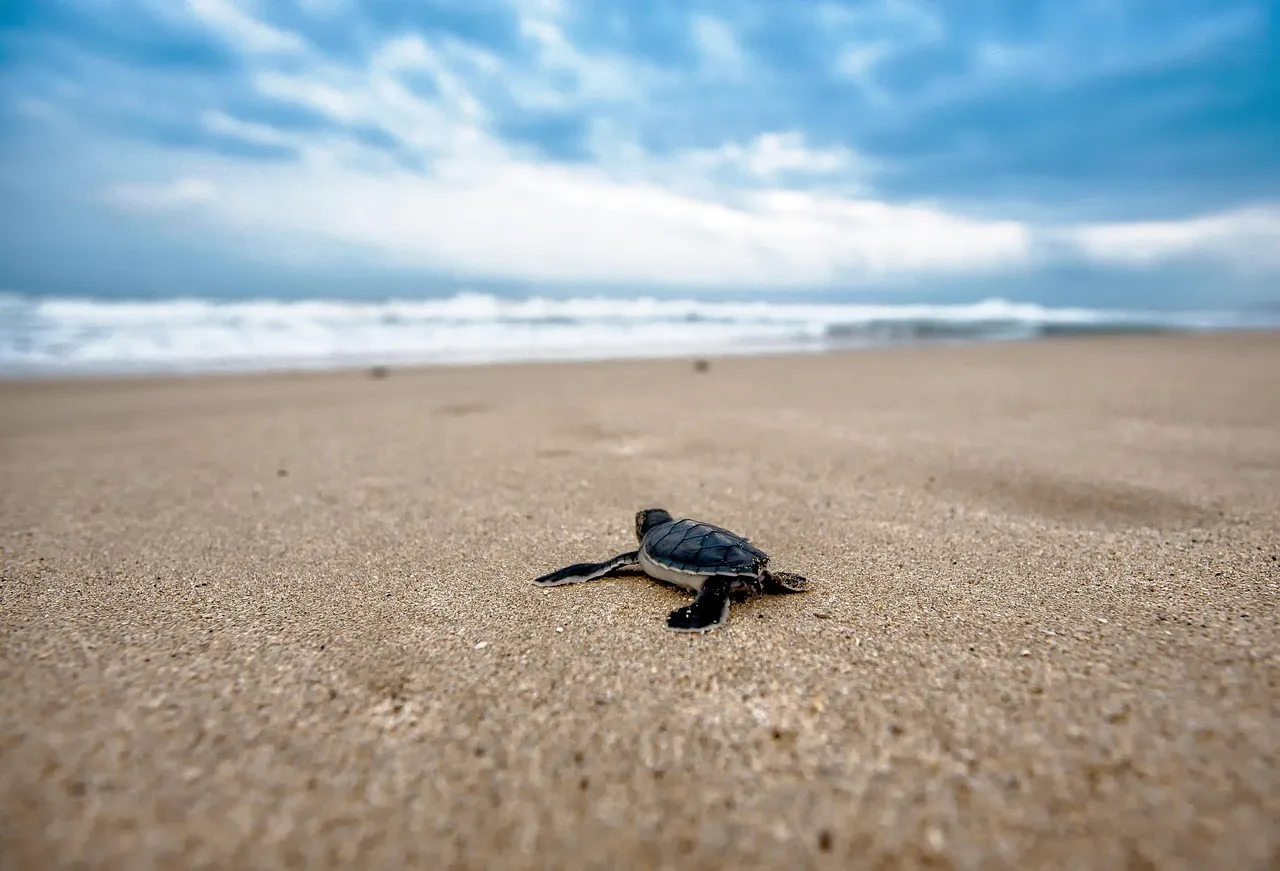
Once above ground, a hatchling’s eyes take over almost immediately. While on the beach, hatchlings find the ocean by crawling towards the lower, brighter seaward horizon and away from the dark, elevated silhouettes of vegetation and dunes. It’s a simple visual rule, but an effective one on a natural, undeveloped beach where the open sky over the water is reliably brighter than the tree line inland.
Not all light pulls equally, though. Each light source affected hatchling seafinding performance either in direction of orientation or width of dispersion, with hatchlings attracted to light sources emitting short wavelength visible light and long wavelength sources that excluded intermediate wavelengths. That sensitivity to certain wavelengths is exactly why streetlights and porch lamps near nesting beaches can be so disruptive, since they can override the natural glow of the open horizon.
#5 The downward slope of the beach
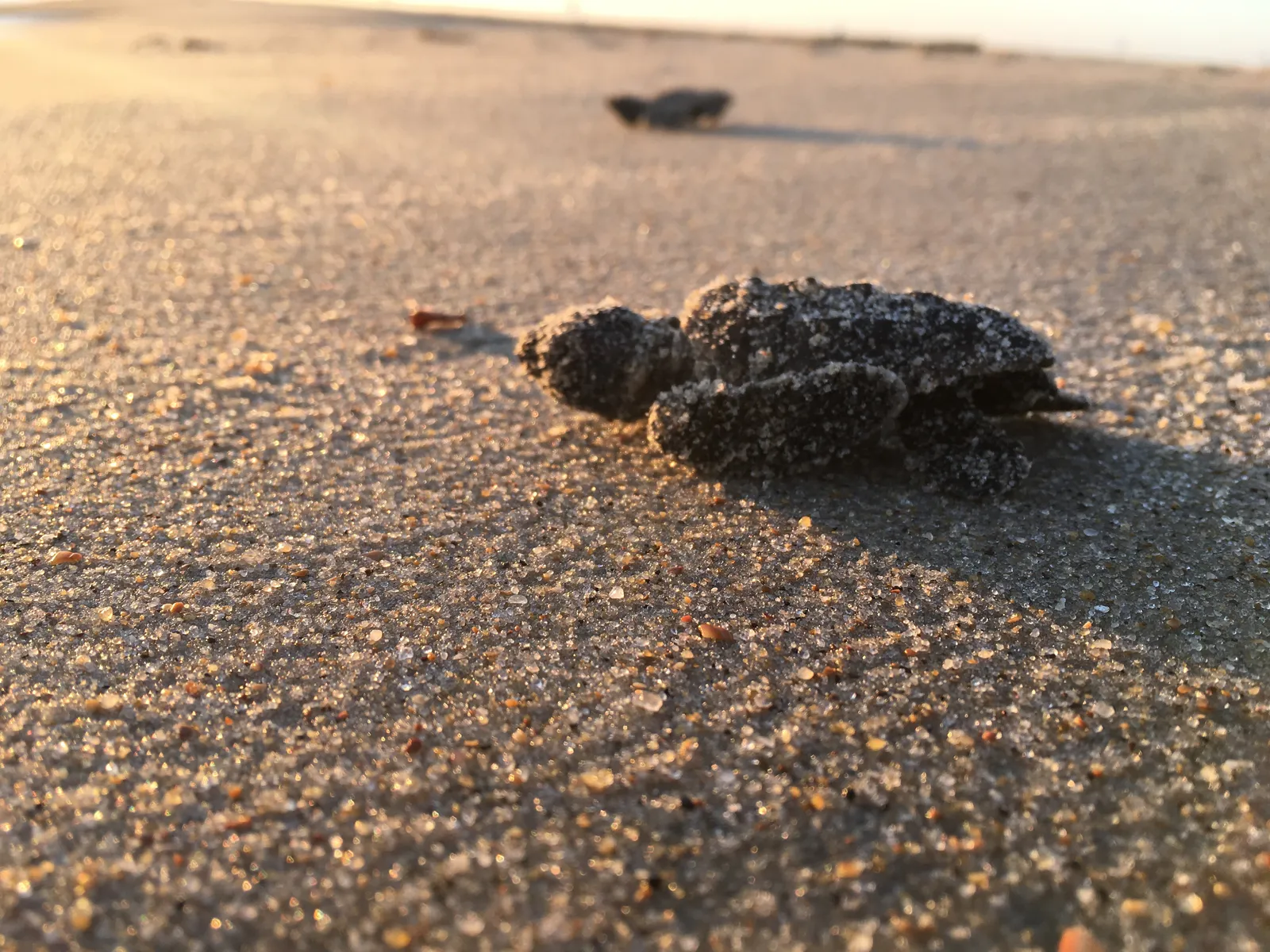
Sight isn’t the only thing guiding a hatchling toward the water. Its body also seems to sense the gentle downward tilt of the beach itself, a cue that becomes especially important when visual signals get confusing. The preference for heading downslope overrides artificial distractions and many hatchlings can make it to the sea without too much trouble, unless the hatchlings are blinded by the light.
This slope sense acts almost like a backup system. When artificial lighting scrambles the visual horizon cue, a strong enough downhill gradient can still nudge a hatchling in the right direction. It’s a good reminder that these tiny animals aren’t relying on just one sense, but layering several together in case one signal gets muddled.
#6 The rhythm of incoming waves
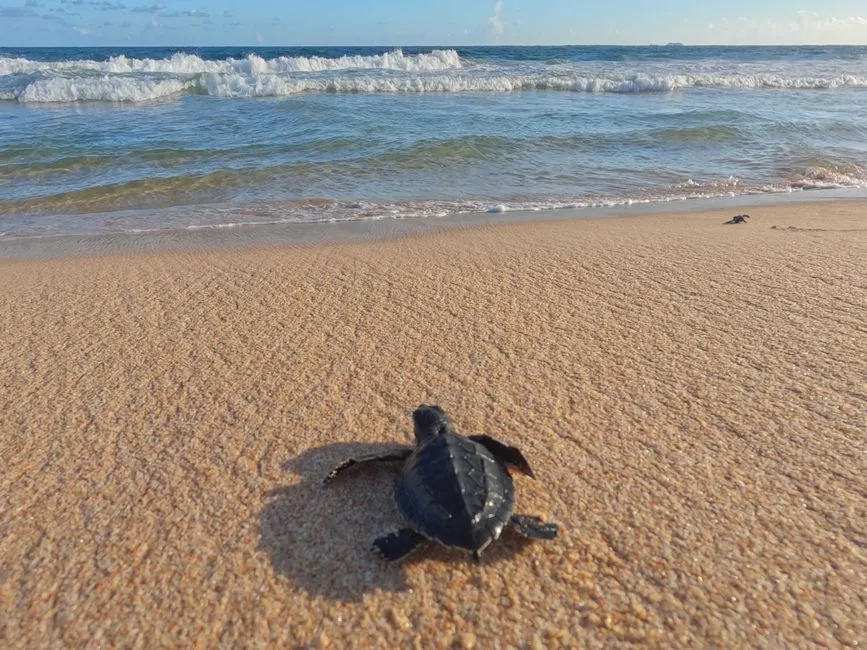
The moment a hatchling’s flippers touch the surf, a new sense kicks in entirely. Upon entering the ocean, turtles initially orient seawards by swimming into waves, which can be detected as orbital movements from under water. This isn’t the same visual system that guided them across the sand. It’s something closer to feeling the water itself.
Sea turtles are exceedingly sensitive to water movements associated with ocean waves, and hatchlings entering the sea for the first time use this ability to guide themselves offshore by orienting their swimming relative to wave direction. Since waves generally roll in from the open ocean toward the shore, swimming directly into them is a remarkably reliable way to head in the opposite direction, straight out to sea.
#7 Earth’s magnetic field
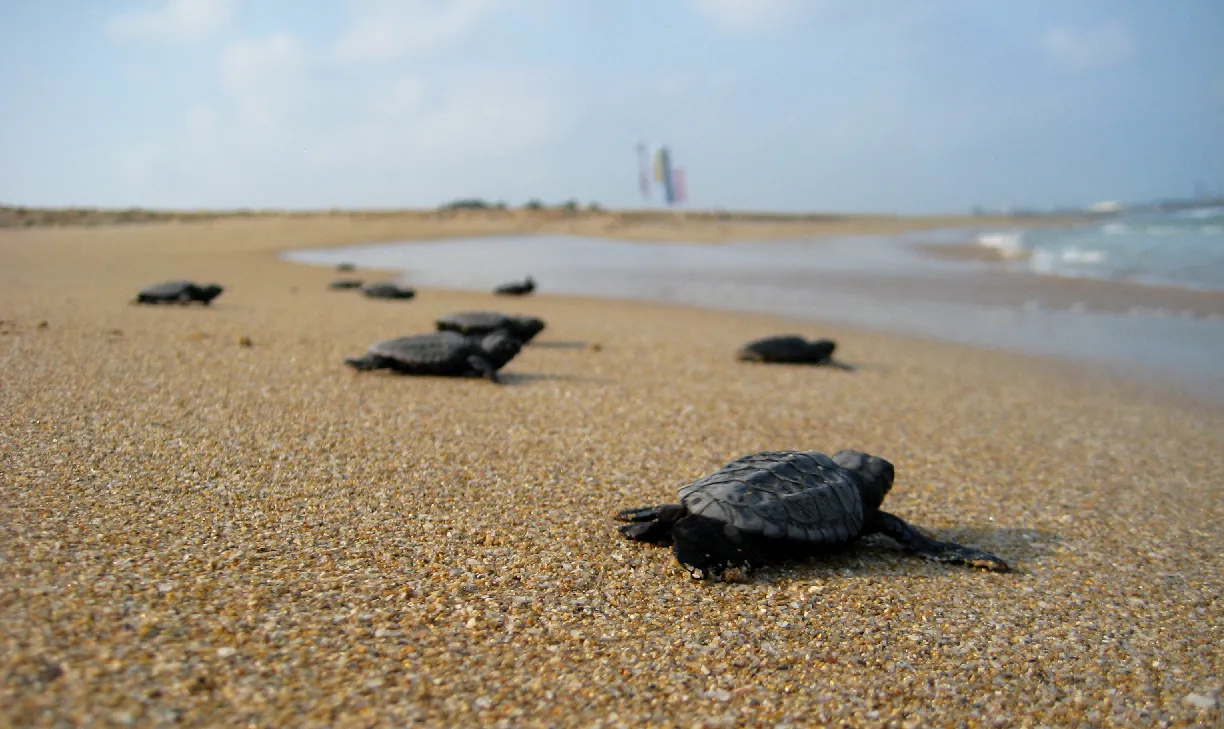
This is where the story gets genuinely strange. Sea turtles carry a sense that humans simply don’t have. Sea turtles have at least one major sensory ability that humans lack, the ability to perceive Earth’s magnetic field, and this magnetic sense appears remarkably sophisticated, allowing them to obtain both directional and positional information.
What’s fascinating is that hatchlings don’t seem to be born already trusting this sense fully. The experience of maintaining a consistent course, whether by swimming toward light or by swimming into waves, is enough to set the turtle’s magnetic directional preference. It’s as if the earlier senses, light and waves, essentially calibrate the magnetic compass for later use, a compass that stays with the animal for the rest of its life. Loggerheads imprint on natal beaches and rely on magnetic cues throughout their migrations, which means this early calibration on the beach can echo for decades.
#8 The sound and chemistry of the surf

The last piece of the puzzle is the quietest, and the least understood. Turtles do seem to hear, though in a limited way. Sea turtles are capable of hearing, but they appear sensitive only to low frequency sounds commonly found in near shore waters, such as the sounds of ocean waves breaking on beaches.
Whether hatchlings actually use that hearing during their crawl to the sea is still debated among researchers, and it’s one of those gaps in the science worth being upfront about. Researchers note that hatchlings may integrate multiple cues, which can include magnetic, visual, wave and current direction, and even chemical signals, depending on the context. So while sound and chemistry likely play some supporting role in this sensory relay race, exactly how large that role is remains an open question, not a settled fact.
Final thoughts
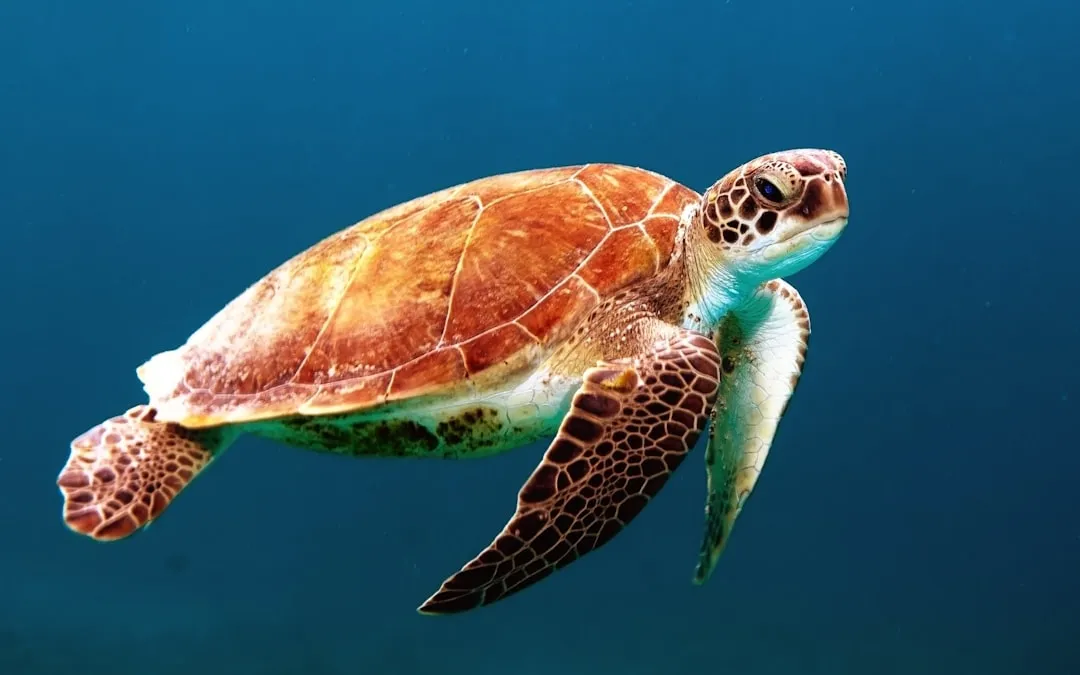
What strikes me most about this whole process is how little room for error these hatchlings actually have. Every sense, from the cooling sand to the tilt of the horizon to an invisible magnetic field, has to fire in roughly the right order, on the first try, with no chance to practice beforehand. That’s not a gentle introduction to life. It’s closer to a pass or fail exam taken by a creature that just hatched an hour earlier.
I’d argue this is exactly why coastal lighting policies and beach development deserve more attention than they usually get, not less. These animals aren’t guessing their way to the ocean. They’re running a precise, ancient sequence that evolution spent millions of years refining, and something as small as a porch light left on overnight can throw the whole thing off course. Understanding what hatchlings sense before they ever reach the water isn’t just a neat bit of biology trivia. It’s a pretty direct argument for why the decisions humans make on nesting beaches carry more weight than most people realize.

- 11 Ways Your Cat Is Secretly Protecting You Every Day - August 14, 2026
- 10 Mistakes People Make When Camping in Wolf Country - August 14, 2026
- 8 Dog Breeds That Form the Strongest Bond With One Person - August 14, 2026