

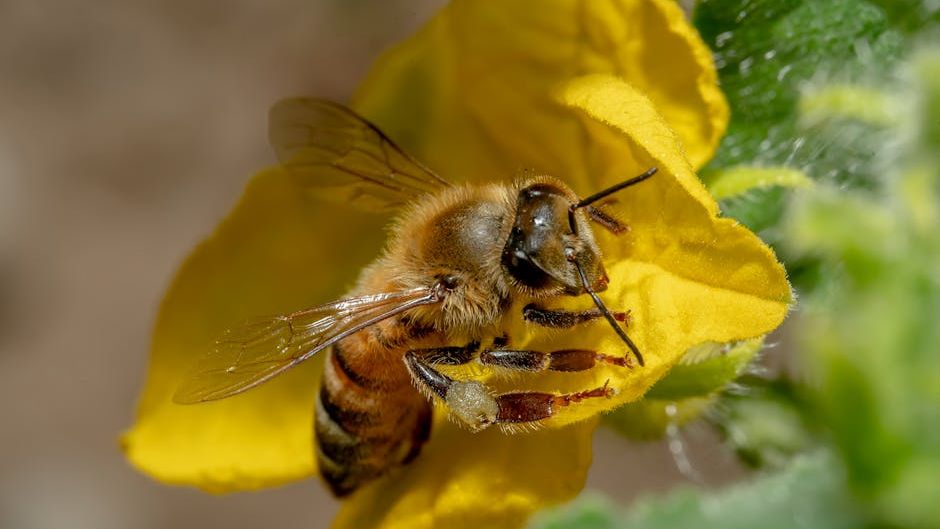
Honeybees are already fighting on too many fronts. Habitat loss, parasites, climate disruption – and now, a herbicide that most people consider completely harmless to insects is emerging as a serious threat. Not to their bodies, but to their minds.
New research is uncovering something deeply unsettling about one of the world’s most widely used weed killers and what it does inside a bee’s brain. The findings are the kind that make you stop and rethink everything you thought you knew about “safe” chemicals. Let’s dive in.
The Herbicide Nobody Thought to Worry About
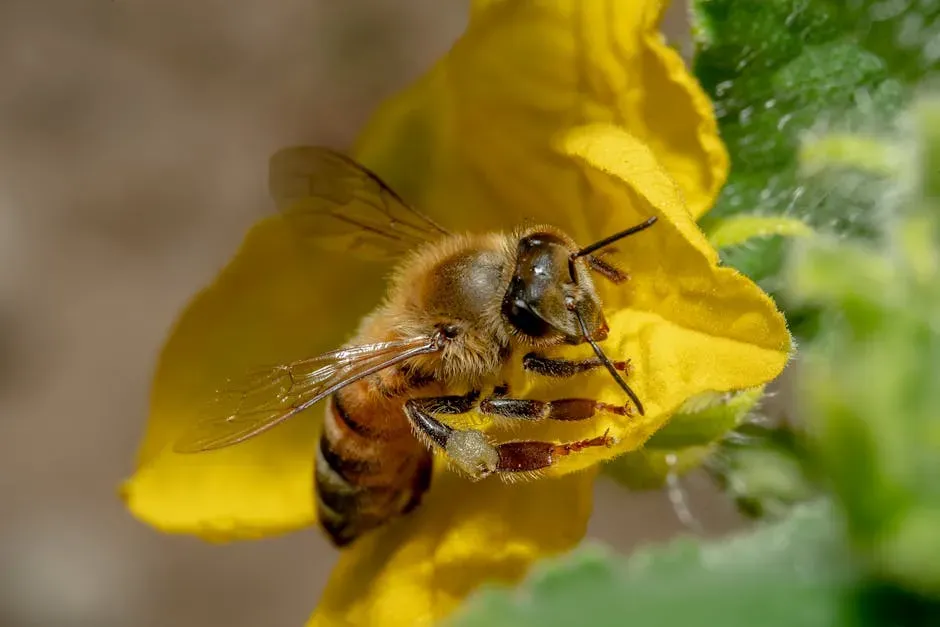
When most people think about chemicals harming bees, they picture insecticides. That’s the obvious culprit, right? Herbicides – chemicals designed to kill plants – have largely flown under the radar when it comes to bee health. They’re not meant to kill insects, so why would they?
Here’s the thing: that assumption may have been dangerously wrong. Researchers studying the effects of glyphosate, the active ingredient in the blockbuster herbicide Roundup, have found that even low, field-realistic doses can significantly alter the neurological function of honeybees. We’re not talking about killing them outright. We’re talking about something arguably more insidious – changing how their brains work.
What the New Research Actually Found
The study, published in April 2026 and covered by Phys.org, examined how glyphosate exposure affects acetylcholinesterase activity in honeybee brains. That’s a mouthful, but here’s the simple version: acetylcholinesterase is an enzyme critical to nerve signal transmission. When it gets disrupted, the brain doesn’t communicate properly.
Scientists found that bees exposed to glyphosate showed measurable changes in this enzyme’s activity, which directly impacts how bees process information, learn, and navigate. Think of it like interference on a radio signal. The bee is still “on,” but the messages are getting scrambled. For an insect whose entire survival depends on precise memory, communication, and spatial awareness, that’s not a minor inconvenience. That’s existential.
How Bees Are Actually Exposed to Glyphosate
You might wonder how a herbicide even reaches a bee. Glyphosate is sprayed on crops, roadsides, and gardens on a truly massive scale. It is one of the most heavily applied agricultural chemicals on the planet, with hundreds of millions of pounds used globally each year.
Bees encounter it through contaminated pollen and nectar in treated areas, through water sources, and even through residue on plant surfaces. Honestly, it’s hard to imagine a foraging bee in a modern agricultural landscape avoiding exposure entirely. The researchers specifically used doses that reflect real-world conditions – not exaggerated lab quantities – which makes these findings far more relevant and, frankly, more worrying.
The Impact on Learning and Memory
This is where things get really striking. Honeybees rely on an extraordinary capacity for learning and memory to do their jobs. They memorize complex flight paths. They communicate the location of food sources through the famous “waggle dance.” They recognize flowers by scent and color. Every single one of these behaviors depends on healthy neurological function.
When glyphosate disrupts the enzyme responsible for nerve signal regulation, bees show impaired learning responses. Studies using conditioning experiments – where bees are trained to associate a scent with a reward – have demonstrated reduced learning performance in exposed bees. It’s hard to say for sure exactly how this translates to colony-wide effects in the field, but the implications feel enormous. A bee that can’t navigate or learn efficiently is a bee that can’t forage. A colony full of those bees is a colony in serious trouble.
Why This Matters Far Beyond Beekeeping
Let’s be real about the stakes here. Honeybees are responsible for pollinating roughly a third of all the food humans consume. Almonds, apples, blueberries, cucumbers – the list goes on and on. If bee cognitive function is being compromised at a neurological level by a chemical we’ve been spraying with extraordinary confidence for decades, the downstream effects on global food systems could be staggering.
Meanwhile, glyphosate’s relationship with ecological health has been a battleground topic for years. Debates around its safety for humans have dominated headlines, but the impact on non-target species like pollinators has received far less urgent attention. This new research shifts the conversation. It forces the question: have we been measuring the wrong risks all along?
The Science of Bee Brains Is More Complex Than We Realized
One thing that genuinely surprises many people is just how sophisticated bee neurology is. Despite having a brain roughly the size of a sesame seed, a honeybee processes sensory information, stores memories, and makes decisions with remarkable efficiency. Researchers have long admired the honeybee brain as a model for understanding neural economy – doing so much with so little.
That’s also what makes them vulnerable. A small brain with tightly optimized systems has less redundancy. When one pathway gets disrupted, there’s no backup system to compensate. It’s like a finely tuned watch versus a simple wall clock – the intricate one keeps better time, right up until something disturbs the mechanism. Even a subtle chemical shift in enzyme activity can cascade into behavioral problems that would take months of field observation to fully untangle.
What Comes Next – And What Should Change
I think the most important outcome of this research is not the finding itself, but the regulatory conversation it should trigger. Glyphosate’s approvals in most countries have been based on toxicity assessments that largely focus on acute lethality in non-target species. A bee doesn’t die immediately after glyphosate exposure. So it was considered safe. That logic now looks incomplete at best.
Researchers are calling for a broader framework that accounts for sublethal neurological effects when evaluating herbicide safety for pollinators. This isn’t about banning a chemical overnight – agricultural systems are deeply dependent on these tools. It’s about demanding more honest, comprehensive testing before we spray hundreds of millions of pounds of something onto the landscapes that bees call home. The science is telling us something. The question is whether the people making policy decisions are actually listening.
Conclusion: The Invisible Threat We Chose Not to See
There’s something quietly devastating about this story. Not a dramatic bee die-off. Not a sudden ecological collapse. Just a slow, neurological unraveling happening in billions of tiny brains across farms and gardens everywhere, largely invisible to the human eye.
What this research underlines is something scientists have been warning about for years: our frameworks for chemical safety are built around what we can easily measure, not necessarily what matters most. Behavioral impairment, cognitive disruption, subtle interference with the biology that holds ecosystems together – these things don’t show up in simple toxicity tests. They require someone asking a different question.
The bees can’t advocate for themselves. So the real question is: are we finally willing to start asking better questions on their behalf? What do you think – should herbicide safety standards be fundamentally rethought? Share your thoughts in the comments.

- Beavers Are Nature’s Engineers, Creating Vital Habitats for Other Wildlife Species - July 21, 2026
- The Recovery of the California Condor Offers Hope for Other Critically Endangered Birds - July 21, 2026
- Bats Play a Crucial Role in Controlling Insect Populations Across the United States - July 21, 2026