
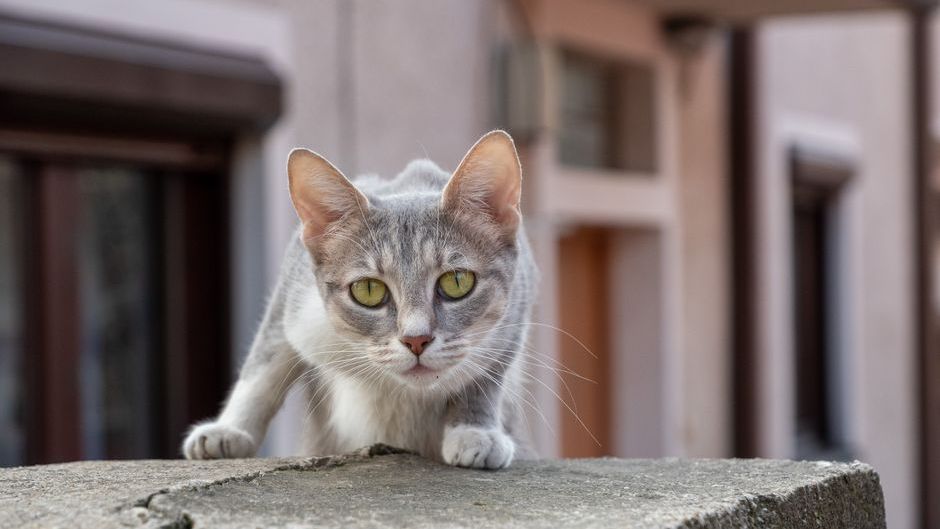
A Visual System Built for Detecting the Invisible
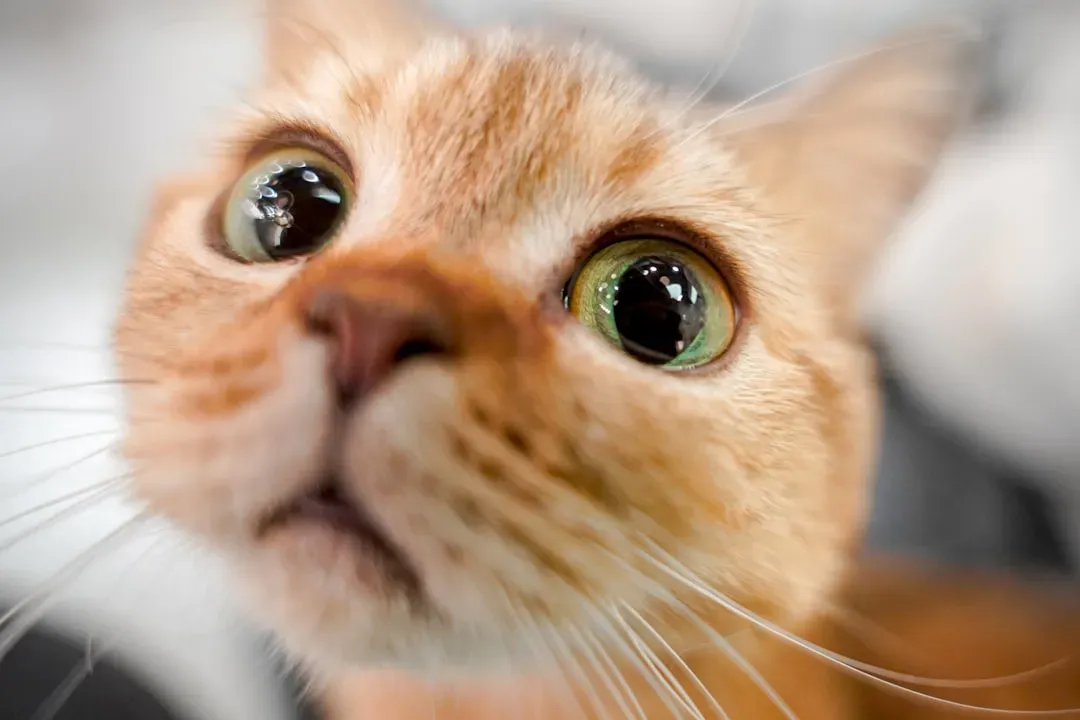
The architecture of a cat’s eye is fundamentally different from yours, and that difference is the key to understanding the wall-staring habit. Cats have far more rod cells in their eyes than humans, making them exceptional at detecting movement in dim conditions. A reflective layer behind the retina called the tapetum lucidum amplifies available light, allowing cats to see in conditions far darker than what humans require.
With a flicker fusion rate of 70 to 80 Hz and dense rod cell concentration, cats can detect the slightest movement in their peripheral vision, which is critical for an ambush predator that waits motionless before exploding into a short sprint to catch prey. To put that in perspective, a cat’s eye can perceive up to 70 images per second, whereas a human’s can only catch around 45. That gap in processing speed is enormous, and it means your cat is registering visual events that your brain never even registers as having occurred.
Cats can also see ultraviolet wavelengths invisible to the human eye. Certain fabrics, cleaning residues, and surface coatings reflect UV light in patterns we cannot perceive, making a blank wall or floor visually interesting to your cat. So when you look at a plain white wall and see nothing, your cat may be seeing a genuinely different surface.
The Peripheral Advantage That Changes Everything
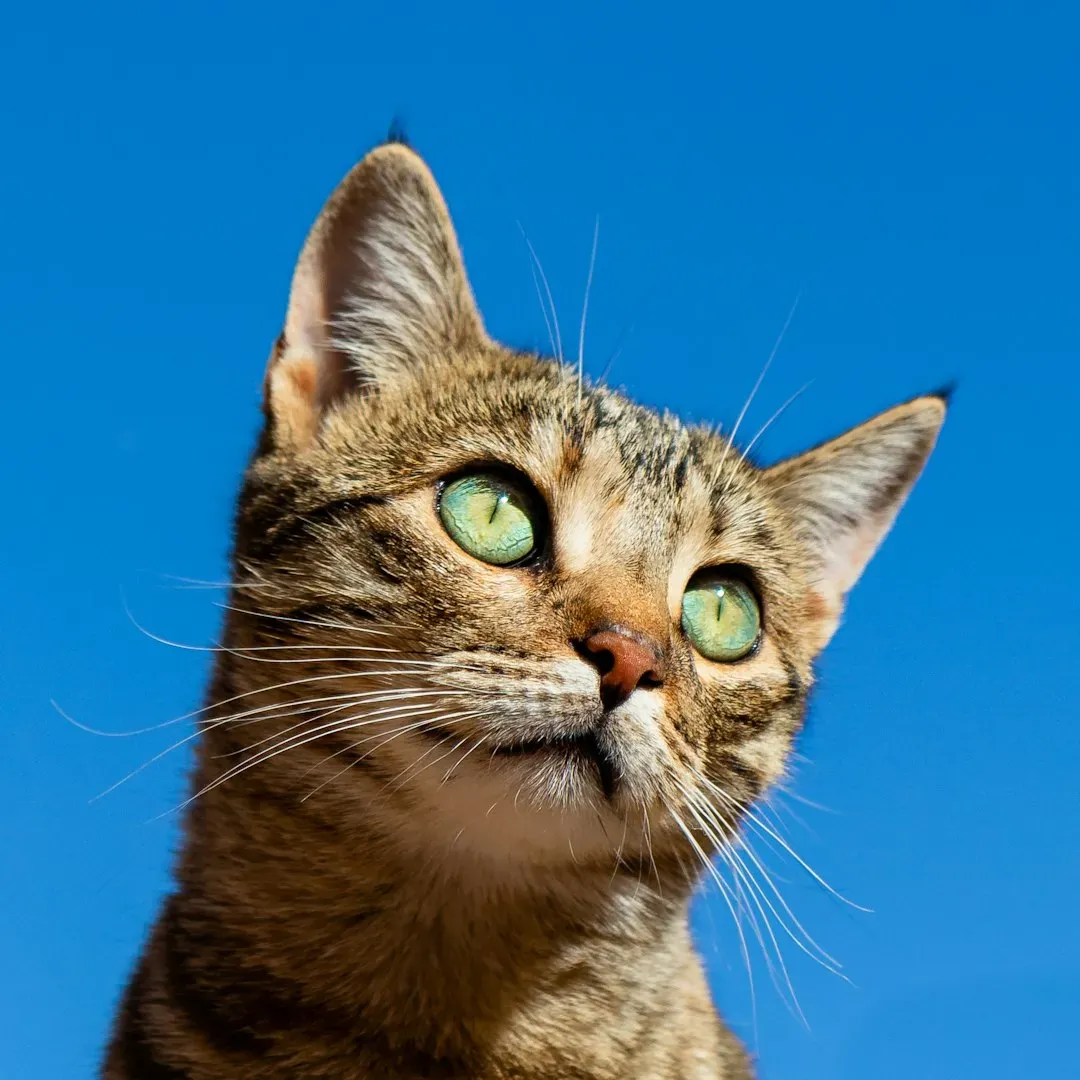
A cat’s peripheral vision spans about 200 degrees, compared to a human’s 180 degrees, allowing them to detect movement from nearly every angle, including at the edge of a wall. That extra coverage matters more than it might seem. It means a cat can catch movement in a zone that’s essentially invisible to your own gaze without even shifting its focus.
Because the large peripheral visual field of cats probably only detects “movingness” or “brightness,” most cats ignore stationary objects in their peripheral visual field but reflexively chase them if they move. This is precisely why your cat can go from completely still to fully locked-in with no warning. Something crossed a boundary your eyes don’t even register as a boundary. Even the slightest flutter of a gnat or a dust speck caught in an air current can register as worth investigating.
The Hearing Behind the Wall
Vision is only part of the story. What’s behind the wall matters just as much as what’s on its surface. While you might think your hearing is fairly good, your cat’s ability to pick up sounds well exceeds human capabilities. Cats can hear up to 64,000 Hz, whereas a human’s range extends to around 23,000 Hz, meaning felines are roughly three times better at picking up sounds than we are.
A cat’s hearing excels far beyond human capability. A faint buzzing inside the wall, the subtle rustle of air through a vent, or the nearly silent movement of an insect can grab their full attention. Think about what lives behind the walls of most homes. Mice, rats, or insects living inside walls create sounds and movements cats easily detect. Water moving through pipes produces sounds and vibrations. Buildings expand, contract, and shift, creating subtle noises. Wiring can produce high-frequency sounds, especially when malfunctioning. Your cat is essentially running a surveillance operation you didn’t know you needed.
A cat’s hearing range spans from 48 Hz to an impressive 85 kHz, and this superior hearing ability evolved to help cats detect prey, particularly rodents, which communicate using ultrasonic frequencies. That’s not a minor refinement from their wild ancestors. That’s a fully intact biological radar.
Predatory Instinct Disguised as Stillness
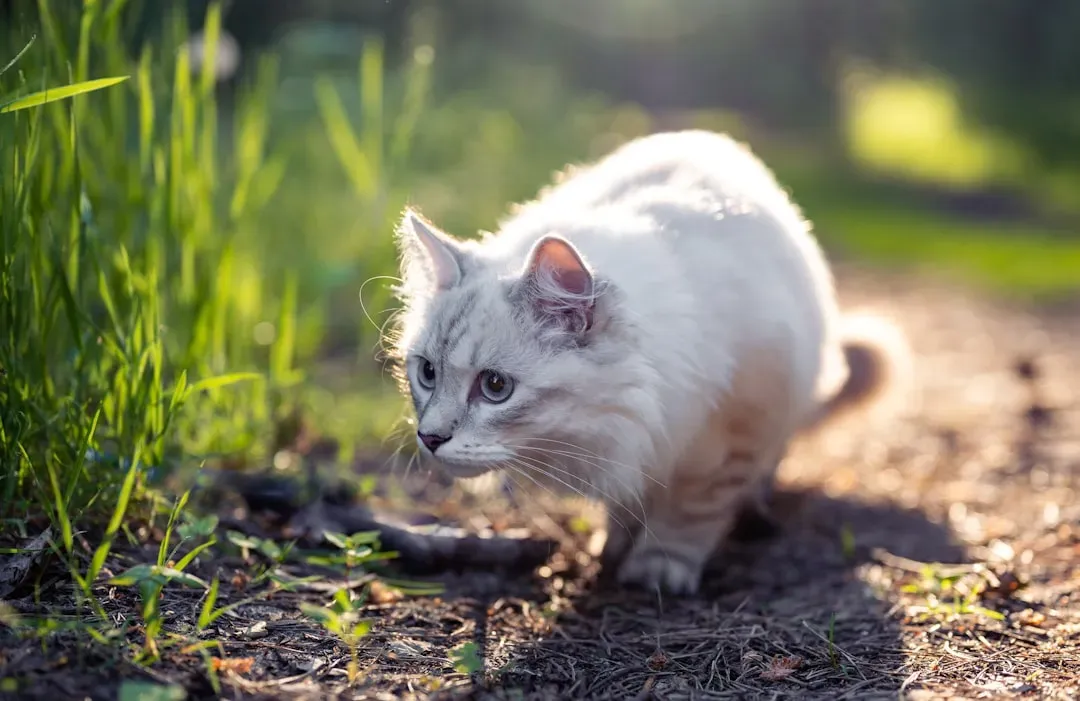
What looks like passive staring is actually something far more active. A cat’s eyes are adapted for hunting in low light, giving them an edge in detecting subtle movements. While they don’t see colors as vividly as we do, their ability to pick up rapid motion, including peripheral flickers, is exceptional. The stillness is the strategy, not the absence of one.
Even indoor cats retain the urge to hunt, and their brains are wired to respond to any sign of potential prey. If a fly lands briefly on a wall or a spider moves behind paint cracks, your cat may lock onto that spot, tracking its path long after it’s gone. The prey doesn’t even need to still be there. A cat will hold the last known position and wait, which is exactly what their wild relatives do when stalking through grass. The wall is simply the new terrain.
The Zoning Out Factor: When It Really Is Nothing
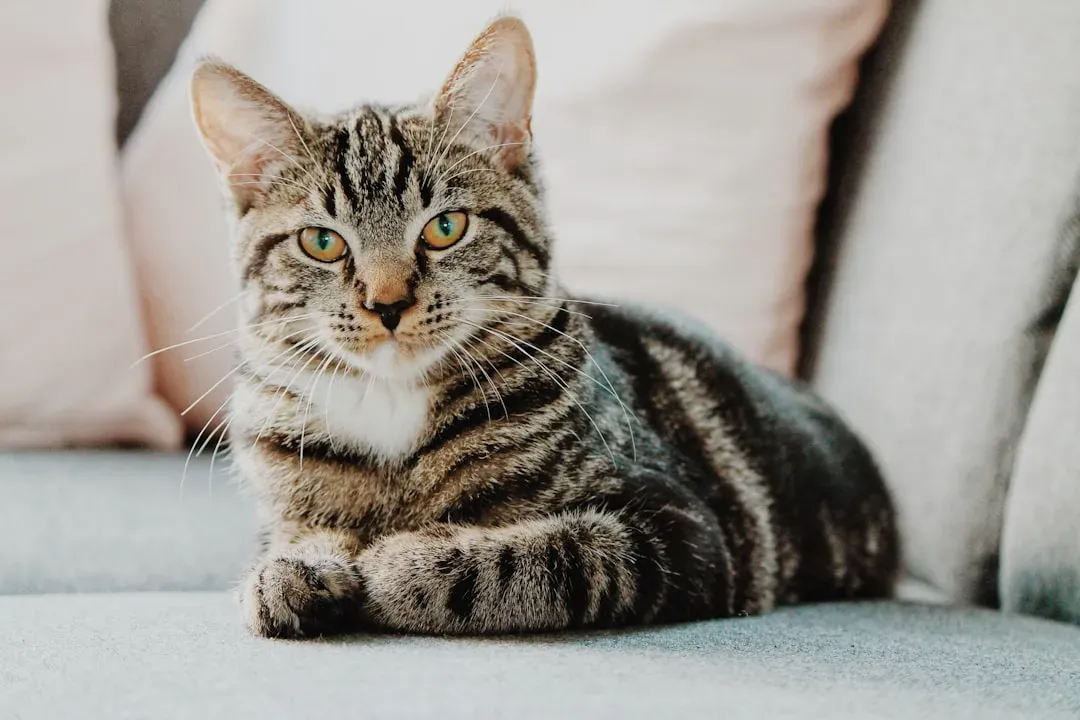
Not every wall-staring session is a sensory investigation. Sometimes it’s the cat equivalent of a human daydream. Just like humans daydream or zone out while staring into space, cats have moments of mental processing where they appear to stare at nothing. The difference is that cats are far better at achieving deep, quiet stillness during these moments, which makes their blank stares look more dramatic than they probably are.
While cats do have superior vision in certain aspects, like motion detection and night sight, their wall-staring episodes are rarely about perceiving supernatural phenomena. Instead, these behaviors stem from a blend of instinct, environment, and sometimes underlying health issues. Context matters a lot here. A cat that stares occasionally and then moves on is almost certainly just processing something that caught its attention. It’s the frequency and intensity of the behavior that tells you more than the act itself.
When the Stare Signals Something Medical
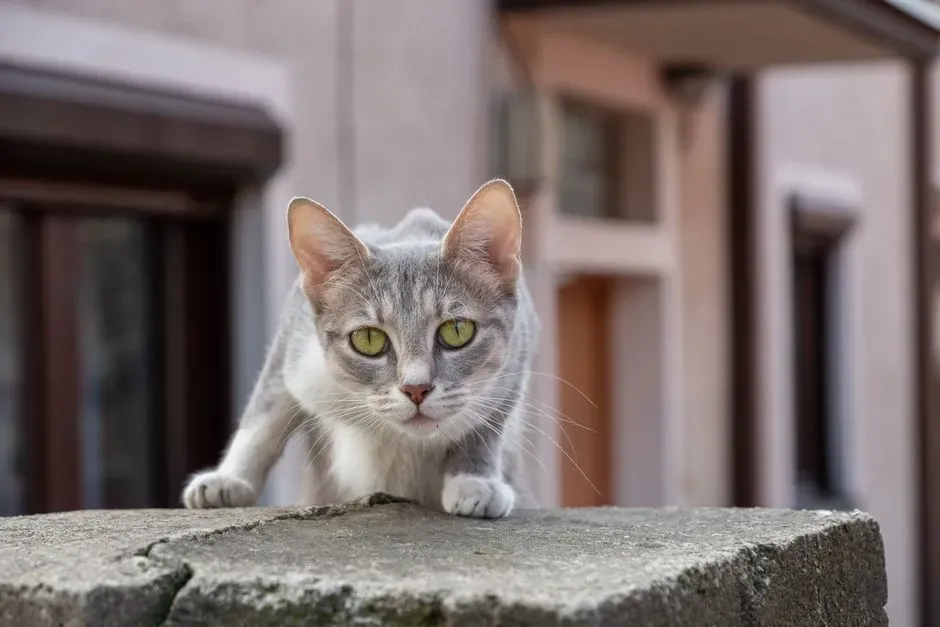
This is where the conversation shifts, and it’s worth taking seriously. Staring at the wall can be a symptom of three concerns: feline cognitive dysfunction, feline hyperesthesia syndrome, and head pressing. These are distinct conditions, and understanding them helps you know when a trip to the vet is warranted rather than optional.
Feline Cognitive Dysfunction Syndrome, also referred to as feline dementia, generally occurs in older cats due to the natural aging of the brain. Cats with this condition may also show other signs of cognitive decline, such as difficulty with learning, memory, attention, and spatial awareness. Separately, feline hyperesthesia syndrome is a rare neurological condition causing twitching, skin rippling, sudden biting at the back, and periods of staring. If the staring comes with these other signs, that’s your signal to act. Cats that also press their heads against walls need urgent veterinary attention, as this is a sign of several very serious medical conditions.
What You Can Actually Do About It
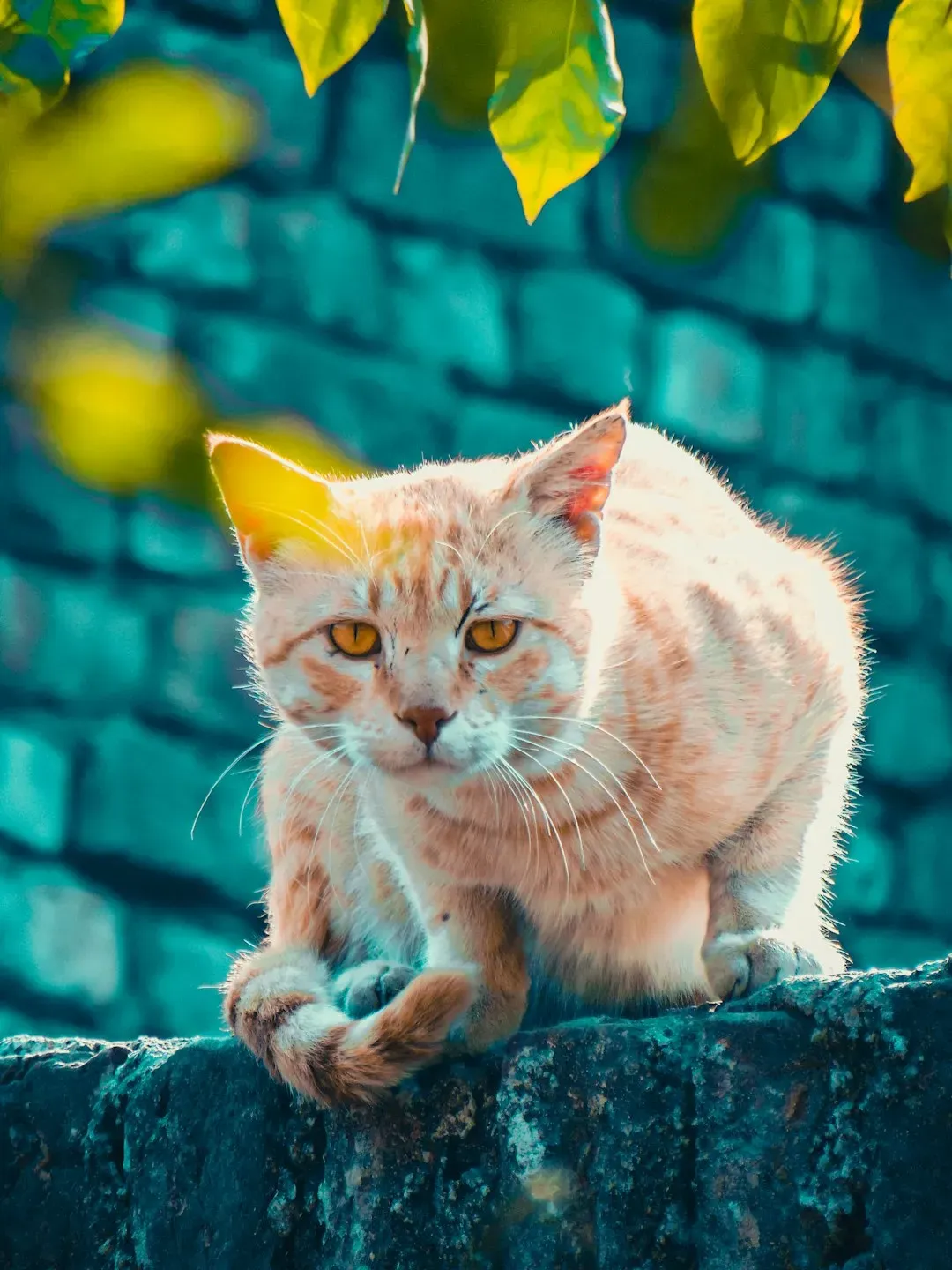
Understanding when your cat staring at a wall is normal versus concerning comes down to context, duration, and overall behavior. In most cases, this behavior is completely harmless because your cat is using their superior senses to detect pests, observe tiny movements, or listen to sounds you can’t hear. Before worrying, look at the environment itself first.
Observe the lighting and airflow in the room where your cat stares. Often, reflections or drafts carry airborne particles that attract feline attention. If environmental factors seem likely, the response is simple enrichment. Understanding their hunting instincts can guide appropriate enrichment activities, like interactive play mimicking hunting. Purring and wall-staring can signal instinctual behavior, and enriching their environment with toys and safe outdoor access is essential. Prioritize mental stimulation with toys, climbing structures, and interactive play to keep your feline friend content. When the behavior persists, escalates, or arrives alongside physical symptoms, a veterinarian’s assessment is the only responsible next step. Prolonged, obsessive staring that can’t be interrupted, especially in senior cats or when accompanied by other symptoms, can indicate neurological issues, vision problems, pain, or cognitive dysfunction that need veterinary attention.
Conclusion

- Dog Breeds That Can Sense When Death Is Near - August 10, 2026
- Why Elephants Quietly Return to the Bones of Their Dead - August 10, 2026
- The Unseen Heroes: How Therapy Animals Make a Real Difference - August 10, 2026