
Most adopters think a rescue cat decides to trust them the day it stops hissing. Actually, the audit started the moment you carried that carrier through the door. Your cat isn’t grading how much you love it. It’s tracking what you do, and it hasn’t stopped since.
Here are the 14 things it’s really watching, based on what behavior experts and research say. Some are obvious. A few may make you look at your own living room differently. One is the test almost everybody fails, and it’s waiting near the end.
#14 – Your Footsteps
🔥 Would you like to save this?
We'll email this post to you, so you can come back to it later!
Your cat knows who you are before you ever enter the room.
Cats are predators, but they’re also small enough to be prey. In a new home, a rescue cat catalogues sounds before it catalogues people. Footsteps are the earliest data it gets about you, and it files them under “safe” or “risky” fast.
Pace and rhythm matter more than weight. A steady, unhurried walk is easy to predict, and predictable is what a nervous animal can relax around. Sudden bursts of speed, heavy thuds and slamming doors tend to send a wary cat straight back under cover.
Here’s what it’s quietly tracking:
- Speed: do you rush or glide?
- Direction: do you walk toward its hiding spot or past it?
- Consistency: does your walk sound the same every day?
Walking straight at a hiding cat, even gently, reads as pursuit. Approaching at an angle reads as passing by. To an animal deciding whether you’re a threat, that difference is huge.
But your feet are only the first clue. The next signal travels through the air…
#13 – Your Voice

🔥 Would you like to save this?
We'll email this post to you, so you can come back to it later!
A cat can pick your voice out from a stranger’s.
Research from Japan found that cats can tell their owner’s voice from other people’s. A later study suggested cats can also tell their own name from similar-sounding words. They may not understand language, but they absolutely read tone.
A rescue cat is listening for volume and pitch, not your vocabulary. A low, even voice sounds like safety. Sudden shouting, even from a big laugh or a loud TV, can sound like a threat.
The same calm greeting every day can become a safety cue all on its own. Pick a short phrase and use it every time you enter the room. Over time, those few words can mean “nothing bad is about to happen.”
Quick Compare
- Likely to soothe: a low, even tone and the same short phrase every time.
- Likely to unsettle: sudden volume jumps, shrieks of delight and a different greeting each day.
- Best bet: speak softly, say less and let the cat set the pace.
Here’s a take that irritates some owners: constant baby talk and nonstop chatter can overwhelm a shy cat. Many behavior experts prefer fewer words delivered predictably. Quiet consistency beats a stream of enthusiasm.
Your voice sets the mood. Your eyes can undo it in a second…
#12 – Your Eye Contact
🔥 Would you like to save this?
We'll email this post to you, so you can come back to it later!
The way you look at a rescue cat can sound like a threat or a greeting.
In cat body language, a hard, direct stare is often read as a threat. Plenty of people stare at a new cat out of pure fascination, with no idea what they’re saying. To the cat, it can feel like being cornered by someone who won’t look away.
The softer alternative is the slow blink. A 2020 study in Scientific Reports found that cats were more likely to approach an experimenter who slow-blinked at them. Many cats use slow blinking as a low-risk way to show calm before they’re comfortable with touch.
Your cat may offer a half-blink first and then wait to see what you do with it. If you answer with a slow blink of your own and then look away, you’ve said something kind. If you stare harder or reach out, you’ve probably erased it.
Many experts consider the old “stare it down to show who’s boss” advice a mistake with a frightened cat.
Still, eyes are only half of the body language. The next signal is much closer to the ground…
#11 – Your Hands
🔥 Would you like to save this?
We'll email this post to you, so you can come back to it later!
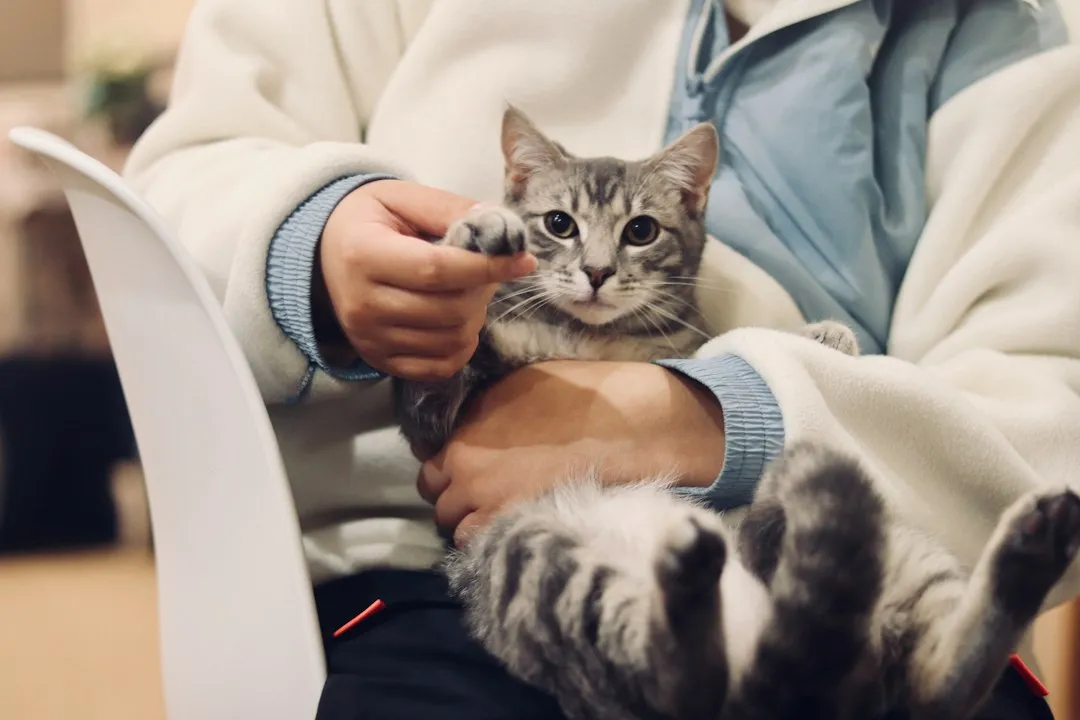
Your hands are the first thing a cat decides whether to fear.
Hands reach, grab, lift and restrain. A cat that has been handled roughly, or not at all, treats them as the most dangerous part of you. It watches how they move far more closely than it watches your face.
A hand coming down from above, over the head, looks like a swoop. Petting the top of a nervous cat’s head first is one of the most common early mistakes. It feels friendly to us. To a cat on high alert, it feels like something dropping out of the sky.
What experts generally suggest instead:
- Keep your hand low and still.
- Offer a curled finger or knuckle at nose height.
- Let the cat close the distance.
- Stop if it pulls away.
Here’s the part people hate: if a cat is hiding, don’t pull it out for a cuddle. Scooping it up may feel like love to you. To the cat, it can confirm that hiding doesn’t work and that your hands can’t be avoided.
Hands matter, but mealtime reveals something even more telling…
#10 – Your Meal Routine
🔥 Would you like to save this?
We'll email this post to you, so you can come back to it later!
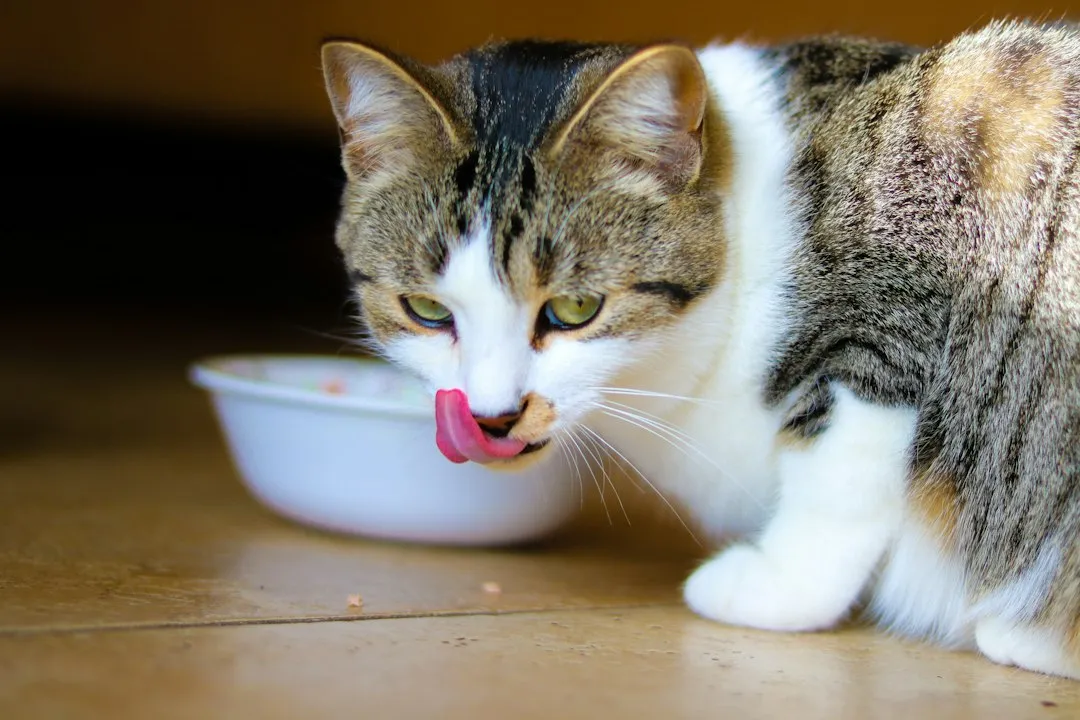
Dinner is where a rescue cat quietly grades your reliability.
Food is the most basic form of trust. A cat that has known scarcity watches whether the bowl appears at the same time and in the same place. Consistent meal times and locations can speed up this stage of trust-building.
Appetite is also a stress barometer, because many cats eat very little when frightened. The first sign of comfort is often not affection at all. Eating and using the litter box normally tend to return well before head bumps or slow blinks show up.
Signs that your routine is working:
- It eats while you’re in the room.
- It finishes meals instead of grazing nervously.
- It starts waiting near the bowl before serving time.
Experts note that treats alone don’t buy trust, but predictable meals do. A bag of treats can’t replace showing up on time.
Food builds routine. But where your cat chooses to eat, and where it disappears afterward, shows where it feels safest…
#9 – Whether You Respect Its Hiding Spot
🔥 Would you like to save this?
We'll email this post to you, so you can come back to it later!
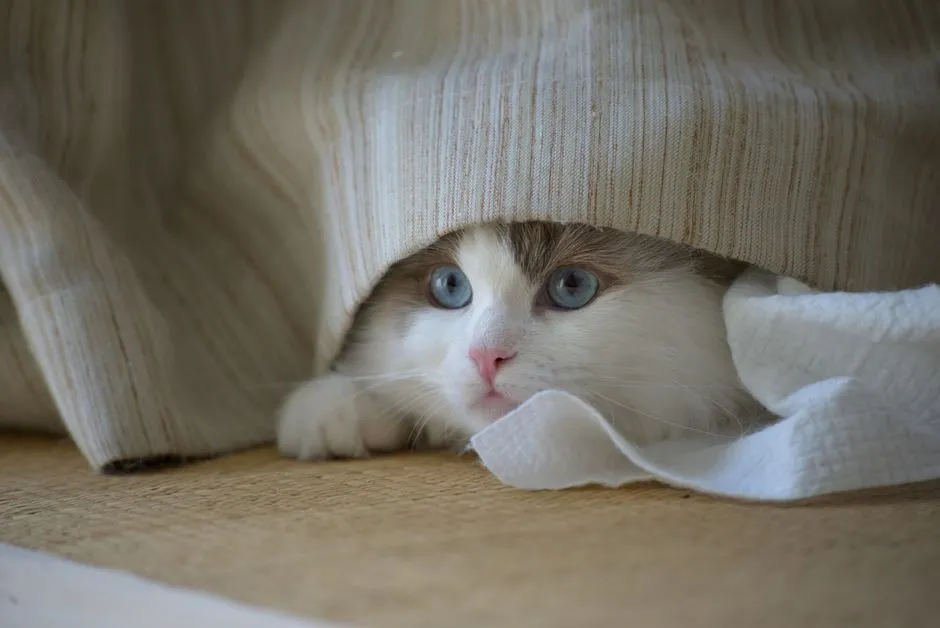
A hiding cat isn’t being difficult. It’s coping.
Hiding is a stress strategy, not a rejection. Shelter research has found that cats given a place to hide tend to show lower stress and settle in faster. For a new rescue, a covered refuge is often the single most useful thing in the room.
What the cat watches is whether you respect it. A cat will often observe from cover for days, studying you while you have no idea. Every time you walk by, it’s taking notes.
It’s tracking whether you:
- Peek in and stare
- Reach into the hiding place
- Leave it alone while staying calm and nearby
Here’s the controversial part. Many adopters believe “forcing” a cat to socialize speeds things up. Experts mostly call it one of the biggest mistakes of the first weeks, because it teaches the cat that its safe place isn’t safe.
While it hides, it’s also doing something you can’t see. It’s reading you through the air…
#8 – Your Scent
🔥 Would you like to save this?
We'll email this post to you, so you can come back to it later!
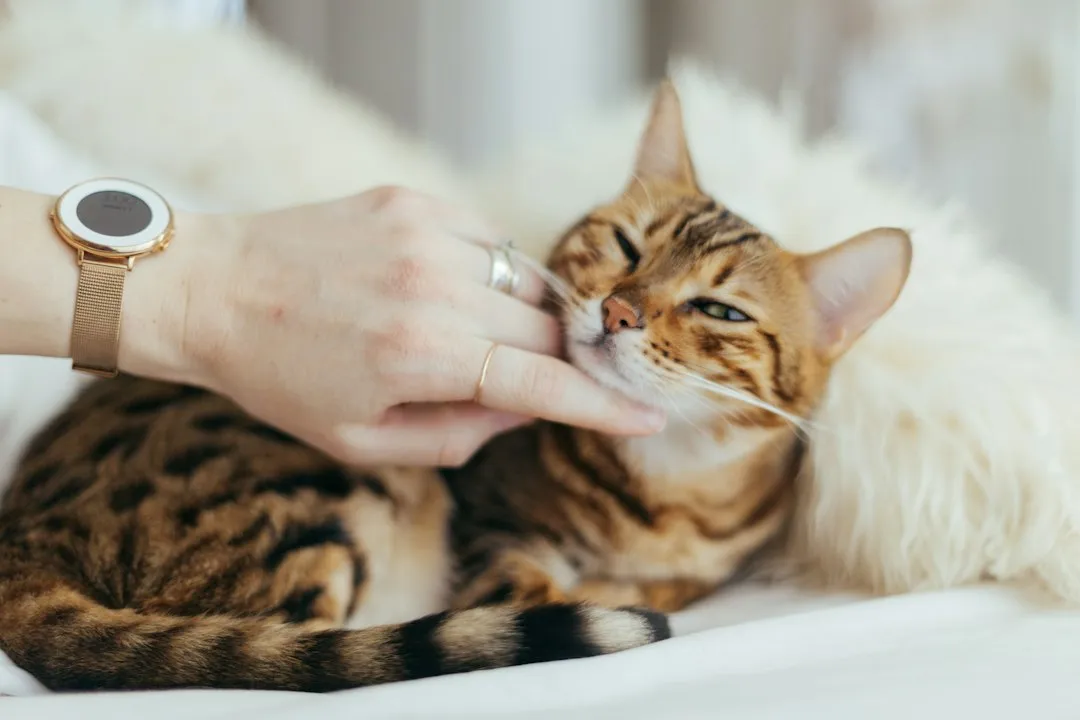
To your cat, you’re a smell before you’re a face.
Cats gather a huge amount of information through scent. Your clothes, soap, shoes, other animals and even your stress can all leave a chemical signature. A rescue cat learns you by smelling you long before it lets you touch it.
Cats also use scent to mark things as safe. When your cat rubs its cheek on your leg, it’s leaving a facial scent mark that says “familiar.” In its own way, it’s adding you to the list of safe things.
A rescue cat may be reading your mood from your scent before you’ve said a word. Things it may notice:
- Strong perfumes or sprays that mask your natural smell
- Smells of other animals on your clothes
- Items that smell like you, such as a worn T-shirt left near its bed
Many people think they should clean everything to a hospital shine. Many experts suggest leaving some familiar scent in place, since a cat can read a spotless home as an unfamiliar one.
Scent tells the story of who you are. How you react to a hiss tells it who you will be…
#7 – Your Reaction to a Hiss
🔥 Would you like to save this?
We'll email this post to you, so you can come back to it later!
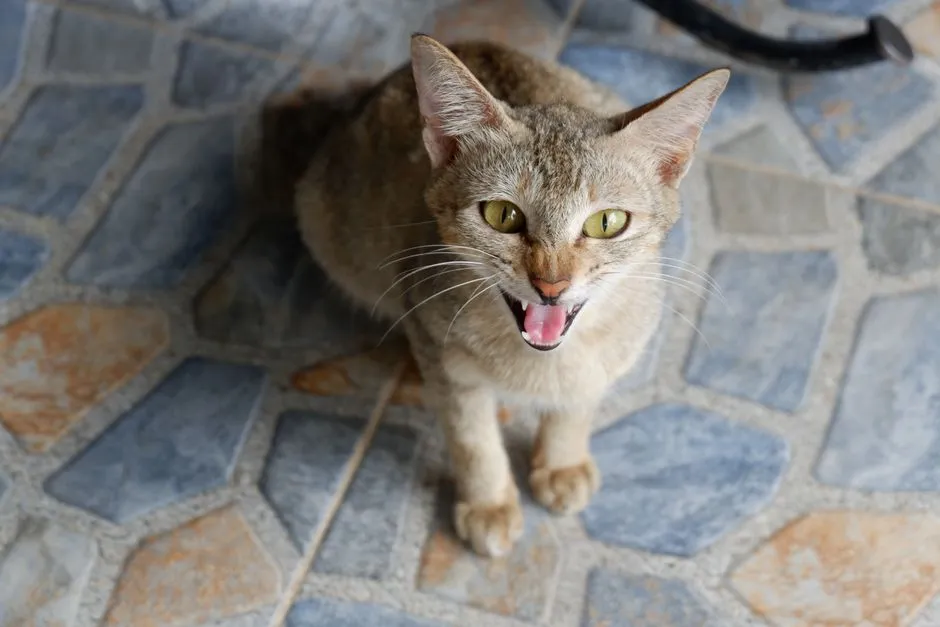
A hiss is the most honest thing a rescue cat will say all week.
A hiss isn’t aggression for its own sake. It’s a warning, a request for distance in the only language the cat has. It feels personal, but it’s actually useful information.
What your cat watches is the aftermath. If you respond to a warning with a scolding, a spray bottle or a grab, the lesson it may take is that warnings don’t work.
Behavior experts widely caution that punishing warning signals can leave a cat with fewer ways to communicate. A cat that stops growling may not have become calmer. It may have become less predictable.
The calm response is simple:
- Pause and soften your body.
- Look away.
- Back up a step and give it room.
Here’s an opinion that makes some people bristle: a hissing cat still trusts the world enough to give you notice.
The hiss is the loudest signal. The quietest ones are easy to miss, and they’re next…
#6 – Whether You Respect Its “No”
🔥 Would you like to save this?
We'll email this post to you, so you can come back to it later!
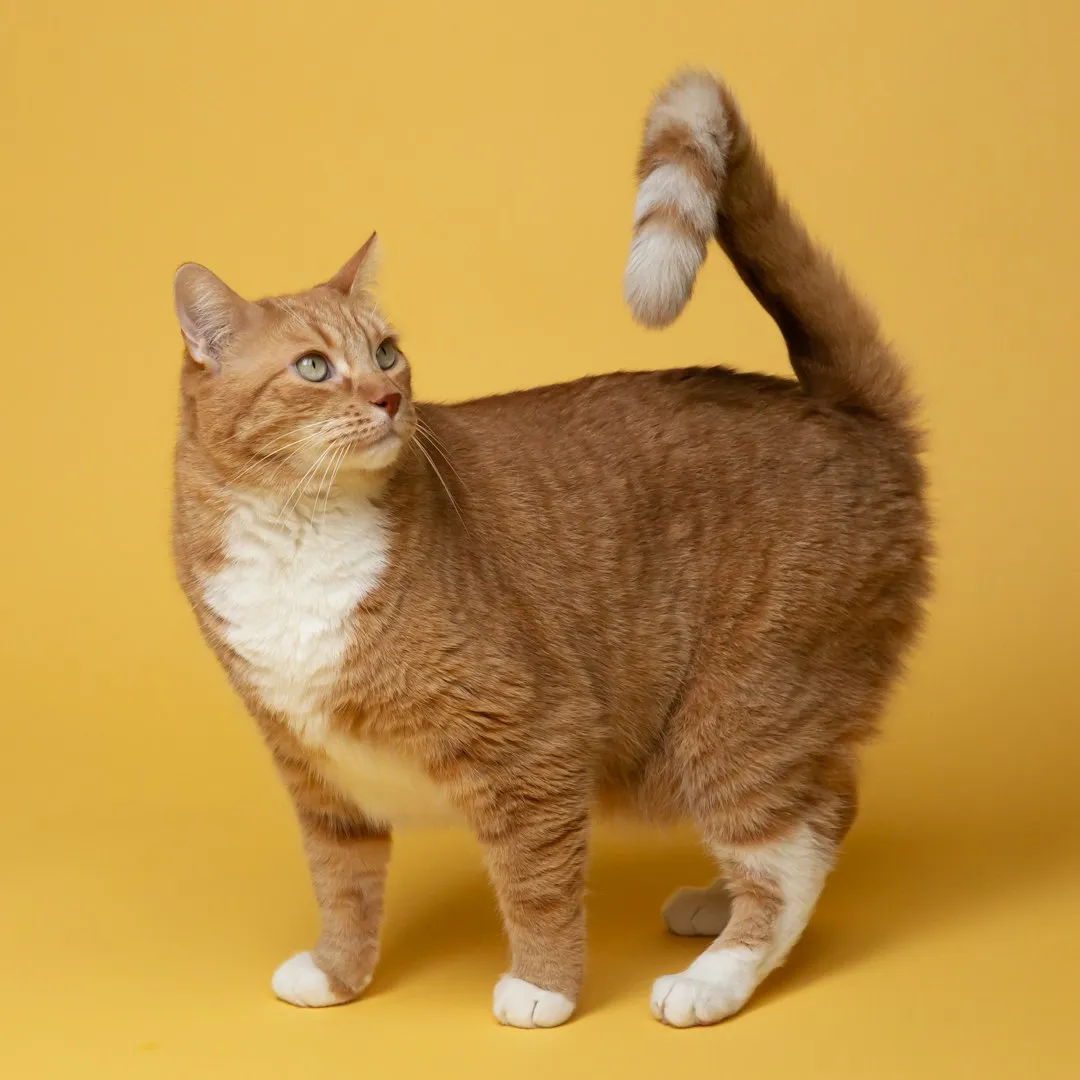
Cats say no long before they hiss.
A cat rarely escalates without leaving a trail of small signals first. Most people only notice the final one. Twitching tails, laid-back ears or pulling away are all signs to offer more space.
Learning to read the earlier clues is what turns an owner into a safe person. Many cats will signal discomfort several times before a swat, and the only people who see it are the ones watching closely.
Early warnings include:
- A tail tip that begins to flick
- Ears rotating sideways or flattening
- Skin rippling along the back
- Sudden, intense grooming
A cat watches whether you stop when it asks. Do it once and you’ve earned a little credit. Do it every time and you’ve earned a friend.
At a Glance
- Relaxed: loose body, soft eyes, ears forward or neutral, tail resting or held loosely.
- Uneasy: tense crouch, ears turned sideways, tail tucked or tapping.
- Time to back off: flattened ears, wide eyes with big pupils, a lashing tail or a low growl.
End the session while the cat still looks relaxed, not after it has had enough. Leaving on a good note matters more than staying one minute longer.
That habit of stopping on time connects to something even bigger: your daily rhythm…
#5 – Your Daily Schedule
🔥 Would you like to save this?
We'll email this post to you, so you can come back to it later!
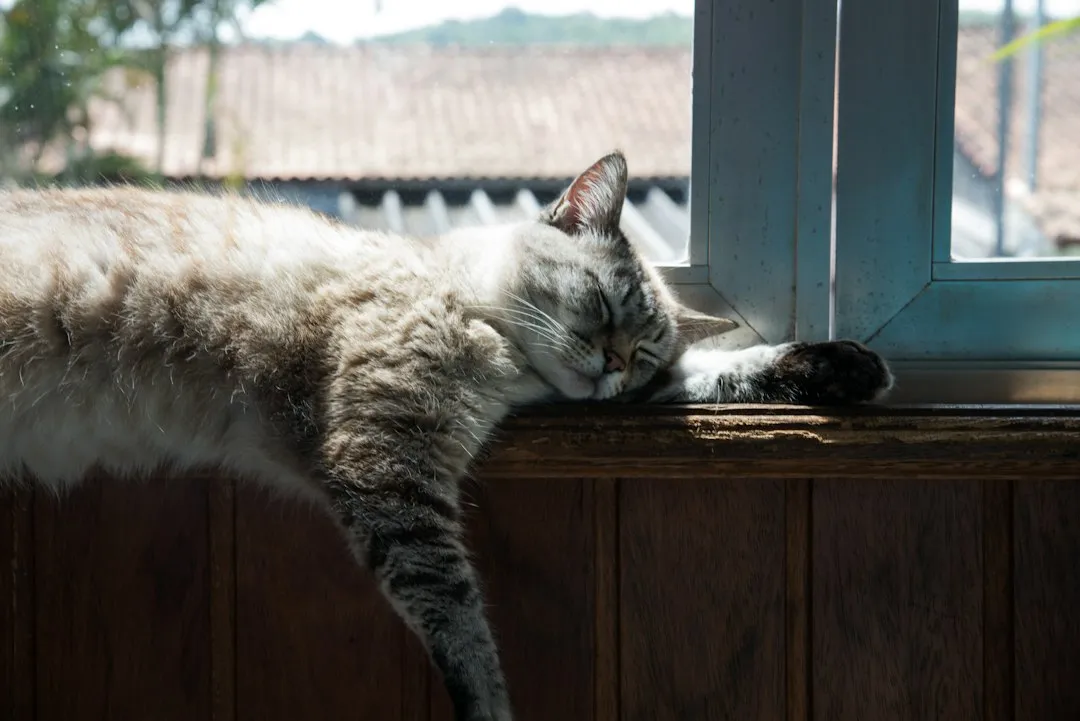
Your calendar is a trust test in disguise.
For an animal that has lived with uncertainty, predictability is comfort. When you wake, feed, leave and return at similar times, the cat learns what comes next. Knowing what comes next is what makes a place feel like home.
A regular schedule can do more than any toy or treat. Cats are creatures of habit, and a stable day lets them lower their guard a little more each week.
If your cat seems distant after months of trying to win it over, that doesn’t mean you’re failing. Trust often grows quietly, in the background of routine, long before you see proof of it.
The routine includes what’s happening around the cat, not just you. That’s where things get complicated…
#4 – How Chaotic Your Home Is
🔥 Would you like to save this?
We'll email this post to you, so you can come back to it later!
You may be passing every test and failing this one.
A rescue cat isn’t only watching you. It’s watching the whole household: visitors, other pets, noise, slammed doors and open windows. If the home is unpredictable, even a perfect owner can’t fully offset it.
Many adopters throw a welcome-home party. Many experts consider that one of the worst gifts you can give a nervous cat. A sudden crowd can undo days of quiet progress in a single afternoon.
Things it keeps score of:
- Do visitors respect its space?
- Does the vacuum run without warning?
- Do other pets get to chase it?
- Does it have one room it can call its own?
A small base room with food, water, a litter box and a place to hide is often a good start. Let the cat expand its territory when it’s ready. You can’t rush it, but you can make it easier.
Fast Facts
- Keep the litter box well away from the food and water bowls.
- Offer at least one covered hiding spot, such as a box or cat cave.
- Add a scratching post and something to climb or perch on.
- Keep the door closed at first so the cat isn’t overwhelmed by the whole house.
Calm surroundings set the stage. What happens in them next is where bonds actually form…
#3 – How You Play
🔥 Would you like to save this?
We'll email this post to you, so you can come back to it later!
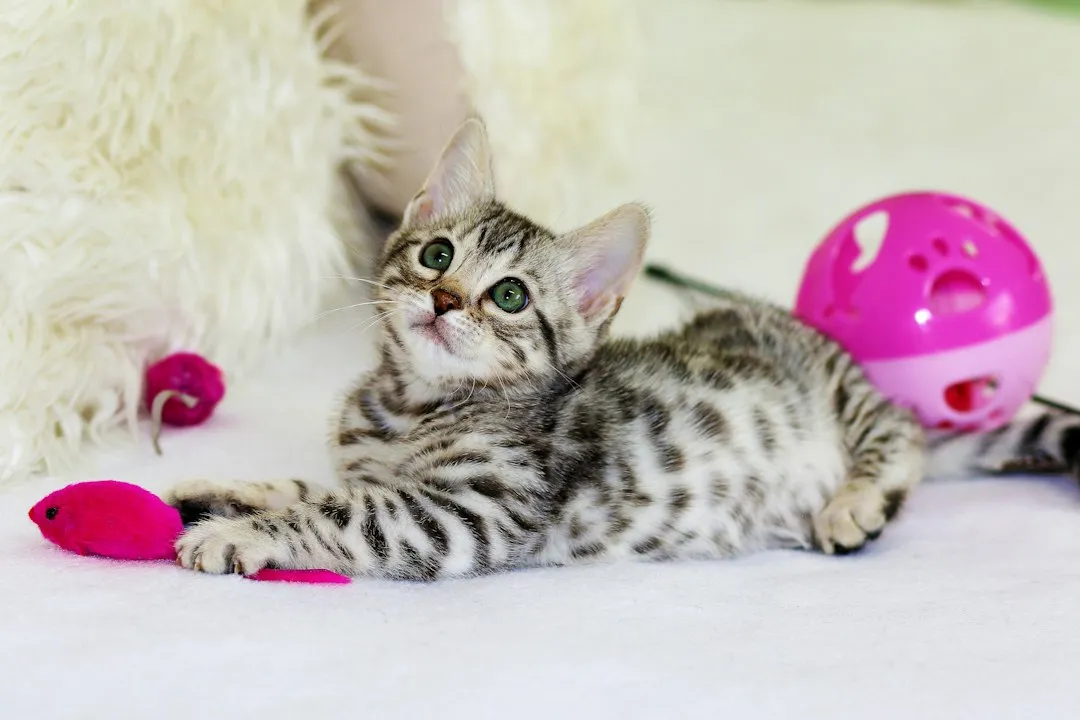
Play shows a cat who you are when no one’s being careful.
Play is practice hunting, and a cat that feels safe will do it. A lack of interest in play is one of the things you may see in a cat that still isn’t relaxed after a few months. In that way, play is a quiet indicator of comfort.
Wand toys and thrown toys let the cat chase from a distance. Your bare hands, by contrast, can teach a cat that fingers are prey. That may seem harmless with a kitten, but it becomes a problem with an adult.
Watch how your cat plays:
- A cat that crouches and pounces is probably relaxed.
- A cat that stares at the toy but never moves may still be tense.
- A cat that plays only when you leave the room is still deciding.
The most useful habit is patience. Let it set the pace, even if the first sign of play is a twitch of the tail.
Play gives you easy points. The next test is the one almost everyone fails…
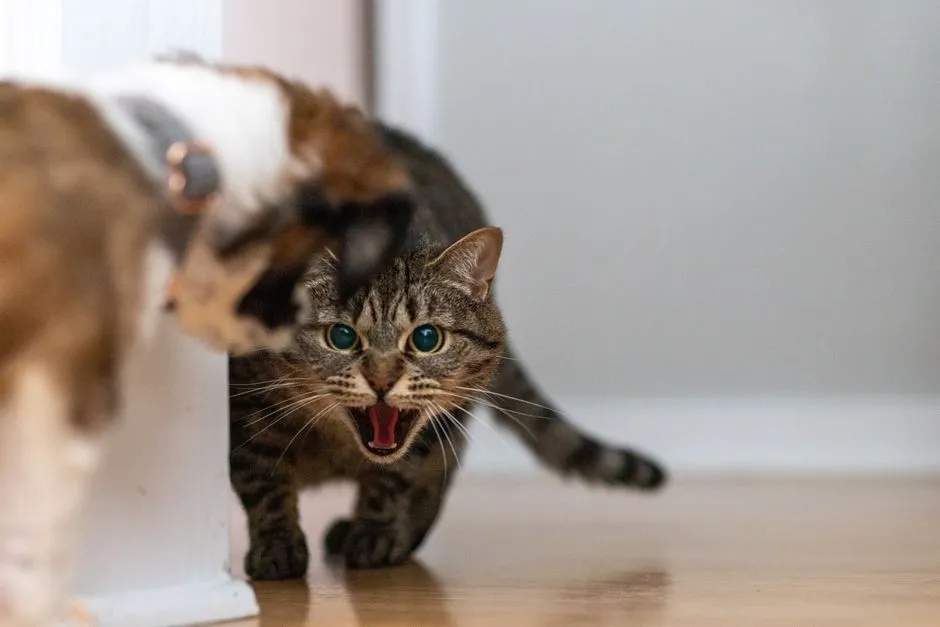
#2 – How You React to Its Mistakes
🔥 Would you like to save this?
We'll email this post to you, so you can come back to it later!
Your worst moment as an owner may be the one your cat remembers.
Scratched sofas, knocked-over glasses and litter box accidents are inevitable. Your cat is watching what happens afterward. Experts widely agree that punishment tends to teach a cat to fear you, not to stop the behavior.
Most “bad” behavior has a reason. Scratching is a natural need. Accidents can signal stress or a medical problem. A cat isn’t trying to get back at you.
Better responses include:
- Provide scratching posts near the spot it’s targeting.
- Clean accidents with an enzyme cleaner and no drama.
- Check with a vet if litter box habits change suddenly.
Here’s what may sting: a frustrated sigh and a stomp out of the room can feel like punishment to a sensitive cat. Calm, boring and consistent usually works better.
Worth Knowing
- Scratching isn’t spite. It stretches muscles, sheds nail sheaths and leaves both a visual and a scent mark.
- Cats tend to link consequences to what’s happening right now, so scolding after the fact mostly teaches them to avoid you.
- A sudden change in litter box habits is a reason to call the vet, not to get angry.
Pass this test over and over, and something remarkable can happen at last…
#1 – What You Do the Moment It Finally Comes Close

🔥 Would you like to save this?
We'll email this post to you, so you can come back to it later!
This is the test that decides everything, and it usually happens when you least expect it.
One evening, your cat will do something small. It sits on the same couch. It naps in the open. It turns its back to you. A cat sitting with its back to you is often showing it trusts you enough to let its guard down.
Sleeping in the open, in view of you, is often a stronger sign than sleeping on you. It suggests the cat trusts the environment enough to let someone else keep watch. Most people miss it because they’re waiting for a lap cat, and the real breakthrough looks like a cat doing nothing at all.
What not to do:
- Don’t rush in with petting.
- Don’t announce it to the household.
- Don’t read a rolled-over belly as an invitation. It’s usually a trust signal, not a petting request.
The science supports patience. A 2019 study in Current Biology found most cats form secure attachments to their owners, so the capacity for a real bond is there. You just have to be the person who doesn’t blow the moment.
The trust you earn this way is quiet, and it’s real.
Here’s our opinion: trust isn’t built by affection. It’s built by being boring, predictable and respectful. Footsteps, voice, hands, routine, scent and your reaction to a hiss all feed one question: is this person safe? Treats and cuddles can’t override a bad answer. Calm consistency can.
The worst mistakes are the well-meant ones: the welcome party, the scooping out of a hiding place, the stare of admiration. A rescue cat doesn’t need you to be perfect. It needs you to be steady, and it will notice every day that you are.
Which of these 14 do you think new adopters get most wrong?

- 7 Everyday Habits That Can Make Your Senior Dog Happier - November 5, 2026
- 10 Enigmatic Structures That Continue to Puzzle Scientists Today - November 5, 2026
- 10 Strange Ruins in the Americas That Challenge What We Know About Early History - November 5, 2026