

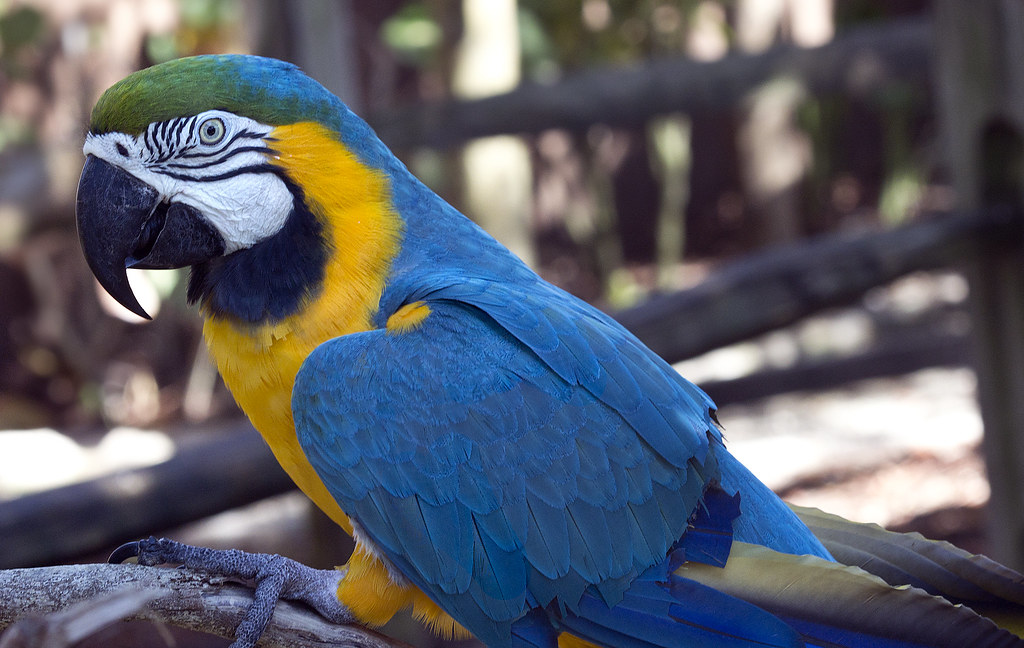
A Long-Lost Presence Resurfaces (Image Credits: Flickr)
Rio de Janeiro – Streaks of blue and gold have reappeared in the skies above Tijuca National Park, where blue-and-yellow macaws soared freely more than 200 years ago.[1][2] Conservationists marked a milestone with the reintroduction of these vibrant birds, absent since the early 19th century due to rampant deforestation and wildlife trade. The effort signals a broader push to restore the Atlantic Forest’s ecological balance in one of the world’s largest urban parks.[3]
A Long-Lost Presence Resurfaces
Austrian naturalist Johann Natterer recorded the last confirmed sighting of blue-and-yellow macaws in Rio in 1818.[1] The species, known scientifically as Ara ararauna, vanished amid 19th-century exploitation of the land for coffee plantations and charcoal production. French explorer Jean de Léry had noted their abundance among Indigenous groups in the 16th century, but colonial pressures erased them from the region.
Tijuca National Park, spanning nearly 4,000 hectares of granite peaks and rainforest, underwent one of the earliest tropical reforestation campaigns in the 1860s under Emperor Dom Pedro II. Yet the forest remained “empty,” plagued by what experts call empty forest syndrome – lush vegetation without the animals needed to sustain it. Up to 90% of the Atlantic Forest’s plants depend on animals for seed dispersal, a role these macaws once filled by cracking tough nuts and carrying seeds over long distances.[1]
The Refauna Initiative Takes Flight
Refauna launched its refaunation program in 2010 to rebuild Tijuca’s ecosystem, starting with the red-rumped agouti – a cat-sized rodent essential for seed burial.[1] Successes followed with yellow-footed tortoises and brown howler monkeys, the latter unseen in Rio since Charles Darwin’s 1832 visit. The macaw project built on these foundations, rescuing birds from illegal captivity and preparing them for wild life.
Four macaws – three females named Fernanda, Selton, and Fátima, plus one male, Sueli – arrived for acclimatization.[2] They underwent seven to nine months in a forest enclosure, rebuilding flight muscles, learning to shun humans, and identifying native fruits like jerivá and juçara. Each bird wears a collar, band, and microchip for tracking, with public sightings encouraged but interaction forbidden.[3]
- Red-rumped agouti: Reintroduced 2010; disperses seeds with sharp teeth.
- Yellow-footed tortoise: Aids soil aeration and seed spread.
- Brown howler monkey: Provides moisture-rich droppings for germination; calls echo for miles.
- Blue-and-yellow macaw: Cracks hard seeds, travels far to regenerate distant forests.
Overcoming Captivity’s Shadow
The birds hailed from sanctuaries like Parque Três Pescadores in São Paulo, victims of the pet trade.[3] Trainers used red sticks and shouts to deter human approaches, while foliage hid enclosures. Artificial nests addressed a scarcity of large dead palms needed for breeding, with four installed nearby and plans for more across the park and Rio’s Botanical Garden.
Challenges persist in this urban setting, where 5 million visitors flock annually. The macaws’ intelligence and social nature draw curiosity, risking dependency on handouts. “Reintroducing species is not simply about returning animals to the forest,” said Vanessa Kanaan of Instituto Fauna Brasil. “It is about rebuilding ecological relationships.”[1] Biologists monitor for diseases like avian influenza and adjust as needed, including potential recaptures.
Toward a Thriving Ecosystem
Marcelo Rheingantz, Refauna’s executive director, described the work as “putting the forest’s orchestra back together again.”[1] Viviane Lasmar, park director, called it “a dream come true,” especially for locals or cariocas. The goal stands at 50 macaws over five years, with six more slated soon and a key release in September.[2]
| Species | Last Rio Record | Reintroduction Year |
|---|---|---|
| Blue-and-yellow macaw | 1818 | 2026 |
| Brown howler monkey | 1832 | Recent |
| Red-rumped agouti | Extinct locally | 2010 |
These efforts promise ripple effects: dung beetles thriving on monkey waste, fruits cleared from the forest floor, and seeds sprouting anew. Macaws could even seed neighboring areas, extending recovery beyond park borders.
Key Takeaways
- Refauna targets 50 macaws to restore seed dispersal in Tijuca.
- Two-thirds of the park’s large mammals remain absent, highlighting ongoing needs.
- Public education prevents human-wildlife conflicts amid heavy tourism.
This reintroduction not only revives a symbol of Brazil’s wild heritage but also demonstrates how targeted conservation can heal urban ecosystems. As macaws reclaim the canopy, Tijuca stands as a model for global refaunation. What do you think this means for other cities battling biodiversity loss? Tell us in the comments.

- Urban Coyotes Show Remarkable Adaptability, Learning to Thrive in City Environments - July 22, 2026
- Beavers Are Nature’s Engineers, Creating Vital Habitats for Other Wildlife Species - July 21, 2026
- The Recovery of the California Condor Offers Hope for Other Critically Endangered Birds - July 21, 2026