

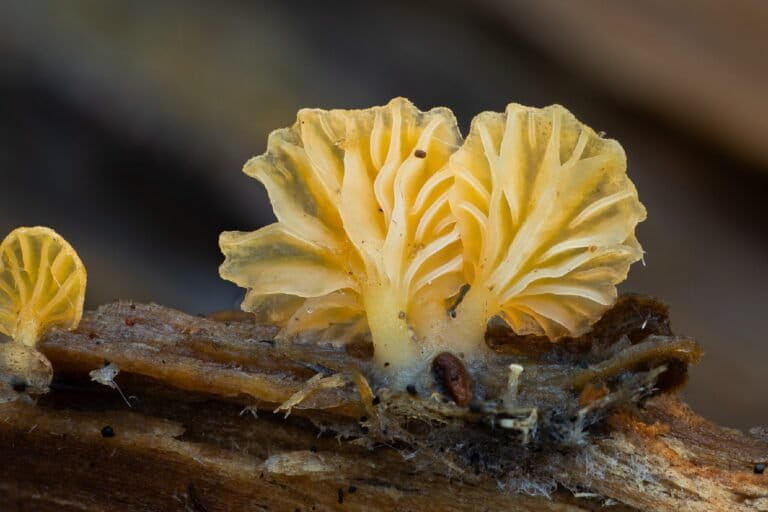

Navigating the Challenges of Unique Habitats (Image Credits: Imgs.mongabay.com)
Deep within California’s diverse landscapes, a groundbreaking initiative seeks to catalog the state’s often-overlooked fungal inhabitants, revealing their critical role in ecosystems under threat.
Navigating the Challenges of Unique Habitats
The Cedars preserve in Sonoma County stands as a testament to nature’s resilience, where access demands crossing turbulent rivers and navigating roads battered by frequent storms. This remote area harbors species adapted exclusively to serpentine soils, a mineral-rich substrate that shapes life in extraordinary ways. Researchers have long recognized these soils for fostering endemism, yet the fungi thriving there remain largely undocumented. Efforts to explore such sites highlight the physical barriers that have historically limited scientific study in California’s wild interiors.
State-funded projects now prioritize these challenging terrains to build a comprehensive fungal inventory. Teams equipped with specialized tools venture into these areas during optimal seasons, collecting samples that could redefine conservation priorities. The work underscores how fungi, as foundational organisms, support plant life and soil health in serpentine environments. Without targeted surveys, these microbial communities risk fading amid broader environmental pressures.
The Launch of a Statewide Fungal Inventory
In late 2022, California initiated the Fungal Diversity Survey, or CA FUNDIS, marking the first systematic effort to map the state’s fungal biodiversity on a grand scale. This program, backed by state resources and aligned with the 30×30 conservation goal, aims to protect 30% of lands and waters by 2030. Previously, fungi received far less attention than plants or animals, despite California’s status as a global biodiversity hotspot. The survey addresses this gap by deploying community scientists and experts across varied ecosystems, from coastal forests to inland deserts.
Participants document species through fieldwork and genetic analysis, creating a baseline dataset for future monitoring. Early findings reveal thousands of potential species, many endemic and vulnerable to climate shifts. This initiative not only fills data voids but also fosters public engagement in mycology. By integrating citizen contributions, CA FUNDIS accelerates discovery while promoting awareness of fungi’s ecological importance.
Why Fungi Matter in Conservation
Fungi form intricate networks beneath the soil, facilitating nutrient exchange and carbon storage that sustain larger ecosystems. In California, where wildfires and urbanization intensify, these organisms prove essential for resilience and recovery. Serpentine soils, like those at The Cedars, amplify this role by hosting fungi that tolerate high metal concentrations, aiding plant survival in harsh conditions. Conservationists argue that ignoring fungi hampers holistic environmental strategies, as they underpin food webs and habitat stability.
The survey employs advanced techniques, including DNA sequencing, to identify rare taxa and assess threats. Collaborations with organizations like the Fungal Diversity Survey extend the project’s reach, emphasizing fungi’s contributions to biodiversity hotspots. Key challenges include seasonal variability and the need for long-term funding to track changes over decades. Ultimately, this work positions fungi as equals in preservation efforts, ensuring their vital functions endure.
Community Science Fuels Discovery
Everyday enthusiasts join professional mycologists in CA FUNDIS events, turning hikes into data-gathering missions. Training sessions equip volunteers with identification skills and safety protocols, democratizing access to scientific contribution. Such involvement has already yielded sightings of species previously unknown in certain regions, enriching the state’s fungal atlas. This model proves scalable, inspiring similar programs elsewhere.
Online platforms allow uploads of observations, verified by experts to maintain accuracy. The approach builds a network of stewards committed to fungal health, countering the isolation of traditional research. As participation grows, so does the potential for policy influence, advocating for protections that benefit entire biomes.
- Document over 10,000 fungal species statewide.
- Focus on endemic varieties in serpentine and coastal habitats.
- Integrate genetic data for threat assessment.
- Engage 500+ community scientists annually.
- Align with 30×30 goals for land and water conservation.
Key Takeaways
- CA FUNDIS establishes the first comprehensive fungal baseline in a U.S. state.
- Serpentine soils host unique fungi vital for ecosystem adaptation.
- Community involvement accelerates conservation amid climate challenges.
As California’s fungal survey progresses, it illuminates the intricate web of life underground, urging a reevaluation of conservation priorities. This effort not only safeguards hidden diversity but also equips the state to face environmental uncertainties. What role do you see fungi playing in your local ecosystem? Share your thoughts in the comments.

As a little kid, I fell in love with nature, wildlife, and animals. Living in the USA, South Africa, Italy, China and Germany gave me the opportunity to discover the world's Wildlife. My favorite animals are Mountain Gorillas, Siberian Tigers, and Great White Sharks.
I'm a certified PADI Open Water Diver, went to Everest Base Camp and Trekked Gorillas in Uganda. I hold a Master of Science in Economics and Finance.
Please send any feedback to feedback@animalsaroundtheglobe.com
- 14 Signs Your Cat Is Trying to Communicate with You - July 29, 2026
- 11 Strange Weather Events Scientists Still Can not Explain - July 29, 2026
- The Elephant’s Powerful Trumpet Nature’s Loudest Call - July 29, 2026