

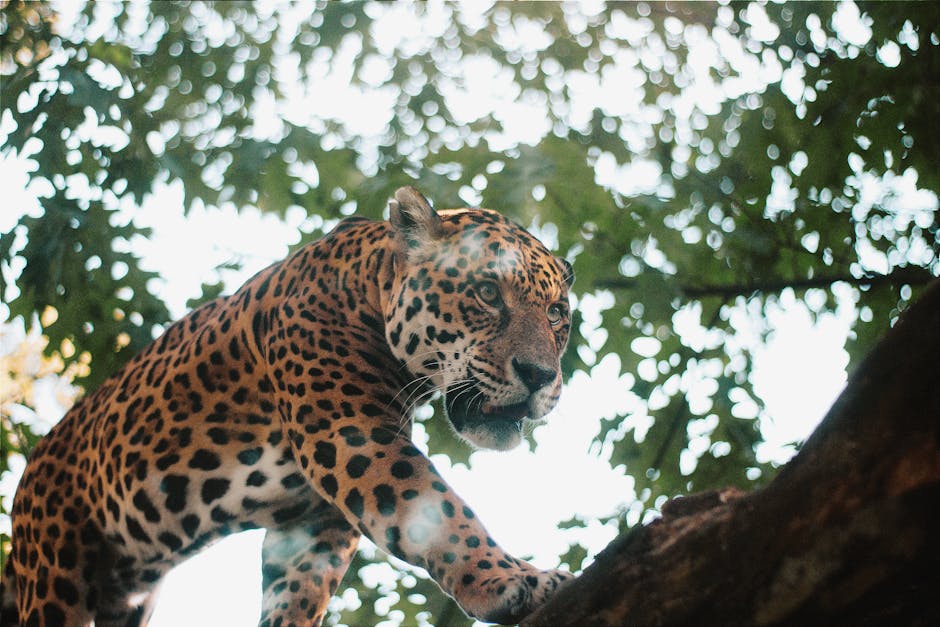
Jaguars on the Brink: Fragmentation Fuels Decline (Image Credits: Pexels)
Mato Grosso do Sul, Brazil – Scientists in this central-western state have turned to advanced reproductive technologies to safeguard jaguars from vanishing populations. Researchers at the Federal University of Mato Grosso do Sul lead efforts to clone the iconic big cats, addressing habitat fragmentation that isolates groups and sparks genetic decline.[1][2] Their work builds on years of sample collection from wild and road-killed animals, aiming to restore diversity without relying solely on habitat restoration.
Jaguars on the Brink: Fragmentation Fuels Decline
Brazil hosts the largest jaguar populations across diverse biomes, yet numbers dwindle in fragmented landscapes. Estimates place up to 21,000 individuals in the Amazon, 5,000 in the Pantanal, 1,000 in the Cerrado, and critically low figures below 250 adults each in the Atlantic Forest and Caatinga.[1] These isolated groups suffer inbreeding, resulting in reproductive failures, malformations, and higher mortality.
Roads and agriculture sever dispersal routes, once spanning hundreds of square kilometers per cat. From 2016 to 2023, 19 jaguars died on a single Mato Grosso do Sul highway stretch alone.[1] Human conflicts exacerbate losses, as ranchers retaliate against predators nearing livestock.
Reprocon’s Biobank: A Genetic Fortress
The Reprocon research group, founded in 2017 at the university’s Central Vivarium in Campo Grande, amassed the world’s largest jaguar genetic repository. Frozen samples include blood from about 160 animals, tissues from 60, and semen from 30 males, preserved in liquid nitrogen.[1][3] Teams gathered these during field captures and from deceased specimens, turning roadkill into conservation assets.
Gediendson Ribeiro de Araujo, Reprocon’s scientific director, standardized semen collection in 2010 using pharmacological sedation on trapped jaguars. Recent operations yielded ear tissue from an 113-kilogram male named Leonço, producing millions of fibroblasts for future use.[4] Such biobanking preserves irreplaceable diversity from vanishing ecotypes.
From Semen to Clones: Breakthrough Techniques Emerge
Reprocon pioneered field-friendly tools, like $15 microfluidic devices for sperm processing, bypassing bulky lab gear. These silicone chips, 3D-printed and reusable up to nine times, select viable cells on-site.[1] Artificial insemination trials occurred, though early attempts failed due to semen quality issues.
Cloning advanced in 2023, with Argentine partners helping reach the morula embryo stage within days. The process extracts DNA from oocytes, fuses it with fibroblasts via electrofusion, and prepares transfers to surrogates.[2] Veterinarian Thyara de Deco-Souza Araujo emphasized integration: “Conservation won’t happen with a single strategy. We need to preserve natural areas, study free-range populations… and also involve people.”[1]
- Semen collection via safe sedation during captures.
- Tissue culturing yields 20-30 million fibroblasts from small ear samples.
- IVF and embryo transfers tested in captive females.
- Cloned embryos targeted for 2026 implantation.
- Genetic material shuttles between biomes to counter isolation.
Overcoming Hurdles in the Lab and Wild
Challenges persist, from inconsistent semen viability to unknowns in clone viability. Researchers question cloned jaguars’ lifespans, fertility, and wild adaptability, mandating post-birth monitoring.[3] Failed inseminations highlighted female-focused needs, shifting strategies toward versatile tissues.
Ethical debates surround reintroduction, yet proponents view cloning as a bridge for critically low groups like Caatinga jaguars, lacking captive backups. Gediendson Ribeiro de Araujo noted: “We can get the genetic material from one region and take it to another… by producing embryos in a lab.”[1]
Toward a Cloned Future: 2026 Milestones
First embryo transfers loom in 2026, potentially yielding lab-born jaguars for population boosts. Collaborations span Argentina, Colombia, Canada, and the U.S., refining protocols amid an upcoming 2026 symposium on wildlife biotech.[5] Success hinges on blending lab innovations with corridor creation and anti-poaching.
This multifaceted push signals hope for apex predators, proving technology can amplify nature’s resilience.
Key Takeaways
- Reprocon’s biobank holds samples from 160+ jaguars, enabling cloning from roadkill.
- Cloning reached early embryo stages; transfers planned for 2026.
- Combines with IVF and habitat efforts for comprehensive protection.
As Brazil’s jaguars teeter, cloning offers a novel lifeline – will it tip the scales? What do you think about it? Tell us in the comments.

- Urban Coyotes Show Remarkable Adaptability, Learning to Thrive in City Environments - July 22, 2026
- Beavers Are Nature’s Engineers, Creating Vital Habitats for Other Wildlife Species - July 21, 2026
- The Recovery of the California Condor Offers Hope for Other Critically Endangered Birds - July 21, 2026