

Dolphins are renowned for their exceptional intelligence, complex social structures, and remarkable communication abilities. Among the many fascinating aspects of dolphin behavior that scientists have studied, one of the most intriguing questions is whether these marine mammals have individual names. The concept of dolphins possessing unique identifiers—akin to human names—has captivated researchers and the public alike. Recent scientific discoveries suggest that dolphins do indeed use distinctive signature whistles that function remarkably similarly to human names, offering a window into the sophisticated communication systems of these remarkable creatures. This article explores the evidence, implications, and ongoing research into dolphin “naming” conventions and what they reveal about dolphin cognition and social complexity.
The Science of Signature Whistles

Dolphins communicate through an intricate system of whistles, clicks, and body postures. Among these vocalizations, scientists have identified what they call “signature whistles”—unique acoustic patterns that appear to function as individual identifiers. Dr. Vincent Janik and Dr. Stephanie King, pioneering researchers in this field from the University of St. Andrews, have documented that bottlenose dolphins develop these distinctive whistles within their first year of life. Unlike other animal vocalizations that might simply express emotional states or basic needs, signature whistles appear to serve a specific social function: identifying the individual producing the sound. These whistles remain stable throughout a dolphin’s lifetime, with each animal’s whistle containing a distinct frequency pattern that differs measurably from those of its pod mates.
How Dolphins Develop Their “Names”

The development of signature whistles in dolphins presents a fascinating example of vocal learning, a relatively rare ability in the animal kingdom. Young dolphins don’t inherit their whistle patterns genetically. Instead, calves actively create their distinctive whistles during their first few months of life. Research indicates that dolphins actually innovate their signature whistles, seemingly deliberately crafting a sound pattern that differs from others in their social group. This process demonstrates remarkable cognitive abilities, as it requires the dolphin to recognize other members’ whistles and consciously develop something different. Interestingly, while each whistle is unique, dolphins often incorporate elements of their mother’s whistle into their own, creating what researchers describe as a form of “family name” connection while maintaining individual distinctiveness.
Evidence from Playback Experiments

Some of the most compelling evidence for signature whistles functioning as names comes from carefully designed playback experiments. In these studies, researchers record specific dolphins’ signature whistles and then play them back to members of their social group. The results have been remarkable: dolphins consistently respond more strongly to recordings of signature whistles from familiar pod members than to those of unfamiliar dolphins. Even more tellingly, they often respond by producing their own signature whistle in return—essentially calling back to the individual being “named.” In one groundbreaking study published in the Proceedings of the National Academy of Sciences, scientists demonstrated that dolphins would approach a speaker playing a familiar signature whistle, indicating recognition of the specific “name” being broadcast, even when the whistle was synthesized to remove voice cues.
Copying Names: A Social Behavior

Perhaps one of the most fascinating aspects of dolphin naming behavior is their ability and tendency to copy each other’s signature whistles in specific social contexts. When dolphins want to address a particular individual, they sometimes produce a close match to that individual’s signature whistle—effectively “calling their name.” This copying behavior appears most frequently during separations and reunions between close associates, particularly between mothers and calves and between bonded male pairs. This name-copying serves as a powerful mechanism for maintaining contact with specific individuals in the open ocean, where visibility is limited but sounds travel well. The deliberate mimicry of another dolphin’s signature whistle demonstrates not only vocal learning abilities but also an understanding of the connection between a specific sound pattern and a specific individual—a cognitive leap that few non-human animals have demonstrated.
Comparing Dolphin Names to Human Language

While we should be careful not to anthropomorphize dolphin communication too readily, the parallels between signature whistles and human names are striking. In both systems, unique identifiers are arbitrarily assigned to individuals rather than being based on physical characteristics or relationships. These identifiers remain stable over time and are recognized across the social group. Importantly, both systems allow for addressing specific individuals within a group context. However, significant differences exist: human names are typically bestowed by others, while dolphins create their own signature whistles. Additionally, the full complexity of how these whistles integrate into broader dolphin communication remains unclear. What is evident is that both systems represent a solution to a similar social problem: how to identify and address specific individuals within a complex social network.
The Role of Signature Whistles in Pod Cohesion

Signature whistles serve crucial functions in maintaining dolphin pod cohesion and social bonds. In the vast, three-dimensional ocean environment where visibility is often limited, acoustic identification becomes paramount. Dolphins use their signature whistles most frequently during contexts that involve coordination or reunion—when pod members are separated and then find each other again, during cooperative hunting, or when navigating turbid waters. Research shows that mother dolphins and their calves exchange signature whistles frequently, particularly when separated, creating an acoustic lifeline between them. Similarly, male dolphins that form long-term alliances (partnerships that can last decades) use signature whistles to maintain contact and coordinate activities. This system of acoustic identification helps sustain the remarkably complex social structures that characterize dolphin societies, allowing individuals to maintain specific relationships within larger, fluid community networks.
Regional “Dialects” in Dolphin Names

Adding another layer of complexity to dolphin naming conventions is the existence of what appear to be regional variations or “dialects” in signature whistle characteristics. Research across different dolphin populations has revealed that groups from separate geographic areas often display distinctive patterns in how they structure their signature whistles. For instance, dolphin populations in Sarasota Bay, Florida have whistle characteristics that differ subtly but consistently from those of dolphins in the waters around Scotland. These variations might be likened to regional accents in human speech. While each individual still maintains a unique signature whistle, the overall acoustic structure follows population-specific patterns. This finding suggests that cultural learning plays a role in signature whistle development, with young dolphins influenced not only by their immediate family members but also by the broader acoustic environment of their community—creating another parallel with human naming and language traditions.
Dolphin Names Across Species

While the majority of research on signature whistles has focused on bottlenose dolphins (Tursiops truncatus), evidence suggests that this naming system isn’t unique to this species. Studies have identified similar individualized whistle patterns in several other dolphin species, including spotted dolphins, common dolphins, and Risso’s dolphins. This widespread presence of signature whistles across the dolphin family (Delphinidae) suggests that name-like identification systems may have evolved early in dolphin evolution, pointing to their fundamental importance in cetacean social structures. Interestingly, research on larger toothed whales like pilot whales and killer whales indicates they may use analogous systems of individualized calls, though the specific mechanisms differ somewhat from dolphin signature whistles. These findings suggest that individualized vocal identification may be an evolutionary solution to the challenges of maintaining complex social relationships in marine environments across multiple cetacean species.
The Cognitive Implications of Naming
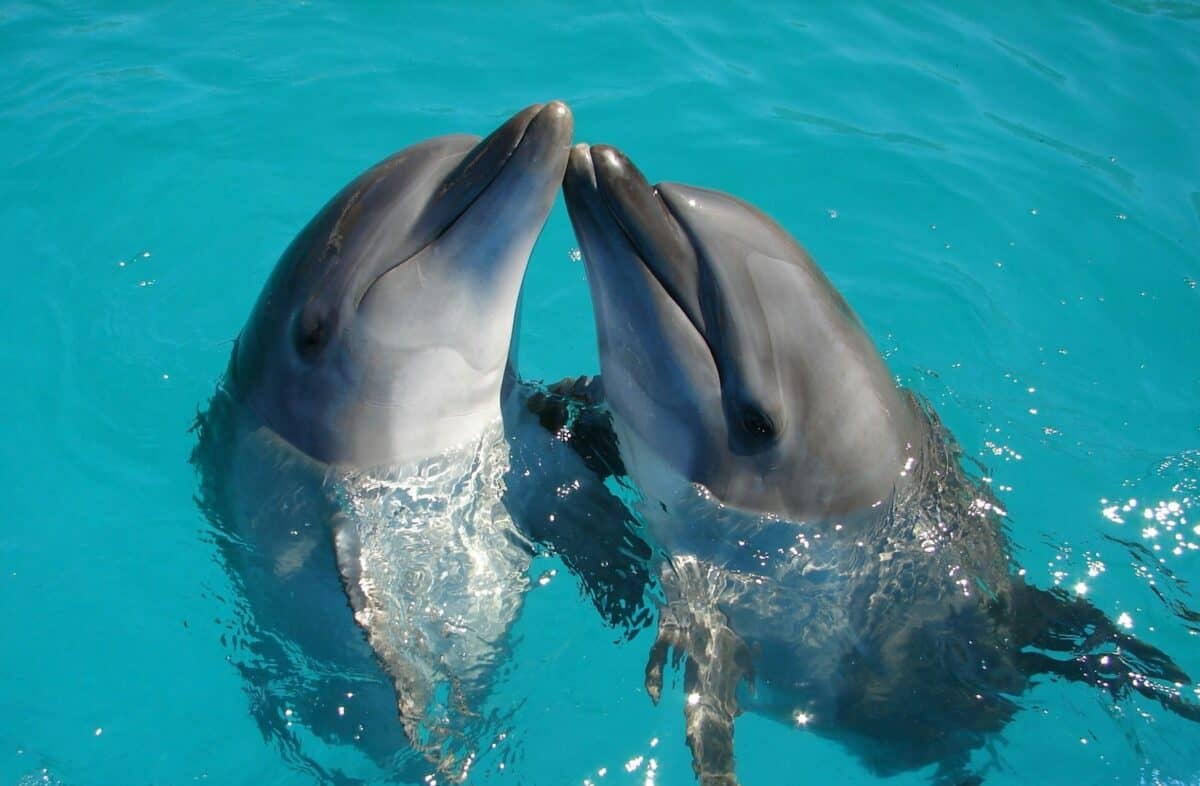
The existence of a naming system in dolphins has profound implications for our understanding of dolphin cognition. The ability to recognize oneself as an individual separate from others (self-awareness) and to recognize other individuals as persistent entities over time are sophisticated cognitive skills. The development and use of signature whistles suggest dolphins possess both capabilities. Furthermore, the copying of signature whistles to address specific individuals implies an understanding that sounds can function as symbols that refer to entities beyond themselves—a fundamental cognitive building block for symbolic communication systems like human language. The fact that dolphins develop their signature whistles through innovation rather than imitation also points to creative cognitive processes. Collectively, these abilities place dolphins among a select group of animals (including great apes and some birds) that demonstrate advanced social cognition approaching aspects of human thought in complexity, though obviously expressed through very different evolutionary pathways.
Challenges in Studying Dolphin Communication

Despite significant advances in our understanding of signature whistles, researchers face substantial challenges in studying dolphin communication comprehensively. The aquatic environment presents obvious logistical difficulties for observing and recording natural behaviors and vocalizations. Water distorts and attenuates sounds, making precise recordings challenging, particularly when trying to attribute specific vocalizations to individuals in a group. Additionally, dolphins communicate across multiple sensory channels simultaneously—combining vocalizations with body postures, touch, and possibly even biosonar information—creating a multimodal communication system that’s difficult to capture with current technology. There’s also the fundamental challenge of interpretation: without a shared language, researchers must infer the function and meaning of dolphin vocalizations indirectly through careful observation of contexts and responses. These challenges remind us that despite impressive research progress, we’re still in the early stages of decoding the full complexity of dolphin communication systems.
Conservation Implications

Understanding that dolphins use individualized naming systems has important implications for conservation efforts. The acoustic environment is crucial for dolphin communication, yet human activities increasingly fill the oceans with noise pollution from shipping, sonar, construction, and resource extraction. This anthropogenic noise can mask dolphin vocalizations, potentially disrupting their ability to identify and locate each other through signature whistles. In highly social species like dolphins, such communication disruptions can have cascading effects on group cohesion, mother-calf bonds, feeding coordination, and overall social functioning. Additionally, the existence of regional “dialects” in signature whistles suggests that protecting specific dolphin populations preserves not only genetic diversity but also cultural diversity in their communication systems. Conservation policies informed by our understanding of dolphin communication complexity can better address these specific threats to dolphin societies, moving beyond simple population counts to consider the preservation of social structures and communication systems.
Future Research Directions

The field of dolphin communication research continues to evolve rapidly, with several promising directions for future investigation. Advanced recording technologies, including multi-channel hydrophone arrays and animal-borne acoustic tags, are enabling researchers to better attribute vocalizations to specific individuals in wild contexts. Machine learning algorithms are improving our ability to identify and classify the subtle variations in signature whistles and detect patterns that might not be obvious to human observers. There’s growing interest in understanding how signature whistles develop ontogenetically—how young dolphins progress from early vocalizations to their distinctive signature whistles. Researchers are also exploring whether dolphins may combine their whistles into more complex sequences with potentially more sophisticated meanings, similar to rudimentary syntax. Perhaps most tantalizing is research into whether dolphins might use their echolocation not just for navigation and feeding but also as a form of communication, potentially creating “acoustic images” that could convey information in ways fundamentally different from human communication models.
Conclusion

The evidence overwhelmingly supports that dolphins do indeed have individual “names” in the form of signature whistles, representing one of the most sophisticated communication systems yet discovered in the non-human world. These acoustic signatures not only function remarkably like human names but also reveal the profound cognitive and social complexity of dolphin societies. Through these whistles, dolphins recognize themselves and others as distinct individuals, maintain specific social bonds across time and space, and navigate the challenges of coordinating group activities in their oceanic environment. As research continues to unlock the nuances of dolphin communication, we gain not only scientific insight but also a deeper appreciation for the rich inner lives of these remarkable marine mammals. Perhaps most importantly, understanding how dolphins name and recognize each other reminds us of our responsibility to preserve the acoustic environments and social structures that allow these sophisticated communication systems to flourish.

- 10 Animals That Cheat Death in the Most Unexpected Ways - July 19, 2026
- The Shrimp That Punches Like a Bullet - July 19, 2026
- This Tiny Mammal Can Slow Its Heartbeat to One Beat Per Minute - July 19, 2026