

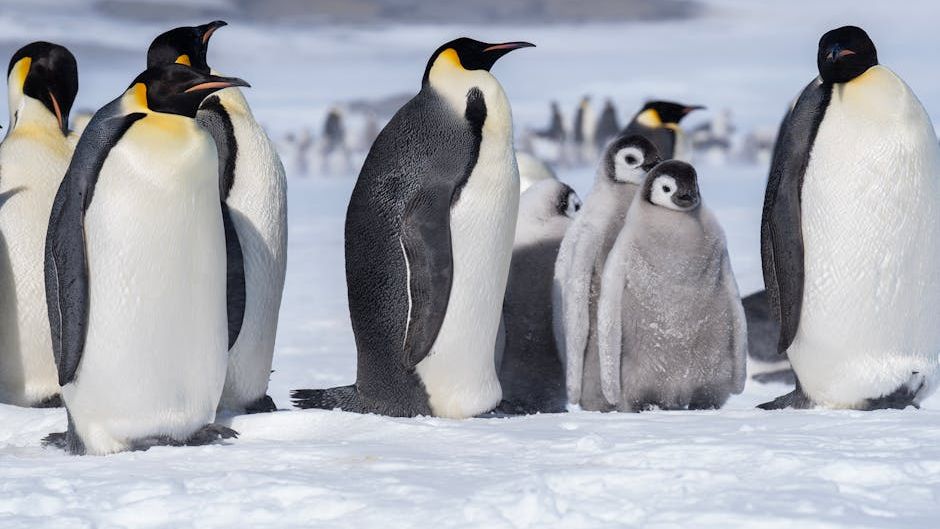
There are creatures on this planet that feel almost mythological. Emperor penguins, standing tall on Antarctic ice in brutal minus-60-degree winds, raising their chicks in conditions no other bird on Earth would dare attempt, have long captured something deep in the human imagination. They are survivors in the most extreme sense of the word.
So when the world’s most authoritative conservation body officially flags them as endangered, that’s not just a headline. That’s a warning bell, ringing loud and clear across every continent. Let’s dive in.
The IUCN Makes It Official
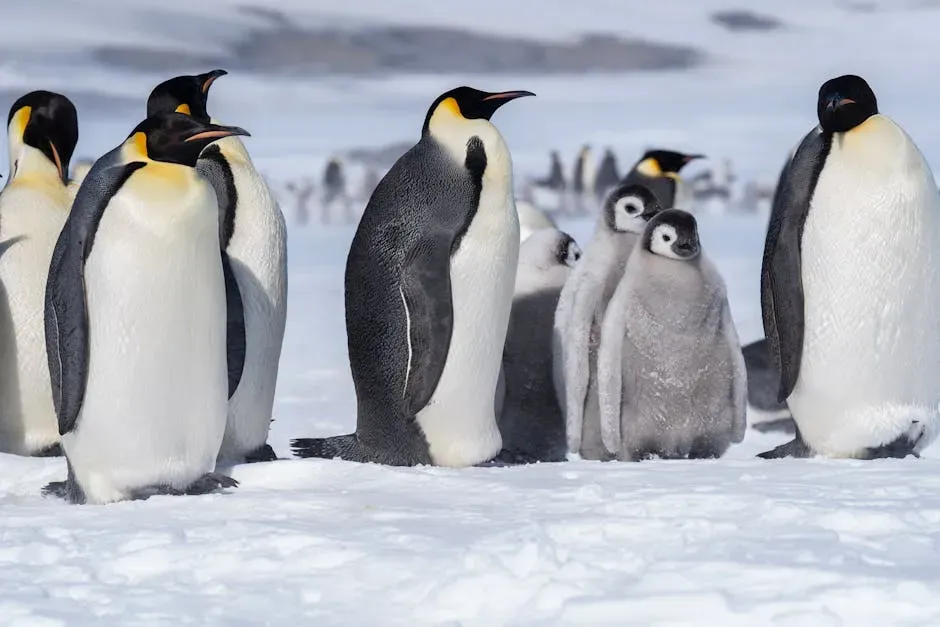
The International Union for Conservation of Nature, widely known as the IUCN, has officially uplisted emperor penguins to “Endangered” status on its Red List of Threatened Species. The announcement came in April 2026 and sent shockwaves through the scientific and environmental communities. This is not a preliminary concern or a cautionary flag. It is a formal recognition that one of the most iconic animals alive today is now racing against a ticking clock.
The IUCN Red List is, honestly, the gold standard when it comes to tracking the conservation status of species worldwide. When something moves up that list, the global community is expected to take notice and, more importantly, act. For the emperor penguin, this uplisting marks a dramatic and sobering shift in how scientists are assessing its future survival.
Why Climate Change Is the Core Culprit
Here’s the thing about emperor penguins. Their entire life cycle is engineered around stable, solid sea ice in Antarctica. They breed on it, raise their young on it, and depend on it for the krill and fish that make up their diet. When that ice disappears, their entire world collapses.
Sea ice in Antarctica has been declining at a rate that has alarmed researchers for years. The record-low Antarctic sea ice extent observed in recent years has not recovered in the way scientists had hoped. For emperor penguins, less sea ice doesn’t just mean fewer resting spots. It means catastrophic breeding failures, with entire colonies losing chicks before they develop the waterproof feathers needed to survive in open ocean.
The Catastrophic Breeding Failures Nobody Saw Coming
In 2022, scientists documented near-total breeding failure across multiple emperor penguin colonies in the Bellingshausen Sea region of Antarctica. Satellite imagery confirmed that thousands of chicks perished after sea ice broke up prematurely beneath them. These weren’t minor losses. These were colony-wide collapses, the kind that can take decades to recover from, if recovery happens at all.
What makes this even more unsettling is that researchers believe such catastrophic events could become the norm rather than the exception. Roughly four out of five emperor penguin colonies could face near-extinction-level breeding failures by the end of this century if current warming trajectories continue. That is an almost incomprehensible loss to contemplate.
How Many Emperor Penguins Are Actually Left?
Current estimates place the global emperor penguin population at somewhere around 600,000 individuals, spread across roughly 60 known colonies dotted around the Antarctic coastline. That might sound like a lot, but context matters enormously here. Population projections tied to climate models suggest dramatic declines are coming, and coming fast.
I think people often assume that because we can’t see these animals in our daily lives, the numbers must somehow be stable. That assumption is dangerously wrong. The modelling used by IUCN assessors suggests that under high-emissions scenarios, emperor penguin populations could decline by well over half before the end of this century. The math simply doesn’t work in their favor.
What Endangered Status Actually Changes
Listing a species as endangered under the IUCN Red List doesn’t automatically trigger legal protections. That’s a common misconception worth clearing up. The IUCN list is a scientific assessment tool, not binding international law. However, the listing carries enormous symbolic and practical weight in shaping conservation policy, funding priorities, and international agreements.
For emperor penguins specifically, the endangered status strengthens the case for more aggressive protections under frameworks like the Antarctic Treaty System and the Convention on the Conservation of Antarctic Marine Living Resources. Conservation organizations and governments can point directly to IUCN status when lobbying for protected marine areas, stricter emissions commitments, and restrictions on krill fishing in critical penguin feeding grounds. The listing is a lever, and how hard the world pulls that lever is still to be determined.
The Role of Krill Fishing and Human Pressure
Climate change is the dominant threat, but let’s be real, it isn’t working alone. Commercial krill fishing in Antarctic waters has expanded significantly in recent decades, and krill sits at the very base of the emperor penguin’s food chain. When fishing fleets compete with penguins for the same food source in an already warming, ice-shrinking ocean, the pressures compound in ways that are difficult to model but easy to imagine.
There have been growing calls from environmental groups and some governments to establish far larger marine protected areas in the Southern Ocean. Progress has been frustratingly slow, partly due to geopolitical disagreements among nations with fishing interests in the region. It’s hard to say for sure whether expanded protections would be enough to offset climate-driven losses, but removing additional stressors from an already stressed population seems like the very minimum required.
What Happens Next for One of Earth’s Most Beloved Animals
The IUCN uplisting is unlikely to be the last escalation in the emperor penguin’s conservation story. Scientists have been clear that if global average temperatures rise beyond 1.5 degrees Celsius above pre-industrial levels, the situation for this species moves from dire to potentially irreversible. We are currently tracking toward warming well above that threshold.
Conservation efforts are not standing still. Researchers are investing in satellite monitoring technology that can track colony health in near real-time, even in the most remote and inhospitable corners of Antarctica. Captive breeding programs exist but are far too limited in scale to serve as a genuine safety net for a species this large and this dependent on wild, open habitats. The honest truth is that saving emperor penguins ultimately comes down to one thing: the speed and seriousness with which humanity addresses climate change itself.
A Final Thought on What We Stand to Lose
There is something almost unbearable about the idea of a world without emperor penguins. These animals have existed for millions of years, surviving ice ages and geological upheaval, only to find themselves pushed to the edge by a few centuries of industrial activity. That’s not just a conservation statistic. That’s a profound moral failure.
Honestly, I think the IUCN’s decision deserves far more attention than it typically receives in a news cycle dominated by politics and economics. The endangered listing isn’t the end of the story for emperor penguins. It’s a last clear chance to write a different ending. Whether we take it seriously enough, quickly enough, is the real question. What do you think it will take before the world finally listens? Share your thoughts in the comments below.

- Urban Coyotes Show Remarkable Adaptability, Learning to Thrive in City Environments - July 22, 2026
- Beavers Are Nature’s Engineers, Creating Vital Habitats for Other Wildlife Species - July 21, 2026
- The Recovery of the California Condor Offers Hope for Other Critically Endangered Birds - July 21, 2026