

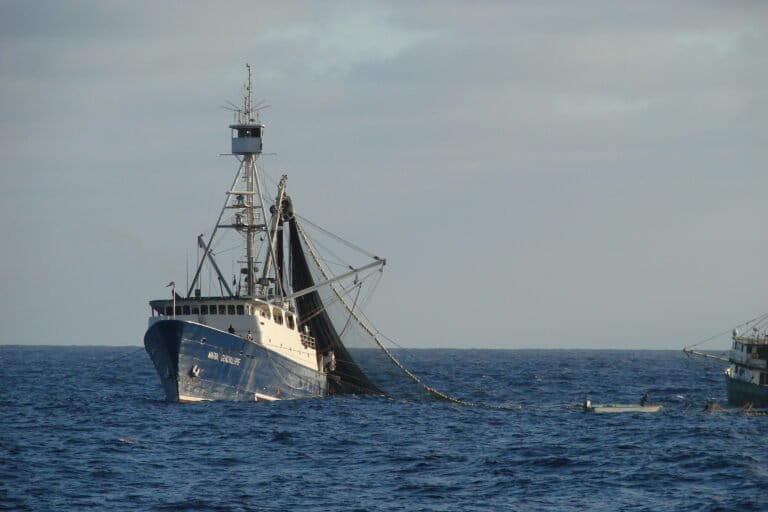

Fishermen as Ocean Sentinels (Image Credits: Imgs.mongabay.com)
U.S. West Coast – Scientists have uncovered a novel method to detect how intensifying marine heat waves disrupt fish populations by analyzing the movements of commercial fishing vessels.
Fishermen as Ocean Sentinels
Fishing fleets, which pursue prey across vast expanses, offer real-time insights into environmental changes that traditional surveys often miss. Researchers at the University of California, Santa Cruz, led by associate project scientist Heather Welch, examined satellite data from over a million vessel locations spanning 2010 to 2024. This approach focused on the Northeast Pacific, particularly off Oregon and Washington, where heat waves have grown more persistent. The study highlighted shifts in albacore tuna and Pacific bluefin tuna distributions during extreme warming events. By treating vessels as mobile detectors, the team identified patterns that signal broader ecosystem stress before widespread impacts emerge.
Such data proves especially valuable because fish do not always relocate predictably in response to warmer waters. In some cases, species like tuna ventured northward or closer to shore, altering fishing grounds and success rates. The findings, detailed in a report released on December 22, 2025, underscore how human activities can inadvertently aid conservation efforts. Vessel monitoring systems, originally designed for regulatory compliance, now double as tools for tracking climate-driven anomalies.
Understanding Heat Waves’ Ecological Ripples
Marine heat waves, periods of unusually high ocean temperatures, have surged in duration and intensity worldwide, absorbing much of the planet’s excess heat from greenhouse gases. Along the U.S. West Coast, these events pushed surface waters to levels that stressed marine life, prompting behavioral changes in commercially vital species. Albacore tuna, for instance, typically favor cooler depths but surfaced more frequently during peaks, drawing boats into new areas. Pacific bluefin tuna exhibited similar inshore movements, complicating harvest predictions and exposing vulnerabilities in food webs.
The analysis revealed that these shifts occurred primarily within the U.S. Exclusive Economic Zone, though some extended to international waters. Warmer conditions reduced oxygen availability in deeper layers, forcing fish to seek relief nearer the surface or poles. Researchers noted that such displacements not only affected catch volumes but also hinted at risks to biodiversity. Key indicators included sudden spikes in vessel density in unexpected zones, serving as early alerts for managers.
Leveraging Data for Conservation Wins
Governments and organizations increasingly integrate vessel tracking into wildlife protection strategies, turning raw location data into actionable intelligence. This method outperforms static ocean buoys by capturing dynamic prey responses over large scales. For tuna fisheries, the insights helped refine quotas and protected zones during heat events, safeguarding stocks from overexploitation. The study’s emphasis on ecosystem health positions fishermen as key partners in monitoring, fostering collaborations between industry and science.
Challenges remain, however, as not all fleets report comprehensively, and privacy concerns limit data sharing. Still, expanding access to these records could enhance global efforts against climate threats. In the Northeast Pacific, initial applications already informed adaptive fishing plans, reducing bycatch and supporting recovery in affected areas.
Global Lessons from Pacific Waters
While centered on the U.S. West Coast, the technique holds promise for oceans everywhere, where heat waves threaten coral reefs, kelp forests, and migratory routes. Similar patterns have appeared in the Mediterranean and Indian Ocean, displacing sardines and mackerels. Projections suggest more frequent extremes by mid-century, demanding scalable tools like vessel data to stay ahead. International bodies, such as those overseeing tuna commissions, now explore standardized tracking to bolster resilience.
Conservationists argue that empowering local fleets with this knowledge builds stewardship, aligning economic needs with environmental goals. The approach also spotlights unregulated “dark fleets” that evade monitoring, urging tighter global regulations.
Key Takeaways
- Vessel tracking detects fish shifts faster than conventional methods, providing early warnings for heat wave impacts.
- Albacore and bluefin tuna moved northward and inshore during 2010–2024 events, altering fishing dynamics.
- Integrating industry data supports sustainable management and ecosystem monitoring worldwide.
As oceans warm, harnessing everyday tools like fishing boat paths could prove essential in preserving marine biodiversity for future generations. What steps should fisheries take next to adapt? Share your thoughts in the comments.

- Urban Coyotes Show Remarkable Adaptability, Learning to Thrive in City Environments - July 22, 2026
- Beavers Are Nature’s Engineers, Creating Vital Habitats for Other Wildlife Species - July 21, 2026
- The Recovery of the California Condor Offers Hope for Other Critically Endangered Birds - July 21, 2026