

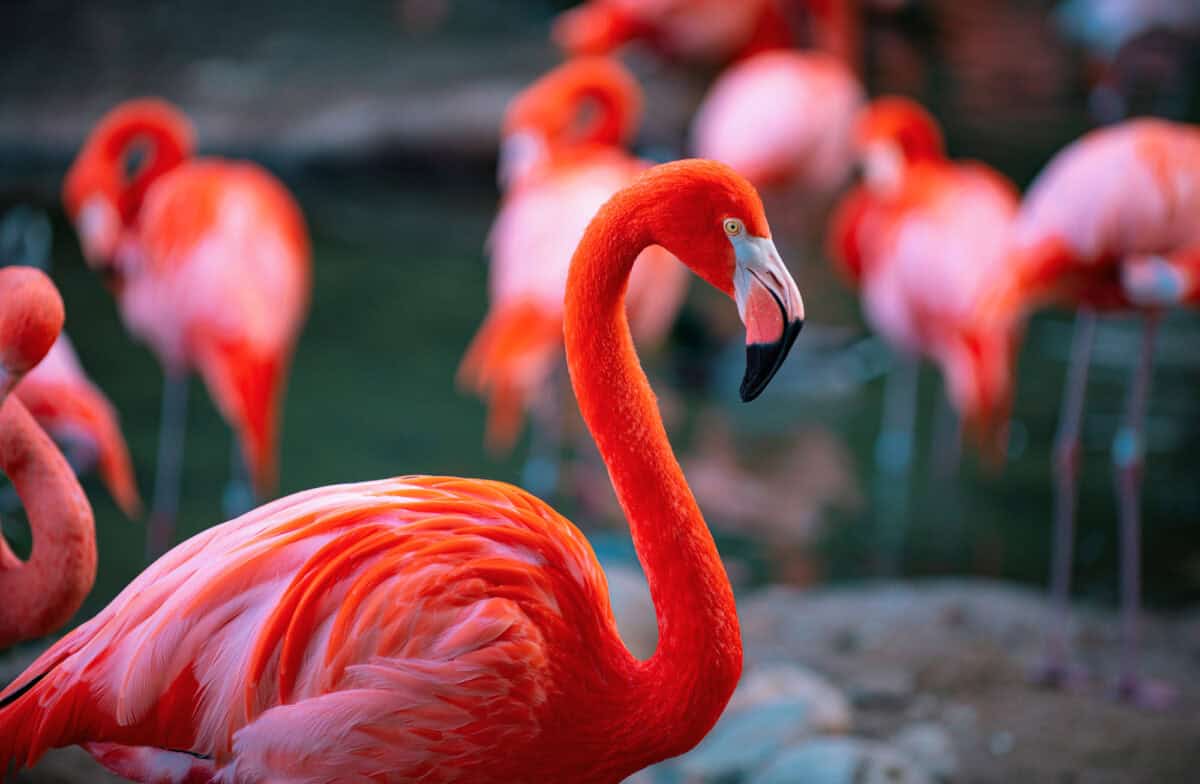
Don’t let their lanky appearance and beautiful, soft pink plumage fool you, flamingos are totally metal. They are extremophiles, meaning they can survive, and even thrive, in environments with extreme conditions.
Introduction
🔥 Would you like to save this?
We'll email this post to you, so you can come back to it later!
An environment is considered “extreme” when one or more environmental factor, such as temperature, salinity, radiation, or pressure, is on the far side of what we arbitrarily consider to be “standard.”
What’s the Point?

🔥 Would you like to save this?
We'll email this post to you, so you can come back to it later!
The benefit of being an extremophile is that there are far fewer predators and much less competition for resources in the particular environment. Flamingos are some of the world’s largest extremophiles, with most extremophiles being microorganisms.
Bird Beak Adaptations

🔥 Would you like to save this?
We'll email this post to you, so you can come back to it later!
Bird beaks are adapted in all sorts of ways according to the kind of food the particular bird species eats. For instance, eagles have hook-tipped beaks for tearing flesh, hummingbirds have long, curved beaks to suck nectar, and finches have thick, conical beaks to break seeds. Flamingos feed on insect larvae, brine shrimp, cyanobacteria, and small mollusks and crustaceans, which is, in fact, similar to the diet of whales. So how does a bird eat literal bacteria?
Flamingo Feeding

🔥 Would you like to save this?
We'll email this post to you, so you can come back to it later!
Flamingos and whales are both considered “filter feeders,” meaning they have specialized structures in their mouths (or beaks) that extract food out of water. These structures are called “lamella” and function similar to how a broom traps dirt and dust off the floor.
Flamboyance of Flamingos
🔥 Would you like to save this?
We'll email this post to you, so you can come back to it later!
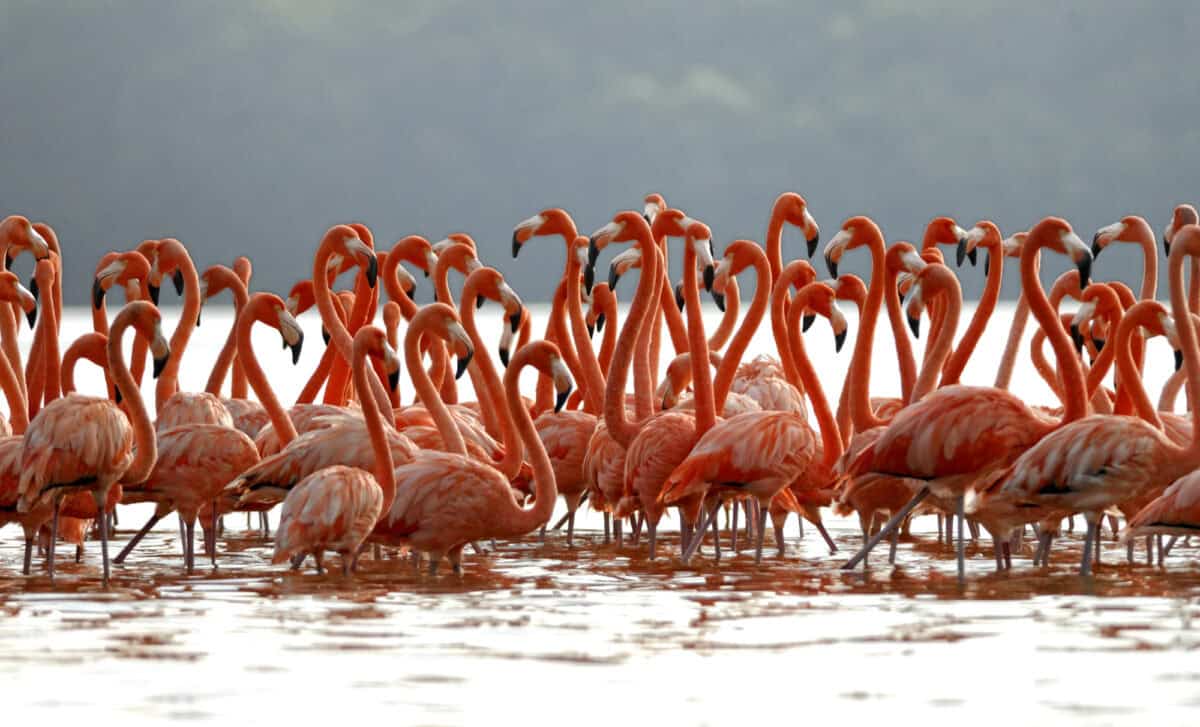
Yes, the collective noun of flamingos is “flamboyance.” How fitting, considering their brilliant pink color. Amazingly, the pink is not genetic, as they are born whitish-grey, but rather as a result of their diet. The food they eat is incredibly high in the beta-carotene pigment (which is also abundant in fruits and veggies like apricots and carrots). Thus, the pigment is absorbed by their skin and feathers and, voilà, pink.
Apricots & Carrots You Say?

🔥 Would you like to save this?
We'll email this post to you, so you can come back to it later!
Indeed, you could turn yourself a shade of pinkish-orange too, you would just have to eat a lot of carrots for that to happen (not recommended).
Temperature Adaptation

🔥 Would you like to save this?
We'll email this post to you, so you can come back to it later!
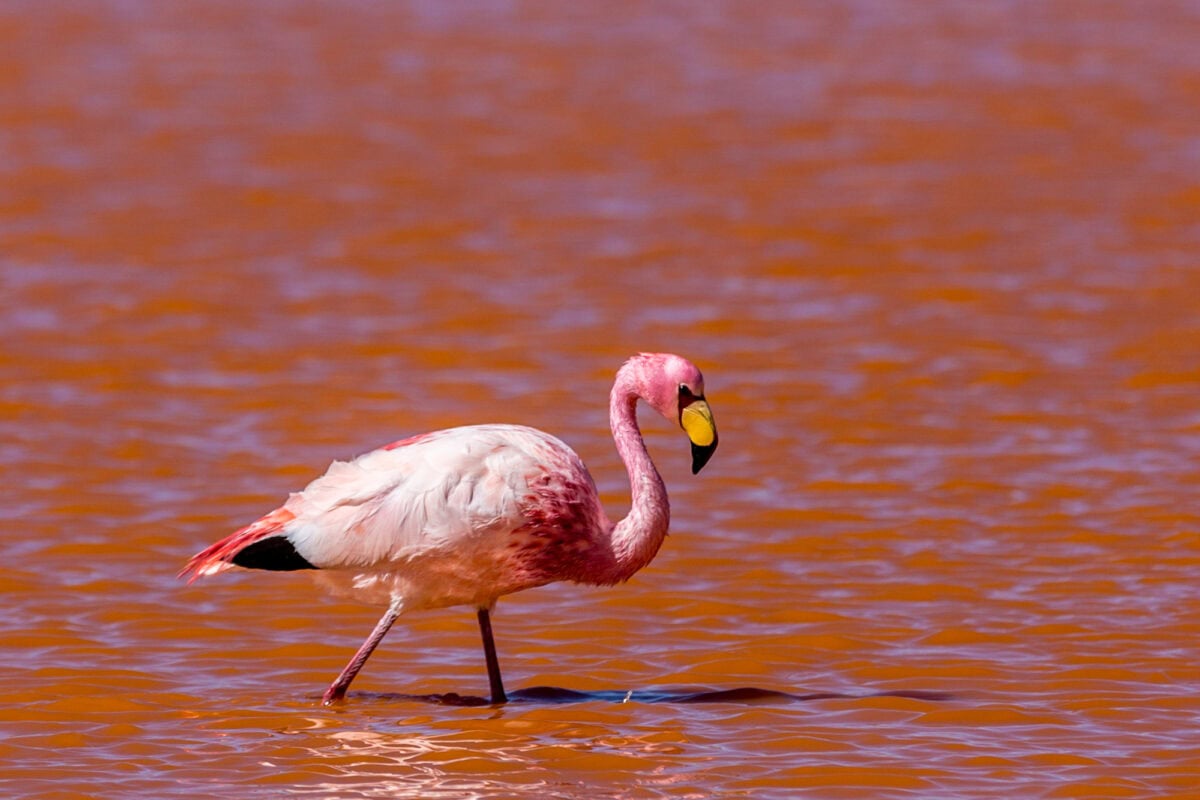
You may have visited the zoo during the height of summer or winter and found the flamingos casually hanging out on their stilts for legs. These birds don’t mind either the heat or cold and can brave extreme temperatures in either direction.
Just A Little Chilly

🔥 Would you like to save this?
We'll email this post to you, so you can come back to it later!
Some flamingo colonies live in the Andes mountains at around 13,000 ft (nearly 4 km) above sea level. Their feathers are excellent insulators, but, more importantly, when they stand on one leg, with the other tucked in, they can conserve up to 170% of their body heat. This allows them to stay standing in water that freezes overnight, so long as the water melts in the morning.
Who Turned Up The Heat?

🔥 Would you like to save this?
We'll email this post to you, so you can come back to it later!
Conversely, flamingos can stand in water that’s close to boiling, like that in geysers and hot springs, due to the specialized scales on their legs. What’s more, they can actually drink this water too, thanks to their particularly strong skin. In addition, they have behavioral mechanisms, like resting and standing on one leg, that regulate their body temperature to keep cool.
Saline Adaptation
🔥 Would you like to save this?
We'll email this post to you, so you can come back to it later!
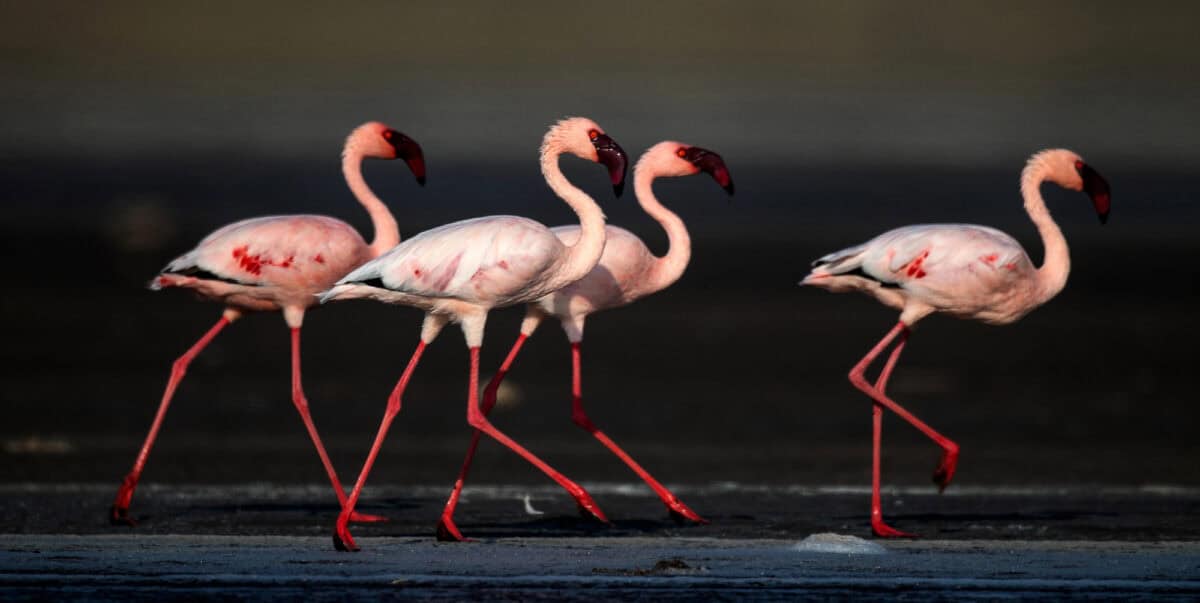
Lake Natron, Tanzania, is an alkaline (salt)-rich lake with a pH of 12, the same pH as a bottle of bleach, and a temperature that can reach up to 140 °F (60 °C). This lake is also the breeding ground for lesser flamingos.
Just … How?

🔥 Would you like to save this?
We'll email this post to you, so you can come back to it later!
Flamingos have a specialized gland in their heads, called a supraorbital gland, that functions like an extra kidney. This gland can filter salt out of flamingos’ bloodstream, allowing them to drink saltwater. They use salt for electrolytes within their bodies, but excess salt is excreted out of their nostrils.
Even Superman Had Kryptonite

🔥 Would you like to save this?
We'll email this post to you, so you can come back to it later!
Sadly, even though flamingos are highly adaptable to unique environments, several species are in decline.
Degradation of Wetlands

🔥 Would you like to save this?
We'll email this post to you, so you can come back to it later!
Many flamingo colonies make wetlands their homes, and wetlands have become increasingly destroyed and polluted by agricultural chemicals and sewage. Further, these chemicals cause harmful algal blooms, which flamingos feed on and from which they often experience fatal side effects.
The Detergent Industry

🔥 Would you like to save this?
We'll email this post to you, so you can come back to it later!
The mining of sodium carbonate, which is abundant in salt lakes, also poses a significant risk to flamingo populations. Mining activities disrupt both the nesting and breeding of flamingos, which could be disastrous for the future of some species.
Final Note

🔥 Would you like to save this?
We'll email this post to you, so you can come back to it later!
From descendants of dinosaurs to funky lawn ornaments, flamingos are certainly cool birdies. Thanks for reading!
🔥 Would you like to save this?
We'll email this post to you, so you can come back to it later!

Please send any feedback to feedback@animalsaroundtheglobe.com
- Wild Animals React to Seeing Themselves in Mirror - September 28, 2026
- 10 Extinct Animals You’ve Never Heard Of - September 22, 2026
- Incredible Tales of Animals That Lived Underground for Decades - September 1, 2026