
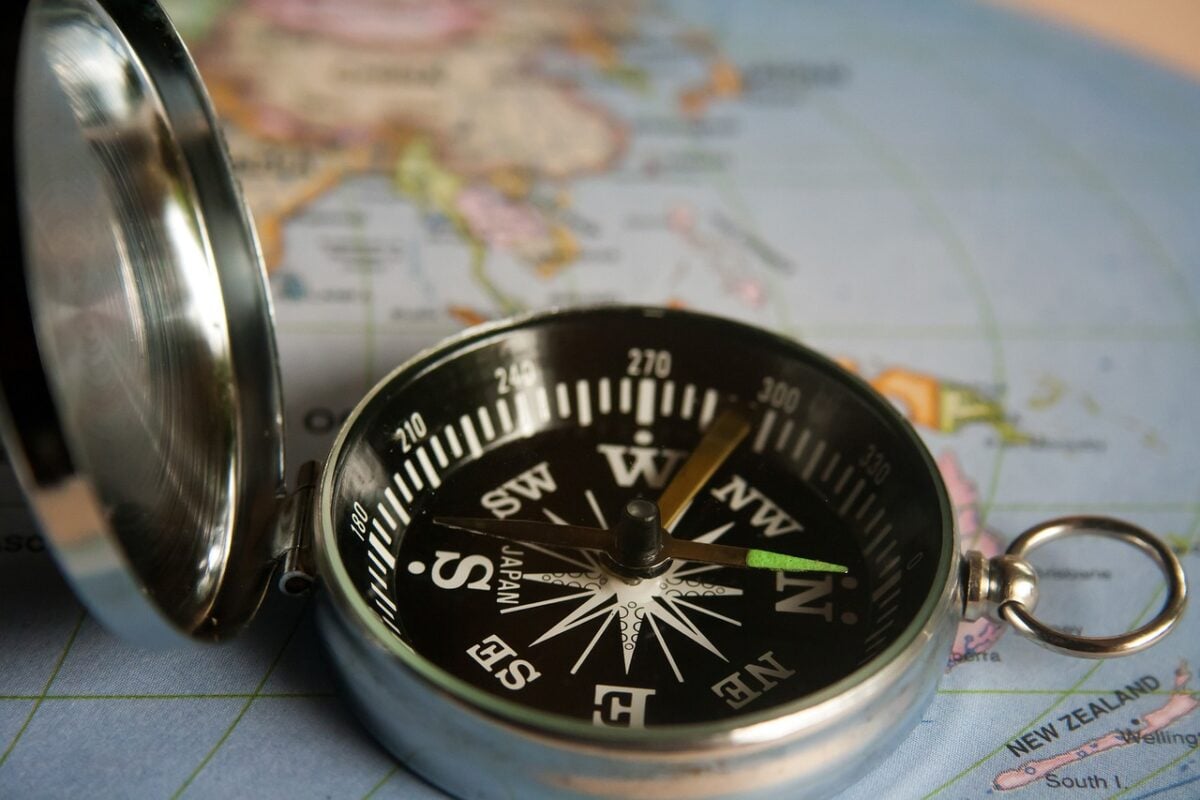
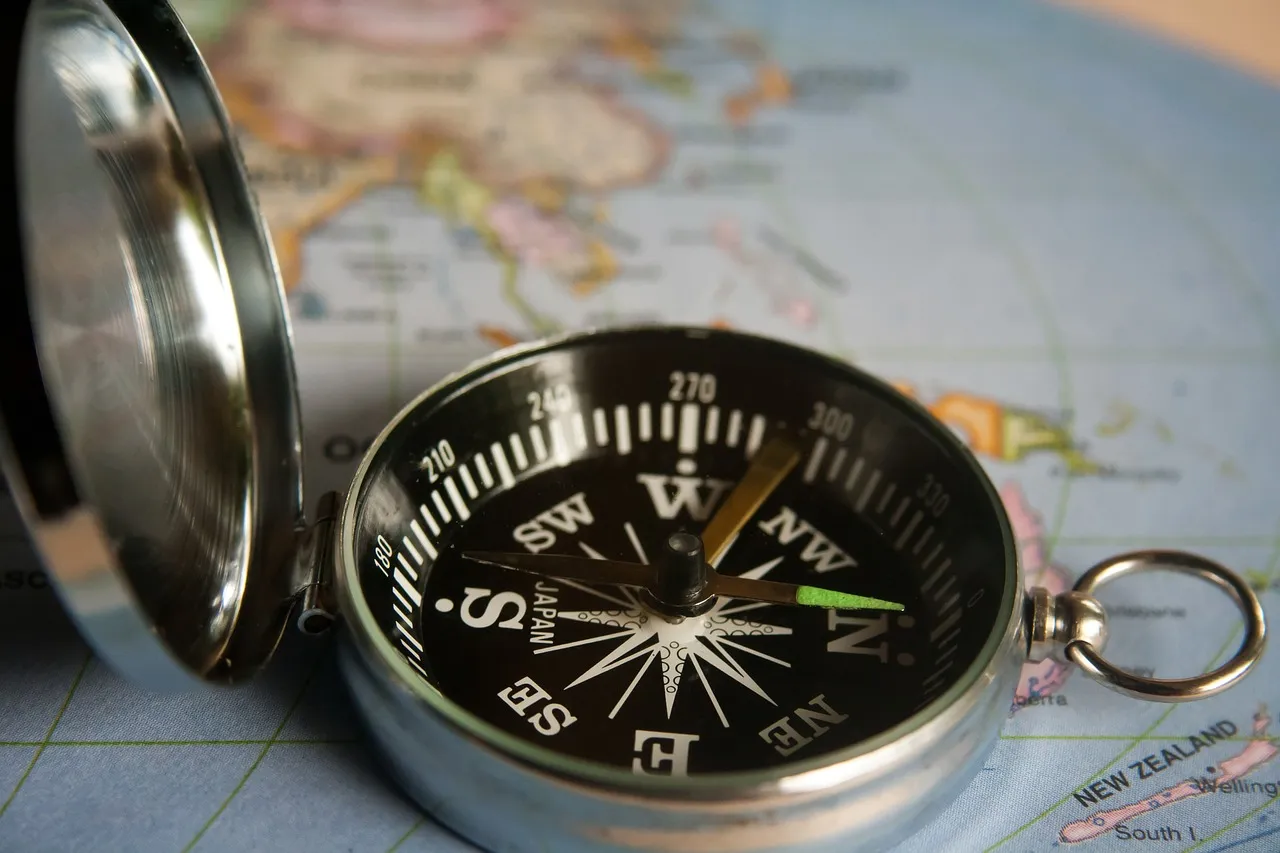
Your phone’s compass app quietly assumes something that isn’t true. It treats magnetic north as a steady point, when that point is actually wandering across the Arctic. Every few years, scientists have to redraw the map of Earth’s magnetic field so that the things we rely on don’t drift off course.
The headline claim about speed makes a good story, and part of it holds up. The full picture is a bit more interesting, though, and it involves a record, a surprising slowdown, and a very busy group of people who keep our navigation honest.
What Magnetic North Actually Is
🔥 Would you like to save this?
We'll email this post to you, so you can come back to it later!
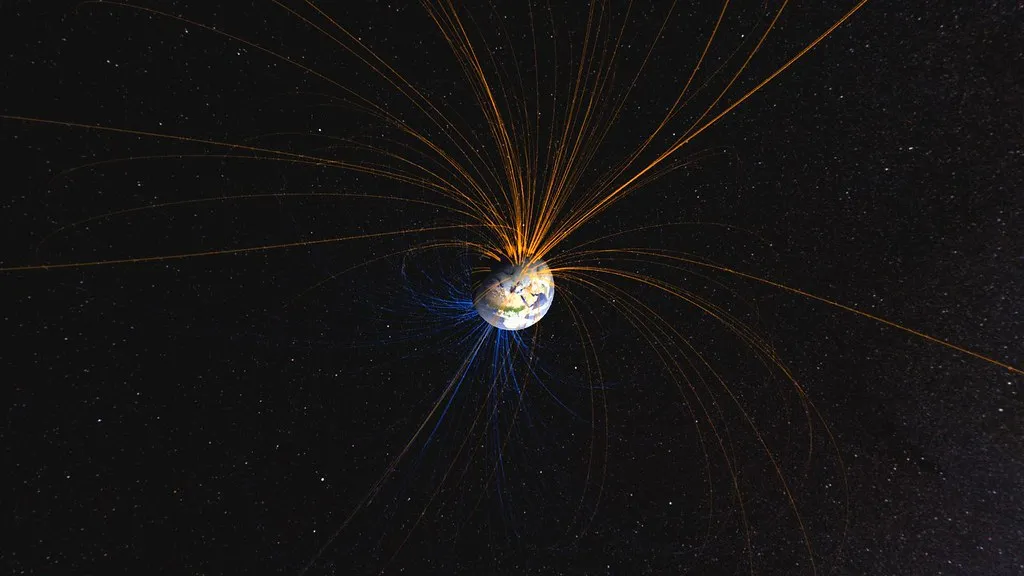
Start with the basic distinction. Earth’s geographic north pole is fixed, while the magnetic north pole moves in tandem with Earth’s constantly shifting magnetic field. The geographic pole is where the planet’s rotation axis meets the surface. The magnetic pole is where a compass needle’s pull points straight down.
The magnetic field itself comes from deep inside the planet. The reason behind the shifting pole is the movement of molten iron and nickel in the outer core. Since that liquid metal never sits still, the field it generates never does either, and the pole follows along.
A Record Sprint, Then an Unexpected Slowdown
🔥 Would you like to save this?
We'll email this post to you, so you can come back to it later!
Here’s where the headline needs a small correction. The pole did hit a record pace, but it isn’t setting new speed records at the moment. In the 2000s it accelerated to reach a record speed of 55 km a year. Compare that with the late 1990s, when magnetic north moved from about nine miles in a year to 37 miles by 2005.
Since then, things have eased off. Newly released maps show the movement has slowed to about 35 km a year, a deceleration not seen before. NOAA’s annual report found much the same thing, noting that the northern magnetic pole averaged about 36 km a year, much faster than the southern pole’s 9 km a year. So the pole is still moving quickly by historical standards, just not as quickly as it did around the turn of the century.
Why the Pole Is Heading for Siberia

🔥 Would you like to save this?
We'll email this post to you, so you can come back to it later!
The direction is as notable as the speed. The pole has spent centuries loitering around northern Canada. It is now closer to Siberia than to the Canadian Arctic, having traveled more than 2,200 kilometers since 1831.
Researchers link the drift to what’s happening in the core, where patches of the field are strengthening and weakening beneath different regions. This is natural behavior of the planet’s interior. The movement is tied to internal processes in Earth’s core, not to global warming or CO₂ emissions. Sediment records from Svalbard also suggest the pole has swung between the two regions several times over the past 22,000 years.
The World Magnetic Model Keeps Everything Honest
🔥 Would you like to save this?
We'll email this post to you, so you can come back to it later!
Anything that reads the magnetic field needs a reference map, and that’s the job of the World Magnetic Model. NOAA and the British Geological Survey jointly update it every five years. The latest version came out in late 2024, and its fourteenth update was led by the BGS alongside 18 other institutions from four continents.
Between updates, the field can still surprise forecasters. In 2019, an unscheduled mid cycle correction was issued because the pole moved unexpectedly fast. The model also gets less accurate during geomagnetic storms, especially at high latitudes, which is a known limitation rather than a flaw nobody has noticed.
Who Feels It: Planes, Ships, and Your Pocket

🔥 Would you like to save this?
We'll email this post to you, so you can come back to it later!
The model feeds a long list of systems. It’s the standard used by military and civilian aircraft, ships, submarines, and consumer GPS devices. Pilots and mariners use it to convert between magnetic and true headings, and even a small error in that conversion adds up over distance.
For most of us, the effect is invisible, because the updates happen behind the scenes. Still, it’s a reminder that a compass reading isn’t a fixed truth. It’s a measurement that stays accurate only because someone keeps correcting the reference. Scientists expect the pole to keep slowing over the next five years while still heading toward Siberia.
Final Thoughts
🔥 Would you like to save this?
We'll email this post to you, so you can come back to it later!
I’d argue the “fastest ever” framing sells the story a little short. The more useful lesson is that our supposedly stable reference point for direction has never been stable at all. We’ve just had good enough maintenance that most of us never noticed.
That’s worth appreciating, and a little humbling. A planet we think of as solid turns out to be steered by churning metal thousands of kilometers down, and the quiet work of keeping our maps in line with it deserves more credit than it gets.

- 7 Everyday Habits That Can Make Your Senior Dog Happier - November 5, 2026
- 10 Enigmatic Structures That Continue to Puzzle Scientists Today - November 5, 2026
- 10 Strange Ruins in the Americas That Challenge What We Know About Early History - November 5, 2026