

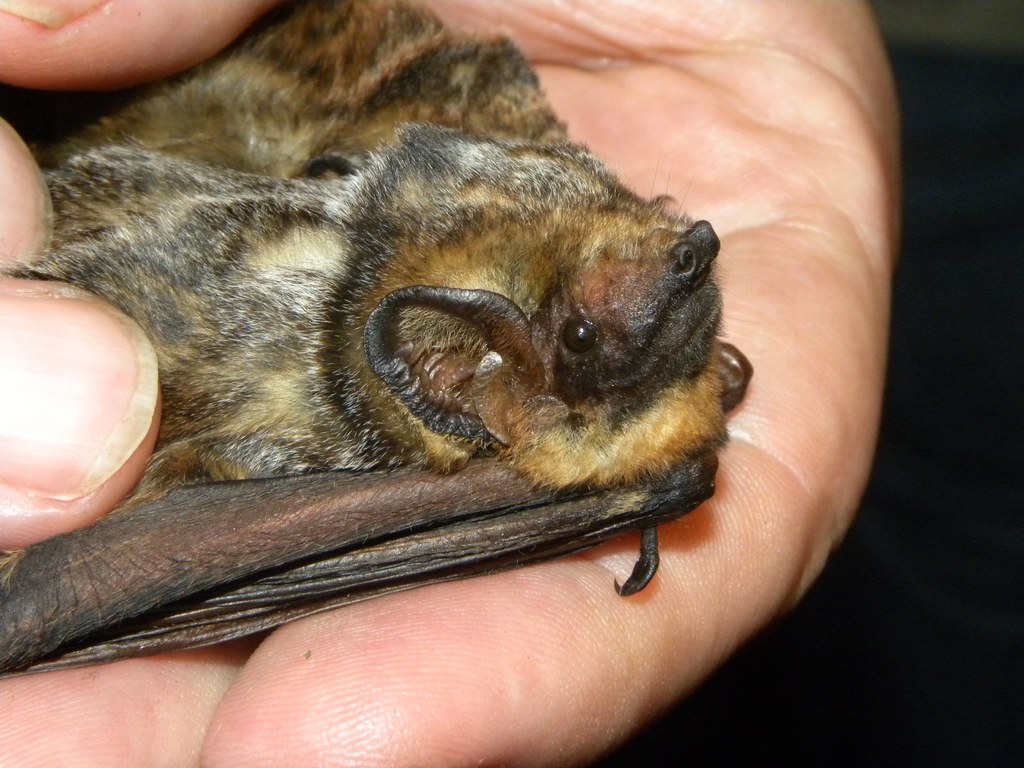
Advanced Tech Unlocks Bat Behavior (Image Credits: Flickr)
Leiden, Netherlands — Researchers from Leiden University equipped pond bats with miniature GPS devices and unveiled a key element of their nocturnal lives. These vulnerable creatures, known for hunting insects over water, actually dedicate about one-third of their nighttime to resting. The findings, detailed in a recent study, highlight the importance of diverse landscapes for their survival and challenge decades-old views on bat activity patterns.
Advanced Tech Unlocks Bat Behavior
Scientists captured pond bats using mist nets stretched over narrow waterways under bridges near Leiden and Rotterdam. Volunteers waited patiently through the night to gently net the flying mammals. Each bat received a lightweight GPS logger weighing just 1.2 grams, combined with motion-sensing accelerometers.
These devices recorded precise locations alongside activity levels. The accelerometers distinguished resting from flying or foraging by detecting movement patterns. Such data enabled researchers to connect specific behaviors to habitat types, a method termed functional habitat use.
Resting Habits Defy Expectations
Pond bats proved far less active than previously thought. They paused frequently between feeding bouts, hanging motionless for extended periods. Most rests occurred outdoors, primarily in trees lining forest edges or isolated stands near ponds and rivers.
Buildings served as rare roosts during these breaks. The bats favored spots close to foraging grounds, allowing quick returns to hunting. As fast-flying species, they navigated open areas efficiently but avoided dense woodlands.
- Trees along forest edges for primary resting.
- Isolated trees adjacent to water bodies.
- Occasional use of structures, but not preferred.
- Proximity to foraging sites like lakes and canals essential.
- Straight waterways for efficient commuting between sites.
Overturning Long-Standing Assumptions
Earlier studies tracked bat locations but rarely linked them to activities. Nighttime resting sites remained a mystery, with assumptions centering on constant foraging after dusk. This pilot project filled that gap through integrated GPS and accelerometer data.
The research emphasized overlooked landscape roles. Different areas supported distinct needs: vegetation-rich edges for feeding, linear canals for travel, and nearby trees for recovery. Yali Si, an environmental scientist at Leiden University, noted, “We don’t just see where they are, but also what they’re doing.”
Urgent Lessons for Conservation
Pond bats (Myotis dasycneme) appear on Europe’s IUCN Red List as vulnerable. Populations have dwindled from habitat fragmentation, insect declines, and modern insulation sealing off roosts. The study underscores protecting interconnected habitats across entire landscapes.
Conservation efforts must extend beyond daytime roosts and feeding zones. Si added, “These new insights show why it’s important to look beyond day roosts and foraging areas. You need to think about the whole landscape.” Findings from this work pave the way for similar tracking in other regions and bat species.
| Habitat Type | Primary Function |
|---|---|
| Vegetation-rich water edges | Foraging |
| Straight canals/rivers | Commuting |
| Forest-edge trees | Resting |
Key Takeaways
- Pond bats rest outdoors about one-third of the night, mainly in trees near water.
- Functional habitat use links behaviors to specific landscape features.
- Conservation requires safeguarding diverse, proximate habitats for vulnerable species.
These revelations from Leiden researchers reshape understanding of pond bat ecology and bolster strategies to halt their decline. As habitats evolve under human pressures, such detailed tracking offers hope for effective protection. What steps should prioritize in local bat conservation? Share your thoughts in the comments.

- Urban Coyotes Show Remarkable Adaptability, Learning to Thrive in City Environments - July 22, 2026
- Beavers Are Nature’s Engineers, Creating Vital Habitats for Other Wildlife Species - July 21, 2026
- The Recovery of the California Condor Offers Hope for Other Critically Endangered Birds - July 21, 2026