

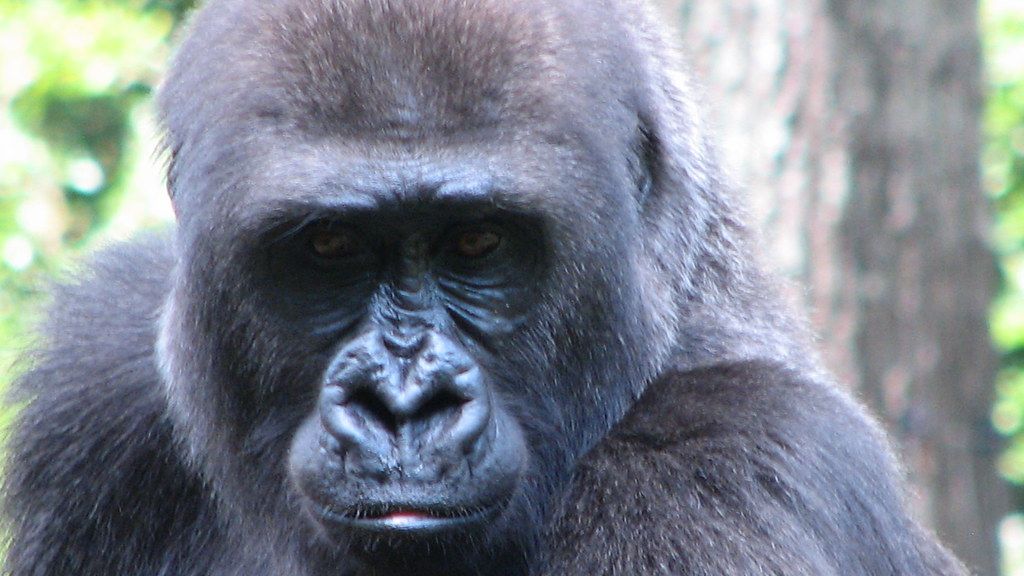
There’s something deeply unsettling – in the best possible way – about looking into the eyes of a chimpanzee and watching it mirror your exact expression back at you. It feels less like observing an animal and more like catching a glimpse of something profoundly familiar. Almost like looking in a mirror, but through millions of years of evolution.
New research published in April 2026 has reignited the conversation about just how emotionally and socially sophisticated our closest living relatives truly are. The findings are, honestly, more striking than most people would expect. So let’s dive in.
The Study That’s Turning Heads in the Scientific Community
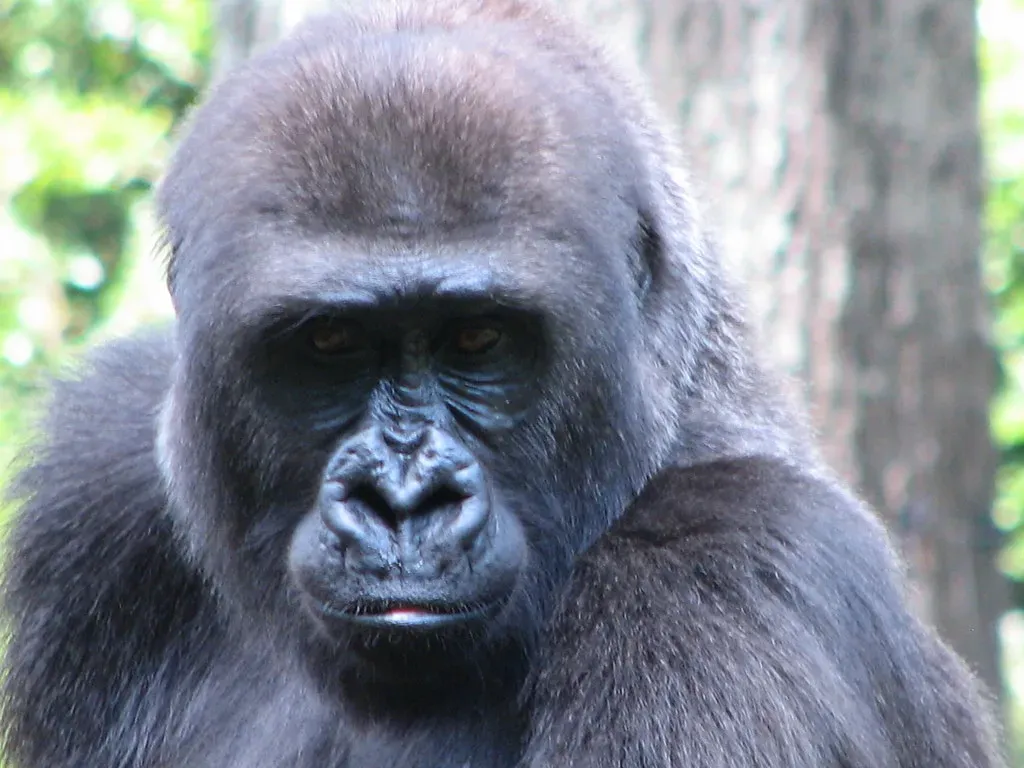
Researchers have found that great apes, including chimpanzees and other non-human primates, are capable of mimicking human facial expressions with a level of precision that goes far beyond what scientists previously credited them with. This isn’t casual, accidental mimicry. It’s fast, deliberate, and remarkably accurate. The study, covered by Phys.org in April 2026, highlights just how nuanced primate facial communication really is, suggesting the roots of human emotional expression run much deeper in our evolutionary past than we ever imagined.
What makes this research particularly fascinating is the speed of the response. Apes were shown to replicate specific facial movements within fractions of a second, which strongly implies an automatic, involuntary mirroring system at work. That kind of rapid response is what researchers call “rapid facial mimicry,” and it’s something previously thought to be a uniquely human social behavior.
What Is Rapid Facial Mimicry and Why Does It Matter
Rapid facial mimicry is exactly what it sounds like – the near-instantaneous, unconscious copying of another individual’s facial expression. In humans, we do this all the time without realizing it. When a friend smiles, you smile back before you’ve even consciously registered their expression. It’s a deeply wired social reflex.
For decades, this kind of automatic emotional resonance was considered a hallmark of human social bonding and empathy. Here’s the thing though: if great apes are doing it too, and doing it with precision, then we have to rethink where empathy itself begins on the evolutionary tree. That is, in my opinion, a genuinely exciting shift in how we understand what separates us from our primate cousins – or rather, how little separates us.
How the Researchers Tested Ape Facial Responses
The methodology behind the study involved presenting apes with carefully controlled facial stimuli and then recording their facial muscle movements using high-speed video analysis. Researchers tracked the activation of specific facial muscles, known in scientific circles as action units, to determine whether the apes were producing true mimicry or just generalized responses. The level of granularity involved in the measurement is impressive.
What they found wasn’t just broad, vague emotional matching. The apes were replicating specific, distinct facial configurations – a raised brow here, a pulled lip corner there. That specificity is what elevates this research above simple observation. It’s the difference between saying someone waved back at you and saying they matched your exact hand position, angle, and timing. One is polite. The other is almost eerie.
The Social Role of Mirroring in Primate Groups
Facial mimicry in great apes isn’t just a curiosity – it likely plays a real, functional social role within their communities. In the wild, apes live in complex social groups where reading emotional signals quickly can be the difference between conflict and cooperation. The ability to instantly mirror another’s expression may help reinforce social bonds, signal non-aggression, or communicate understanding without a single vocalization.
Think of it like a silent language spoken entirely in muscle movements. For animals that rely heavily on social hierarchy and group cohesion, that kind of rapid nonverbal fluency is enormously valuable. It’s honestly not that different from how humans use microexpressions in high-stakes social situations, like a job interview or a tense family dinner.
What This Tells Us About the Origins of Human Empathy
One of the deeper implications of this research is what it says about the biological origins of human empathy. If rapid facial mimicry is present across multiple great ape species, then this capacity likely predates the emergence of Homo sapiens by millions of years. Empathy, or at least its neurological and muscular foundations, may not be a uniquely human gift at all.
This raises genuinely uncomfortable but fascinating questions. Were early hominins already emotionally mirroring each other long before language developed? Did our shared capacity for facial empathy actually help drive the development of complex social structures in both human and non-human primates? It’s hard to say for sure, but the evidence is pointing in a direction that should make us reconsider our long-held assumptions about emotional exclusivity.
The Broader Implications for Animal Cognition Research
This research lands in the middle of a much larger ongoing conversation about animal cognition and consciousness. For years, scientists debated whether non-human animals experience anything resembling complex emotion. The dominant view for much of the twentieth century was skeptical, treating animals as biological machines responding to stimuli rather than beings with inner lives.
Studies like this one are gradually dismantling that outdated picture. The finding that great apes perform precise, rapid facial mimicry adds to a growing body of evidence suggesting rich inner emotional lives in many animal species. It joins previous research on ape laughter, grief-like behavior in elephants, and play behavior in ravens as part of a compelling, steadily building case. Let’s be real – at some point, the evidence becomes too consistent to dismiss.
What Comes Next for Primate Emotional Research
The obvious next step for researchers is expanding the scope of these observations across more species and more controlled social scenarios. Do bonobos, who are arguably even more socially sophisticated than chimpanzees, show even greater facial mimicry precision? What about gorillas, who are generally considered less expressive? These are the kinds of questions that will likely define the next decade of primate cognition studies.
There’s also a deeper ethical dimension quietly lurking beneath all of this. If great apes can mirror human emotional expressions with this level of precision, and if that behavior is tied to empathy and social bonding, then the moral case for stronger protections of these animals grows considerably stronger. Science, in this case, isn’t just illuminating the past. It may be reshaping how we treat our closest living relatives in the very near future.
A Conclusion Worth Sitting With
Honestly, the more we learn about great apes, the harder it becomes to draw a clean line between “human” and “animal” behavior. Rapid facial mimicry was supposed to be one of our defining social traits. Turns out, we’ve been sharing it all along.
What this research ultimately suggests is that emotional intelligence didn’t spring into existence with modern humans. It was already there, encoded in our shared primate lineage, long before we started walking upright. That’s both humbling and, I think, genuinely beautiful. The next time you lock eyes with a chimpanzee at a sanctuary or in a documentary, remember – it might be reading your expression far more accurately than you ever imagined. What does that make you feel?

- Urban Coyotes Show Remarkable Adaptability, Learning to Thrive in City Environments - July 22, 2026
- Beavers Are Nature’s Engineers, Creating Vital Habitats for Other Wildlife Species - July 21, 2026
- The Recovery of the California Condor Offers Hope for Other Critically Endangered Birds - July 21, 2026