

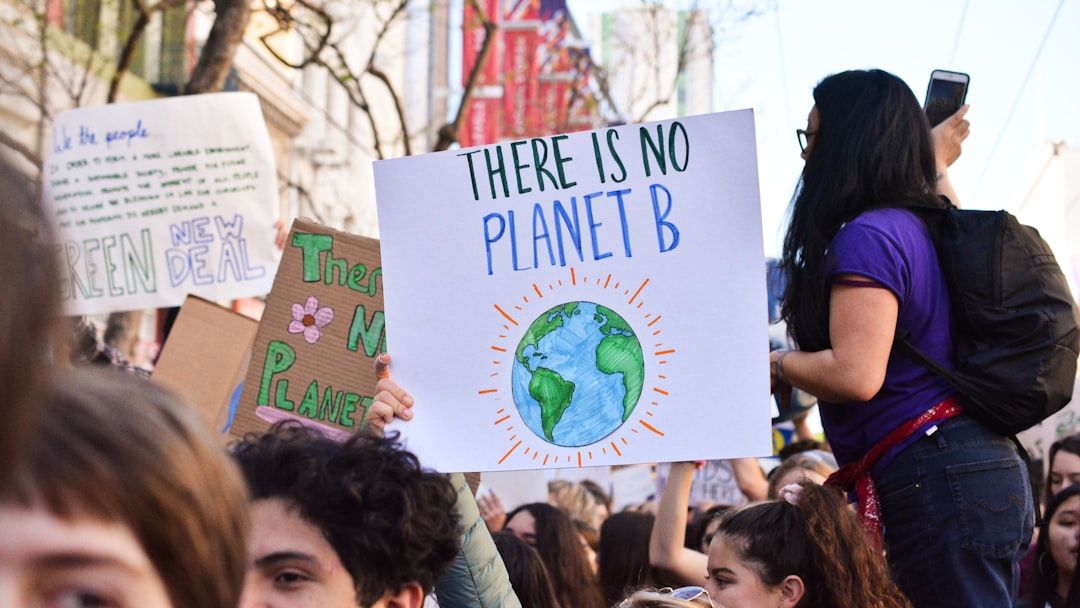
Guardian: “Declare climate crisis a global public health emergency, experts tell WHO” – Image for illustrative purposes only (Image credits: Unsplash)
Discussions among medical researchers have increasingly focused on how shifts in weather patterns and environmental conditions affect daily health outcomes around the globe. What once appeared mainly as a concern for ecosystems now shows clear connections to hospital admissions, disease spread, and long-term care demands. This view treats the issue as both an urgent matter and one that will shape public health planning for years ahead.
Why the Push for an Official Declaration
Specialists argue that formal recognition by the World Health Organization would help coordinate responses across countries. Such a step could guide funding decisions and encourage health agencies to include environmental factors in routine planning. Without this level of attention, efforts to prepare medical systems may remain scattered and under-resourced.
The proposal rests on evidence that changing conditions already influence everything from respiratory illnesses to nutrition security. Supporters see the declaration as a way to move these links from research papers into practical policy.
Health Effects That Appear Right Away
Heat waves and altered rainfall patterns contribute to more frequent cases of heat-related illness and waterborne infections. Communities with limited access to cooling or clean water feel these pressures first. Health services in those areas often report higher workloads during extreme events, stretching staff and supplies.
Vector-borne diseases also shift their ranges as temperatures rise, bringing new risks to regions that previously saw few cases. These changes require updated surveillance and prevention programs that many places have not yet fully developed.
Challenges That Build Over Time
Over longer periods, repeated exposure to poor air quality and disrupted food supplies can worsen chronic conditions such as asthma and heart disease. Mental health impacts from repeated extreme weather events add another layer that health systems must address. These gradual effects make it harder to measure progress and harder to justify investments that may not show results for a decade or more.
Uncertainty remains about exactly how quickly some of these trends will accelerate. Researchers continue to refine models that link specific environmental changes to measurable health outcomes, yet gaps in data collection persist in many parts of the world.
What Would Change With Greater Priority
A formal emergency label could prompt clearer guidelines for integrating climate considerations into medical training and infrastructure design. It might also support international agreements that share resources for early-warning systems and resilient health facilities. At the same time, the approach would need to balance attention across many competing health priorities that already strain budgets.
Progress would likely depend on steady monitoring rather than one-time announcements. Health authorities would still face questions about how to allocate limited resources while evidence continues to evolve.
Key points to watch
- Coordination between environmental and medical agencies
- Updates to disease tracking in newly affected regions
- Long-term funding commitments for adaptation measures
Continued research will determine whether these steps produce measurable improvements in population health or simply add another layer of planning. The outcome will depend on how well global institutions turn the current discussion into sustained action.

As a little kid, I fell in love with nature, wildlife, and animals. Living in the USA, South Africa, Italy, China and Germany gave me the opportunity to discover the world's Wildlife. My favorite animals are Mountain Gorillas, Siberian Tigers, and Great White Sharks.
I'm a certified PADI Open Water Diver, went to Everest Base Camp and Trekked Gorillas in Uganda. I hold a Master of Science in Economics and Finance.
Please send any feedback to feedback@animalsaroundtheglobe.com
- 25 Loyal Dog Breeds That Will Protect You With Their Life - July 21, 2026
- 11 Monkey Antics That Prove They are Our Wildest Relatives - July 21, 2026
- 15 Animals That Plan Their Actions - July 21, 2026