

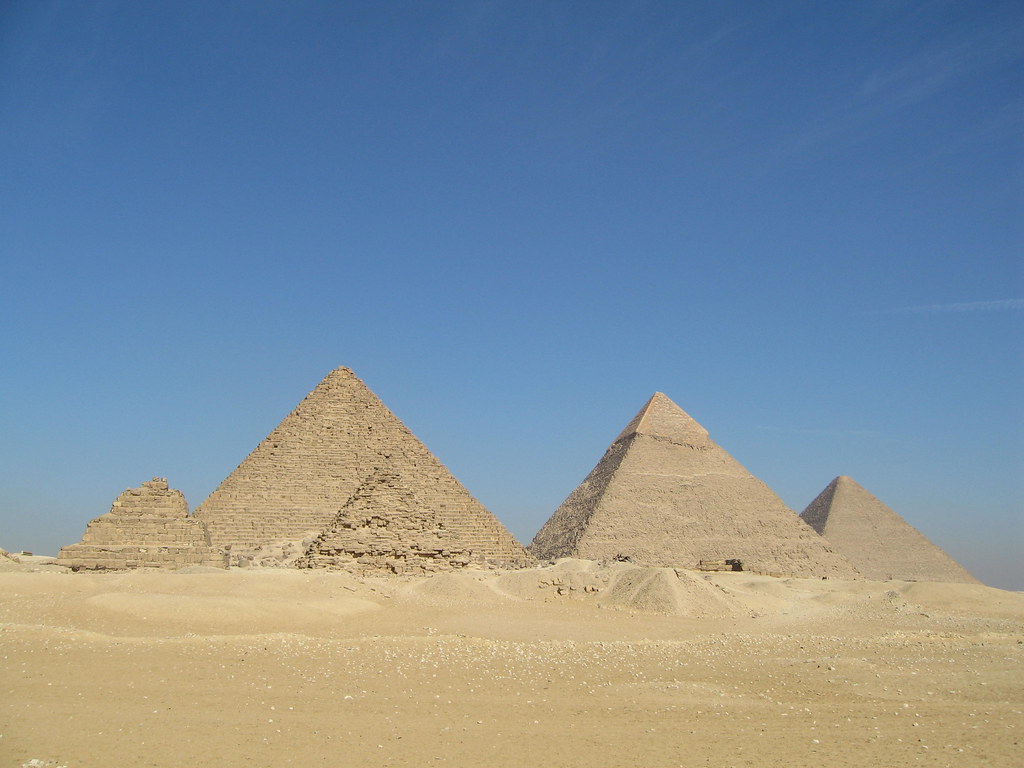
When you stand before the Great Pyramid of Giza, something strikes you immediately beyond its colossal size: the mathematical perfection etched in stone. This ancient wonder, built over four millennia ago, demonstrates a level of geometrical precision that astounds engineers even today. The pyramid’s base measures approximately 230.3 meters square, yet the largest discrepancy between sides is merely 30 centimeters, with the north and east sides differing by only 6 centimeters.
How did ancient Egyptian builders achieve such extraordinary accuracy without modern technology? The answer lies in their ingenious combination of sophisticated measurement systems, innovative tools, astronomical observations, and engineering techniques that would make even contemporary construction professionals pause in admiration.
The Foundation of Human-Based Measurement Systems
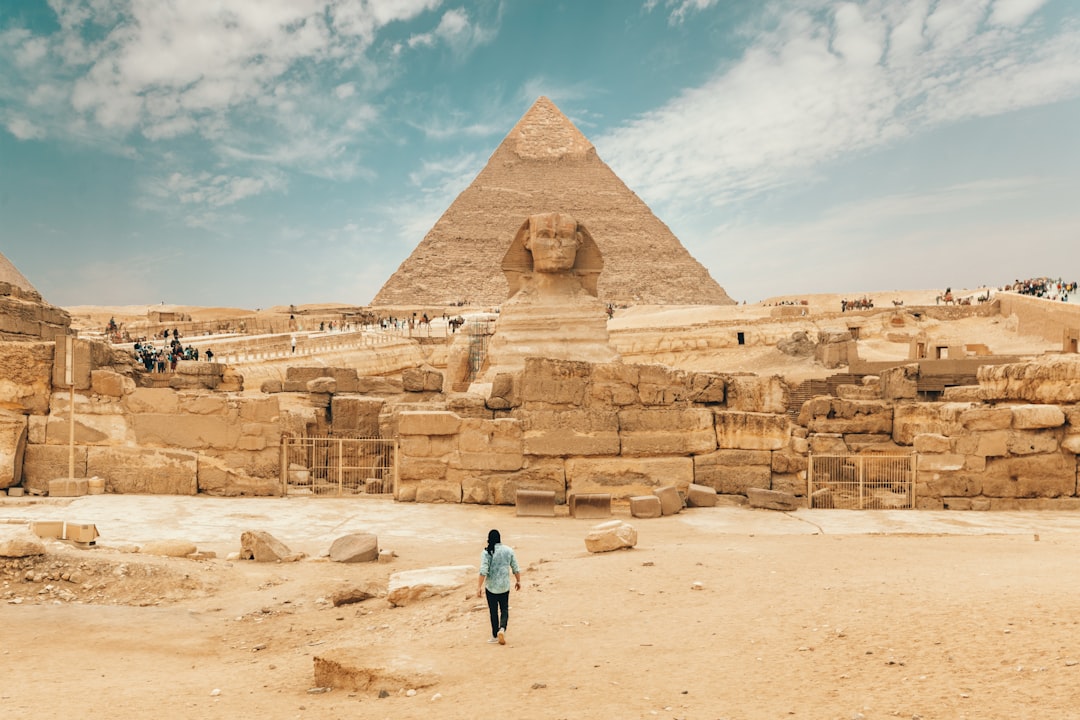
The Egyptians developed an incredibly sophisticated measurement system rooted in human proportions. The Egyptian measure of length was the royal cubit (approximately 20.6 inches) with one cubit equal to 7 palms and one palm equal to 4 digits. The seven palm widths from the human elbow to the tip of the middle finger produce the cubit. This wasn’t arbitrary; it created a consistent standard that workers could reference anywhere.
Their standardization went beyond basic measurements. The wooden Cubit Rod, one Cubit long, was marked in Palm and Digit divisions and used by Architects and Surveyors as we now use our modern Rules. These measuring rods became the backbone of precision construction, allowing builders to maintain accuracy across the entire pyramid complex.
Revolutionary Surveying Tools and Techniques
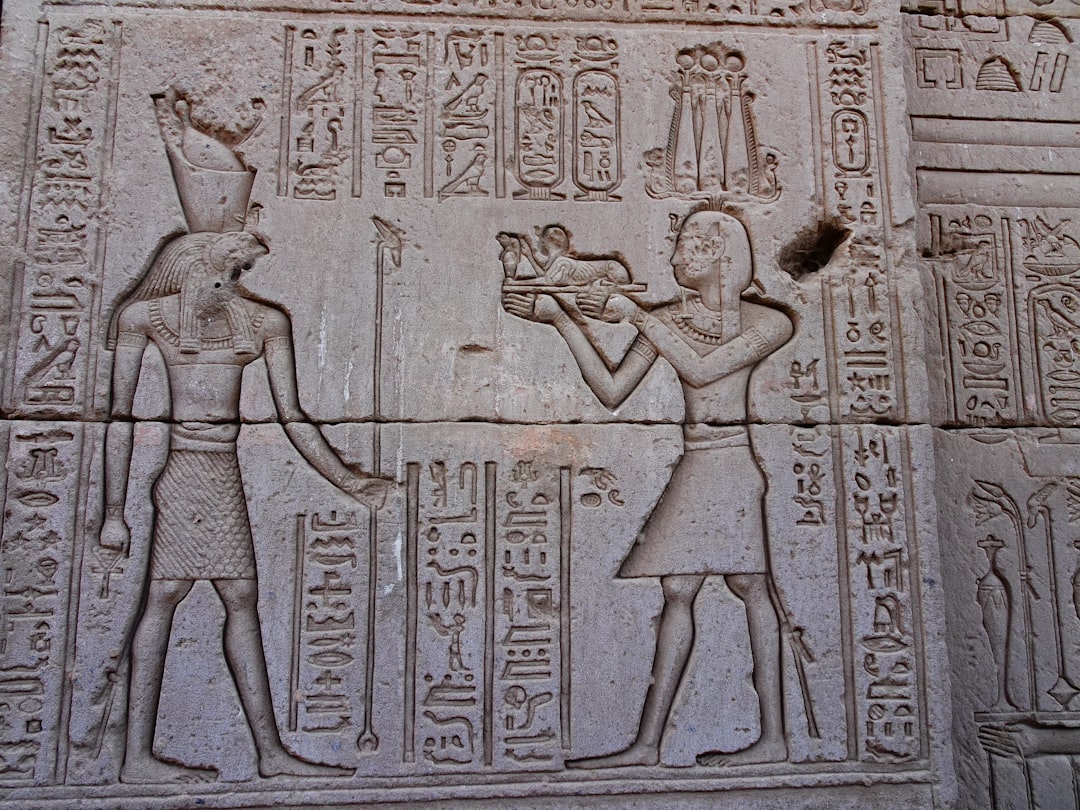
Ancient Egyptian surveyors, known as “rope stretchers,” used remarkably effective tools that seem simple yet were ingeniously precise. A rope or cord calibrated with knots placed at regular intervals, was one of the tools used in surveying larger distances (measuring cords may have been 100 Cubits long since the number 100 is represented by a picture of a rope in Hieroglyphs).
The Egyptians also employed specialized surveying instruments called the Merkhet and Bay. Egyptian architects, surveyors and builders are known to have used two specialised surveying tools: the Merkhet (the ‘instrument of knowing’, similar uses to an Astrolabe) and the Bay (a sighting tool probably made from the central rib of a palm leaf). These tools enabled them to establish precise horizontal and vertical references essential for geometrical accuracy.
Water Leveling: Ancient Engineering Mastery
One of the most brilliant techniques involved using water as a natural level. Egyptian builders would create temporary channels around the pyramid’s foundation and fill them with water. They cut channels for water and filled them. The water level showed where to make it even. This method exploited water’s natural tendency to find its own level, providing an incredibly accurate reference across vast distances.
This water leveling system proved remarkably effective. The dimensions of the pyramid are extremely accurate and the site was leveled within a fraction of an inch over the entire base (approximately 13.1 acres). This is comparable to the accuracy possible with modern construction methods and laser leveling. Think about that for a moment: achieving modern precision with ancient tools.
Astronomical Navigation for Perfect Alignment

The pyramids’ extraordinary alignment with cardinal directions wasn’t accidental but resulted from sophisticated astronomical observations. Egyptian Pyramids were very accurately aligned North, South, East, West and it was their knowledge of Astronomy which made this possible. The builders used specific stars as reference points, tracking their movements across the sky to determine true north.
Their astronomical methods were surprisingly sophisticated. Text and illustrations suggest that the Merkhet was used to mark where a particular star would sink below the horizon and then reappear later. A second person could move until a Plum Bob suspended from a Merkhet crossed the line of sight and then mark a point on the ground. Bisecting this angle would always give a true North.
Precision Stone Cutting and Fitting
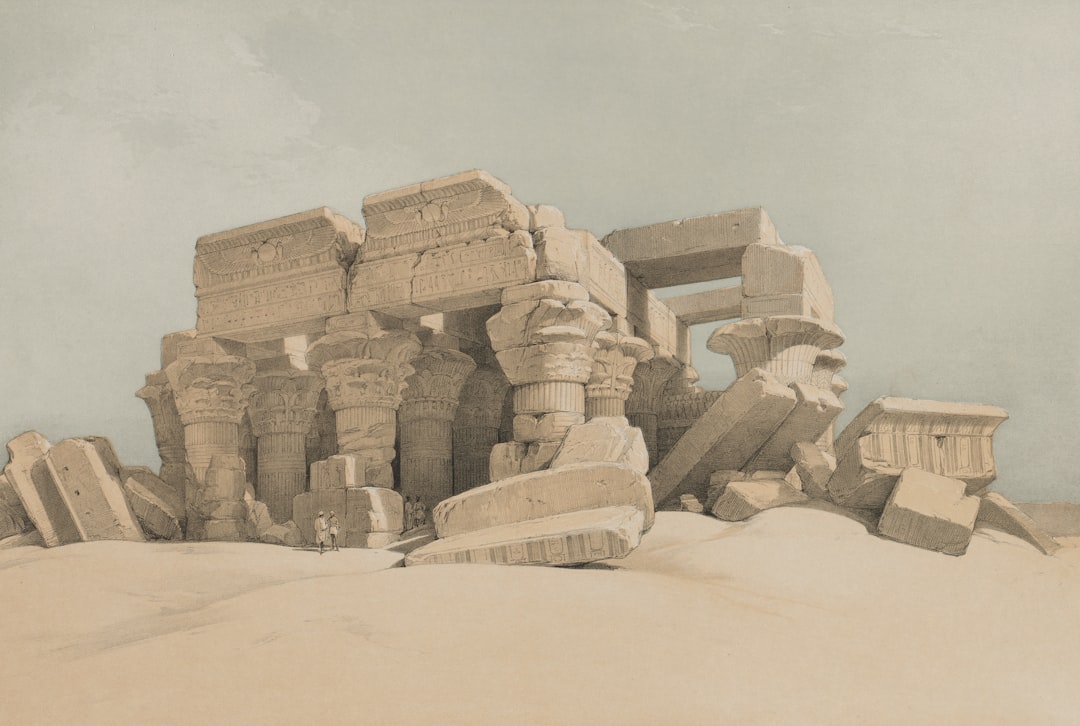
Perhaps the most mind-boggling achievement was the precise cutting and fitting of massive stone blocks. The precision fitting of the massive stones – some weighing several tons – was achieved without mortar in many parts of the pyramids. The blocks were cut so precisely that the joints between them are often barely visible, with gaps measuring less than 1/50th of an inch.
This level of precision required extraordinary skill and careful techniques. The Egyptians utilized tunnels and caverns to remove these deposits in large blocks, then chiseled into smaller blocks for transport. Each stone had to be individually shaped and fitted, creating joints so tight that you can barely slip a knife blade between them.
Mathematical Principles and Geometric Knowledge
The Egyptians demonstrated deep understanding of geometric principles, particularly the 3-4-5 triangle relationship. Rope stretchers used 3-4-5 triangles and the plummet, which are still in use by modern surveyors. This mathematical relationship allowed them to create perfect right angles consistently throughout construction.
Their application of mathematical precision extended to slope angles and proportional relationships. According to their measurement techniques the slope of the Khufu Pyramid is 1cubit divided by 5 palms and 2 digits. This gives a shekel measure of 7×4/(4×5+2] =1.27. Every aspect was calculated to maintain structural integrity while achieving aesthetic perfection.
Organizational Systems and Quality Control
Achieving such precision required extraordinary organizational capabilities. Perhaps the most impressive aspect of pyramid construction was the organizational capability it required. Coordinating the quarrying, transportation, and placement of millions of stone blocks – while providing for the needs of thousands of workers – represents one of history’s greatest project management achievements.
The builders implemented systematic quality control measures throughout construction. The conversion from a stepped mastaba to a true pyramid did have a number of failures, but the Egyptian engineers would work around the problems or in the case of complete failure note the problems and re-design avoiding the reason for failure. They learned from mistakes and constantly refined their techniques, creating an iterative improvement process that modern engineers would recognize.
Conclusion
The geometrical precision of Egyptian pyramids resulted from an extraordinary combination of human ingenuity, mathematical understanding, and engineering excellence. These ancient builders created measurement systems based on human proportions, developed sophisticated surveying tools, used water for leveling, observed astronomical phenomena for alignment, and maintained quality control that rivals modern standards.
What makes their achievement even more remarkable is that they accomplished this precision using tools we might consider primitive today. Their success demonstrates that true engineering excellence comes not from advanced technology alone, but from deep understanding of fundamental principles, careful planning, and meticulous execution.
The next time you hear someone claim the pyramids required supernatural intervention, remember the remarkable human achievement they truly represent. What do you think about these ancient engineering marvels? Tell us in the comments.

- 11 Ways Your Cat Is Secretly Protecting You Every Day - August 14, 2026
- 10 Mistakes People Make When Camping in Wolf Country - August 14, 2026
- 8 Dog Breeds That Form the Strongest Bond With One Person - August 14, 2026