

Have you ever had one of those days where everything feels heavy, and before you even realize it, your dog is pressed against your leg or resting their head on your lap? It’s uncanny, really. They don’t need you to say a word. They just seem to know.
This isn’t some mystical sixth sense or telepathy at work. Science has started catching up with what dog owners have believed for centuries. Our canine companions possess a remarkable ability to detect human emotions, particularly sadness. Through a combination of their extraordinary senses, evolutionary history with humans, and social intelligence, dogs have become finely tuned emotion detectors. Let’s explore the fascinating ways our four-legged friends pick up on our emotional states.
They Read Your Face Like a Book
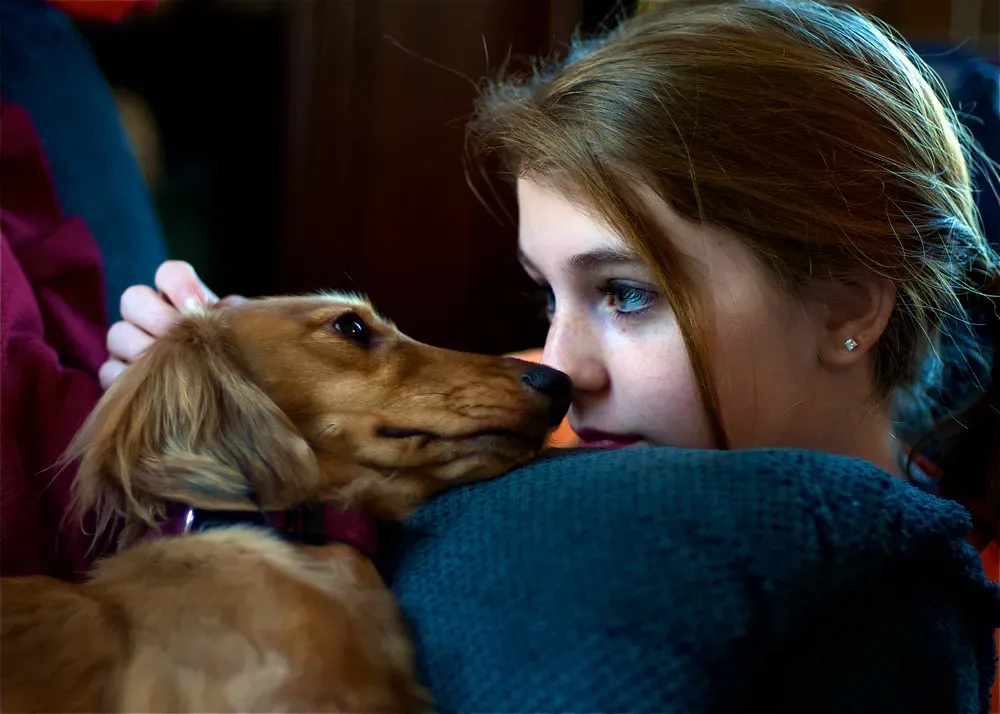
Dogs can respond functionally to emotional expressions and can use the emotional information they obtain from others during problem-solving. Think about it. When you’re sad, your facial muscles relax differently than when you’re happy or angry. Your eyes might droop slightly, your mouth turns downward, and your entire expression shifts.
Dogs are able to sense emotion on human facial expressions from just seeing a photograph of a person, and they can even recognize emotional cues from photographs or images of people. That’s pretty remarkable when you consider they’re interpreting the emotions of an entirely different species. Unlike many animals, dogs have evolved alongside humans for thousands of years, giving them a unique advantage in reading our faces.
Dogs spent a significantly longer time looking at facial expressions that matched the emotional state of audio clips, showing they could match two different sources of sensory information and come up with one coherent perception of emotion. This means they’re not just seeing your sad face in isolation. They’re combining what they see with what they hear to form a complete picture of how you’re feeling.
What’s particularly interesting is that this ability isn’t learned through living with you specifically. Dogs received no prior training before assessments involving unfamiliar subjects, nor had any time to familiarize themselves with those individuals. Your dog’s talent for reading sadness appears to be hardwired into their cognitive abilities. They come equipped with this skill right out of the box, so to speak.
Studies involving brain imaging have revealed something else intriguing. Domestic dogs show asymmetric engagement of brain hemispheres linked to physiological changes, with prevalent use of the right hemisphere when processing negative vocalizations and the left hemisphere when processing positive valence. Their brains actually process negative emotions differently than positive ones, suggesting a sophisticated level of emotional recognition.
Your Voice Gives You Away

Ever notice how your voice changes when you’re upset? It’s not just what you say but how you say it. The tone, pitch, and cadence of your speech shift when sadness settles in. Dogs are absolute experts at picking up on these vocal cues.
Dogs can distinguish the positive sound of laughing from the negative sound of crying, and negative sounds upset and arouse dogs more than positive ones. They don’t need to understand your words to grasp your emotional state. The sound alone carries enough information.
Dogs turned to the left for fear and sadness vocalizations, and it seems dogs can determine human emotions using only their ears, at least for happiness, fear, and sadness. This head-turning behavior is significant because it indicates which side of their brain is processing the emotion. Turning left means the right hemisphere is engaged, which is associated with processing negative emotions.
Dogs use a combination of visual and auditory cues to understand how someone is feeling, and they pick up on subtle cues in body language and tone of voice. It’s this multi-sensory approach that makes them so good at detecting sadness. They’re not relying on just one signal. They’re gathering data from multiple sources and putting it all together.
Honestly, it’s a bit humbling when you think about it. We might believe we’re hiding our emotions well, maintaining a brave face and steady voice. Yet our dogs see right through the performance. Our canine companions are constantly observing us and responding to our emotions, so any change in emotional state may be reflected in a dog’s behavior.
They Can Actually Smell Your Sadness

Here’s where things get really wild. Dogs don’t just see and hear your sadness. They can literally smell it. This might sound like something out of science fiction, but research has confirmed it’s absolutely real.
Dogs can smell stress, represented by higher levels of the hormone cortisol, and they also react to it emotionally. When you’re sad or stressed, your body releases cortisol and other stress hormones. These chemical changes alter your scent in ways imperceptible to humans but crystal clear to dogs.
Dogs can discriminate between baseline and stress odors using a double-blind, two-phase, three-alternative forced-choice procedure. In experiments, dogs successfully identified stressed human sweat samples from relaxed ones, even when those samples came from strangers. They didn’t need prior familiarity with the person to detect the difference.
The smell of human stress affects dogs’ emotions as well as their decisions, leading them to make more pessimistic choices. This isn’t just detection. It’s emotional response. When dogs smell stress or sadness-related hormones, their own emotional state shifts. They become more cautious and less optimistic about uncertain situations.
Dogs are able to sense rising cortisol levels in our sweat or breath and react accordingly, because of their super-sensitive noses and their ability to smell changes in hormones, including cortisol. This olfactory superpower developed over thousands of years of evolution alongside humans. It likely served an important survival function for early dogs, alerting them to threats that their human companions had already sensed.
Your Body Language Speaks Volumes

Sadness affects more than just your face and voice. Your entire physical presence changes. You might move more slowly, slump your shoulders, or withdraw physically. Dogs are incredibly observant of these postural shifts.
Dogs discern subtle visual cues and get the message without a single word being uttered. They watch how you carry yourself through space. When you’re sad, you probably don’t bounce around the house with the same energy. Your gestures become more subdued. You might sit for longer periods or isolate yourself in certain rooms.
Dogs pick up on how we’re feeling according to how we sound, smell, and even look, allowing them to decipher our emotions and respond in a comforting manner. This holistic reading of body language is something dogs excel at because they’ve had to. Their survival and well-being have long depended on correctly interpreting human behavior.
Dogs can sense stress based on a combination of cues and the context of the situation, observing facial expressions and body language and listening to the tone of voice. Context matters enormously. Your dog knows your routines and habits. When those patterns change, they notice immediately.
It’s worth noting that this sensitivity goes both ways. Dogs engage in mimicry, or mirroring our own emotions in order to relate to us. Sometimes when you’re sad, your dog might appear sad too. This isn’t necessarily because they feel sad about the same things you do. They’re experiencing emotional contagion, where your emotional state influences theirs.
Thousands of Years of Evolution Made Them This Way

The relationship between humans and dogs stretches back perhaps thirty thousand years. That’s an enormous amount of time for co-evolution to work its magic. Dogs didn’t just happen to become good at reading human emotions. This ability was actively selected for over countless generations.
Part of a dog’s ability to understand human emotions stems from the centuries-long relationship between humans and canines, during which dogs have picked up human tendencies and relate to us innately. Think about it from a survival perspective. Dogs that could better understand and respond to human emotional states would have received better care, more food, and more protection.
Humans and dogs have been close companions for perhaps 30,000 years, and dogs have evolved to read verbal and visual cues from their owners. This wasn’t a one-sided arrangement. Humans benefited from dogs who could alert them to danger, assist with hunting, and provide companionship. Dogs who were attuned to human emotions thrived in this partnership.
The ability to perceive and recognize human emotions may have developed in dogs over the long co-evolution process as it has been adaptive to perceive negative or positive emotions in humans and respond by either avoiding or approaching them. Recognizing when a human was sad, angry, or happy would have been crucial information for early dogs living alongside people.
Dogs are believed to be on the same emotional plane as human toddlers. This comparison comes up frequently in research. Like young children, dogs are highly social, dependent on caregivers, and emotionally reactive. They form strong attachments and seek comfort when distressed.
What I find fascinating is how this evolutionary history has resulted in dogs becoming perhaps the only non-human species so thoroughly adapted to reading our emotional lives. They’ve essentially become emotional specialists for human beings. That’s a pretty extraordinary niche to occupy in the animal kingdom.
Conclusion
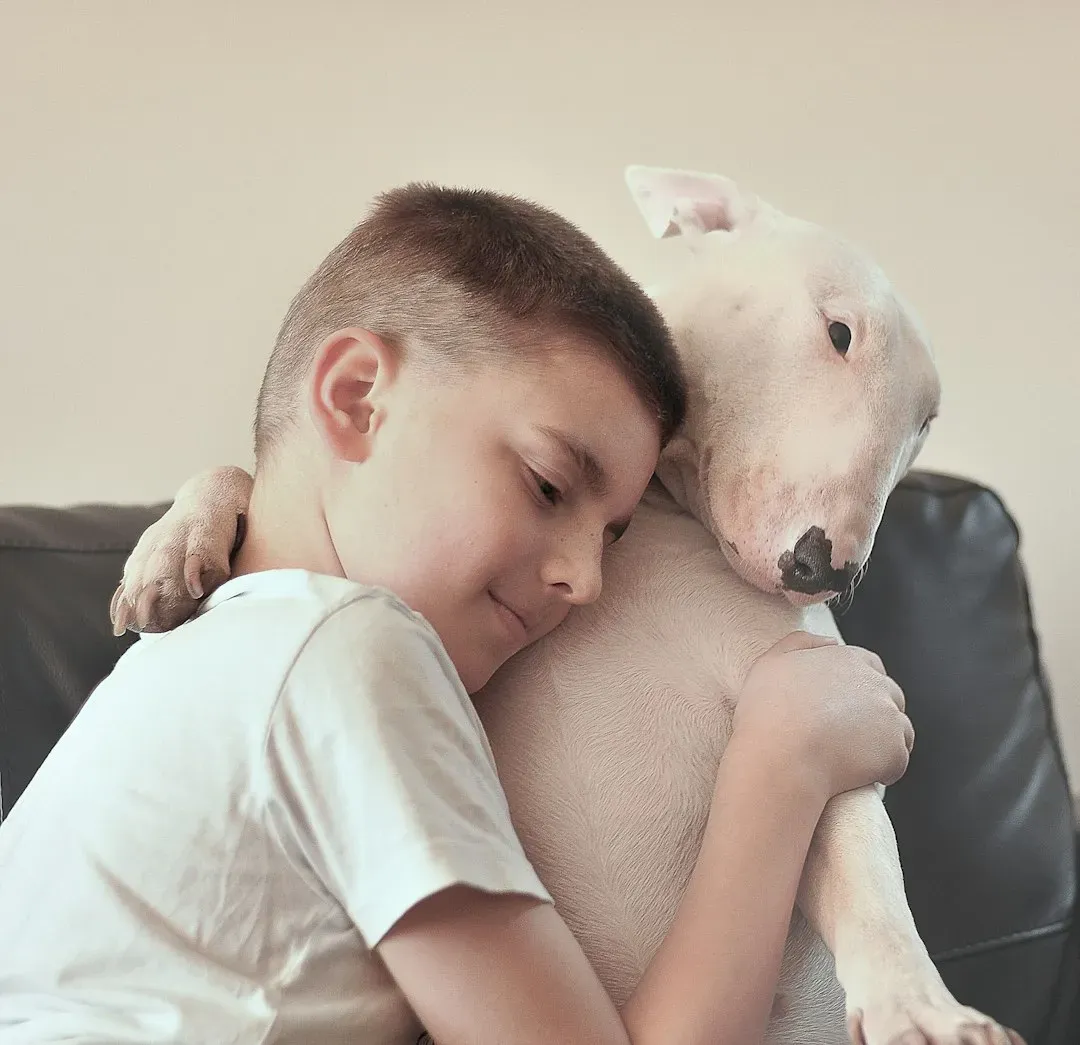
So when your dog pads over to you on a difficult day, resting their head on your knee or pressing their warm body against yours, they truly do know you’re sad. It’s not coincidence or projection on your part. They’ve detected it through your facial expressions, the sound of your voice, the scent of stress hormones in your breath and sweat, and the way you’re holding your body. They’re responding to a complex array of signals that tell them, unmistakably, that their human needs comfort.
This remarkable ability developed over millennia of shared history between our two species. Dogs became experts at reading us because it helped them survive and thrive in human company. Today, that ancient skill serves a different but equally important purpose. It allows them to be companions in the truest sense, present with us not just in our joyful moments but in our sorrow too.
Next time your dog seems to sense your sadness before you’ve even fully acknowledged it yourself, remember you’re experiencing something deeply rooted in evolutionary history. What’s your dog’s favorite way of comforting you? Tell us in the comments.

- The Wild Animal Each Zodiac Sign Would Become Under Pressure - August 5, 2026
- The Desert Town in Nevada Slowly Being Buried by Moving Sand - August 5, 2026
- Do Animals Feel Emotions Like Humans? New Studies Reveal Surprising Truths - August 5, 2026