

Our expert-vetted content is grounded in current scientific publications, yet we acknowledge science’s ever-evolving nature. Read our full editorial and disclosure policy.
Introduction
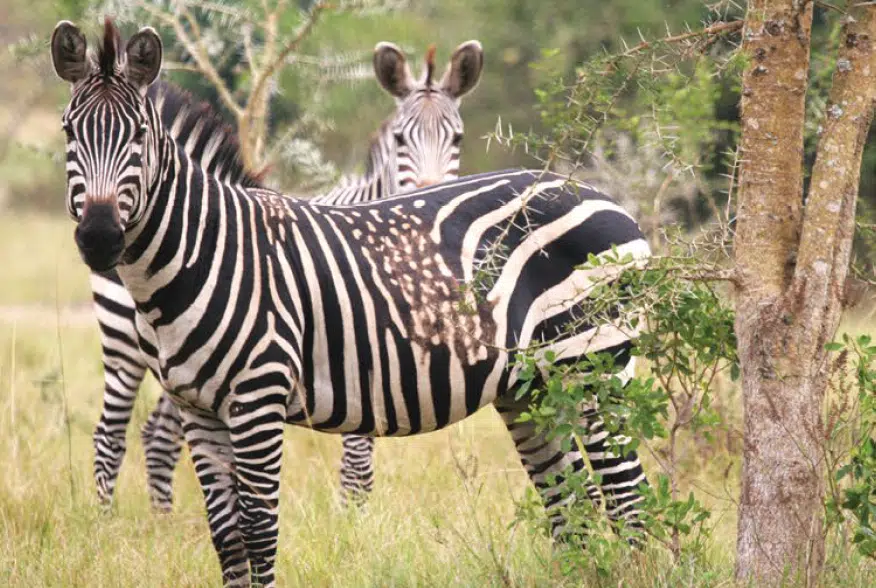
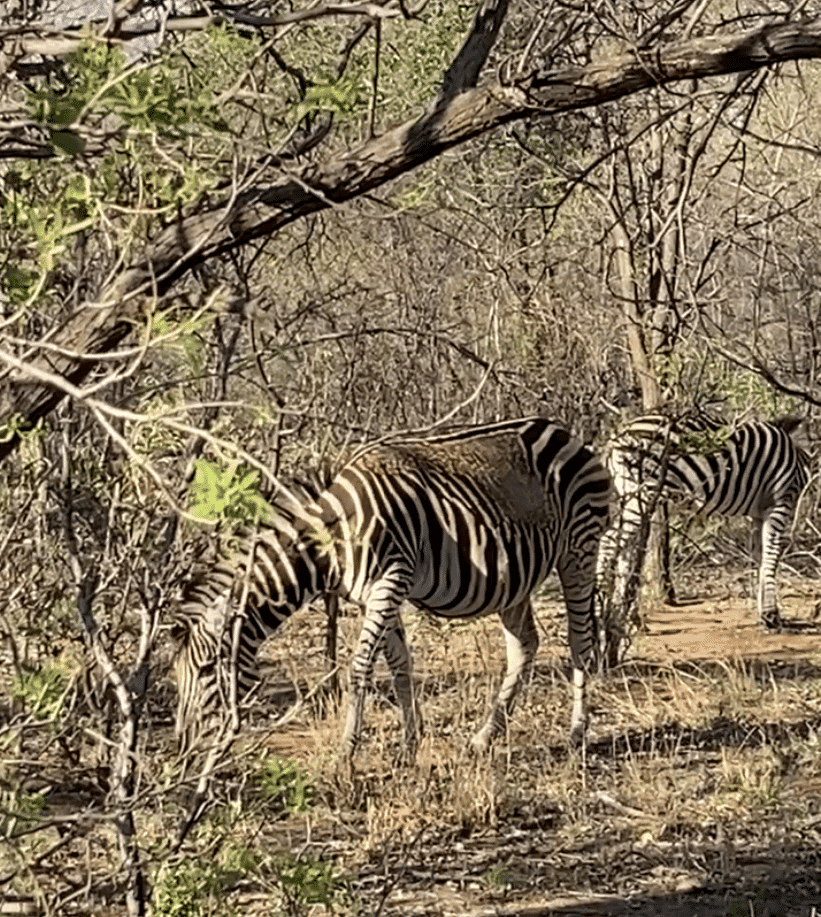
I recently went on safari in South Africa and saw a zebra with a very unusual pattern on the saddle area of its body. This pattern was symmetrical on both sides, which you can see in my video. As a qualified Animal Scientist and veterinarian student, I decided to research it and share my findings.
🔥 Would you like to save this?
We'll email this post to you, so you can come back to it later!
Where Do The Spots On This Zebra Come From?
The rare spot genetic mutation in zebras, particularly notable in the saddle area, is a fascinating phenomenon that diverges from the typical stripe pattern these animals are known for. This sight is a striking example of the variability in natural patterns and how genetic diversity (or lack thereof) manifests in wild populations.
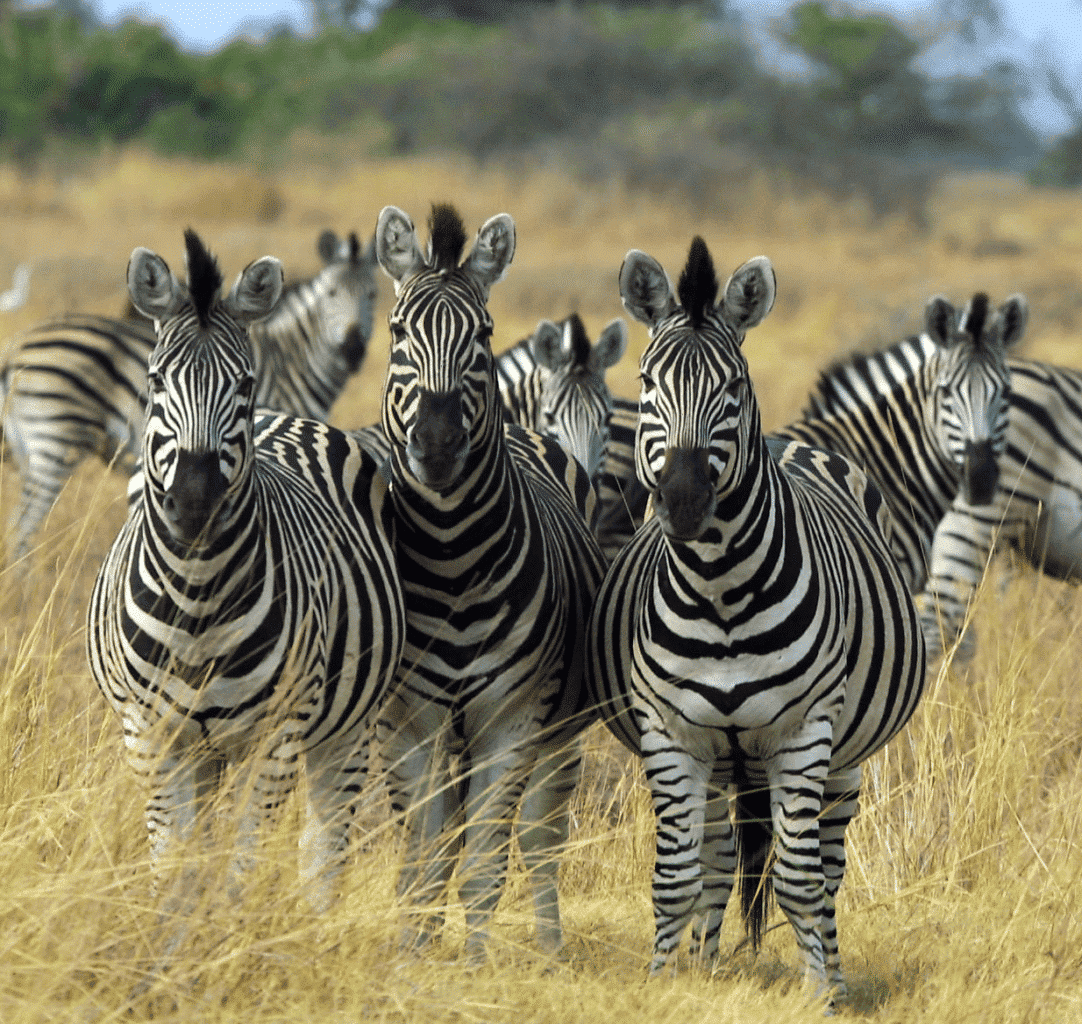
Zebras are commonly known for their black and white striped pattern, contrasting the African landscape. They are the most common wild equid. Plains Zebra (Equus quagga) is the most common zebra species.
| Characteristic | Plains Zebra | Mountain Zebra | Grevy’s Zebra |
| Scientific Name | Equus quagga | Equus zebra | Equus grevyi |
| Size (Height at Shoulder) | 1.2-1.4 m (3.9-4.6 ft) | 1.2-1.4 m (3.9-4.6 ft) | 1.4-1.6 m (4.6-5.2 ft) |
| Weight | 175-385 kg (385-849 lbs) | 240-372 kg (529-820 lbs) | 350-450 kg (770-990 lbs) |
| Habitat | Savannas, grasslands | Mountainous, rocky areas | Semi-arid grasslands |
| Distribution | Eastern and Southern Africa | South-Western Africa | Northern Kenya, Southern Ethiopia |
| Stripes | Broad and bold, more numerous | Thin and relatively few | Fine and closely spaced |
| Conservation Status | Near Threatened | Vulnerable | Endangered |
🔥 Would you like to save this?
We'll email this post to you, so you can come back to it later!
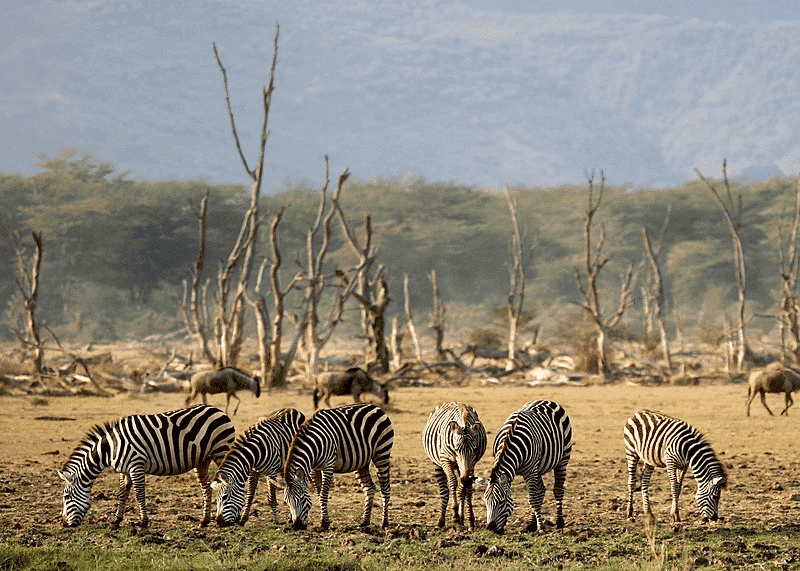
Zebras are found in the wild, living in various habitats such as grasslands, savannahs, woodlands, shrublands, and even mountainous areas. They inhabit areas in Eastern and Southern Africa. In this article, I will dive into the deviation of the striped pattern I observed in a plains zebra.
What do Zebras Normally Like?
Zebras are characterized by their distinctive black-and-white stripes, which are unique to each individual and serve various functions. These unique stripes are involved in camouflage, social interaction, and a deterrent to biting flies. The precise mechanisms behind stripe formation are complex and involve a combination of genetics and environmental factors.
🔥 Would you like to save this?
We'll email this post to you, so you can come back to it later!
How Did This Zebra Get Its Spots?
In rare instances, some zebras exhibit a spot pattern in the saddle area – the region around the zebra’s back and sides. Studies on these rare sightings have been conducted to understand how this deviation from the usual stripes occurred.
Zebra populations travel thousands of kilometers to find areas with sufficient grazing and water. These areas have been fragmented and reduced due to human activities, impacting their migration ability. This reduces the zebra herds’ natural migration and limits their movement, reducing gene flow. As a result, there has been a decline in the zebra populations of about 25% over the last 21 years.

🔥 Would you like to save this?
We'll email this post to you, so you can come back to it later!
Due to the issues mentioned above, herds cannot wander and ‘mix’ with other herds. Logically, this leaves only those in the area as possible suitors for breeding. From this, we can deduce that inbreeding will arise. When inbreeding occurs, you get less genetic variation, this opens up the possibility of recessive genes (traits) becoming expressed.
Concerns About Inbreeding
The presence of this spot pattern is an indicator of increased inbreeding, and a recessive trait is now expressed as a spot pattern. The stripe pattern in zebras plays a role in camouflage to evade predators and deter insects. Without this pattern, the zebra might be more easily identified by predators risking their lives (and the herds).
Check out: Watch the World’s Rarest Zebra Discovery
Secondly, these animals are exposed to harsh biting insects that can carry diseases, and the stripes play a role in deterring them. This exposes the zebra with spots to being bitten by these insects and possibly contracting diseases they carry.
🔥 Would you like to save this?
We'll email this post to you, so you can come back to it later!
Genetic diversity is crucial for the health and resilience of species, enabling them to adapt to changing environments and resist diseases. The spotted pattern mutation, while rare, underscores the genetic richness present in zebra populations and the ongoing evolution of species in the wild.
What concerns me is that this spot pattern is just one recessive trait being visually shown. As inbreeding continues, you risk losing variation in the genes, reducing the herd’s adaptive potential. Furthermore, as inbreeding increases, there could be more recessive traits that become prevalent and they may have more detrimental effects on the health of zebras.
Going forward
🔥 Would you like to save this?
We'll email this post to you, so you can come back to it later!
In order to preserve the genetic integrity of the stripy animals, conservationists and those involved in game parks need to take the utmost care in introducing new zebras every so often. This is done to introduce ‘outside’ genes to reduce the amount of inbreeding that occurs. I hope you enjoyed learning about the power of genetics in wild zebra herds and the risk of inbreeding.
Reference:
Larison, B., Kaelin, C. B., Harrigan, R., Henegar, C., Rubenstein, D. I., Kamath, P., Aschenborn, O., Smith, T. B., & Barsh, G. S. (2020). Population structure, inbreeding and stripe pattern abnormalities in plains zebras. Molecular Ecology, 30(2), 379–390. https://doi.org/10.1111/mec.15728
If you enjoyed reading this article, you might enjoy:

Alex enjoys writing about domestic animals such as dogs, cats, and horses. As well as exploring some of the wildlife in Africa.
Please send any feedback to Feedback@animalsaroundtheglobe.com
- Orcas Attacking Boats Off Spanish Coast Or Are We Attacking Orcas - November 3, 2026
- Foreign Objects That Could Get Stuck In Your Dog - October 15, 2026
- The Origin of Horses Dates Back 50 Million Years Ago - August 31, 2026