

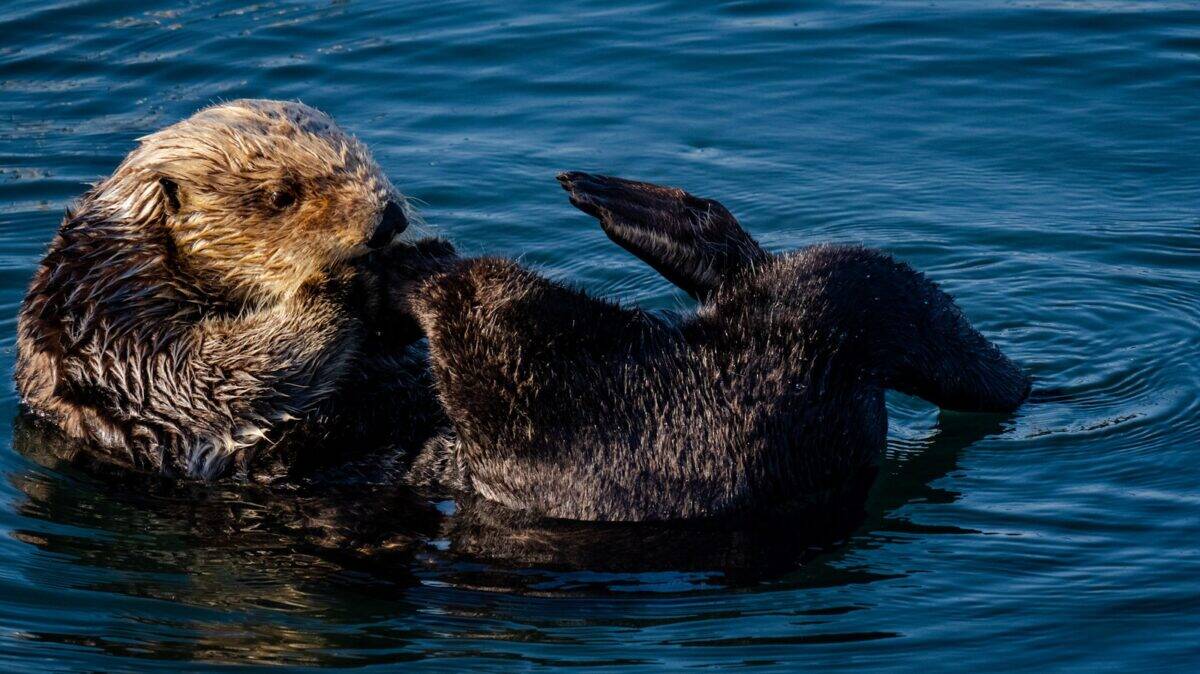
In the animal kingdom, the distinction between instinct and intelligence often blurs, especially when we observe behaviors that seem to demonstrate complex problem-solving abilities. Among the most fascinating examples are otters, whose tool use has captivated scientists and animal enthusiasts alike. These semi-aquatic mammals, with their playful demeanor and dexterous paws, have demonstrated remarkable ingenuity in using objects from their environment as implements to acquire food and navigate their world. Their sophisticated manipulation of tools not only highlights their cognitive capabilities but also offers profound insights into the evolution of intelligence across species. As we explore how otters interact with and utilize tools, we uncover compelling evidence that challenges traditional notions about animal cognition and reveals the remarkable adaptive strategies that have evolved in these charismatic creatures.
The Toolbox of Sea Otters

Sea otters (Enhydra lutris) are perhaps the most famous tool users in the otter family. Unlike many other marine mammals, they lack a thick layer of blubber to keep warm in cold ocean waters. Instead, they rely on their exceptionally dense fur and high metabolism. This high metabolic rate requires them to consume approximately 25% of their body weight daily—creating a strong evolutionary pressure to develop efficient foraging techniques.
Their primary tools are rocks, which they use as anvils and hammers to break open hard-shelled prey like clams, mussels, snails, and sea urchins. What makes this behavior particularly remarkable is that sea otters will often select specific rocks based on their shape and weight, carefully storing their favorite tools in loose skin pouches under their armpits. This tool selection demonstrates not just simple object manipulation but an understanding of cause and effect relationships and object properties—cognitive abilities previously associated primarily with primates.
Tool Selection and Preference

Research has revealed that sea otters show surprising discrimination in their choice of tools. Studies conducted along the California coast documented otters selecting rocks of particular weights and shapes depending on the specific prey item they intended to crack open. For tough-shelled prey, they choose heavier, more angular rocks, while for softer-shelled creatures, they may opt for smoother, lighter stones. This selective behavior suggests not merely random tool use but a sophisticated understanding of tool functionality.
Even more intriguing is the discovery that individual otters develop personal preferences for specific rocks, carrying their favored tools for days or even weeks. Some otters have been observed using the same rock for multiple feeding sessions, sometimes traveling significant distances while keeping their chosen tool safely tucked in their underarm pouch. This attachment to particular tools indicates a level of planning and foresight rarely documented in non-primate species.
Learning and Cultural Transmission

One of the most compelling aspects of otter tool use is how these behaviors are acquired and passed down through generations. Young sea otters spend an extended period with their mothers—typically about six months—during which they observe and learn complex foraging techniques. Researchers have documented mother otters demonstrating tool use to their pups, even providing them with smaller, more manageable tools as they learn.
This form of social learning represents a sophisticated type of cultural transmission, where behaviors are not merely instinctual but acquired through observation and practice. Different populations of sea otters sometimes develop distinct tool-using techniques specific to their local environment and available prey, creating what scientists refer to as “cultural variations” within the species. These localized traditions further emphasize the role of learning rather than pure instinct in the development of tool use.
River Otters: Emerging Evidence of Tool Use
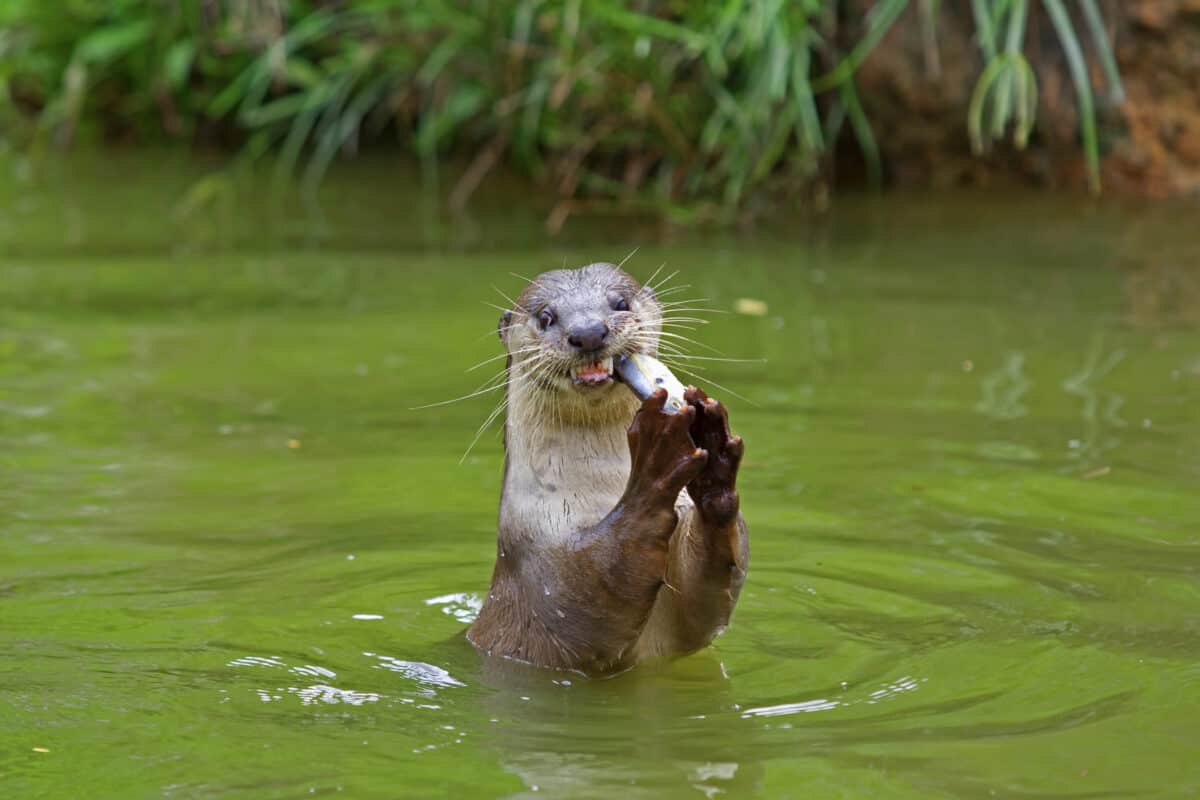
While sea otters have long been celebrated for their tool-using abilities, recent research has begun to document similar behaviors in river otter species. North American river otters (Lontra canadensis) and Asian small-clawed otters (Aonyx cinereus) have been observed manipulating objects in captivity in ways that suggest rudimentary tool use. These behaviors include using rocks to break open shellfish and manipulating sticks and other objects to extract food from enrichment devices.
Though less studied than their marine cousins, river otters display impressive problem-solving abilities and manual dexterity. Asian small-clawed otters, with their partially webbed paws allowing greater digital mobility, have demonstrated particularly advanced object manipulation skills. While wild observations remain limited, these captive studies suggest that tool use may be more widespread throughout the otter family than previously recognized, pointing to shared cognitive capabilities across different otter species.
The Cognitive Underpinnings of Tool Use

The ability to use tools requires several sophisticated cognitive functions working in concert. First, an animal must recognize the potential relationship between an external object and a desired outcome—a form of causal reasoning. Second, they must possess the physical dexterity to manipulate the tool effectively. Third, they must be able to adapt their technique based on feedback and changing conditions, demonstrating behavioral flexibility.
For otters, these cognitive abilities appear to be well-developed. Neurological studies have shown that otters possess relatively large brains for their body size, with well-developed cerebral cortices—the brain region associated with higher cognitive functions. Their tool use demonstrates understanding of physical relationships (such as hammering to break shells), means-end reasoning (selecting appropriate tools for specific tasks), and the ability to modify their behavior based on experience. These cognitive traits place otters among the most intellectually sophisticated non-primate mammals.
Comparative Intelligence: Otters Among Tool-Users

In the hierarchy of animal tool users, otters occupy a fascinating position. While their tool use is not as varied or complex as that observed in great apes or some bird species like New Caledonian crows, it surpasses the capabilities of most mammals. Sea otters are one of the few non-primate mammals that regularly use tools in the wild, joining a select group that includes elephants, dolphins, and certain corvids (members of the crow family).
What makes otter tool use particularly remarkable is that they evolved this behavior independently from primates. This represents a case of convergent evolution—where similar traits develop separately in unrelated lineages due to similar environmental pressures. The fact that otters independently evolved tool use suggests that certain ecological challenges (like accessing hard-shelled prey) may consistently drive the evolution of advanced cognitive abilities across different evolutionary branches.
Tools Beyond Feeding: Multi-Purpose Implementations

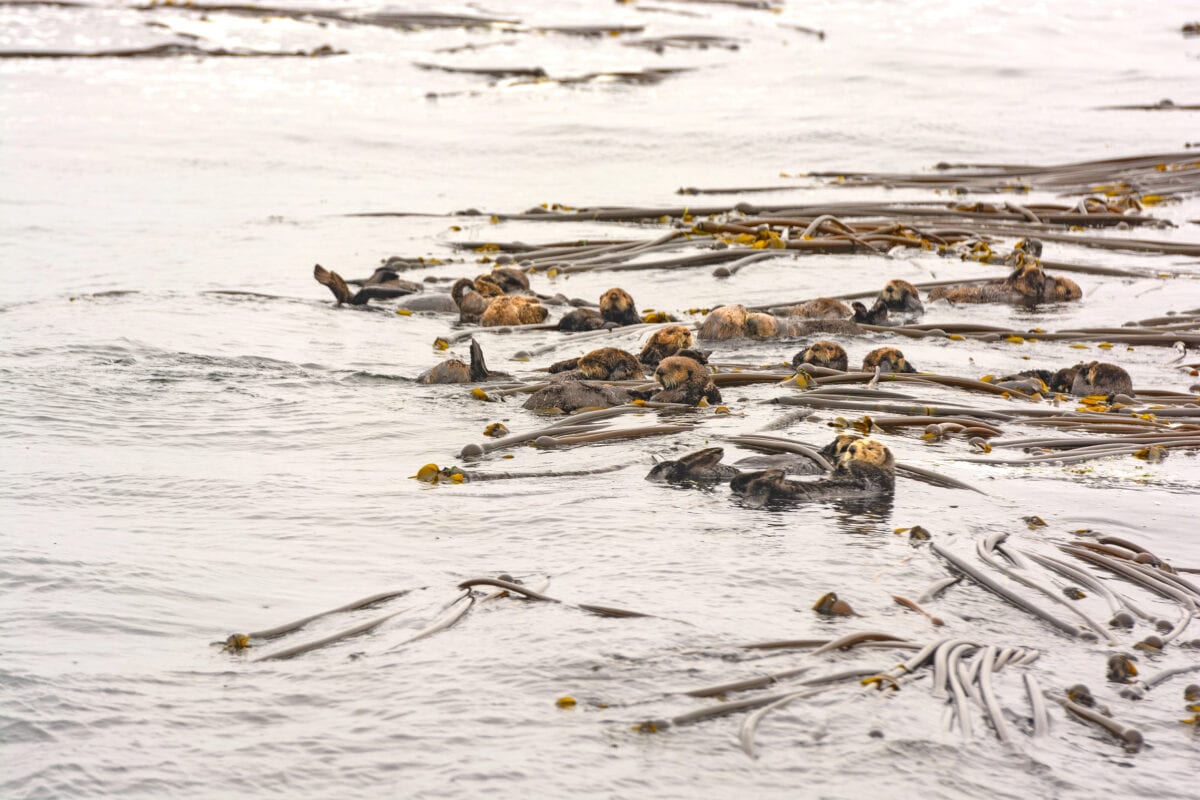
While the most documented examples of otter tool use involve food acquisition, researchers have observed these resourceful mammals using tools for other purposes as well. Sea otters have been seen using rocks not just as hammers but also as anvils, placing them on their chests while floating on their backs to create a stable platform for breaking open shells. Some have even been observed using kelp or seaweed as anchors, wrapping themselves in these marine plants to avoid drifting while they sleep or rest—a behavior that demonstrates an understanding of object properties beyond simple hammering.
In captivity, otters have displayed even more diverse tool applications. Asian small-clawed otters have been documented using sticks to probe crevices, rocks to pound on objects of interest, and even using water itself as a tool—manipulating water flow to move objects toward themselves. These varied applications suggest that the cognitive framework underlying tool use in otters is flexible and adaptable, not limited to a single, stereotyped behavior.
The Evolutionary Advantage of Tool Use

The development of tool use in otters provides a clear evolutionary advantage. For sea otters particularly, tools allow access to calorie-rich, protein-packed prey that would otherwise be inaccessible. Shellfish like abalone, mussels, and sea urchins provide essential nutrients but are protected by hard exteriors that few predators can breach. By developing tool use, sea otters exploited an abundant food source with relatively little competition from other predators.
This dietary specialization has profound ecological implications. Sea otters are considered keystone species in kelp forest ecosystems precisely because their shellfish diet—enabled by tool use—helps control sea urchin populations that would otherwise decimate kelp forests. In this way, the cognitive evolution that led to tool use in sea otters has shaped entire marine ecosystems, demonstrating how intelligence and ecological relationships are deeply intertwined.
Brain Structure and Tool Innovation

The neural foundations of tool use in otters provide fascinating insights into how brain structure relates to cognitive abilities. Otters possess relatively large brains compared to their body size, with a well-developed neocortex—the brain region associated with higher cognitive functions in mammals. Specifically, they have expanded regions related to sensory processing and motor control, which support their exceptional manual dexterity.
Of particular interest is the somatosensory cortex, which processes touch information. Otters, especially the small-clawed species, have highly sensitive paws with extensive neural connections to this brain region. This enhanced tactile sensitivity likely facilitates their ability to manipulate tools with precision. Additionally, studies suggest that otters possess well-developed areas for spatial reasoning and memory, allowing them to remember effective techniques and the locations of preferred tools. This neural architecture creates the cognitive foundation necessary for sophisticated tool use to emerge.
Conservation Implications of Otter Intelligence
The sophisticated cognitive abilities demonstrated by otters have important implications for conservation efforts. As we recognize that these animals possess complex intelligence, ethical considerations about their protection become more pressing. All otter species face significant threats from habitat loss, pollution, poaching for fur and pet trade, and climate change effects on their ecosystems. Their tool use capabilities highlight that we’re not just protecting a species but preserving a unique form of animal intelligence that evolved independently from our own.
Conservation strategies for otters increasingly incorporate considerations of their cognitive needs. Captive environments for rehabilitation or education now commonly include enrichment activities that allow for tool manipulation and problem-solving. In the wild, protection efforts focus not just on preserving otter populations but on maintaining intact ecosystems that provide both the food resources and the tool materials (like appropriately sized rocks) that otters need to express their natural behaviors. Understanding otter intelligence helps create more effective and ethical conservation approaches.
The Future of Otter Cognition Research

Research into otter intelligence and tool use is still an evolving field with many unanswered questions. Emerging technologies are opening new avenues for investigation. Motion-sensitive cameras allow for non-invasive observation of wild otters, while cognitive testing paradigms adapted from primate research are being modified to assess otter problem-solving abilities in controlled settings. Some researchers are even exploring whether otters can learn to use novel tools or solve artificial puzzles that weren’t part of their evolutionary history.
Future research directions include investigating whether different otter species have varying cognitive capabilities, exploring the neurological basis of their tool use through non-invasive imaging, and examining how early development influences the acquisition of tool-using skills. There’s also growing interest in potential communication systems among otters, as complex social learning often correlates with sophisticated communication. As our understanding deepens, otters may prove to be even more cognitively advanced than currently recognized, potentially challenging our understanding of intelligence evolution across mammalian lineages.
Convergent Cognition: What Otters Teach Us About Intelligence

The tool-using capabilities of otters provide profound insights into the evolution and nature of animal intelligence. Their sophisticated behaviors challenge traditional hierarchical views of cognition that place primates—and especially humans—at the pinnacle of a linear intelligence scale. Instead, otter intelligence represents a case of convergent cognitive evolution, where similar intellectual capabilities emerged independently in response to specific ecological challenges, suggesting that intelligence evolves along multiple pathways rather than a single trajectory.
Beyond scientific significance, otter tool use serves as a powerful reminder that complex cognition exists throughout the animal kingdom in forms we are still discovering and understanding. Their abilities invite us to reconsider how we define and measure intelligence across species, moving beyond anthropocentric models to appreciate diverse forms of cognitive adaptation. As we face global biodiversity challenges, recognizing the rich cognitive lives of species like otters strengthens ethical arguments for conservation and reinforces our responsibility to preserve not just the physical existence of species but the unique forms of intelligence they represent.
Perhaps most importantly, otter tool use illustrates that the gap between human and animal cognition may be narrower than traditionally assumed, existing along a spectrum rather than representing a fundamental divide. In the playful otter, carefully selecting and using a stone tool, we glimpse a form of intelligence that evolved alongside our own—different in its expression but sharing core elements of problem-solving, learning, and adaptation that speak to the remarkable cognitive potential that has evolved across the animal kingdom.
As research continues to illuminate the mental lives of otters and other tool-using animals, we gain not just scientific knowledge but a deeper appreciation for the diverse ways intelligence manifests in nature, enriching our understanding of cognition itself and our place within the broader spectrum of animal minds.

- How Your Pet’s Eyesight Compares to Yours - July 31, 2026
- Honoring Military Working Dogs Throughout History - July 30, 2026
- Forgotten Animal Heroes From Major Wars - July 30, 2026