

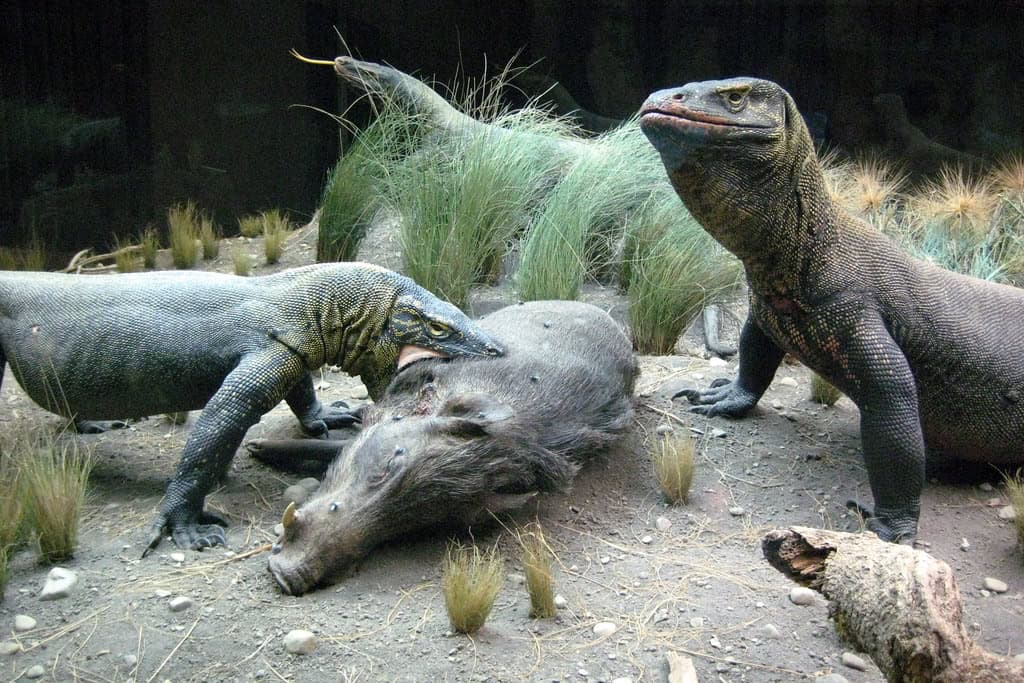
The Komodo dragon, an apex predator of remarkable power and evolutionary distinction, stands as a living testament to nature’s capacity for creating specialized hunters. Native to a handful of Indonesian islands, these massive lizards have developed hunting strategies and physical adaptations that make them one of the most successful and feared predators in their ecosystem. From their prehistoric origins to their highly specialized hunting techniques, Komodo dragons represent a fascinating study in evolutionary success. This article explores how these remarkable reptiles evolved their formidable hunting abilities, the unique biological adaptations that make them lethal predators, and how they maintain their dominant position in their island habitats despite being relatively recent evolutionary arrivals.
The Ancient Origins of the World’s Largest Lizard

The evolutionary journey of the Komodo dragon (Varanus komodoensis) began approximately 4 million years ago during the Pliocene epoch. Contrary to popular belief, these massive reptiles are not living dinosaurs but rather members of the monitor lizard family (Varanidae), which evolved around 40 million years ago. Fossil evidence suggests that Komodo dragons likely evolved from ancestors that originated in Asia and then migrated to Australia, before eventually reaching the Indonesian islands they now inhabit.
What makes their evolutionary history particularly fascinating is that Komodo dragons represent a case of island gigantism, a biological phenomenon where species isolated on islands with limited resources and reduced competition grow significantly larger than their mainland counterparts. This adaptation allowed them to become efficient hunters of the largest prey available on their islands, including deer, water buffalo, and wild boar. Their isolation on the islands of Komodo, Rinca, Flores, and Gili Motang created the perfect evolutionary laboratory for these specialized predators to develop.
Anatomical Adaptations for Predatory Success

Komodo dragons have evolved a suite of physical adaptations that make them formidable hunters. Their most notable feature is their impressive size—they can reach lengths of up to 10 feet (3 meters) and weigh over 300 pounds (136 kilograms), making them the world’s largest living lizards. This substantial mass provides them with the strength needed to take down large prey, including animals several times their weight.
Their muscular bodies are supported by strong limbs equipped with sharp, curved claws that are ideal for gripping prey and climbing. Komodo dragons possess powerful tails that account for half their total length, serving both as a counterbalance when running and as a formidable weapon capable of delivering devastating blows to prey or competitors. Their necks and shoulders contain particularly dense musculature, providing the power needed to wrestle large prey to the ground and maintain a grip during struggles. These physical adaptations allow Komodo dragons to employ multiple hunting strategies, from ambush attacks to prolonged pursuits, depending on the prey and circumstances.
The Deadly Bite: More Than Just Teeth
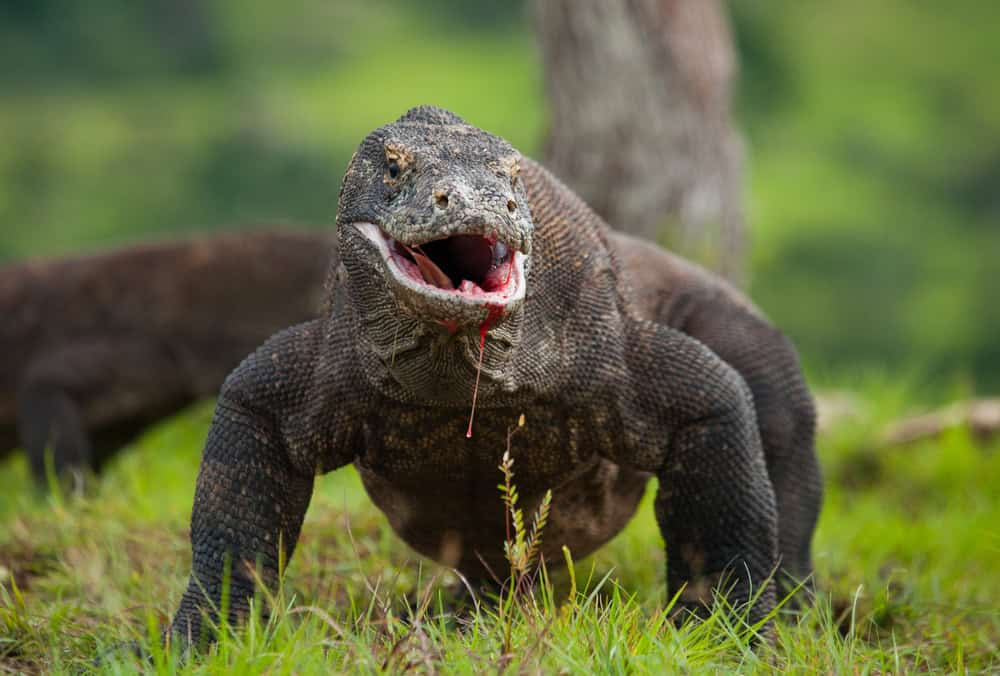
The Komodo dragon’s mouth is perhaps its most lethal weapon, armed with about 60 serrated teeth that can reach up to one inch in length. These teeth are designed for slicing rather than crushing, allowing the lizard to tear large chunks of flesh from its prey. Unlike many predators that evolve specialized teeth for different functions, Komodo dragons regularly replace their teeth throughout their lifetime, ensuring they always maintain sharp, effective weapons for hunting.
Beyond their impressive dentition, what truly makes the Komodo dragon’s bite deadly is the combination of mechanical damage and biological factors. When a Komodo dragon bites, it employs a “bite and pull” strategy, using its serrated teeth and powerful neck muscles to tear away flesh. Research has shown that their bite force, while not as powerful as that of crocodilians, is enhanced by their slicing teeth and head-pulling motion, creating wounds that cause massive blood loss in prey animals. This adaptation allows them to inflict devastating damage quickly, even to large prey animals, initiating the killing process that may be completed through a combination of trauma, blood loss, and the effects of bacteria or venom.
The Venom Controversy: Setting the Record Straight

For decades, scientists believed that Komodo dragons relied primarily on bacteria in their saliva to kill prey through infection. However, groundbreaking research in 2009 led by Dr. Bryan Fry revealed that Komodo dragons actually possess venom glands and delivery systems similar to those found in venomous snakes. These specialized glands produce toxins that prevent blood clotting, lower blood pressure, induce muscle paralysis, and create shock-like symptoms in victims.
This venom-delivery system represents a sophisticated evolutionary adaptation that enhances the Komodo dragon’s hunting efficiency. Rather than waiting days for bacteria to kill wounded prey—a strategy that would risk losing meals to scavengers or competitors—the venom allows Komodo dragons to track wounded prey that succumb to venom effects within hours. This discovery fundamentally changed our understanding of how these predators hunt, demonstrating that they possess one of the most sophisticated predatory adaptations in the reptile world. The debate continues among some scientists about the primary killing mechanism, but current evidence strongly supports the venom hypothesis as a key component of their hunting strategy.
The Extraordinary Sensory Systems of Komodo Dragons

Komodo dragons possess highly developed sensory systems that make them extraordinarily effective hunters. Their most remarkable sensory adaptation is their forked tongue and vomeronasal organ (Jacobson’s organ), which function together as a sophisticated chemical detection system. By flicking their tongue to collect air particles and transferring them to the Jacobson’s organ in the roof of their mouth, Komodo dragons can detect carrion from up to 2.5 miles (4 kilometers) away, depending on wind conditions.
Additionally, these predators have excellent vision, with their eyes positioned high on their head to provide a wide field of view. They can see objects clearly from as far as 980 feet (300 meters) away and have decent color vision, which helps them detect movement and identify potential prey. While their hearing is less acute than their chemical sensing abilities, they can detect low-frequency sounds and ground vibrations through specialized sensory organs. This multi-faceted sensory toolkit allows Komodo dragons to locate prey with remarkable precision, whether hunting by sight in open areas or tracking wounded animals through dense vegetation by scent, giving them significant advantages as apex predators.
Hunting Strategies: Masters of Ambush and Pursuit

Komodo dragons have developed versatile hunting strategies that maximize their chances of success across different terrains and against various prey species. Their primary hunting technique is ambush predation, where they remain motionless, camouflaged against the brownish landscape, often positioning themselves along game trails or near water sources where prey animals must pass. When a potential victim approaches within striking distance—typically just a few meters—the dragon lunges with surprising speed, using its powerful jaws to deliver a devastating bite.
For larger prey like water buffalo or deer that might escape the initial attack, Komodo dragons employ a strategy of bite-and-follow. After inflicting a serious wound, they will track the injured animal, sometimes for days, using their extraordinary olfactory abilities to follow the scent trail until the prey succumbs to blood loss, shock, or the effects of venom. Younger dragons, being more agile but less powerful, often employ different techniques than adults, including tree-climbing to ambush prey from above or pursuing smaller, faster prey that adult dragons might ignore. This adaptability in hunting methods allows Komodo dragons to successfully target a wide range of prey species and adjust their approach based on environmental conditions and prey behavior.
The Speed Paradox: Surprising Agility for Their Size

Despite their bulky appearance, Komodo dragons possess remarkable speed and agility that contradict their seemingly lumbering physique. When necessary, they can accelerate to speeds of up to 12 miles per hour (20 kilometers per hour) in short bursts, fast enough to overtake many potential prey animals within their habitat. This surprising speed is achieved through a specialized gait where the lizard lifts its body off the ground and moves with a side-to-side motion, similar to the movement pattern seen in many mammals rather than the typical sprawling gait of most lizards.
This locomotive ability is complemented by their impressive endurance. While they cannot maintain top speeds for extended periods, Komodo dragons can sustain moderate activity levels for hours, allowing them to patrol large territories and pursue wounded prey over considerable distances. Young Komodo dragons demonstrate even greater agility, with the ability to climb trees to escape larger predators (including cannibalistic adults) and access alternative food sources. This combination of burst speed, endurance, and surprising agility for their size makes Komodo dragons versatile predators capable of hunting in various terrains and employing multiple strategies to secure prey.
Metabolic Efficiency: The Key to Survival
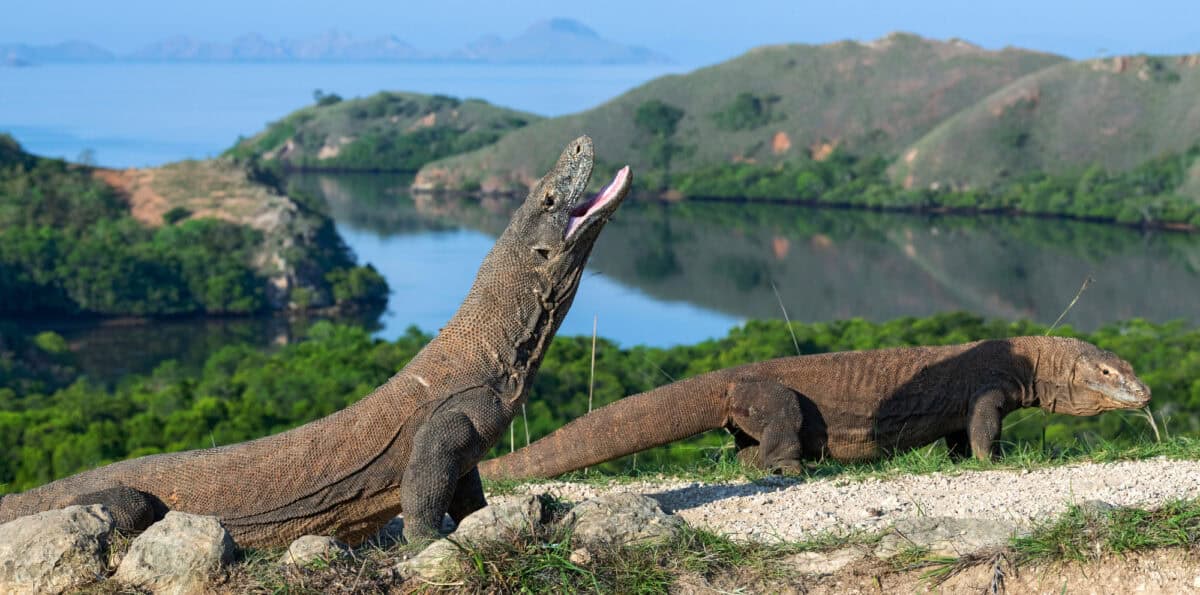
One of the most remarkable evolutionary adaptations of the Komodo dragon is its highly efficient metabolism, which has been finely tuned for its predatory lifestyle on resource-limited islands. Unlike mammalian predators that maintain high body temperatures through constant energy consumption, Komodo dragons are ectothermic, relying on environmental heat to regulate their body temperature. This reduces their caloric needs by up to 80% compared to a mammalian predator of similar size, allowing them to survive in environments where food resources may be scarce or unpredictable.
When they do feed, Komodo dragons demonstrate extraordinary efficiency in converting food to body mass. They can consume up to 80% of their body weight in a single meal, and their digestive system has evolved to extract maximum nutrition from their food, using powerful stomach acids and specialized gut bacteria to break down everything from meat and bone to hooves and hide. After a large meal, they can slow their metabolism dramatically, sometimes going without food for months. Research has shown that adult Komodo dragons may need as few as 12 substantial meals per year to thrive, a remarkable adaptation that allows them to maintain their position as apex predators even in challenging island ecosystems with limited resources.
Social Structure and Competitive Adaptations
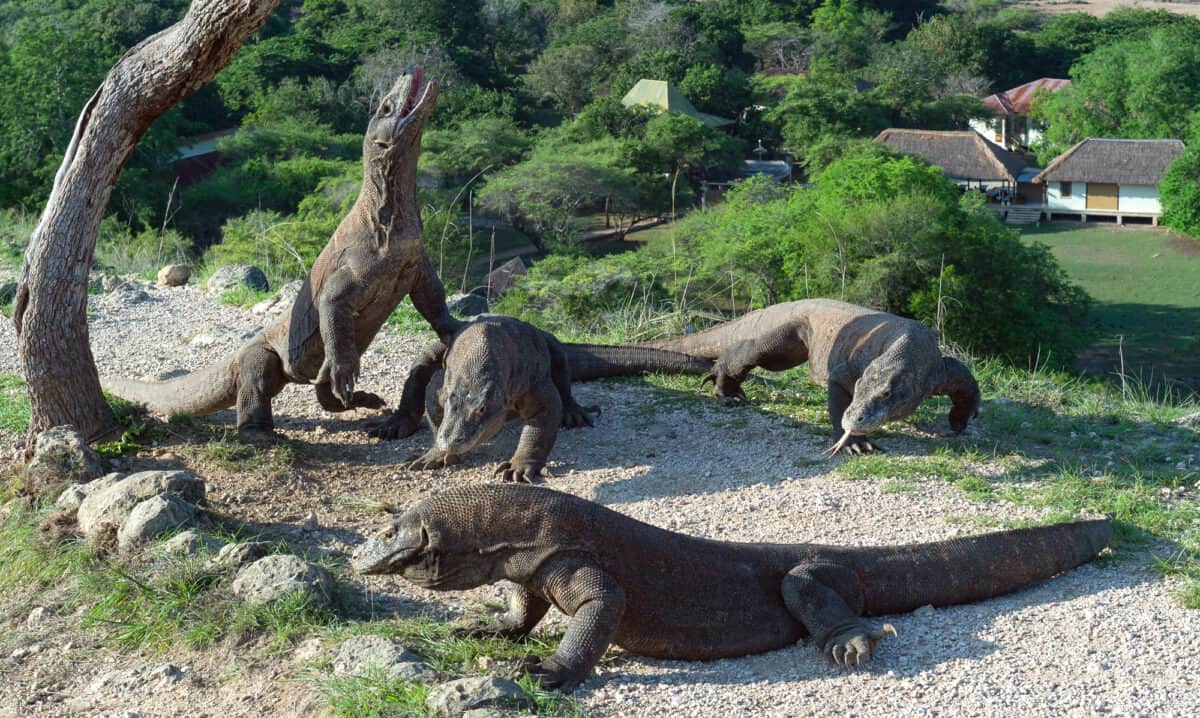
Unlike many reptiles that lead primarily solitary lives, Komodo dragons have developed a complex social structure that influences their hunting behaviors and survival strategies. They establish and maintain loose hierarchies based primarily on size, with dominant individuals gaining preferential access to food sources and mating opportunities. This social organization has driven the evolution of behavioral adaptations that allow them to navigate competitive interactions with conspecifics while maximizing their individual hunting success.
When multiple dragons feed on the same carcass, they follow an established pecking order, with the largest individuals feeding first. Smaller dragons have adapted behavioral strategies to compensate for this disadvantage, including scavenging, targeting different prey species, or developing specialized hunting techniques. Young dragons spend significant time in trees, not only to avoid being eaten by adults but also to access bird nests and other food sources unavailable to larger individuals. These social dynamics have shaped their hunting adaptations, creating a system where dragons of different sizes effectively occupy different ecological niches within the same habitat, reducing direct competition while maintaining the species’ overall dominance in the ecosystem.
Reproduction and Parental Investment
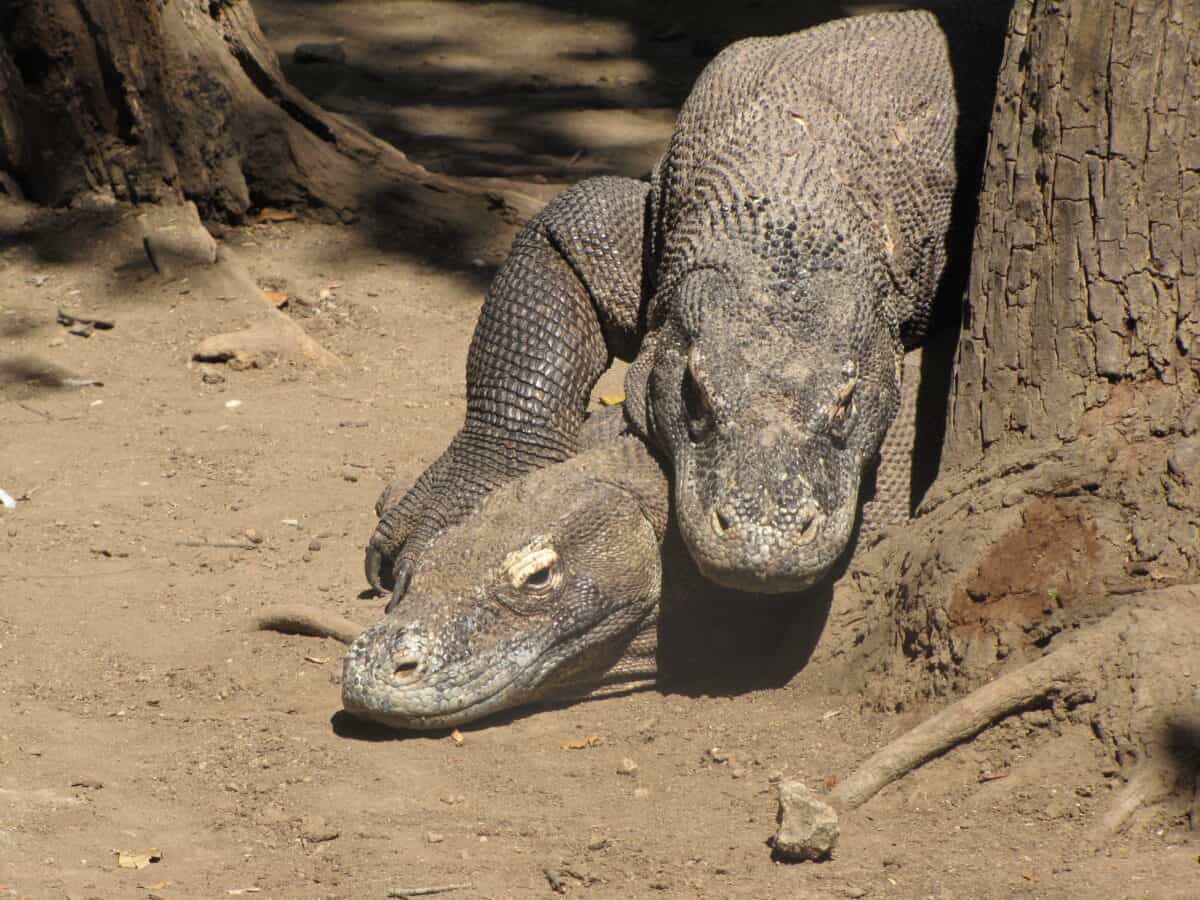
The reproductive strategy of Komodo dragons reflects evolutionary adaptations that maximize offspring survival while minimizing parental investment. Females lay clutches of approximately 20 eggs in carefully selected nest sites, often using abandoned megapode bird mounds that provide optimal temperature and humidity conditions. After laying eggs, female Komodo dragons will guard the nest for several months, an unusual behavior among reptiles that helps protect eggs from predators and demonstrates a greater level of parental care than observed in most lizard species.
Once hatched, however, young Komodo dragons receive no further parental care and must immediately fend for themselves in an environment where they may be viewed as prey by adults of their own species. This harsh selective pressure has driven the evolution of specialized behaviors in juvenile dragons, including their tendency to roll in feces and intestinal contents from kills to mask their scent from cannibalistic adults. Young dragons also possess greater climbing ability than adults, allowing them to access arboreal refuges and food sources unavailable to larger individuals. These adaptations create a survival gauntlet that ensures only the most adept young dragons survive to adulthood, maintaining the species’ exceptional predatory capabilities through intense natural selection at all life stages.
Evolutionary Arms Race: Prey Adaptations
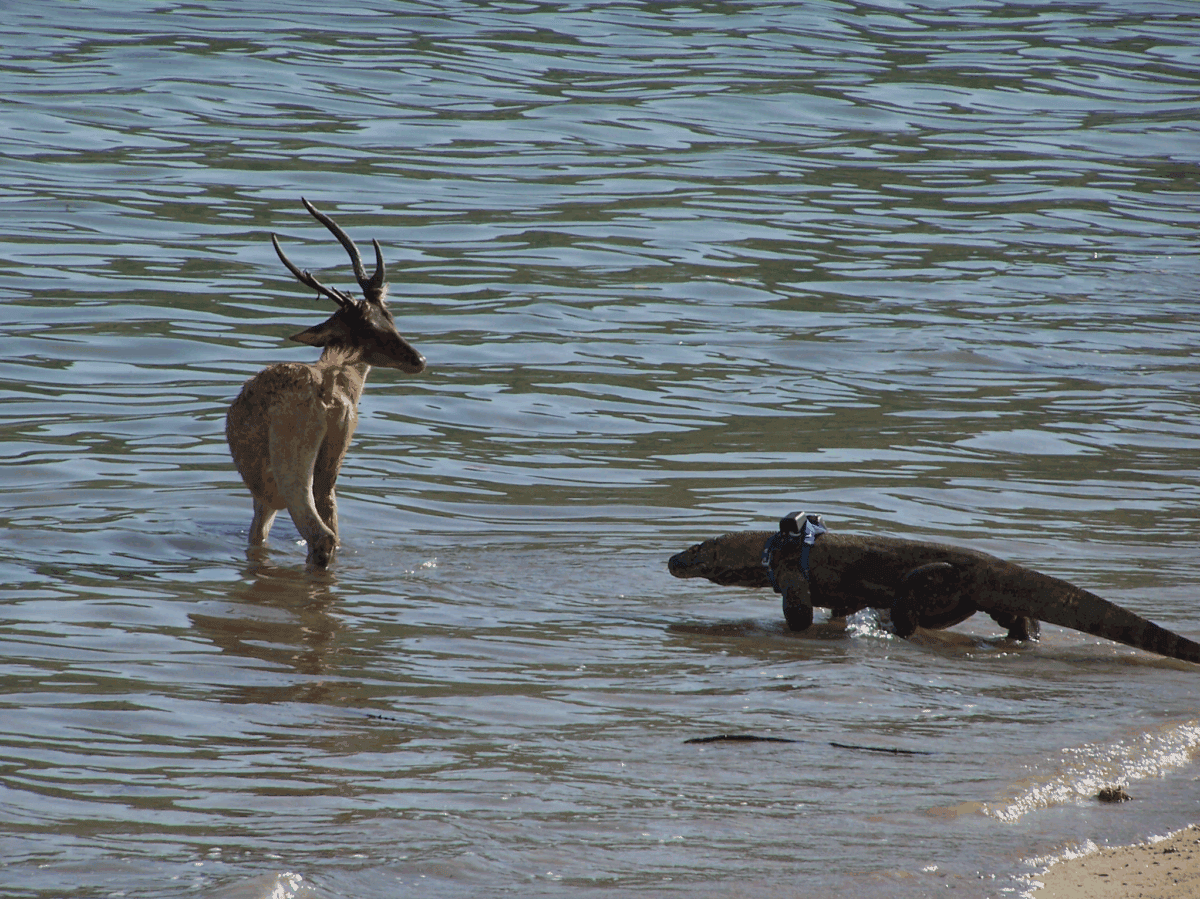
The evolution of Komodo dragons as apex predators has triggered corresponding adaptations in their prey species, creating a classic evolutionary arms race. Native prey animals like the Timor deer (Rusa timorensis) have developed heightened vigilance behaviors and remarkable speed to escape dragon attacks. These deer possess acute senses that allow them to detect predators at greater distances and have evolved social warning systems where individuals alert the herd to potential danger through specific vocalizations and body language.
Water buffalo, another common prey species, have adapted different defensive strategies, relying on their size, strength, and group protection rather than speed. When threatened, buffalo often form defensive circles with calves protected in the center and adults facing outward with their horns presented to potential attackers. Some prey species have also developed behavioral adaptations to minimize their vulnerability, such as visiting water sources during times when dragons are less active or selecting terrain that provides better visibility and escape routes. This ongoing coevolutionary dynamic has shaped both the hunting strategies of Komodo dragons and the defensive tactics of their prey, resulting in an ecological balance that has maintained both predator and prey populations in their island ecosystems.
Conservation Status and Future Challenges

Despite their fearsome reputation and evolutionary success, Komodo dragons face significant conservation challenges in the modern world. Currently classified as endangered on the IUCN Red List, their total wild population numbers approximately 3,000-3,100 individuals, confined to a small geographical range across several Indonesian islands. The primary threats to their survival include habitat loss due to human development, climate change impacts on their island ecosystems, and declining prey populations due to illegal hunting and competition with livestock.
The limited genetic diversity of Komodo dragons presents another challenge to their long-term survival. Research indicates that their isolated island populations have relatively low genetic variation compared to mainland monitor lizard species, potentially making them more vulnerable to disease outbreaks or environmental changes. Conservation efforts currently focus on habitat protection within Komodo National Park, established in 1980, along with captive breeding programs in zoos worldwide that maintain genetic diversity. These conservation challenges represent the latest evolutionary pressure on these ancient predators, testing whether their remarkable adaptations that have served them for millions of years will be sufficient to navigate the unprecedented changes brought by human activity and global climate shifts.
The Komodo dragon stands as one of nature’s most remarkable evolutionary success stories, a living example of how natural selection can craft a supremely efficient predator through millions of years of adaptation. From their specialized venom and sensory systems to their efficient metabolism and versatile hunting strategies, every aspect of the Komodo dragon’s biology reflects precise adaptations to their ecological niche. Their position as apex predators on their island homes demonstrates the culmination of an evolutionary journey that has produced one of the most perfectly adapted hunters in the natural world.
As we continue to study these fascinating reptiles, our understanding of their complex biology and behavior continues to deepen, revealing new insights into evolutionary processes and predator-prey dynamics. The story of how the Komodo dragon became one of nature’s fiercest hunters is not simply a tale of physical power but rather one of evolutionary refinement—a process that has produced a predator whose success lies in the intricate integration of specialized adaptations working in concert. In the Komodo dragon, we witness the remarkable result of evolution’s patient craftsmanship: a predator whose design has been perfected over millions of years to dominate its ecosystem with unparalleled efficiency.

- The Story Behind the Red Panda’s Endangered Status - July 18, 2026
- Are You Really Swallowing Spiders in Your Sleep? - July 18, 2026
- Why Japanese Macaques Love Hot Springs - July 17, 2026