

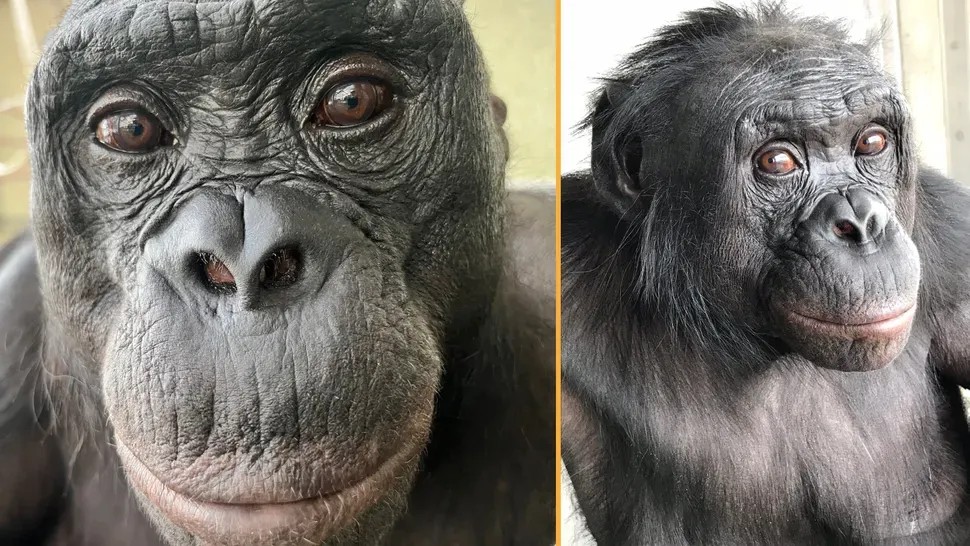
There are moments in science that make you stop and genuinely rethink what it means to be human. The story of Kanzi, a bonobo who lived for decades at a research facility and quietly shattered expectations about animal cognition, is one of those moments.
Most of us assume pretend play – the kind where a child picks up a stick and calls it a sword – is something uniquely ours. A deeply human quirk. Turns out, that assumption may have been wrong all along. Let’s dive in.
The Bonobo Who Changed Everything We Thought We Knew
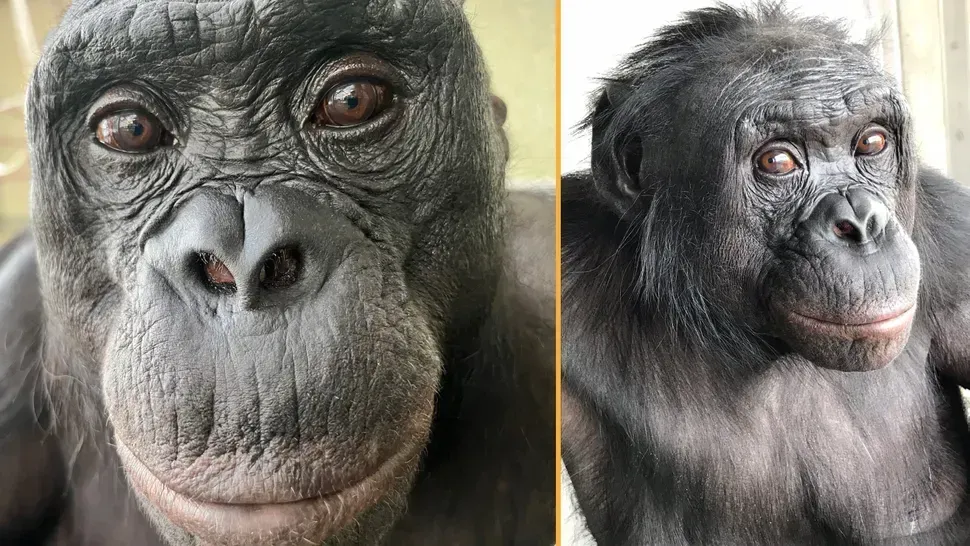
Kanzi was not just any research subject. Born in 1980, he became one of the most studied great apes in history, known primarily for his remarkable ability to communicate using lexigrams – symbols on a keyboard that represented words and concepts. Researchers at the Great Ape Trust in Iowa worked closely with him for years, and what they documented across his lifetime continues to ripple through the scientific community.
What made Kanzi extraordinary was not just his vocabulary. It was the way he seemed to understand context, intention, and imagination. Scientists began noticing behaviors that were harder to explain away as simple conditioning or learned response.
What “Pretend Play” Actually Means in Science
Here’s the thing – pretend play isn’t just goofing around. In developmental psychology, it refers to the ability to mentally represent something as something else. A banana becomes a phone. A cardboard box becomes a spaceship. It requires a theory of mind, the capacity to hold an imagined scenario in your head separately from reality.
This kind of symbolic thinking has long been considered a cognitive milestone that separates humans from other animals. The emergence of pretend play in human children typically begins around eighteen months to two years of age, and it’s deeply tied to language development, social understanding, and abstract reasoning. Honestly, it’s more cognitively demanding than it looks.
The Behaviors That Caught Researchers Off Guard
Observers documented instances where Kanzi appeared to engage in imaginary scenarios without any prompting. In one notable case, he pretended to feed an invisible creature, carefully placing food into an empty location and behaving as though something was actually there consuming it. That’s not a simple trick. That’s a mental simulation.
He also reportedly pretended objects were things they were not, using a stuffed toy or random object as a stand-in for something entirely different within a play scenario. These weren’t isolated incidents either. They were consistent enough that researchers felt they warranted serious documentation and analysis.
Why This Discovery Matters So Much
Let’s be real – science has a long history of drawing a hard line between human cognition and animal cognition, then slowly watching that line blur. We once thought only humans used tools. Then we met chimpanzees using sticks to fish for termites. We once thought only humans grieved. Then we watched elephants linger over the bones of their dead.
Pretend play was supposed to be one of the last safe distinctly human territories. The cognitive leap required to mentally represent a fictional scenario and then act within it is enormous. If Kanzi genuinely demonstrated this capacity, it doesn’t just tell us something remarkable about bonobos. It forces a much bigger question about where the boundaries of imagination truly begin and end across the animal kingdom.
The Role of Language in Kanzi’s Cognitive Life
It’s hard to separate Kanzi’s apparent imaginative abilities from his extraordinary language exposure. He was raised in an environment saturated with human communication. He wasn’t just taught symbols – he reportedly acquired many of them by observation, watching researchers work with his mother. That passive absorption of language is itself a strikingly human-like learning pathway.
Some scientists argue that this immersive linguistic upbringing may have scaffolded cognitive abilities that wild bonobos may not develop in the same way. It’s a fascinating and genuinely unsettling idea – that language might not just describe thought, but actually build new kinds of thinking. Kanzi’s life is perhaps the most compelling case study we have for that hypothesis.
Scientific Debate and Healthy Skepticism
Not everyone is fully convinced, and that skepticism is fair. Critics point out that interpreting animal behavior through a human cognitive lens is notoriously tricky. What looks like pretend play to a human observer might have a simpler explanation rooted in association or reinforced behavior patterns. The risk of anthropomorphism – projecting human meaning onto non-human actions – is real and well-documented in animal cognition research.
It’s hard to say for sure where the line falls between genuine symbolic imagination and a very sophisticated conditioned behavior. What researchers tend to agree on, however, is that Kanzi’s behaviors are consistent enough and complex enough to merit serious scientific inquiry rather than dismissal. The debate itself is productive. It’s pushing the field to design better, more rigorous methods for studying imagination and symbolic cognition in non-human animals.
What Kanzi’s Legacy Tells Us About the Nature of Intelligence
Kanzi passed away in 2024, leaving behind decades of data, observations, and genuinely profound questions. His life at the intersection of human and non-human worlds produced something rare in science – a case study that doesn’t offer clean answers, but instead keeps generating better questions.
I think what Kanzi ultimately showed us is that intelligence, imagination, and even play are not switches that are simply on or off depending on species. They exist on a spectrum, shaped by environment, relationships, and experience. The fact that a bonobo could plausibly pretend – could hold a fictional scenario in mind and act within it – suggests the seeds of imagination may have far older evolutionary roots than we ever assumed.
Kanzi’s story is one of those rare scientific narratives that genuinely moves the goalposts. It challenges assumptions, demands humility, and leaves you sitting with a quiet sense of wonder. If imagination was something Kanzi could access, even partially, then what else are we misunderstanding about the inner lives of the animals sharing this planet with us? That question deserves to stay open. What do you think – does this change the way you see the animals around you? Share your thoughts in the comments.

- Urban Coyotes Show Remarkable Adaptability, Learning to Thrive in City Environments - July 22, 2026
- Beavers Are Nature’s Engineers, Creating Vital Habitats for Other Wildlife Species - July 21, 2026
- The Recovery of the California Condor Offers Hope for Other Critically Endangered Birds - July 21, 2026