

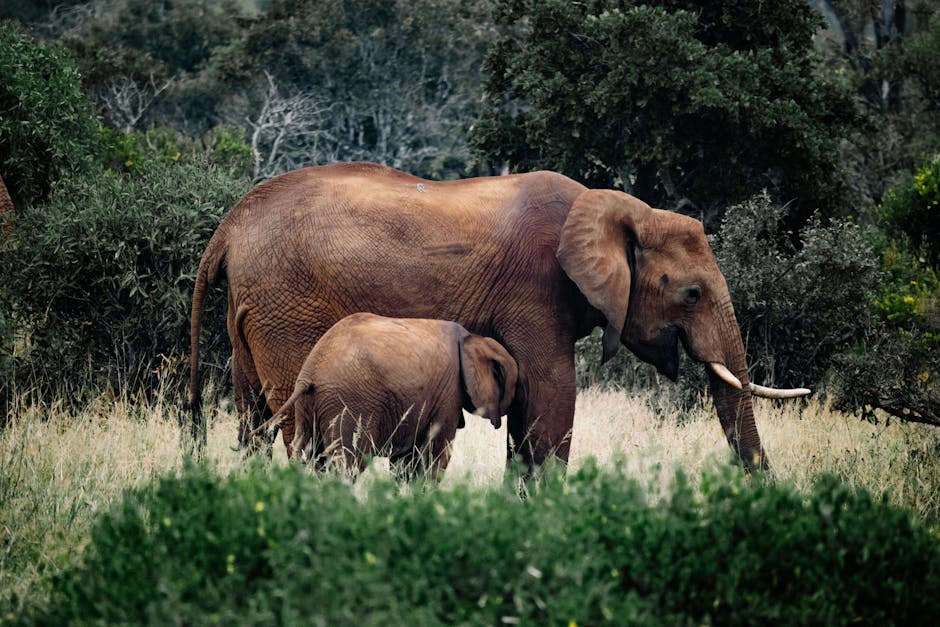
Microbial Shifts Signal Deeper Ecosystem Strain (Image Credits: Pexels)
Northern Kenya – Elephants in Samburu and Buffalo Springs National Reserves share their semi-arid habitat with growing numbers of livestock amid intensifying droughts. Researchers tracked fecal samples from these animals over 13 months and discovered significant shifts in their gut microbiomes linked to livestock abundance.[1][2] Microbes prevalent in cattle feces surged within elephant intestines, while beneficial bacteria declined, signaling potential health vulnerabilities in these iconic species.
Microbial Shifts Signal Deeper Ecosystem Strain
Scientists uncovered livestock-associated microbes dominating elephant guts in periods of high pastoralist activity. The study, published in Royal Society Open Science, analyzed 317 samples from 64 known individuals and found composition changes along key diversity axes.[1] These alterations occurred as livestock counts rose above 800 heads in the reserves.
“Our analysis revealed that the elephants’ gut microbiomes changed when they shared the reserves with more livestock,” stated lead author Jenna Parker, Assistant Professor of Conservation Biology at Lake Superior State University. “We observed increases in the amount of the methane-producing genus Methanobrevibacter of Kingdom Archaea, known as prevalent in livestock feces, and decreases in bacterial genera like Roseburia that are known as beneficial to human health.”[2]
Long-Term Tracking Reveals Patterns
Teams from San Diego Zoo Wildlife Alliance and Save the Elephants collected samples between May 2015 and June 2016 from elephants aged 0.9 to 22 years. They employed 16S rRNA gene sequencing on the V4 region to profile bacterial and archaeal communities, processing over 11 million reads into thousands of amplicon sequence variants.[1] Statistical models accounted for factors like individual identity, seasonal diet shifts from browsing to grazing, and livestock indices derived from ground transects.
Alpha diversity, a measure of species richness within guts, dipped slightly with higher livestock exposure—about 0.09 fewer species per roughly 500 additional animals. Beta diversity, reflecting community turnover, shifted markedly, with pairwise tests confirming differences between low and high livestock periods (p = 1.4 × 10⁻⁸).[1] Individual elephants maintained distinct microbiomes, underscoring host-specific influences.
Key Microbes Drive the Changes
Livestock proximity correlated with rises in specific taxa, including the archaeon Methanobrevibacter and bacterium Enterococcus, both tied to livestock digestion. Other increasers encompassed Terrisporobacter and Lachnoclostridium. Meanwhile, declines hit Roseburia, noted for anti-inflammatory properties, and certain Rikenellaceae groups.
- Increased with livestock: Methanobrevibacter (methane producer), Enterococcus (opportunistic), Terrisporobacter.
- Decreased with livestock: Roseburia (health-promoting), uncultured Dysgonomonadaceae.
- Seasonal effects: Grazing reduced alpha diversity by 0.18 species compared to browsing.
- Core taxa: 37 genera present in over 70% of samples, overlapping substantially with prior Kenyan elephant studies.
These patterns emerged despite a stable core microbiome of 12 phyla across the population, highlighting targeted disruptions rather than wholesale overhauls.[1]
Health Concerns Spark Conservation Debate
Altered microbiomes often precede broader health declines, though direct causation remains under study. Methanobrevibacter links to digestive issues in other species, while Roseburia‘s loss could impair immunity and fiber breakdown essential for elephants’ grass-heavy diets during droughts.
“We are not sure if these changes are harmful, but they are concerning because changes in gut microbiomes often signal health problems,” Parker added.[2] George Wittemyer, Chief Scientist at Save the Elephants, emphasized holistic approaches: “The often negative impacts to wildlife populations from human encroachment are well documented, but this study highlights that previously unrecognized, more subtle impacts also occur.”[2]
Candace Williams, formerly with San Diego Zoo Wildlife Alliance, noted interconnected systems: “The health of wildlife, livestock, and humans are interconnected, and more work is needed to better understand how each impacts the others.”
Key Takeaways
- Livestock abundance significantly alters elephant gut composition (beta diversity p < 10-8).
- Beneficial Roseburia declines as livestock microbes like Methanobrevibacter rise.
- Findings from 64 elephants urge monitoring in shared landscapes worldwide.
These revelations from the full study underscore the hidden costs of human-wildlife overlap. As climate pressures drive more livestock into reserves, safeguarding elephant microbiomes demands innovative coexistence strategies. What do you think about managing these shared spaces? Tell us in the comments.

- Urban Coyotes Show Remarkable Adaptability, Learning to Thrive in City Environments - July 22, 2026
- Beavers Are Nature’s Engineers, Creating Vital Habitats for Other Wildlife Species - July 21, 2026
- The Recovery of the California Condor Offers Hope for Other Critically Endangered Birds - July 21, 2026