

When DreamWorks Animation released “Madagascar” in 2005, audiences worldwide were introduced to a colorful cast of animal characters escaping from New York’s Central Park Zoo. The film and its sequels became cultural phenomena, bringing the unique wildlife of Madagascar into the spotlight. However, the animated characters – while charming and memorable – present significantly stylized versions of their real-life counterparts. From Alex the lion (who wouldn’t naturally be found on Madagascar at all) to the scene-stealing lemurs King Julien, Maurice, and Mort, these characters offer only a glimpse into the fascinating reality of Madagascar’s extraordinary biodiversity. This island nation, separated from mainland Africa for approximately 88 million years, has developed some of the most unique and diverse ecosystems on the planet, with over 90% of its wildlife found nowhere else on Earth. Let’s explore the real animals behind these beloved movie characters and discover the true wonders of Madagascar’s exceptional fauna.
The Island That Time Forgot

Madagascar is the world’s fourth-largest island, situated about 250 miles off the eastern coast of Africa in the Indian Ocean. Its isolation from the African continent began during the breakup of the supercontinent Gondwana approximately 88 million years ago. This prolonged isolation has resulted in an evolutionary laboratory like no other, allowing species to evolve independently from their mainland relatives. Scientists often refer to Madagascar as a “living laboratory” or an “eighth continent” due to its biodiversity and high rates of endemism.
The island features diverse ecosystems ranging from lush rainforests in the east to dry deciduous forests in the west, spiny deserts in the south, and highlands in the central regions. This variety of habitats has contributed to the evolution of highly specialized species adapted to specific environmental conditions. Unfortunately, Madagascar has lost approximately 90% of its original forest cover due to human activities such as slash-and-burn agriculture, logging, and mining, putting immense pressure on its unique wildlife. This makes understanding and appreciating Madagascar’s real animals all the more important for conservation efforts.
King Julien and the Real Ring-tailed Lemurs

One of the most memorable characters from the Madagascar franchise is King Julien XIII, the self-proclaimed lemur king with a penchant for dancing and the catchphrase “I like to move it, move it!” While the real ring-tailed lemurs (Lemur catta) don’t rule kingdoms or organize dance parties, they are indeed highly social animals with fascinating behaviors. Ring-tailed lemurs live in groups called troops that typically consist of 6 to 30 individuals. Unlike King Julien’s male-dominated leadership, real lemur society is matriarchal, with females taking dominant roles in the group hierarchy and having first access to food and choice of mates.
These distinctive primates are easily recognizable by their black and white ringed tails that can grow up to 24 inches long. Unlike the movie portrayal, their tails aren’t used for grasping objects but rather for balance, communication, and group cohesion during movement. Ring-tailed lemurs are diurnal (active during daytime) and spend about 40% of their day on the ground – more time than most other lemur species. They’re currently classified as endangered, with wild populations having declined by more than 50% in recent decades due to habitat loss, hunting, and capture for the illegal pet trade. The Madagascar films have helped raise awareness about lemurs, though conservation experts note that portraying wild animals as entertainers can sometimes send mixed messages about their status as wild animals.
Maurice and the Aye-aye Connection
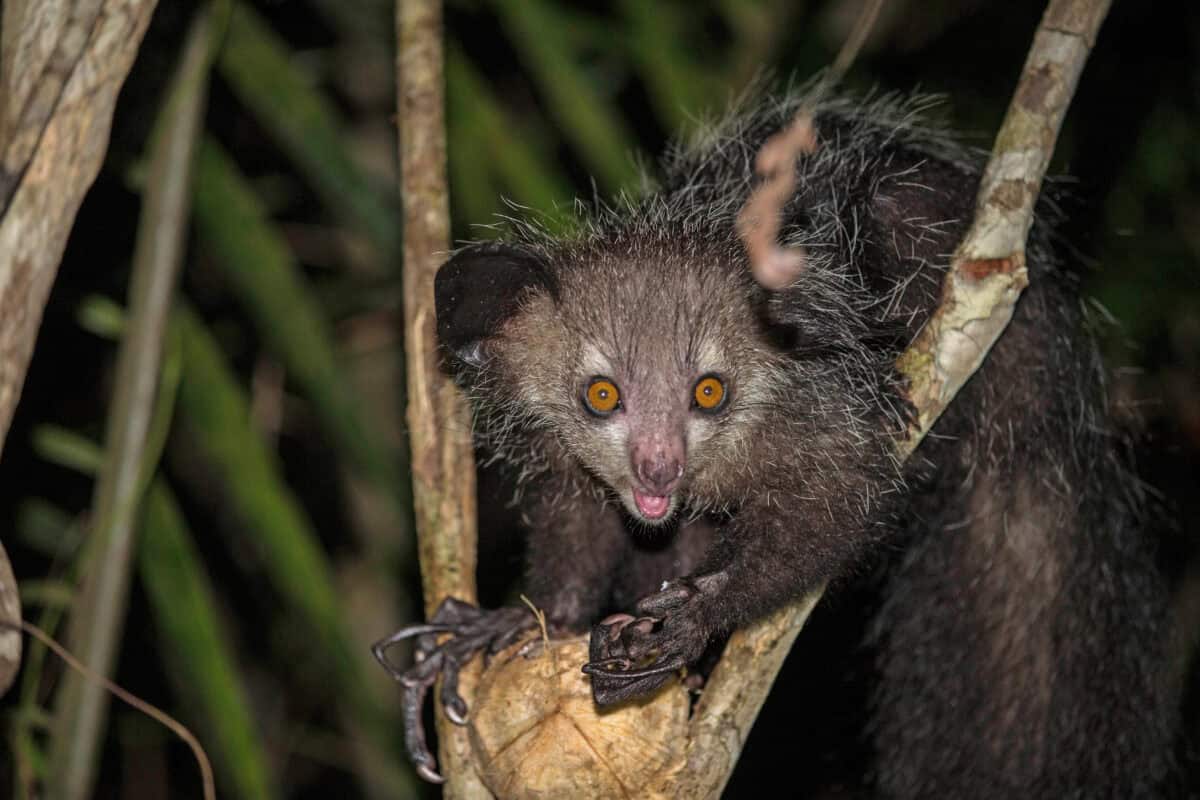
In the Madagascar films, Maurice serves as King Julien’s loyal advisor and right-hand man. While the character appears to be an aye-aye (Daubentonia madagascariensis), his appearance is significantly altered from the real animal. Actual aye-ayes are among the most unusual primates on Earth and bear little resemblance to the rotund, grey Maurice. Real aye-ayes have distinctive features that make them appear almost supernatural: enormous bat-like ears, continuously growing incisors, and an extremely thin middle finger used for extracting grubs from wood – a specialized adaptation known as percussive foraging.
Aye-ayes are nocturnal and solitary, spending most of their time high in the forest canopy. They’re the world’s largest nocturnal primate and the only extant member of the Daubentoniidae family. Sadly, aye-ayes face significant threats from superstition-based persecution; in some Malagasy communities, they are considered harbingers of evil, and there’s a belief that if an aye-aye points its elongated middle finger at someone, that person is marked for death. Combined with habitat loss, this has led to their endangered status. Unlike Maurice’s gregarious personality, real aye-ayes are shy, elusive creatures that scientists are still working to understand fully.
Mort and Mouse Lemurs: Tiny Primates with Big Personalities
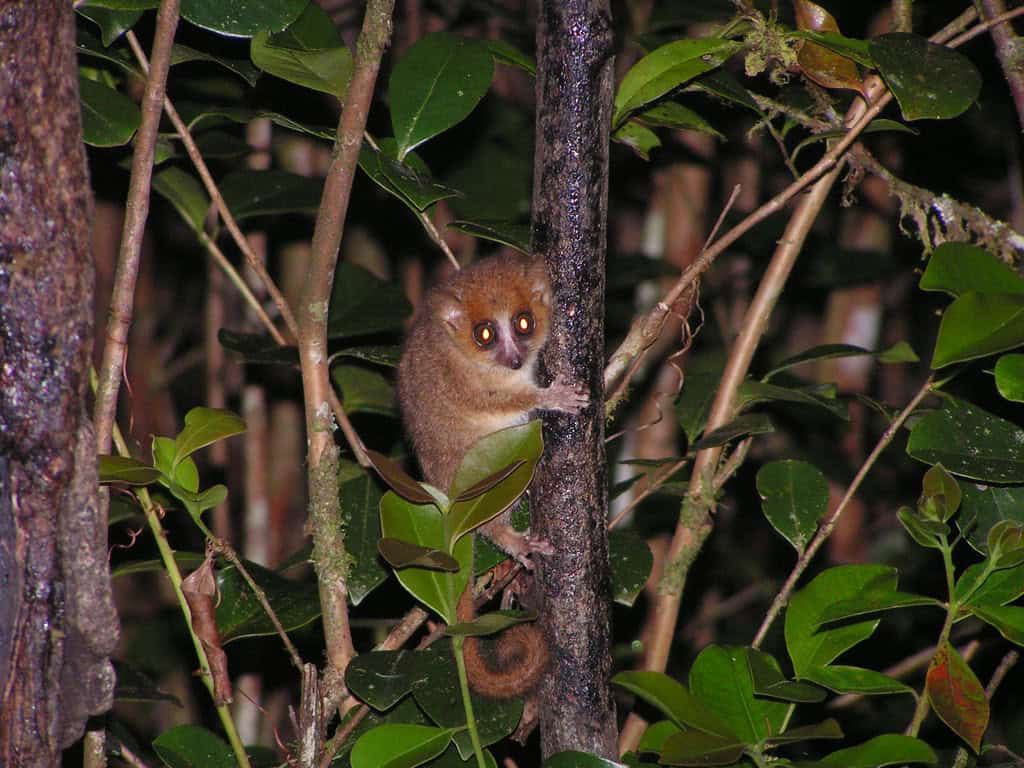
The adorable Mort from the Madagascar franchise, with his oversized eyes and tiny body, appears to be based on mouse lemurs, particularly the gray mouse lemur (Microcebus murinus). These diminutive primates are among the smallest primates in the world, weighing only about 2 ounces (58-67 grams) and measuring around 5-6 inches (12-14 cm) in body length, plus a tail of similar length. Unlike Mort’s attachment to King Julien’s feet, real mouse lemurs are solitary foragers that come together mainly during mating season, though females may share nesting sites and occasionally form small, loose social groups.
Mouse lemurs have proportionally large eyes adapted for their nocturnal lifestyle, allowing them to navigate and hunt in the darkness of Madagascar’s forests. They’re omnivorous, feeding primarily on fruits, flowers, insects, and small vertebrates. Scientists have identified at least 24 species of mouse lemurs, with new species still being discovered. Many mouse lemur species can enter a state of torpor (a form of hibernation) during the dry season when food is scarce, lowering their metabolic rate and body temperature to conserve energy. While Mort’s childlike personality makes for entertaining cinema, real mouse lemurs are complex creatures with sophisticated behaviors that have adapted perfectly to their ecological niches over millions of years of evolution.
Alex the Lion: A Geographical Misplacement

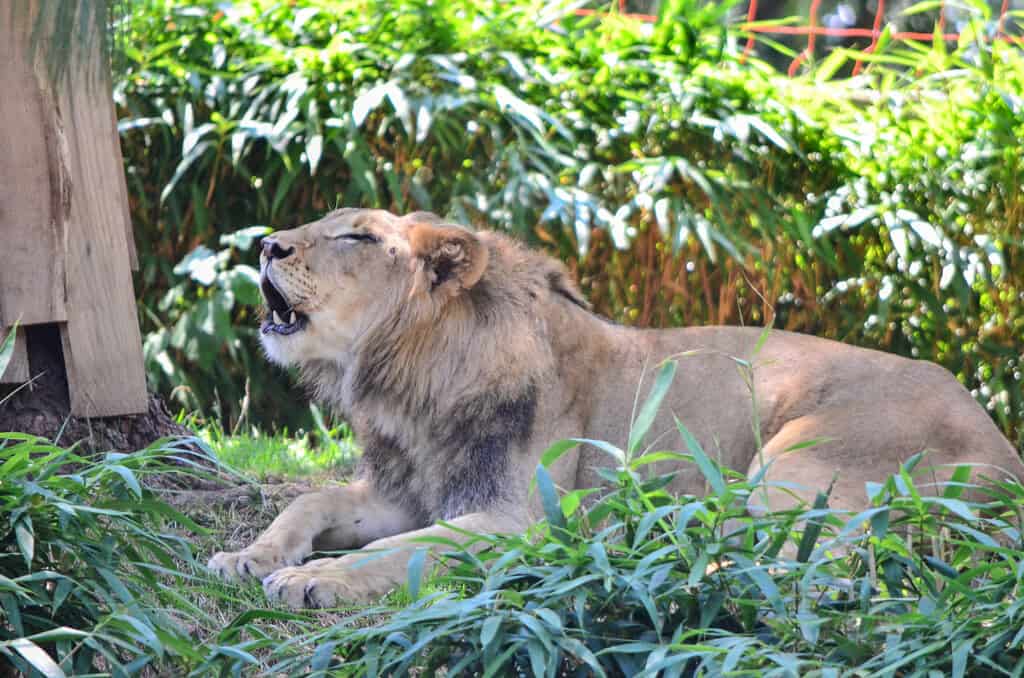
Perhaps the most significant scientific liberty taken in the Madagascar films is the presence of Alex the lion as a native animal. In reality, lions (Panthera leo) are not indigenous to Madagascar and never have been. Lions evolved and live primarily in Africa and historically in parts of Europe and Asia. Madagascar separated from the African mainland long before the evolution of lions, meaning they never naturally colonized the island. The top predators in Madagascar’s ecosystems are quite different – the largest being the fossa, which we’ll discuss later.
Modern lions face significant conservation challenges on the African continent, with populations having declined by approximately 43% over the past two decades. They’re currently listed as vulnerable on the IUCN Red List. Lions in the wild live in prides consisting of related females, their cubs, and a small number of adult males who defend the territory. This social structure differs significantly from Alex’s story as a solitary zoo attraction. While the inclusion of Alex in the Madagascar narrative required creative license, it highlights an important ecological reality: island ecosystems often develop without large mammalian predators, leading to evolutionary trajectories quite different from continental ecosystems.
Gloria the Hippopotamus: Another Continental Visitor

Like Alex the lion, Gloria the hippopotamus represents another animal that doesn’t naturally occur on Madagascar. Hippopotamuses (Hippopotamus amphibius) are native to sub-Saharan Africa, where they inhabit rivers, lakes, and wetlands. These massive semi-aquatic mammals can weigh up to 4,500 pounds (2,000 kg) and are considered one of the most dangerous large animals in Africa, responsible for numerous human fatalities each year despite their herbivorous diet. Their aggressive temperament contrasts sharply with Gloria’s friendly, supportive personality in the films.
Hippos spend up to 16 hours a day submerged in water to keep their massive bodies cool and their skin from drying out. They emerge at dusk to graze on grass, sometimes traveling up to six miles in a night and consuming about 88 pounds (40 kg) of vegetation. In the wild, hippos live in loose groups called bloats, pods, or sieges, typically consisting of 10-30 individuals led by a dominant male. Like many large African mammals, hippos face threats from habitat loss and poaching for their meat and ivory tusks, with their population declining by 7-20% over the past decade. While Gloria’s character adds diversity to the Madagascar cast, her presence reinforces the creative rather than scientific nature of the film’s premise.
Melman the Giraffe: The Third Continental Transplant

Completing the quartet of main characters from the mainland African savanna is Melman, the hypochondriac giraffe. Like his companions, giraffes (Giraffa camelopardalis) are not native to Madagascar. These iconic animals, known for being the tallest living terrestrial animals, evolved on the African continent and are adapted to browsing on tree leaves that other herbivores cannot reach. Giraffes have unique cardiovascular systems to manage blood pressure between their hearts and brains across their remarkable 6-foot-long necks, along with specialized valves to prevent excessive blood rush when they lower their heads to drink.
In the wild, giraffes form loose, non-territorial herds with fluid membership, quite different from Melman’s portrayed attachment to his Central Park Zoo companions. They typically sleep for only 30 minutes to two hours per day, usually in short bursts of a few minutes at a time – a far cry from Melman’s concern with comfortable bedding and regular sleep. Giraffes face significant conservation challenges, with populations having declined by about 40% over the past three decades due to habitat loss, poaching, and civil unrest in their range countries. In 2016, giraffes were uplisted to “vulnerable” on the IUCN Red List, highlighting the conservation challenges facing these magnificent animals that, while beloved in the Madagascar franchise, remain continental Africa’s gentle giants rather than residents of the island nation.
The Fossa: Madagascar’s Top Predator

The fossa (Cryptoprocta ferox) makes a memorable appearance in the first Madagascar film as a fearsome predator threatening the lemurs. Unlike the continental African characters, the fossa is indeed native to Madagascar and serves as the island’s largest carnivorous mammal. Often described as looking like a cross between a cat, a mongoose, and a cougar, the fossa has a slender body, muscular limbs, a relatively long tail for balance, and a small, fox-like head. Growing up to six feet long from nose to tail tip and weighing 15-26 pounds (7-12 kg), fossas are formidable hunters uniquely adapted to pursue prey both on the ground and through the trees.
While the film portrays fossas as pack hunters with limited intelligence, real fossas are typically solitary and highly intelligent predators. They’re exceptional climbers with reversible ankle joints similar to squirrels, allowing them to descend trees headfirst and move through the forest canopy with remarkable agility. Lemurs do indeed constitute a significant portion of their diet, along with rodents, birds, reptiles, and other small animals. Fossas face significant threats from habitat loss and fragmentation, with less than 10% of Madagascar’s original forest cover remaining intact. They’re currently classified as vulnerable, with an estimated population of fewer than 2,500 mature individuals remaining in the wild. The Madagascar films, despite some creative liberties, helped introduce this little-known predator to global audiences.
Beyond the Movie: Madagascar’s Extraordinary Tenrecs

While not featured prominently in the Madagascar films, tenrecs represent one of the island’s most remarkable evolutionary stories. Madagascar hosts 30 of the world’s 34 tenrec species, showcasing a textbook example of adaptive radiation – the process by which organisms diversify to fill available ecological niches. Tenrecs have evolved to resemble hedgehogs, shrews, otters, and even mice, despite being unrelated to these animals. This phenomenon, called convergent evolution, demonstrates how similar environmental pressures can produce similar adaptations in unrelated species.
The common tenrec (Tenrec ecaudatus) can have up to 32 young in a single litter – the highest number of any mammal. The streaked tenrec (Hemicentetes semispinosus) uses its specialized quills to produce ultrasonic sounds for communication. The aquatic tenrec (Limnogale mergulus) has webbed feet and water-repellent fur for swimming and hunting underwater. Perhaps most remarkably, tenrecs maintain lower body temperatures than most mammals and can enter torpor to conserve energy during food shortages. These fascinating adaptations highlight the unique evolutionary laboratory that Madagascar represents and illustrate the wealth of extraordinary wildlife beyond the charismatic lemurs that dominate popular representations of the island.
Chameleons: Masters of Disguise
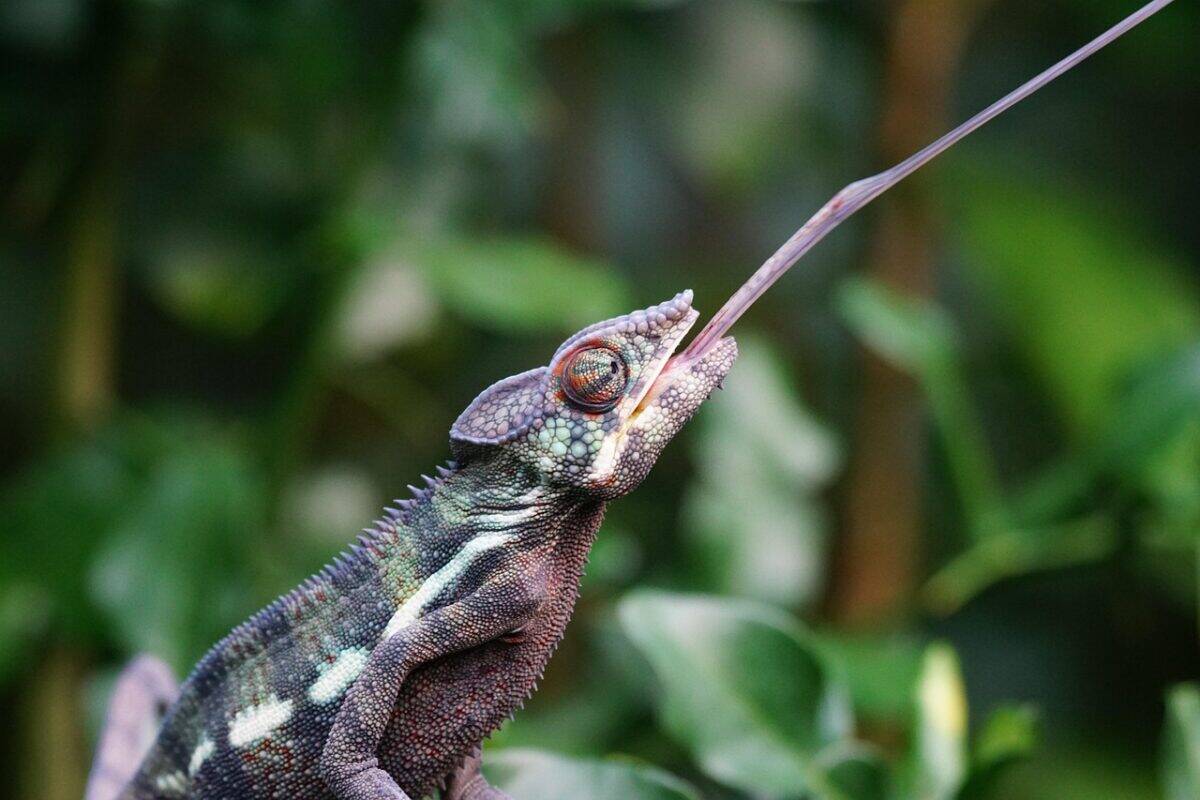
Madagascar is a global hotspot for chameleon diversity, home to approximately half of all chameleon species worldwide. These remarkable reptiles are known for their ability to change color (though not to match any background as commonly believed, but rather to communicate, regulate temperature, and express emotions), independently movable eyes that provide 360-degree vision, and their specialized ballistic tongues that can extend to twice their body length in a fraction of a second. The island hosts everything from the Brookesia micra, one of the world’s smallest reptiles at just over half an inch long, to the Parson’s chameleon (Calumma parsonii), which can grow to over two feet in length.
While the Madagascar films don’t feature chameleons prominently, these animals represent a crucial part of the island’s biodiversity story. Many Madagascar chameleon species have extremely limited ranges, sometimes restricted to a single forest fragment or mountaintop, making them particularly vulnerable to habitat loss. Nearly 40% of Madagascar’s chameleon species are threatened with extinction. Their specialized adaptations, such as feet perfectly designed for gripping branches and prehensile tails that function as fifth limbs, make them perfectly suited to arboreal life but ill-equipped to adapt to rapidly changing environments. Conservation efforts for these iconic reptiles focus on habitat preservation and combating the illegal wildlife trade, as many species are sought after in the exotic pet industry.
Madagascar’s Vanishing Giants: Recently Extinct Megafauna
In the relatively recent past – just over 1,000 years ago – Madagascar was home to an array of megafauna that would have made the island even more extraordinary than it appears today. These included elephant birds (Aepyornis and Mullerornis genera), flightless birds that stood up to 10 feet tall and laid eggs with a volume approximately 160 times that of a chicken egg; giant lemurs like the koala-sized Megaladapis and the gorilla-sized Archaeoindris that browsed in the island’s forests; and dwarf hippos that evolved smaller body sizes in response to island conditions. None of these spectacular animals survived the arrival of humans to Madagascar approximately 2,000-2,500 years ago.
The extinction of Madagascar’s megafauna represents one of history’s most recent and well-documented extinction events. Evidence suggests that a combination of hunting, habitat modification through slash-and-burn agriculture, and introduced species led to their disappearance. Some species, like the elephant birds, persisted until around the 13th-14th centuries, meaning they coexisted with humans for over a millennium before finally succumbing to extinction. These lost giants remind us that the Madagascar we see today – even with its extraordinary biodiversity – is an impoverished version of its former self. Understanding this history adds important context to conservation efforts for the island’s remaining unique species, highlighting both the fragility of island ecosystems and the profound impact humans can have on them.
Conservation Challenges and the Future of Madagascar’s Wildlife

The remarkable animals that inspired the Madagascar franchise face unprecedented threats in the wild. Madagascar has lost approximately 90% of its original forest cover, with deforestation continuing at alarming rates. Slash-and-burn agriculture (locally known as “tavy”), illegal logging of precious hardwoods like rosewood, mining operations, and charcoal production all contribute to habitat loss.
These environmental pressures not only fragment the habitats of iconic species like lemurs, fossas, and chameleons but also push many of them toward extinction—some of which exist nowhere else on Earth. The island’s incredible biodiversity, shaped by millions of years of isolation, is now one of the most endangered on the planet. Conservation efforts face additional hurdles, including poverty, limited enforcement of environmental regulations, and political instability. Without sustained international support, community-based conservation initiatives, and stronger protections for critical habitats, Madagascar risks losing much of its unique wildlife heritage within a generation.

- Dolphin Brains Compare to Those of Apes and Humans - June 20, 2026
- Why Nurse Sharks Are Often Misunderstood - June 20, 2026
- The 8 Most Poisonous Creatures Lurking in American Waters - June 20, 2026