

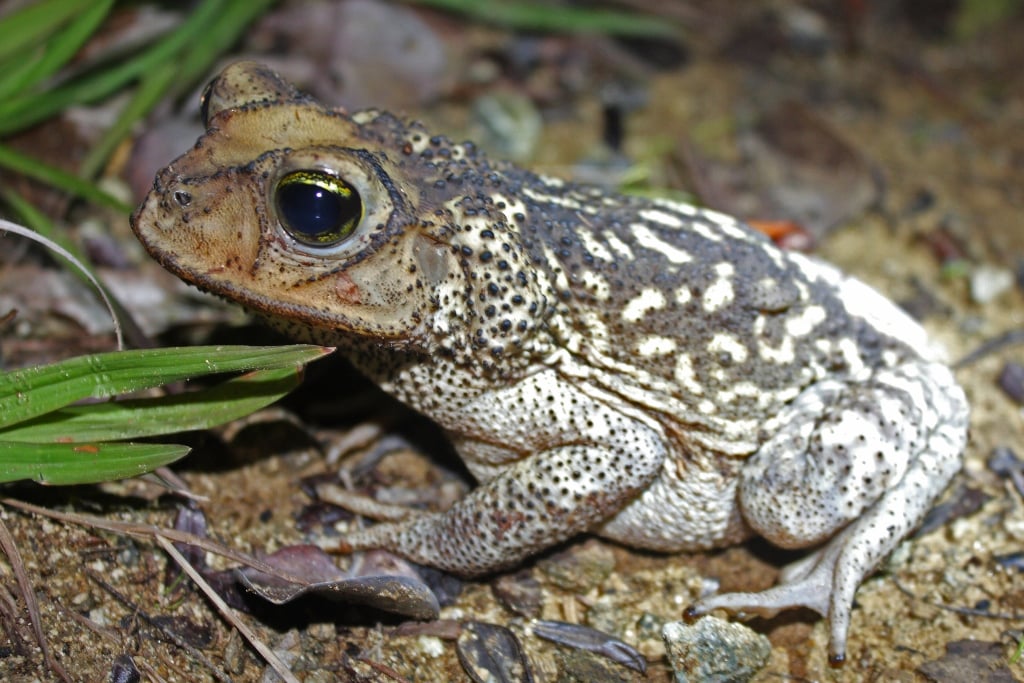
Astounding Rarity in Amphibian Reproduction (Image Credits: Upload.wikimedia.org)
Eastern Arc Mountains, Tanzania – Scientists recently identified three distinct toad species that produce live offspring, entirely skipping the familiar egg-laying and tadpole development common to most amphibians. These tree toads, found in fragmented forest habitats, represent a striking departure from typical frog reproduction. The discovery highlights the biodiversity hidden in Tanzania’s ancient mountain ranges and raises fresh questions about evolutionary adaptations in isolated ecosystems.[1]
Astounding Rarity in Amphibian Reproduction
Among more than 7,000 known frog and toad species worldwide, live birth remains an extraordinarily uncommon trait, documented in just 17 species before this finding.[1]
Researchers confirmed the three new species within the Nectophrynoides genus, previously lumped together under Nectophrynoides viviparus. Genetic and morphological differences set them apart, including variations in head shape and shoulder gland positioning. These toads, often called tree toads, now bring the genus’s live-birthing count to 16.
The Eastern Arc Mountains and Southern Highlands host these populations, where smaller, isolated habitats had masked their uniqueness until now. Earlier assumptions treated them as one widespread species, but detailed analysis revealed otherwise.
Unveiling the Species: A Museomics Triumph
Museomics propelled this breakthrough, as scientists scrutinized hundreds of preserved specimens from museums, some dating back over 120 years. They extracted mitochondrial DNA and compared it with fresh field samples and wild call recordings.[1]
Key contributors included evolutionary scientist Alice Petzold from the University of Potsdam in Germany. “Some of these specimens were collected over 120 years ago,” Petzold noted. “Our museomics work was able to reveal exactly which populations those old specimens belonged to, giving us a lot more confidence for future work on these toads.”
- Nectophrynoides saliensis: Identified from specific mountain populations, distinguished by genetic markers.
- Nectophrynoides luhomeroensis: Named for its Luhomero habitat, with unique head and gland features.
- Nectophrynoides uhehe: Tied to the Uhehe region, showing morphological variances from relatives.
The effort built on a 2016 genetic study that first hinted at hidden diversity within N. viviparus. Biologist John Lyakurwa from the University of Dar es Salaam in Tanzania collaborated, emphasizing fieldwork integration.
The Mechanics of Live Birth in Tree Toads
Females in the Nectophrynoides genus nourish embryos internally, delivering fully formed toadlets ready to hop away. This viviparity eliminates vulnerable aquatic tadpole phases, potentially suiting their arboreal lifestyles in misty forests.
Such adaptations likely evolved in response to the mountains’ unstable streams and predation pressures. The trait’s concentration in this genus underscores Tanzania’s role as an evolutionary hotspot for amphibians.
Previously, N. viviparus, first described in 1905 and formalized in 1926, stood as the genus exemplar. The new species closely resemble it but occupy narrower ranges, complicating past identifications.
Conservation Implications Amid Habitat Loss
Fragmented forests expose these toads to heightened risks from human activity and climate shifts. Lyakurwa warned, “The forests where these toads are known to occur are disappearing quickly. These habitats are vulnerable to both human uses and climate change.”[1]
A related species, Nectophrynoides asperginis, vanished from the wild in 2009 after a dam project and fungal outbreak. This precedent signals urgency for the newcomers, whose smaller distributions demand revised protections.
Researchers anticipate further surveys northward, where additional undiscovered kin may lurk. The study appeared in Vertebrate Zoology on November 6, 2025.[1]
Key Takeaways
- Live birth occurs in only about 0.2% of frog and toad species globally.
- Museomics revived century-old specimens to delineate the new species.
- Habitat fragmentation elevates extinction risks for these isolated populations.
This discovery not only expands our understanding of amphibian diversity but also spotlights the need for swift conservation in Tanzania’s vanishing forests. As these toadlets emerge fully formed, they remind us of nature’s ingenious solutions under pressure. What steps should protect such rarities? Share your thoughts in the comments.

- Urban Coyotes Show Remarkable Adaptability, Learning to Thrive in City Environments - July 22, 2026
- Beavers Are Nature’s Engineers, Creating Vital Habitats for Other Wildlife Species - July 21, 2026
- The Recovery of the California Condor Offers Hope for Other Critically Endangered Birds - July 21, 2026