


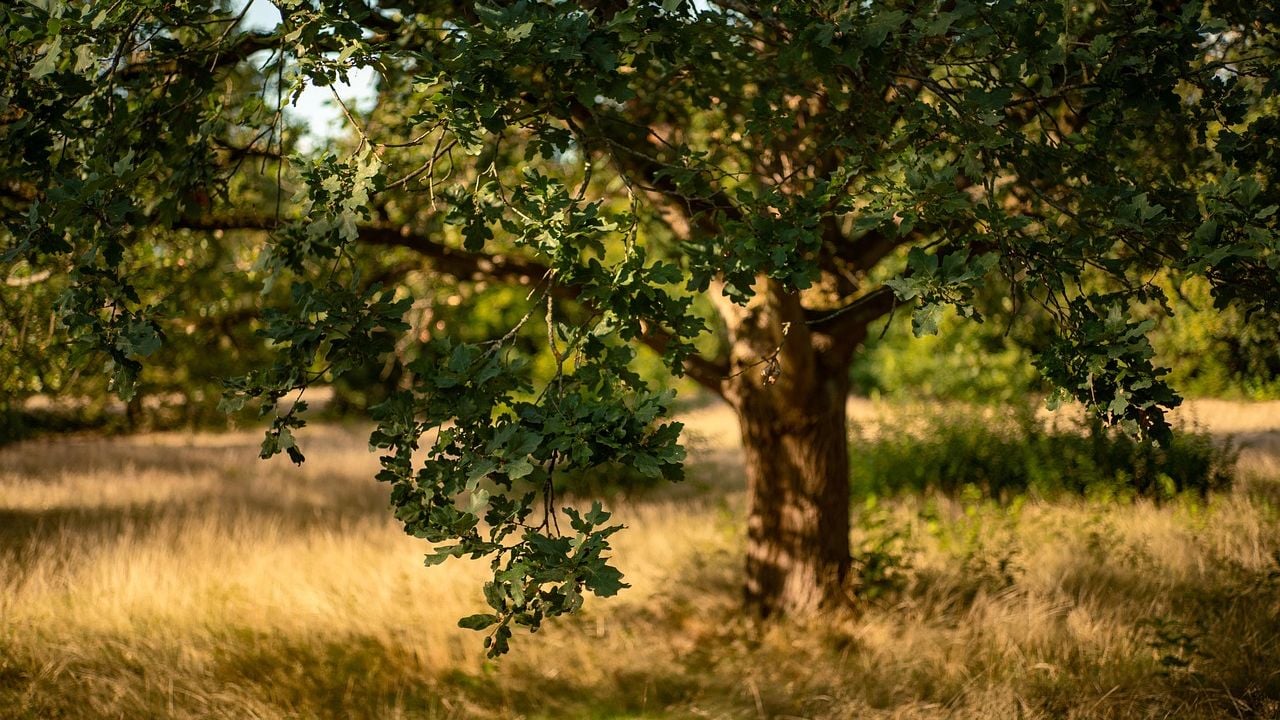
How oak trees outwit their predators – Image for illustrative purposes only (Image credits: Pixabay)
Oak trees in forests reveal a subtle yet powerful survival tactic against insect onslaughts. After enduring a severe caterpillar infestation one year, they push back the emergence of their leaves by three days the following spring. This adjustment disrupts the predators’ feeding cycle, forcing newly hatched larvae to confront barren branches instead of tender foliage.
Spring’s Delicate Rhythm Disrupted
Forest springs unfold with remarkable precision. Caterpillars and other insects time their emergence to coincide with the unfurling of oak leaves, which at that stage remain young, soft, and packed with nutrients. This alignment turns the trees into an abundant buffet, allowing the larvae to devour freely from the moment they hatch.
The strategy works seamlessly under normal conditions. Insects gain a critical head start in growth, capitalizing on the leaves’ vulnerability before tougher tissues develop. Oak trees, however, possess a responsive mechanism that alters this pattern when pressure mounts.
Infestation Triggers a Tactical Shift
Heavy caterpillar damage in one season prompts oaks to adapt their growth cycle. Researchers observing this phenomenon noted that affected trees delay bud break by exactly three days the next year. This postponement stems from the trees’ ability to “remember” prior stress through physiological changes.
Hatching occurs on schedule for the insects, driven by environmental cues like temperature. Yet the oaks’ leaves stay encased in protective buds, denying access to food. Starved larvae weaken quickly, reducing their numbers and easing the burden on the trees.
| Normal Spring | Post-Infestation Spring |
|---|---|
| Caterpillars hatch; leaves emerge simultaneously. Insects feast on soft, nutrient-rich foliage. | Caterpillars hatch; leaves delayed by three days. Insects face empty buds and struggle to survive. |
Nature’s Built-In Population Control
This leaf-delay response highlights how plants actively manage pest pressures without human intervention. Oaks effectively reset the balance, preventing repeated devastation from synchronized insect booms. The mechanism underscores the resilience embedded in forest ecosystems.
Over time, such adaptations help maintain tree health amid fluctuating insect populations. Fewer surviving caterpillars mean less defoliation, allowing oaks to allocate energy toward growth and reproduction. This natural check contributes to long-term woodland stability.
Lessons from the Forest Floor
Oak trees demonstrate that survival often hinges on timing rather than brute force. Their three-day deferral serves as a quiet testament to evolutionary ingenuity, where past threats shape future defenses. In an era of environmental challenges, these strategies remind us of nature’s capacity for self-regulation.

As a little kid, I fell in love with nature, wildlife, and animals. Living in the USA, South Africa, Italy, China and Germany gave me the opportunity to discover the world's Wildlife. My favorite animals are Mountain Gorillas, Siberian Tigers, and Great White Sharks.
I'm a certified PADI Open Water Diver, went to Everest Base Camp and Trekked Gorillas in Uganda. I hold a Master of Science in Economics and Finance.
Please send any feedback to feedback@animalsaroundtheglobe.com
- 10 Most Unique Reptiles You will See in the US - July 21, 2026
- 3 Dangerous Invasive Species the USA Must Eradicate - July 21, 2026
- 10 Things That Calm Cats And 4 That Make Them Nervous - July 21, 2026