

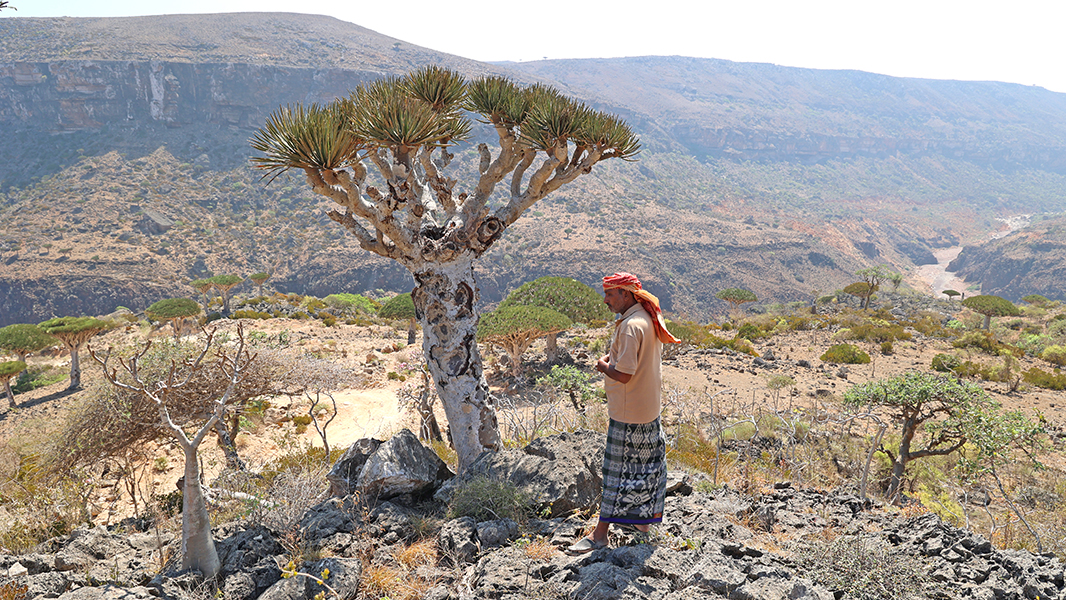
A Global Treasure Trove of Unique Flora (Image Credits: Images.nature.com)
Socotra, Yemen – Conservationists on this remote island confront mounting pressures to protect ancient tree species emblematic of its unparalleled biodiversity.[1]
A Global Treasure Trove of Unique Flora
The world’s last forest of dragon’s blood trees clings to survival in Socotra, drawing comparisons to the Galápagos for its extraordinary endemism.[1]
Geological isolation over millennia fostered plants and animals found nowhere else on Earth. Among the imperiled species stand cucumber trees and frankincense trees, each adapted to the island’s harsh terrain. These trees not only define Socotra’s landscape but also hold cultural significance for local communities. Efforts to conserve them gained momentum through dedicated projects addressing habitat loss.
Climate Change and Goats: Deadly Double Threat
Drought intensified by climate change has emerged as a primary adversary, stunting growth and weakening established stands of rare trees.[1]
Free-roaming goats exacerbate the crisis, devouring tender seedlings that fail to hide among rocky outcrops. Local residents prioritize livestock over vegetation, rendering goat control a delicate negotiation. Seedlings face slim odds without intervention, as herbivores strip away future generations. This combination of environmental shifts and grazing pressure has accelerated declines in populations already teetering on the brink.
Mohammed Amar: Bridge Between Science and Community
Mohammed Amar, an Indigenous manager, spearheaded the Socotra endangered-tree project for over two decades.[1]
He forged partnerships with scientists from Mendel University in Brno, Czech Republic, and other European institutions, primarily under funding from the Franklinia Foundation in Geneva. Amar scouted restoration sites and collaborated with remote villages to harmonize protection measures with livelihoods. “When the plants are doing well, I feel happy,” he noted.[1] His role as liaison ensured initiatives respected Indigenous knowledge while advancing scientific goals. Through these efforts, small victories emerged in safeguarding key habitats.
Key Species at Risk
Socotra hosts several iconic trees central to global conservation priorities. Understanding their vulnerabilities guides targeted actions.
- Dragon’s blood tree (Dracaena cinnabari): Features the planet’s sole remaining forest, prized for resin with historical medicinal uses.
- Cucumber tree (Dendrosicyos socotranus): A bizarre, bottle-shaped species unique to the archipelago.
- Frankincense trees (Boswellia spp.): Sources of aromatic resin traded for millennia, now threatened by arid conditions.
These plants evolved in isolation, yet modern stressors demand innovative defenses.[1]
Pathways to Resilience
Habitat restoration forms the cornerstone of response strategies, with scouting identifying prime locations for replanting.[1]
Balancing ecological needs with community reliance on goats requires community-led solutions. Long-term success hinges on sustained international support and local buy-in. Amar’s work exemplifies how Indigenous leadership can drive effective change amid adversity.
Key Takeaways
- Socotra’s endemism makes its flora irreplaceable, with dragon’s blood trees as a flagship species.
- Drought and goats pose immediate risks, complicated by cultural priorities.
- Collaborative efforts led by locals like Mohammed Amar offer hope through restoration and partnerships.
Socotra’s trees remind us that biodiversity hotspots demand urgent, nuanced protection to endure shifting climates and human impacts. What steps can global efforts take next to bolster such initiatives? Share your thoughts in the comments.

- Urban Coyotes Show Remarkable Adaptability, Learning to Thrive in City Environments - July 22, 2026
- Beavers Are Nature’s Engineers, Creating Vital Habitats for Other Wildlife Species - July 21, 2026
- The Recovery of the California Condor Offers Hope for Other Critically Endangered Birds - July 21, 2026