
In the vast waters of oceans and rivers, otters exhibit one of nature’s most endearing behaviors: they sleep while holding hands, or “paws,” in what scientists call “rafting.” This heart-warming practice isn’t just adorable—it serves critical survival functions that researchers have studied extensively. For years, this behavior captivated animal lovers worldwide, appearing on countless social media posts and nature documentaries. But behind the cuteness lies fascinating science and evolutionary adaptation that helps these semi-aquatic mammals thrive in their environments. Recent scientific studies have revealed compelling reasons for this behavior, shedding light on the complex social structures and survival mechanisms of these intelligent creatures.
The Phenomenon of Otter Hand-Holding
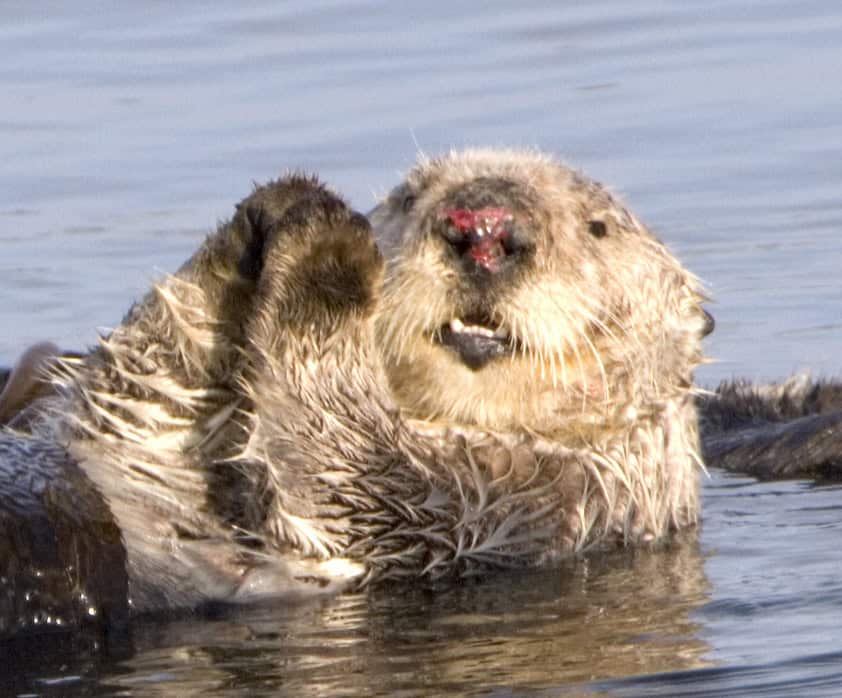
Sea otters, particularly those in the North Pacific Ocean, are frequently observed floating on their backs in groups called rafts, holding onto each other’s paws while they sleep. These rafts can consist of just a few individuals or, remarkably, up to 100 otters clustered together. The behavior is most common among female otters and their pups, though male otters occasionally form bachelor rafts as well. When sleeping, otters enter a relaxed state while remaining somewhat alert to potential dangers, and the hand-holding appears to be a deliberate, consistent behavior rather than coincidental contact. Scientists have documented this behavior extensively across otter populations, confirming it’s not isolated to certain groups but rather a species-wide practice for sea otters (Enhydra lutris).
Preventing Drift During Sleep

The primary scientific explanation for otters’ hand-holding behavior is remarkably practical: it prevents them from drifting apart while sleeping. Sea otters typically sleep floating on their backs in bodies of water where currents, winds, and tides could easily separate them. By holding paws, family groups and social units remain together despite these environmental forces. This is particularly crucial for mother-pup pairs, as separation could prove fatal for young otters not yet fully capable of independent survival. Research has shown that otters that maintain physical contact during rest periods have significantly higher survival rates in challenging aquatic environments, demonstrating that this charming behavior serves a vital evolutionary purpose.
Thermoregulation Benefits

Another compelling scientific explanation involves thermoregulation. Unlike many marine mammals, sea otters don’t have a thick layer of blubber to insulate them from cold waters. Instead, they rely on their extraordinarily dense fur—the densest of any animal with up to one million hairs per square inch—and their naturally high metabolism. By clustering together and maintaining physical contact while sleeping, otters create shared warmth that helps maintain optimal body temperature. Studies measuring the body temperatures of solitary versus clustered otters have found that those in groups consistently maintain more stable core temperatures, especially during colder seasons. This thermal advantage translates to reduced metabolic demands and better energy conservation, allowing otters to survive in waters that would otherwise be too cold for mammals of their size.
Protection from Predators

The rafting behavior also provides significant protection from predators such as sharks and killer whales. When otters cluster together, they create a larger, more intimidating presence on the water’s surface. Additionally, having multiple sets of eyes and ears—even in a semi-alert sleeping state—increases the chances that at least one otter will detect danger and alert the group. Research conducted off the California coast has documented significantly fewer successful predator attacks on otters sleeping in groups compared to solitary individuals. Scientists have observed that rafting otters position themselves strategically, with the most vulnerable members (typically pups) located in the center of the formation, surrounded by more experienced adults who can respond quickly to threats.
Social Bonding and Family Connections

Beyond the practical survival benefits, hand-holding reinforces social bonds within otter communities. Marine biologists studying otter behavior have noted that this physical connection appears to strengthen family relationships, particularly between mothers and pups. Young otters learn this behavior from their mothers during their first months of life, and the consistent physical contact helps establish secure attachment patterns. Hormonal studies have revealed elevated levels of oxytocin—often called the “bonding hormone”—in otters that regularly engage in physical contact during rest. This neurochemical reinforcement likely contributes to the strong social structures observed in otter communities and helps maintain the cohesion of family units that is essential to their collective survival strategy.
Anchoring to Kelp Forests

In addition to holding hands, sea otters in kelp forest habitats frequently wrap themselves in kelp strands while sleeping. This behavior serves as a natural anchoring system that complements hand-holding. The kelp acts as a flexible tether, allowing otters to remain in place despite ocean currents while still maintaining some mobility. Scientists studying otters in the kelp forests off California’s coast have observed that otters often hold hands while simultaneously anchoring to kelp, creating redundant security systems. This dual approach is particularly prevalent during stormy conditions when water turbulence increases. Research indicates that otters utilizing both strategies—hand-holding and kelp anchoring—experience approximately 50% less displacement during sleep compared to those using only one method, demonstrating the evolutionary sophistication of their rest behaviors.
Differences Between Otter Species

While sea otters are the most famous for hand-holding, the behavior varies significantly across the 13 species of otters worldwide. River otters, for instance, typically sleep on land in dens and don’t exhibit the same floating hand-holding behavior. The sea otter’s unique adaptation appears specifically evolved for their fully marine lifestyle—they rarely come ashore and spend nearly their entire lives in water. Comparative studies between different otter species suggest that hand-holding evolved independently in sea otters as they transitioned to a more marine existence approximately 5 million years ago. This divergent evolution highlights how different environmental pressures shape behavior, even among closely related species. Scientists point to this as a classic example of behavioral adaptation to specific ecological niches.
Scientific Research Methods

Researchers employ various sophisticated techniques to study otter hand-holding behavior. Wildlife biologists use drones equipped with thermal imaging to observe otter rafts without disturbing them, allowing for non-invasive monitoring of natural behavior patterns. Radio tracking devices attached to select otters help scientists understand movement patterns during both active and resting periods. Some researchers use underwater cameras to capture rare footage of how otters transition into hand-holding positions. DNA analysis from collected fur samples helps identify family relationships within rafts, revealing whether otters preferentially hold hands with relatives. These combined approaches have transformed our understanding of this behavior from mere anecdotal observation to scientifically documented phenomenon with clear evolutionary significance and specific biological mechanisms.
The Role of Learning and Culture

Evidence suggests that hand-holding behavior in otters has both innate and learned components. Observational studies of captive-born otters show they naturally attempt floating and holding behaviors even without witnessing it from others, indicating some genetic programming. However, the refinement of these techniques appears to be culturally transmitted, with young otters learning optimal hand-holding techniques from their mothers and other community members. Researchers studying rehabilitated orphaned otters have noted that those reintroduced to wild populations quickly adopt the specific hand-holding patterns of their new community, suggesting behavioral flexibility and social learning. This combination of innate tendency and cultural transmission represents a sophisticated behavioral system that ensures the practice continues through generations while allowing for adaptation to local conditions.
Conservation Implications

Understanding otter hand-holding behavior has important implications for conservation efforts. When oil spills occur, they can severely compromise otters’ fur insulation, making group thermoregulation through rafting even more critical for survival. Conservation programs now recognize the importance of keeping social groups together during rehabilitation efforts, as disrupting these bonds can reduce survival rates when animals are released back into the wild. Marine protected areas are increasingly designed to include known rafting locations, providing safe havens where otters can rest undisturbed. Population monitoring programs use raft size and frequency as indicators of population health, with stable or increasing raft sizes generally signaling a healthy population structure with sufficient social connectivity. These conservation applications demonstrate how scientific understanding of seemingly cute behaviors can translate into meaningful protection strategies.
Cultural Impact and Human Connection

The image of otters holding hands has resonated deeply with humans, becoming a powerful symbol in popular culture. This behavior frequently appears in children’s books, conservation campaigns, and as a metaphor for cooperation and companionship in everything from greeting cards to relationship advice. The emotional response humans have to this behavior likely stems from its anthropomorphic quality—it resembles human hand-holding, creating an immediate sense of connection and recognition. Conservation psychologists have studied how such emotionally resonant behaviors can serve as entry points for public engagement with wildlife protection issues. Research shows that people who are exposed to images of otters holding hands report increased willingness to support marine conservation efforts and express greater concern about threats to ocean ecosystems, demonstrating how this charming behavior serves as an effective ambassador for broader environmental protection.
Challenges to Otter Rafting Behavior

Human activities increasingly threaten otters’ ability to safely engage in their natural rafting behavior. Boat traffic can disrupt otter rafts, causing stress and separation. Water pollution, particularly from oil spills, damages the otters’ fur, compromising its insulating properties and making group thermoregulation even more essential yet more difficult. Climate change impacts, including changing ocean temperatures and increasing storm frequency, may force otters to adapt their rafting behaviors or locations. Monitoring programs have documented disturbing instances of raft disruption in high-traffic coastal areas, with some historic rafting locations now abandoned due to human disturbance. Conservation organizations are working to establish protected resting areas and boating guidelines in critical otter habitats to preserve their ability to engage in this vital behavior.
Conclusion: The Science Behind the Cuteness

The endearing image of otters holding hands while sleeping represents far more than just a charming animal behavior—it embodies sophisticated evolutionary adaptations that enhance survival through multiple mechanisms. What appears anthropomorphically sweet to human observers actually demonstrates nature’s elegant solutions to the challenges of marine living: preventing drift, maintaining body temperature, avoiding predators, and strengthening social bonds. Scientific research continues to deepen our understanding of this behavior, revealing increasingly complex dimensions of otter social structures and environmental adaptations. As we face growing environmental challenges that threaten otter populations worldwide, this deeper appreciation of their behavior should motivate stronger conservation efforts to protect these remarkable animals and the ecosystems they inhabit. The otters’ joined paws remind us that in nature, as in human society, connection often lies at the heart of resilience.

- The 10 Most Dangerous Predators You’ve Never Heard Of - July 23, 2026
- This Bird Can Sleep While Flying Thousands of Miles - July 23, 2026
- What to Do If You Encounter a Bear (And What NOT to Do) - July 23, 2026