

Something quietly extraordinary is happening in the wildflower meadows and garden hedgerows of Britain and beyond. Scientists are peeling back the surface of pollinator ecology and finding a hidden web of infection, dependency, and survival strategy that most of us never knew existed. The bumblebee, that familiar fuzzy visitor to summer blooms, is at the center of a story far more complex than anyone expected.
It turns out that not all bumblebees are equal when it comes to disease. Some species carry parasites. Others spread them. A few, it seems, do both with alarming efficiency. Let’s dive in.
The Surprising Discovery That Changed How Scientists See Bumblebee Disease
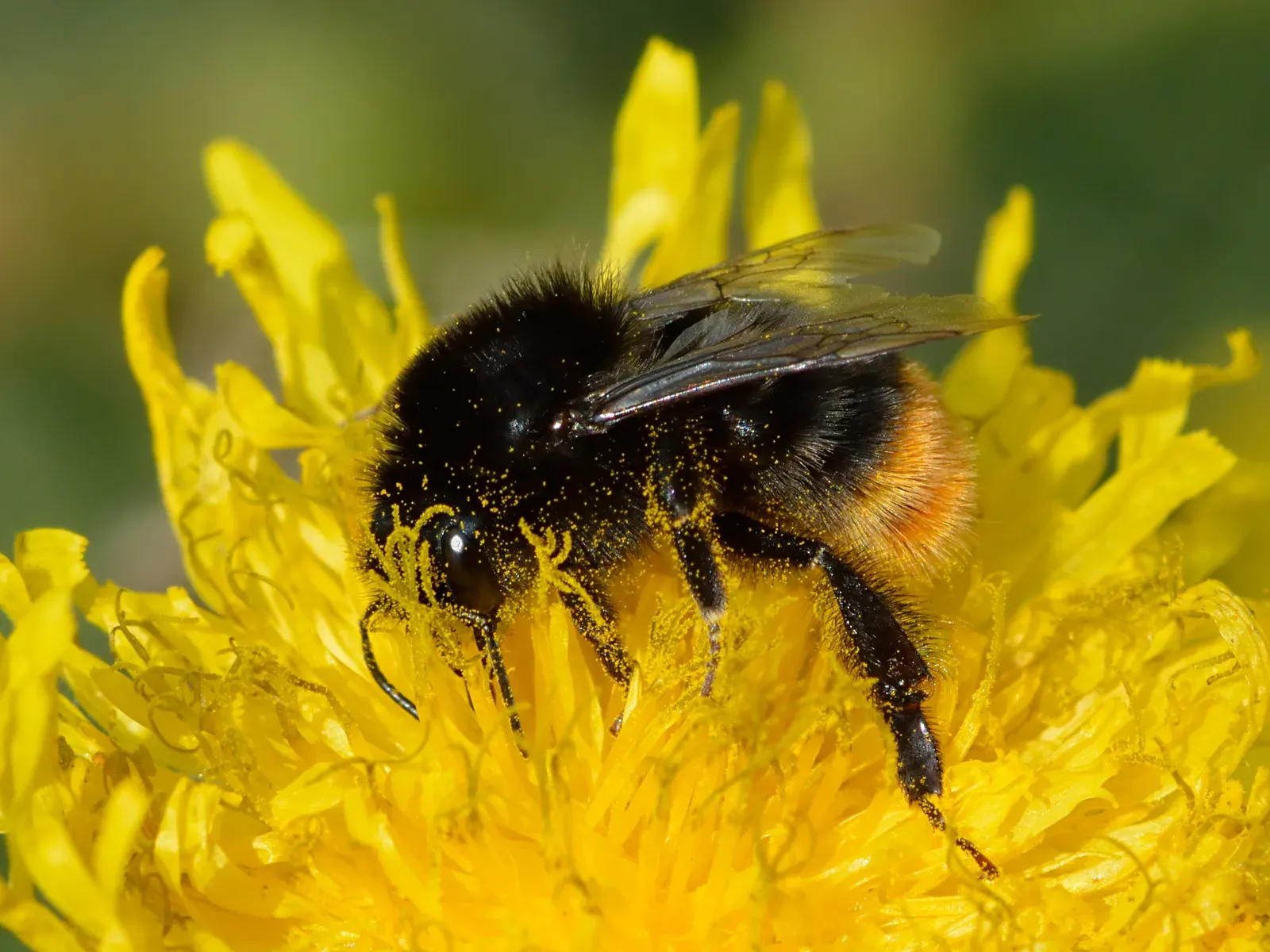
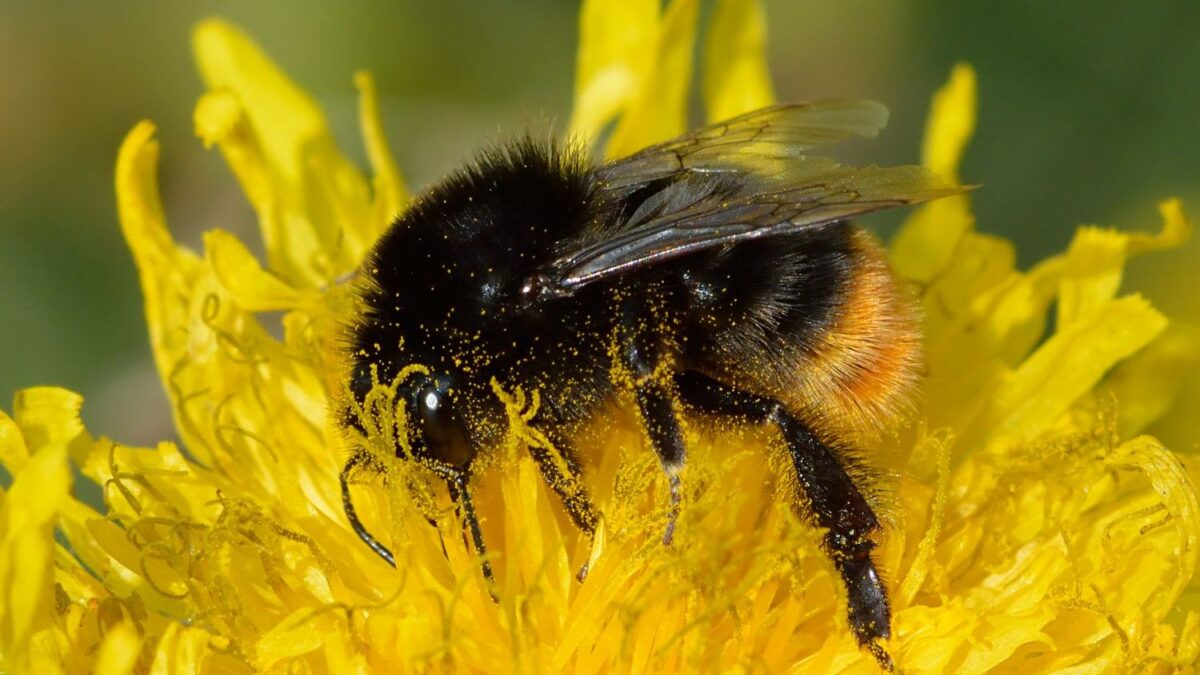
Here’s the thing about scientific breakthroughs: they often come from looking at something totally ordinary with fresh eyes. Researchers studying bumblebee parasite networks recently identified the red-tailed bumblebee, known scientifically as Bombus lapidarius, as a disproportionately important host in the transmission of a gut parasite called Crithidia bombi. This single finding reshaped how ecologists think about disease flow within pollinator communities.
What makes this so striking is that B. lapidarius wasn’t previously considered a standout species in disease ecology research. It’s common, widespread, and easy to overlook. Yet when scientists mapped out which species were driving parasite spread across flower-sharing networks, this bumblebee kept emerging as a central hub, like a busy airport in a flight route map where removing it would cascade across the entire system.
The parasite in question, Crithidia bombi, is a gut pathogen transmitted when bees visit shared flowers and leave behind infected feces. It sounds unpleasant because it is. Infection can reduce foraging efficiency, impair colony growth, and in some cases contribute to population decline.
How Parasites Travel Through Flower-Sharing Networks
Think of a flower as a shared drinking glass at a party. Every bee that visits leaves something behind, and every bee that arrives picks something up. This is the basic mechanic of indirect parasite transmission in pollinator communities, and it’s surprisingly effective at moving pathogens across species boundaries.
Researchers used network analysis to trace how Crithidia bombi moves between different bumblebee species through shared floral resources. What they found was that transmission isn’t random. Certain species act as bridge nodes, connecting otherwise separate clusters of bee populations. The red-tailed bumblebee repeatedly appeared in these bridge positions, making it structurally essential to how the parasite propagates.
This kind of network thinking, borrowed from epidemiology and social science, is relatively new in entomology. Honestly, it’s one of those methodological crossovers that feels obvious in hindsight but took years to arrive. Understanding transmission at the network level changes everything about how conservation interventions might be designed.
Why Red-Tailed Bumblebees Are So Central to the Infection Web
Several factors seem to explain why B. lapidarius occupies such a pivotal role. For one, it’s a generalist forager with broad flower preferences, meaning it visits a wider range of plant species than more specialized bumblebees. More flower types visited means more species overlapping at those flowers. More overlap means more transmission opportunities.
Its abundance also matters. Common species simply have more contact events than rare ones. Let’s be real: if a species shows up everywhere in a landscape, it’s going to dominate interaction networks whether we want it to or not. Abundance combined with broad foraging range creates the perfect conditions for acting as a disease connector.
There’s also a seasonal component. Red-tailed bumblebees are active across a relatively long foraging window, increasing the duration over which they can both acquire and deposit the parasite at flower sites. It’s a combination of geography, timing, and behavior that lands them at the center of this particular ecological problem.
What This Means for Other Bumblebee Species at Risk
The implications extend well beyond B. lapidarius itself. Several rarer and more vulnerable bumblebee species share flower resources with red-tailed bumblebees, meaning they are potentially exposed to elevated parasite pressure simply by using the same habitat. This is where the findings become genuinely worrying for conservation biologists.
Species like the shrill carder bee and the brown-banded carder bee are already under significant pressure from habitat loss and agricultural change. If flower-sharing with a highly infectious hub species like B. lapidarius compounds their disease burden, it adds another layer of threat that current conservation models may be underestimating. It’s hard to say for sure how large this effect is in practice, but the network data suggests it cannot be ignored.
Understanding which species are most vulnerable to spillover infection from hub species could help prioritize landscape management decisions, such as which wildflower mixes to plant and where to focus habitat restoration efforts.
The Role of Floral Diversity in Controlling Parasite Spread
One of the more hopeful threads in this research is the idea that floral diversity itself might act as a buffer against parasite transmission. When more flower species are available, bee visits become more diluted across a wider range of plant resources. This reduces the chance that any single flower becomes a repeated transmission hotspot.
Think of it like crowd management. A tightly packed single-venue event is a disease transmission nightmare. Spread the same crowd across a dozen venues and the risk per person drops dramatically. Diverse floral landscapes essentially spread the bee traffic, reducing the density of shared exposures at any one point.
This has practical implications for how we design green spaces, agricultural field margins, and urban gardens. Planting a variety of flowering species rather than monoculture flower strips isn’t just aesthetically nice. It may be a genuine public health measure for pollinator communities.
How Network Science Is Transforming Pollinator Conservation
The methodological shift at the heart of this research deserves its own spotlight. For decades, bumblebee disease studies focused on individual bees or individual species in isolation. Network ecology changes the frame entirely, treating the pollinator community as an interconnected system where the behavior of one species affects the health of many others.
This approach has been transformative in human epidemiology, helping scientists understand how diseases like influenza move through social networks and which individuals or groups function as super-spreaders. Applying equivalent logic to bee communities is genuinely exciting, and I think it’s one of the most underappreciated methodological advances in ecological science right now.
The data collection required is intensive. Researchers must record which bee species visit which flowers, at what frequency, in which locations, and across multiple seasons. It’s painstaking fieldwork, but the resulting network maps reveal patterns invisible to any other approach. The investment is clearly worth it.
What Scientists and Conservationists Should Do Next
The research opens up a clear agenda for future investigation. Scientists need to understand how parasite load in B. lapidarius populations varies across different landscapes, particularly comparing intensive agricultural areas with more diverse habitats. If abundance and parasite prevalence are both higher in degraded landscapes, the transmission risk to vulnerable species could be substantially elevated in exactly the places where those vulnerable species are already struggling.
There’s also an urgent need to incorporate disease network data into existing pollinator monitoring schemes. Most national monitoring programs track abundance and distribution but not infection status. Adding parasite surveillance to these programs would provide an early warning system for disease-driven declines before populations collapse.
Conservation policy, particularly around agri-environment schemes that fund wildflower habitat creation, should start integrating this network-based understanding of disease ecology. Planting the right flowers in the right places, with the right diversity, might do more than feed bees. It might protect them.
Conclusion: A Humble Bee With an Outsized Impact
It’s genuinely surprising that a species as common and unremarkable-looking as the red-tailed bumblebee could sit at the center of something this significant. That’s the thing about ecology: the animals we overlook are often the ones doing the most behind-the-scenes work, for better or worse.
This research is a compelling reminder that conservation isn’t just about counting rare species and protecting their habitats. It’s about understanding the invisible threads connecting species across a landscape, including the threads that carry disease. The more we understand those connections, the better equipped we are to intervene wisely rather than accidentally making things worse.
If you’re a gardener, a farmer, or a policymaker with any influence over what gets planted and where, this research is quietly speaking to you. Biodiversity isn’t a luxury. In the case of pollinator health, it might be one of the most practical disease-control strategies we have. What would our food systems look like if we’d known this decades ago? Something worth thinking about.

- Urban Coyotes Show Remarkable Adaptability, Learning to Thrive in City Environments - July 22, 2026
- Beavers Are Nature’s Engineers, Creating Vital Habitats for Other Wildlife Species - July 21, 2026
- The Recovery of the California Condor Offers Hope for Other Critically Endangered Birds - July 21, 2026