

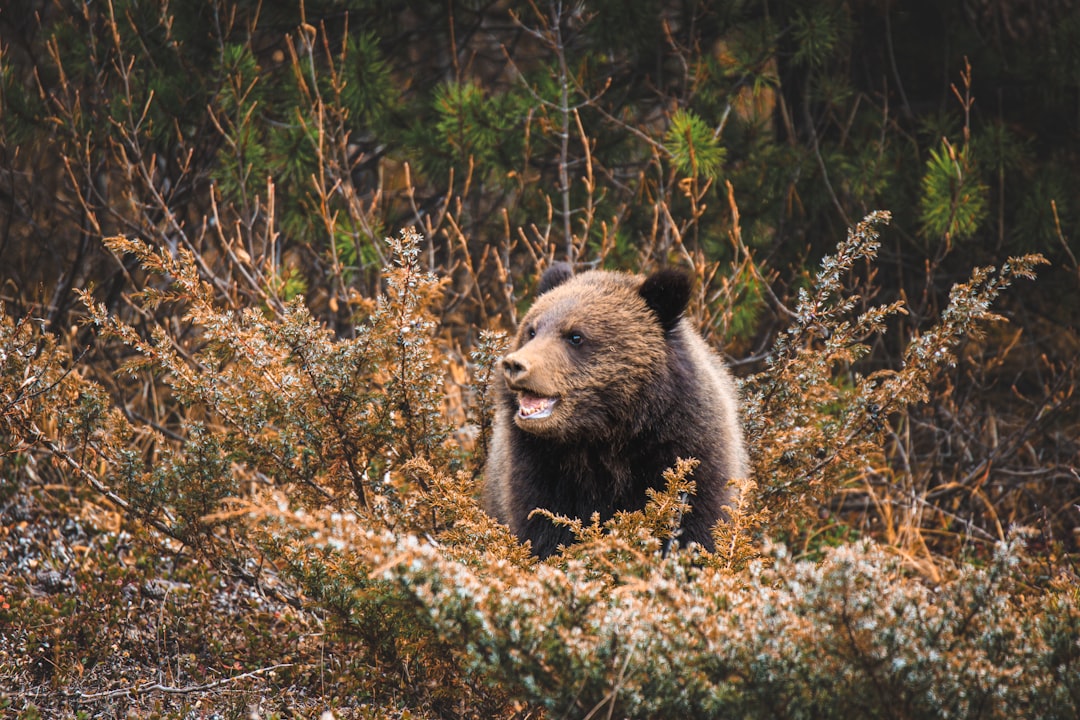
Wyoming – A female grizzly bear moved from Montana two years ago stepped out of her winter den in the Teton Wilderness this spring alongside two cubs-of-the-year. Wildlife officials confirmed the sighting during a routine radio-telemetry flight on March 27, 2026.[1][2] The 6-year-old sow, identified as 1126F, had been captured near Montana’s Middle Fork Flathead River and released into the Greater Yellowstone Ecosystem in July 2024. This event highlights early success in a multi-agency plan to enhance genetic diversity among isolated grizzly populations.[3]
A Bold Move for Genetic Health
Officials translocated the then-4-year-old female grizzly as part of a collaborative effort to address longstanding concerns over genetic isolation in the Greater Yellowstone Ecosystem. The population there had grown robustly since the 1970s but remained cut off from neighboring groups, prompting a 2018 federal court ruling that emphasized the need for intervention.[1] Agencies acted to introduce fresh genetic material from the Northern Continental Divide Ecosystem in Montana, where bears thrive across a connected habitat.
Biologists paired the translocation with a subadult male, designated 1129M, who received release south of Yellowstone Lake. The female settled in the Blackrock Creek drainage, southwest of Togwotee Pass and northwest of Dubois. Such moves aimed to foster natural breeding and long-term viability without relying solely on population growth.[4]
The Pilot’s Surprising Find
A contracted pilot from the Wyoming Game and Fish Department flew a standard surveillance route over the Teton Wilderness when 1126F’s radio signal drew his attention. There, at the den entrance, two cubs peered out, marking the first documented reproduction from the 2024 effort.[1] The photos captured the family group shortly after den emergence, a critical period when mothers and newborns remain close to the site.
This first litter for the young sow surprised researchers somewhat. She had roamed extensively the previous year, expending significant energy. Yet the images showed her in strong condition, ready to guide her offspring through the rugged terrain.[2]
Boosting Connectivity Between Ecosystems
The cubs represent the first confirmed genetic exchange between Montana’s Northern Continental Divide and Wyoming’s Yellowstone bears in at least 50 years. Wildlife managers hailed the development as proof of successful integration. “This is concrete evidence that Montana and Wyoming are committed to sustaining recovered populations of grizzly bears,” stated Montana Fish, Wildlife and Parks Director Christy Clark.[3]
- Partnerships drove the initiative: Montana Fish, Wildlife and Parks; Wyoming Game and Fish Department; and Yellowstone National Park.
- The Greater Yellowstone Ecosystem holds around 1,000 bears, recovered from lows in the 1980s.
- Translocations addressed isolation across 35 miles of unsuitable habitat between populations.
- Annual monitoring tracks collar signals to assess movements and reproduction.
- Cubs inherit diverse traits, potentially strengthening resilience against disease or environmental shifts.
Wyoming Game and Fish Director Angi Bruce called the collaboration “a shining example of interstate cooperation to address long-term genetic viability concerns.”[2] Researchers noted the male counterpart remains active in the reproductive age class, with hopes he contributes genes as well.
Challenges and Optimism Ahead
First-time mothers face hurdles, including lower cub survival rates around 50 percent in dense populations like Greater Yellowstone. Grizzly researcher Cecily Costello observed, “We do have to wait and see about the survival of this litter… Even if this litter does not survive, we expect she will be successful in the future.”[3] Higher bear densities increase risks from males or resource competition.
Still, the event bolsters arguments for state-led management post-Endangered Species Act protections. Officials anticipate more translocations if needed, building on this milestone. The cubs’ presence offers tangible progress toward sustainable populations across the Northern Rockies.
Key Takeaways
- 1126F’s cubs confirm inter-ecosystem breeding after decades of separation.
- Multi-state partnership demonstrates proactive conservation.
- Survival monitoring continues to gauge long-term impact.
This den emergence stands as a promising step in grizzly recovery, blending science, collaboration, and nature’s unpredictability. As these cubs venture forth, they embody hope for healthier populations region-wide. What do you think this means for the future of grizzlies in the West? Tell us in the comments.

- Urban Coyotes Show Remarkable Adaptability, Learning to Thrive in City Environments - July 22, 2026
- Beavers Are Nature’s Engineers, Creating Vital Habitats for Other Wildlife Species - July 21, 2026
- The Recovery of the California Condor Offers Hope for Other Critically Endangered Birds - July 21, 2026