

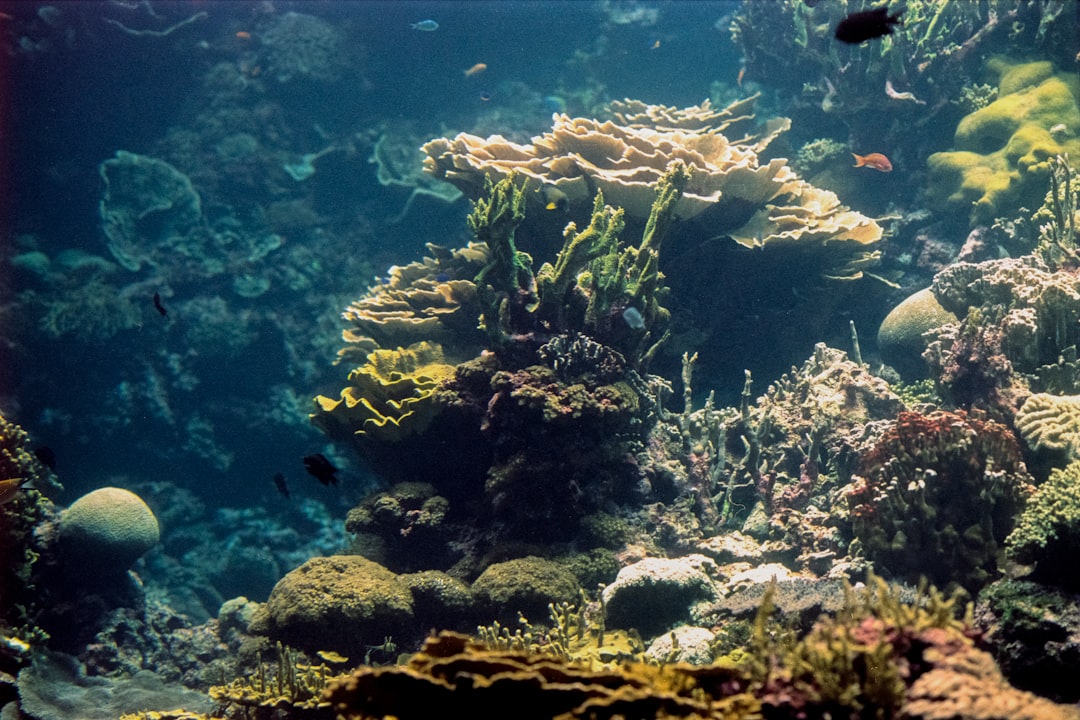
Coral reefs worldwide confront escalating threats from marine heatwaves fueled by climate change. These events trigger mass bleaching, where corals expel their symbiotic algae and risk starvation. Researchers recently demonstrated that assisted evolution holds promise for boosting coral resilience, yet success demands precise strategies applied rigorously across multiple generations.[1][2]
Heatwaves Push Corals to the Brink
Intensifying ocean temperatures have unleashed frequent and severe heatwaves that devastate reef ecosystems. Tropical corals depend on algae for energy to construct their calcium carbonate skeletons. When waters overheat, this symbiosis breaks down, leading to widespread mortality.
A new study highlighted how natural evolution struggles to keep pace with rapid warming. Scientists emphasized that without intervention, many populations face extinction. Assisted evolution emerges as a critical tool to accelerate adaptation and enhance survival rates.[1]
Unpacking Assisted Evolution for Corals
Assisted evolution involves human-guided processes to speed up natural selection. For corals, this means breeding individuals with superior heat tolerance. The approach draws from quantitative genetics to identify heritable traits that confer resilience.
Over eight years, researchers maintained a captive population in Palau that included related and unrelated corals. They measured performance under controlled stress mimicking heatwaves. This setup allowed estimation of genetic correlations between survival and other vital traits.[1]
Key traits assessed included:
- Heat tolerance under varied exposures, from prolonged mild stress at 32.5°C to acute shocks up to 38.5°C.
- Growth rates.
- Energy reserves.
- Reproductive output.
Insights from Genetic Analysis and Simulations
The study revealed no negative genetic correlations among heat tolerance, growth, energy reserves, and reproduction. This finding suggests that selecting for heat resistance need not compromise other fitness components. Genetic merit proved more reliable than survival alone for predicting tolerance.
“Survival alone does not guarantee a genetic predisposition for heat tolerance. A coral could survive by chance,” researchers noted. Simulations projected tolerance gains over ten generations by selecting the top 5% most tolerant corals as parents. Such intense culling – ruthless selection – proved essential to match projected heatwave intensities.[1]
At extreme temperatures, trait correlations weakened, underscoring the need for direct targeting of heatwave survival proxies. Repeated selection across generations emerged as non-negotiable for meaningful progress.
Logistical Hurdles and Scaling Challenges
Implementing this strategy faces significant barriers. Identifying top performers requires testing thousands of corals to select just dozens for breeding while preserving genetic diversity. Wild populations complicate efforts due to widespread larval dispersal, which obscures relatedness.
Current research lags behind the urgency. An international team of 28 scientists called for larger field hubs, extended funding beyond typical three-year cycles, and protections for experimental corals against storms or heat events. Corals mature slowly – three to seven years – demanding multi-generational commitment.[3]
“Selection needed to directly target long-term heatwave survival. This meant choosing only the top 5% most tolerant corals as parents for breeding, and it had to be repeated over multiple generations,” the Palau study concluded. Active measures, like relocating corals deeper during threats or using shading techniques, could safeguard progress.
Toward a Resilient Future for Reefs
Assisted evolution offers a viable bridge, but only if paired with drastic emissions cuts to slow warming. The Palau research provides a blueprint: prioritize heritable tolerance, apply unrelenting selection, and scale operations swiftly. Complementary strategies, including restoration and monitoring, must integrate these efforts.
Key Takeaways
- No trade-offs found between heat tolerance and growth, reproduction, or energy storage.
- Top 5% selection over 10 generations could match future heatwave stress in models.
- Urgent need for scaled hubs, long-term funding, and protection of breeding stocks.
Reefs support biodiversity, fisheries, and coastal protection for millions. Failure to act decisively risks irreversible loss. What do you think about accelerating coral evolution – worth the investment? Tell us in the comments.

- Urban Coyotes Show Remarkable Adaptability, Learning to Thrive in City Environments - July 22, 2026
- Beavers Are Nature’s Engineers, Creating Vital Habitats for Other Wildlife Species - July 21, 2026
- The Recovery of the California Condor Offers Hope for Other Critically Endangered Birds - July 21, 2026