

The Birth of a Radical Idea (Image Credits: Cdn.mos.cms.futurecdn.net)
Astronomers have long puzzled over anomalies in the early universe, where observations from the James Webb Space Telescope revealed brighter-than-expected galaxies and unexpectedly massive black holes forming mere hundreds of millions of years after the Big Bang.
The Birth of a Radical Idea
Researchers first proposed the concept of dark stars in 2007, envisioning massive celestial bodies fueled not by the familiar process of nuclear fusion but by the annihilation of dark matter particles within their cores.
These hypothetical objects would have emerged in the dense, primordial environment shortly after the universe’s inception, drawing energy from the invisible substance that constitutes about 27 percent of the cosmos.
Unlike ordinary stars, dark stars could grow to enormous sizes – potentially millions of times the mass of the sun – while remaining cool and puffy on the surface, allowing them to shine with extraordinary luminosity.
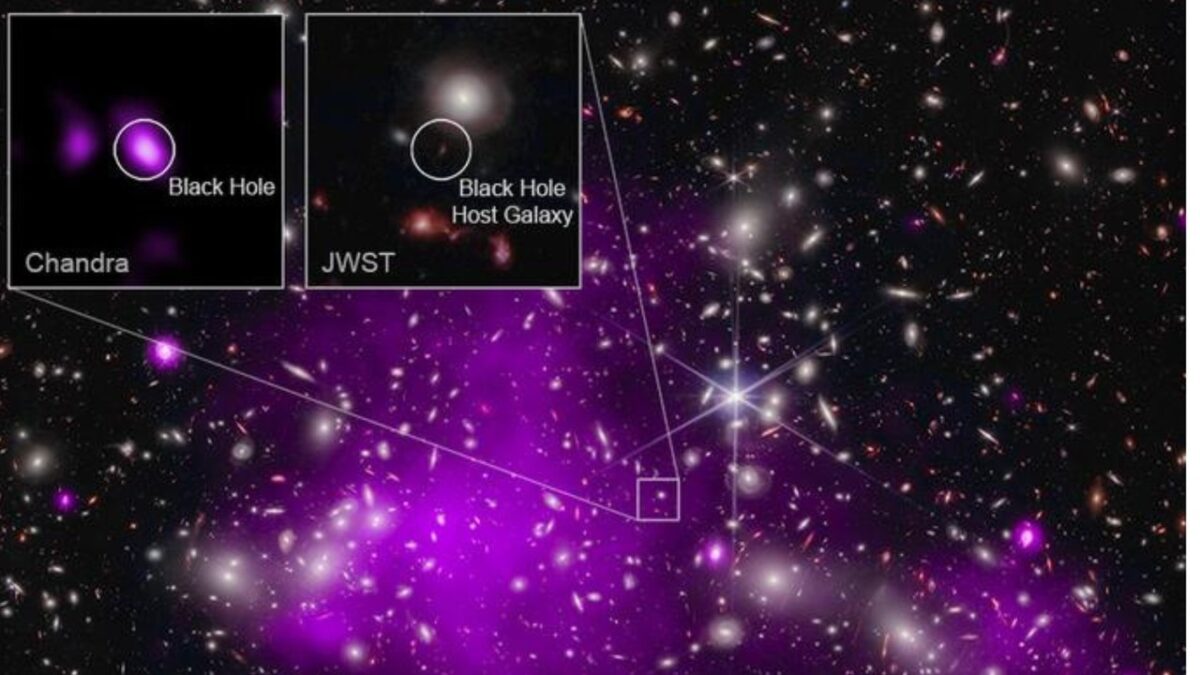
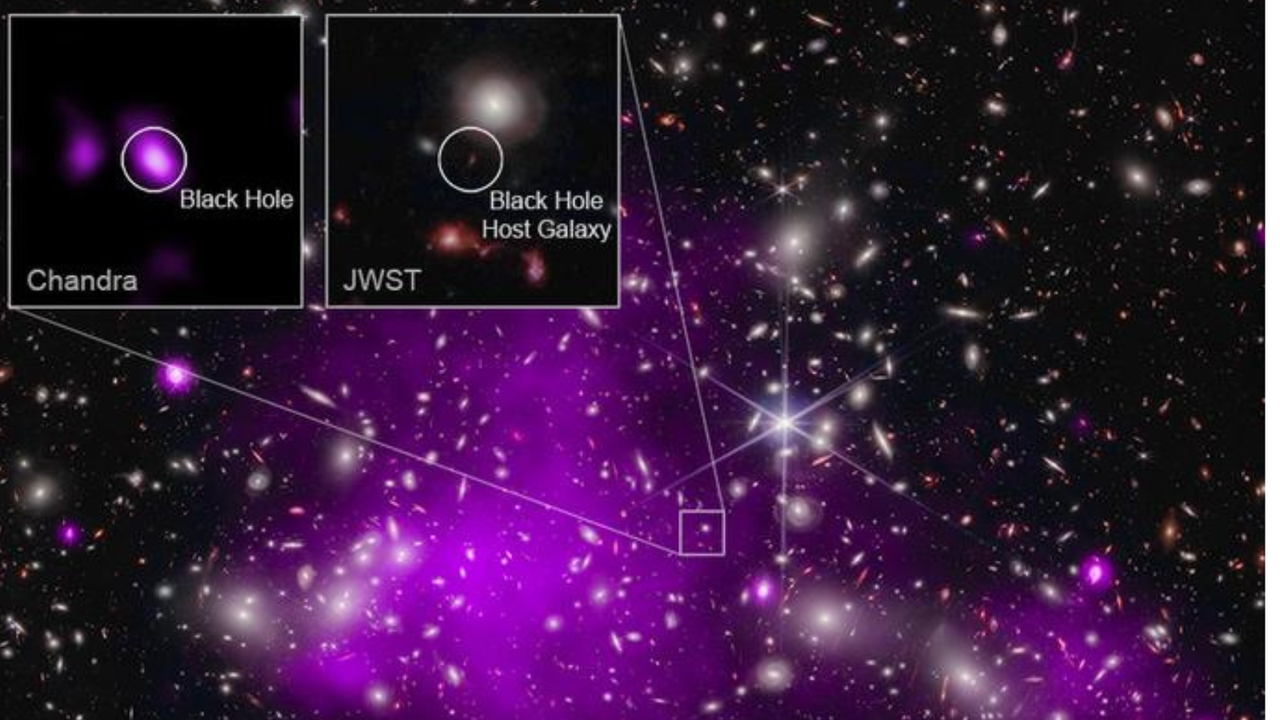
Recent data from the James Webb Space Telescope has reignited interest in this theory, as it captured glimpses of compact, red-shifted sources that do not fit traditional models of early stellar evolution.
Explaining the Overly Bright Early Galaxies
One of the most striking puzzles involves galaxies that appeared far too luminous in the universe’s infancy, challenging the timeline of star formation and light production.
Dark stars offer a compelling explanation: their immense scale and dark matter-powered glow could have illuminated these proto-galaxies, providing the radiation needed to heat and ionize surrounding hydrogen gas much earlier than expected.
Scientists estimate that such stars would have dominated the early cosmos, outshining clusters of smaller, fusion-based stars and accelerating the epoch of reionization.
This mechanism aligns with telescope observations of unexpectedly mature structures at redshifts greater than 10, suggesting that dark stars played a pivotal role in the universe’s rapid lighting up.
Supermassive Black Holes’ Rapid Rise
Another mystery centers on the swift emergence of supermassive black holes, some weighing billions of solar masses, which seem to defy the gradual accretion processes observed in later cosmic epochs.
Dark stars could serve as progenitors for these behemoths; upon exhausting their dark matter fuel, they might collapse directly into massive black holes without the intermediate steps required for smaller seeds.
This direct pathway would allow for the formation of million-solar-mass black holes within the first billion years, matching the profiles detected in quasars from that era.
By bridging the gap between stellar remnants and galactic cores, dark stars address why such enormous gravitational monsters appeared so prematurely in the universe’s history.
Compact Enigmas and New Cosmic Classes
Telescopes have also spotted ultra-compact objects, often called “little red dots,” that exhibit traits of both galaxies and black holes but resist easy classification.
These could represent the remnants or active phases of dark stars, blending stellar and black hole characteristics in ways that traditional astrophysics struggles to explain.
A study led by physicists at Colgate University suggests that dark stars’ unique life cycles – prolonged by dark matter sustenance – might produce these hybrid entities, potentially heralding a new category of cosmic objects.
Further analysis of James Webb data continues to support this view, with spectral signatures indicating environments rich in heavy elements atypical for such early times.
Implications for Dark Matter Understanding
Beyond resolving observational discrepancies, the dark star hypothesis ties directly into the broader quest to comprehend dark matter, which remains one of cosmology’s greatest unsolved riddles.
If confirmed, these stars would provide indirect evidence of dark matter’s particle nature, as their energy output hinges on weakly interacting massive particles annihilating in high densities.
Current models predict that dark stars would have flickered out after about a million years, seeding the growth of the first galaxies and black holes we see today.
Experiments like those at particle accelerators and underground detectors aim to probe dark matter interactions, potentially validating the conditions necessary for dark stars to form.
- Dark stars powered by dark matter annihilation, not fusion.
- Potential mass: Up to millions of solar masses.
- Lifespan: Roughly one million years.
- Role in reionization: Heating cosmic gas early on.
- Connection to black holes: Direct collapse into supermassive seeds.
- Observational hints: JWST’s little red dots and bright early galaxies.
Key Takeaways
- Dark stars could illuminate why early galaxies shone so brightly.
- They offer a fast-track explanation for supermassive black hole origins.
- These objects might reveal dark matter’s elusive properties through cosmic fossils.
As astronomers refine their models with incoming telescope data, dark stars stand as a bridge between theory and observation, promising to reshape our view of the universe’s dawn.
What role do you think dark stars played in shaping the cosmos? Share your thoughts in the comments.

- Beavers Are Nature’s Engineers, Creating Vital Habitats for Other Wildlife Species - July 21, 2026
- The Recovery of the California Condor Offers Hope for Other Critically Endangered Birds - July 21, 2026
- Bats Play a Crucial Role in Controlling Insect Populations Across the United States - July 21, 2026