
California’s coastal waters are a treasure trove of marine biodiversity, harboring some of the most unusual and enigmatic creatures on Earth. The dynamic ecosystem created by the California Current, deep submarine canyons, and varied underwater terrain creates ideal conditions for a remarkable array of marine life. From the mysterious depths of Monterey Canyon to the nutrient-rich waters of the Channel Islands, these waters have revealed organisms that challenge our understanding of ocean life. Some appear to be visitors from science fiction, while others represent evolutionary marvels that have adapted to extreme conditions. This article explores some of the strangest and most fascinating marine creatures discovered off California’s 840-mile coastline, highlighting both recent discoveries and legendary inhabitants of these productive waters.
The Black Seadevil: Abyssal Angler of the Deep

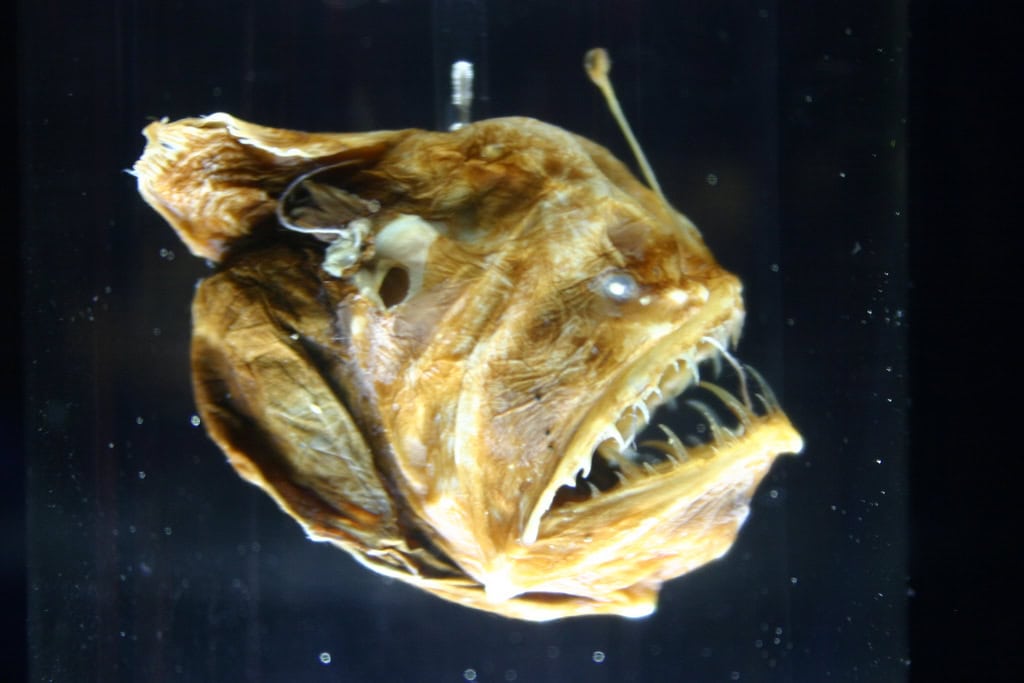
One of the most intimidating creatures found in California’s deep waters is the Black Seadevil (Melanocetus johnsonii), a species of anglerfish that dwells in the darkness of the Monterey Submarine Canyon. In 2014, researchers from the Monterey Bay Aquarium Research Institute (MBARI) captured rare footage of this elusive creature at a depth of about 1,900 feet. Measuring just a few inches long, the female Black Seadevil sports a disproportionately large head dominated by a gaping mouth filled with sharp, translucent teeth. Its most distinctive feature is the bioluminescent lure that extends from its head, which it uses to attract prey in the lightless depths. What makes this creature particularly strange is the extreme sexual dimorphism—males are tiny parasites that permanently fuse to the female’s body, essentially becoming nothing more than reproductive appendages. The Black Seadevil represents one of the most dramatic evolutionary adaptations to life in the deep ocean.
Barreleye Fish: The Transparent-Headed Marvel
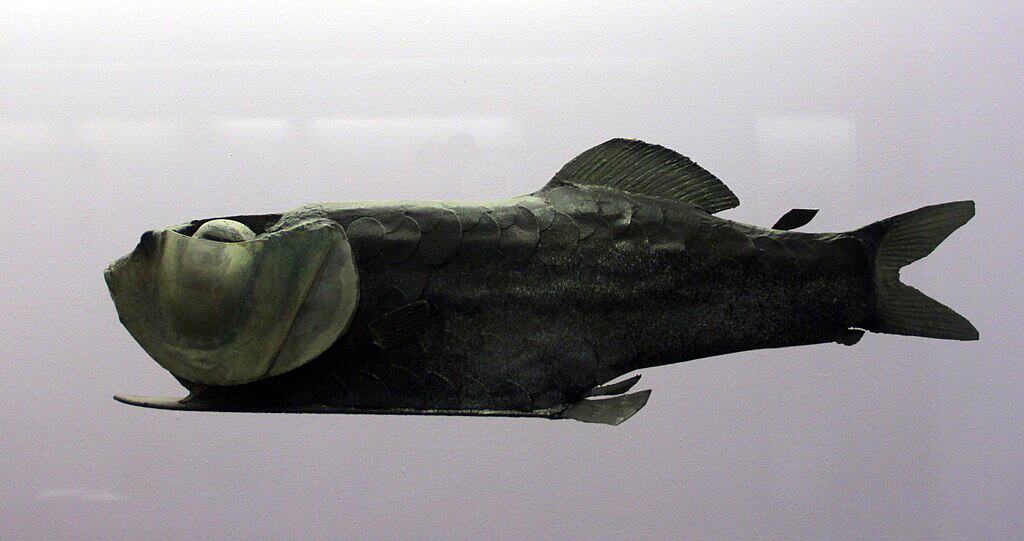
Perhaps one of the most bizarre creatures ever documented off California’s coast is the Barreleye fish (Macropinna microstoma). This deep-sea fish, first filmed alive by MBARI in 2004, features a transparent, fluid-filled dome on its head through which its tubular, barrel-shaped eyes can be seen. These specialized eyes normally point upward, allowing the fish to spot the silhouettes of potential prey against the faint light filtering down from above. What makes the Barreleye truly remarkable is its ability to rotate these eyes within its transparent head shield to look forward when feeding. The fish’s body is small and dark, helping it remain camouflaged in the depths between 2,000 and 2,600 feet where it typically resides. Its unusual anatomy represents an extraordinary adaptation to the challenging conditions of the deep sea, where food is scarce and the ability to spot prey from a distance provides a crucial survival advantage.
The Goblin Shark: Living Fossil from the Depths
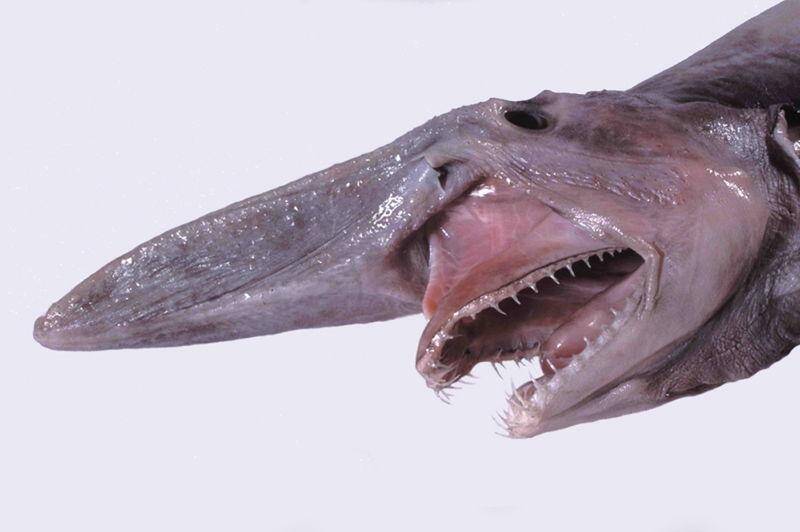
The Goblin Shark (Mitsukurina owstoni) represents one of the most primitive shark species still swimming in our oceans, with a lineage dating back 125 million years. This rare deep-sea predator occasionally appears in California waters, particularly off the southern coast. With its distinctively elongated, flattened snout and protrusible jaws that can rapidly extend outward to capture prey, the Goblin Shark has earned the nickname “alien of the deep.” Most specimens found near California have measured between 10 and 13 feet long, with pinkish-gray skin that appears almost ghostly in its deep-water habitat. A 2014 sighting off the coast of Southern California caused a sensation when commercial fishermen pulled up a juvenile in their nets. The shark’s bizarre appearance comes from its specialized feeding mechanism—when prey is detected, the jaws can project forward at remarkable speed, almost like an alien inner mouth bursting forth to capture food.
Giant Phantom Jellyfish: The Deep-Sea Apparition
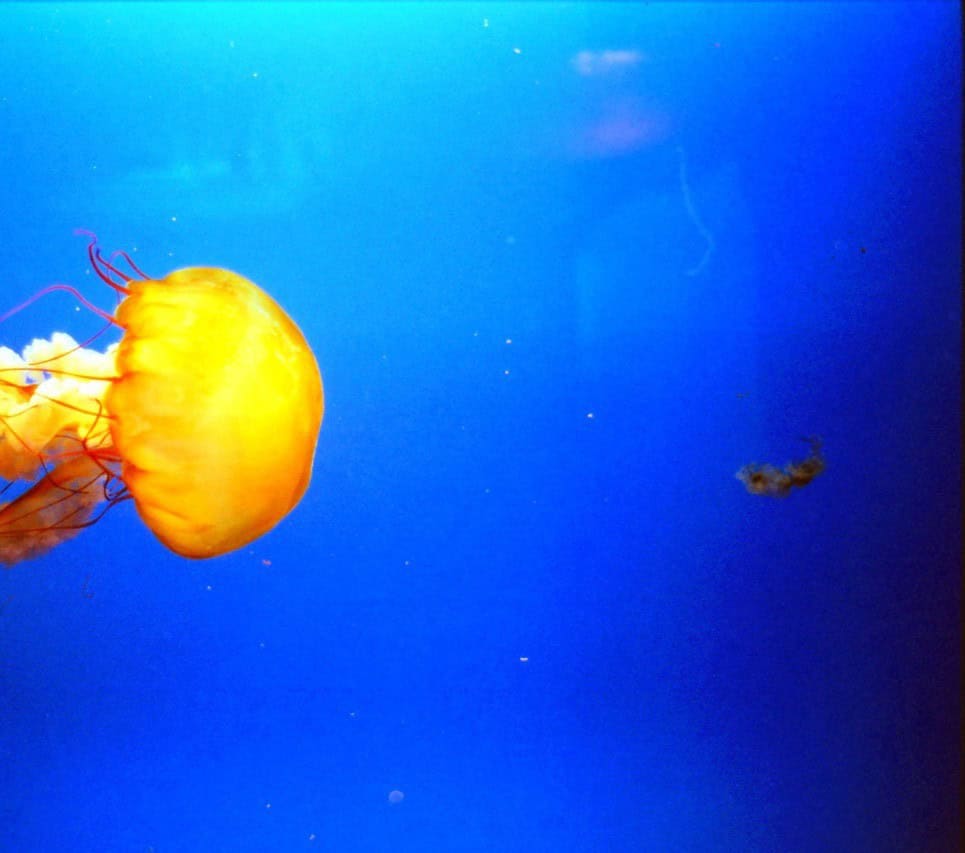
The Giant Phantom Jellyfish (Stygiomedusa gigantea) is one of the largest and most elusive jellyfish species in the world, with a bell diameter reaching up to 3 feet and four ribbon-like oral arms that can extend to lengths of over 30 feet. Despite its massive size, this deep-sea cnidarian has been officially documented fewer than 120 times in the last 110 years. In November 2021, MBARI researchers encountered this ghostly giant in the depths of Monterey Bay using a remotely operated vehicle. The jellyfish’s semi-transparent reddish-brown bell pulsates gently as it drifts through the mesopelagic zone, typically at depths between 3,000 and 5,000 feet. Unlike many jellyfish, the Giant Phantom lacks stinging tentacles, instead using its four massive, curtain-like oral arms to ensnare prey like small fish and crustaceans. The creature’s rarity and phantom-like appearance have made each new sighting off California’s coast a significant scientific event, helping researchers better understand deep-sea ecosystems.
Fangtooth: The Ocean’s Most Fearsome Teeth

Despite its terrifying name and appearance, the Fangtooth (Anoplogaster cornuta) is a relatively small deep-sea fish, typically measuring only about six inches in length. What it lacks in size, it makes up for with the most impressively disproportionate teeth in the ocean relative to body size. These formidable fangs are so large that the fish has evolved special pouches on the roof of its mouth to accommodate them when its mouth is closed. Found in the deeper waters off California’s coast, particularly in the Monterey Submarine Canyon, the Fangtooth lives at depths ranging from 1,600 to 6,500 feet. Its body is covered in rough, spiny scales and ranges in color from dark brown to black, helping it remain concealed in the darkness. Despite its fearsome appearance, the Fangtooth primarily feeds on small crustaceans, squid, and smaller fish. The extreme pressure and darkness of its habitat have shaped its evolution into one of the strangest-looking creatures in California’s waters.
The Sarcastic Fringehead: Territorial Coastal Oddity
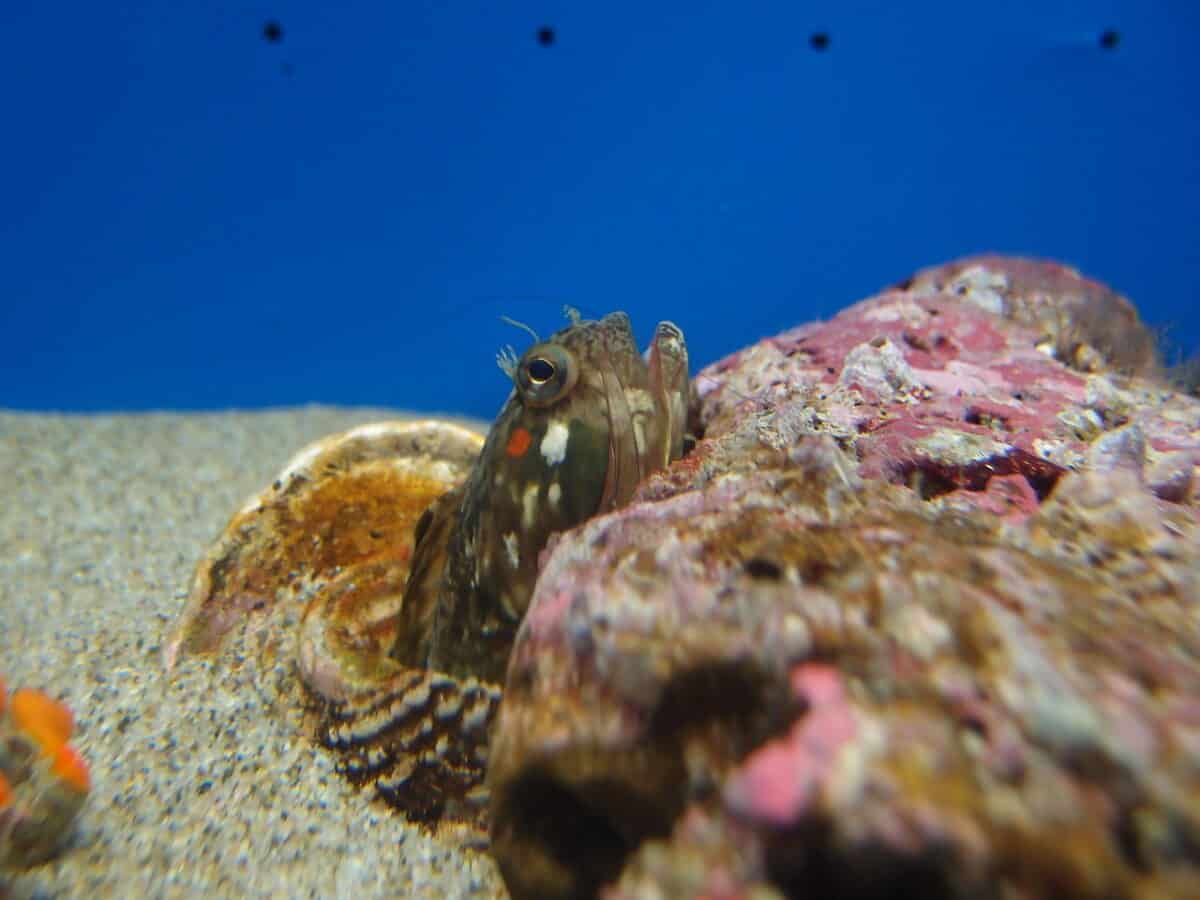
Moving from the deep sea to shallower coastal waters, the Sarcastic Fringehead (Neoclinus blanchardi) demonstrates that strange creatures aren’t limited to the ocean depths. This territorial fish, found in relatively shallow waters along the California coast, possesses one of the most dramatic defensive displays in the marine world. When threatened or challenging a rival, the Sarcastic Fringehead unfurls its massive, colorful mouth in a display that seems utterly disproportionate to its 8-12 inch body length. During these confrontations, two rival fish will press their open mouths against each other in what appears to be a bizarre “kissing” contest to determine dominance. The fish inhabits empty shells, crevices, and even abandoned man-made objects like bottles and pipes in waters from 10 to 240 feet deep. Despite its aggressive territorial behavior and frightening appearance when threatened, the Sarcastic Fringehead poses no danger to humans and primarily feeds on small crustaceans and other tiny marine organisms.
The Vampire Squid: Neither Vampire Nor Squid

With a scientific name that translates to “vampire squid from hell” (Vampyroteuthis infernalis), this unique cephalopod lives up to its dramatic nomenclature in appearance, though not in behavior. Despite its name, the Vampire Squid is neither a true squid nor an octopus, but the sole surviving member of the order Vampyromorphida, representing a fascinating evolutionary link between these two groups. Found in the oxygen-minimum zones off California’s coast at depths between 2,000 and 3,000 feet, this ancient animal has adapted to survive in waters with extremely low oxygen levels where few predators can follow. The Vampire Squid’s most distinctive features include its webbed arms that can be pulled over the body like a cloak, intense red eyes, and bioluminescent organs covering its body. When threatened, rather than releasing ink like other cephalopods, it emits a cloud of bioluminescent mucus that confuses predators while the squid escapes. Despite its fearsome name and appearance, this gentle creature primarily feeds on marine snow—detritus falling from above—making it more of a delicate filter feeder than a fearsome predator.
Oarfish: The Sea Serpent Legend

The Oarfish (Regalecus glesne) is perhaps the creature most responsible for ancient sea serpent legends. With its ribbon-like body capable of growing to lengths of over 30 feet, vibrant silver coloration, and bright red dorsal fin that runs the length of its body, this deep-sea dweller is a truly spectacular sight when it appears near the surface. In 2013, a 18-foot specimen washed ashore near Catalina Island, creating a media sensation as marine biologists had a rare opportunity to study this typically deep-dwelling species. Oarfish normally inhabit depths between 660 and 3,300 feet, making surface encounters extremely rare. They propel themselves by undulating their dorsal fin while keeping their body straight, creating a distinctive swimming pattern unlike most fish. Japanese legend suggests that Oarfish appearances near the surface precede earthquakes, though scientific evidence hasn’t supported this claim. These creatures feed primarily on krill, small crustaceans, and other zooplankton, using their protrusible mouths to filter feed. The Oarfish’s appearance near California’s shores always creates excitement in the scientific community, offering rare opportunities to study this enigmatic deep-sea resident.
Dumbo Octopus: The Adorable Deep-Sea Dweller

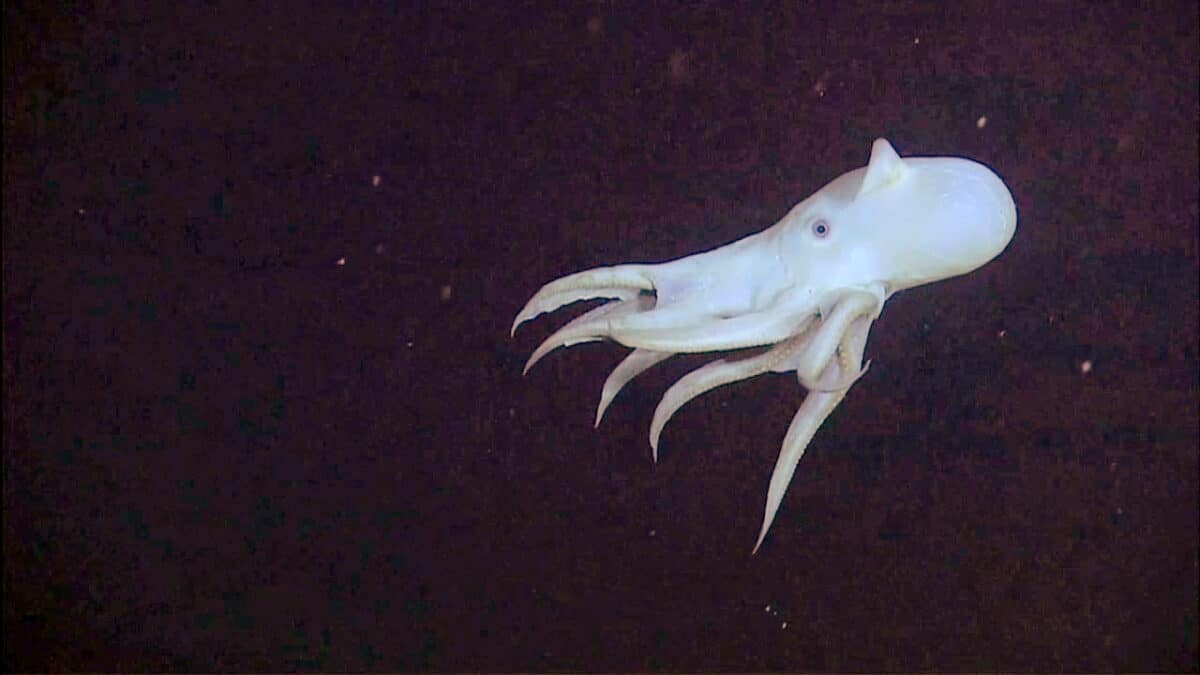
Named for their resemblance to Disney’s flying elephant, Dumbo octopuses (family Grimpoteuthis) are among the deepest-dwelling of all octopus species and occasionally spotted off California’s coast by deep-sea exploration vehicles. Their most distinctive feature is the pair of ear-like fins protruding from the top of their mantle, which they flap to propel themselves through the water with a graceful, almost balletic movement. Unlike most octopuses, Dumbo octopuses do not have ink sacs, as they have few predators in their deep-sea habitat, typically living at depths between 9,800 and 13,000 feet—among the deepest of any octopus. Most species reach only about 12 inches in length, with semi-transparent bodies ranging from pale white to pinkish or orange hues. MBARI researchers have documented several species in California’s deep submarine canyons, where these gentle creatures hover above the seafloor searching for their preferred prey of snails, worms, and other small invertebrates. Their unique appearance and gentle demeanor have made them favorites among deep-sea enthusiasts and researchers alike.
Pyrosomes: The Floating Fire Colonies
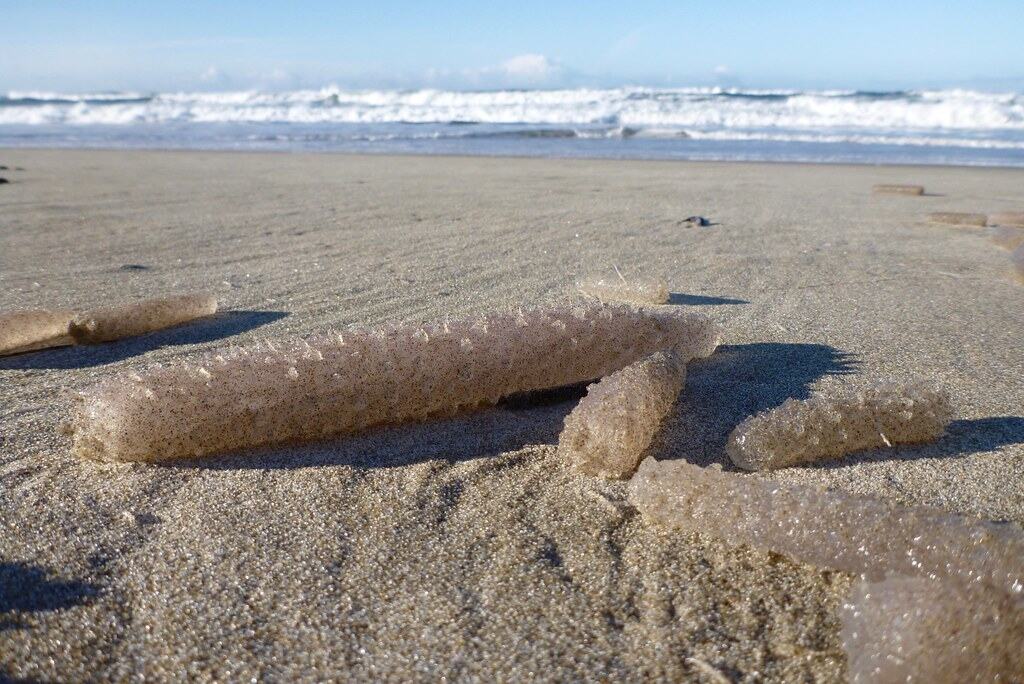
In recent years, massive tubular colonies known as pyrosomes have appeared in unprecedented numbers off California’s coast, creating some of the strangest sights recorded by marine researchers. These free-floating colonial tunicates can form tubes reaching lengths of up to 60 feet, though most are smaller. Each colony consists of thousands of individual zooids—tiny, filter-feeding organisms that work together as a unified entity. The name “pyrosome” comes from the Greek words for “fire body,” referring to their bioluminescent ability to produce an eerie blue-green light when disturbed at night. Since 2016, the waters off California have experienced unusual pyrosome blooms, sometimes creating dense aggregations that have interfered with fishing operations. Although typically associated with warmer tropical waters, changing ocean conditions have brought these strange colonial organisms into California’s coastal ecosystem in unprecedented numbers. Scientists continue to study these events to understand if they represent a temporary anomaly or a more permanent shift in marine species distribution related to changing ocean conditions.
King of the Salmon: The Ribbon-Like Mystery

The King of the Salmon (Trachipterus altivelis) is one of the more unusual fish species occasionally found in California waters. This ribbon-like fish from the family Trachipteridae can grow up to 6 feet long while maintaining an extremely thin, laterally compressed body rarely more than a few inches thick. Its name derives from Native American mythology of the Pacific Northwest, where it was believed this fish led the salmon back to their spawning grounds. The most distinctive features of this deep-water species include its crimson dorsal fin running the entire length of its silvery body, large eyes, and unusual crescent-shaped tail that points downward rather than vertically as in most fish. Typically inhabiting depths between 300 and 1,500 feet, these fish are rarely seen by humans except when they wash ashore at the end of their life cycle or are accidentally caught in deep-water fishing operations. In 2020, a specimen was found washed ashore near San Diego, creating excitement among marine biologists who rarely get to examine these elusive creatures. The King of the Salmon represents one of California’s more mysterious deep-water inhabitants, about which relatively little is known compared to coastal species.
The Pacific Hagfish: Living Slime Machine
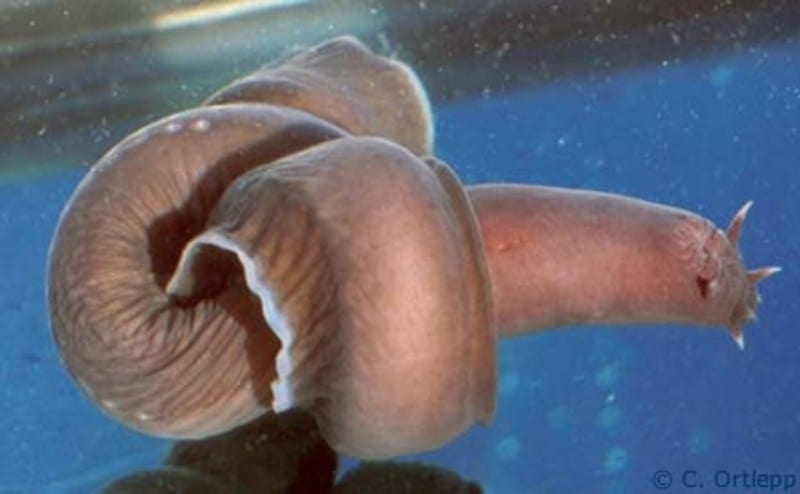
Perhaps no creature better exemplifies the strange evolutionary paths of marine life than the Pacific Hagfish (Eptatretus stoutii), a primitive, eel-like fish found along California’s continental shelf. Often referred to as “slime eels” despite not being true eels, hagfish are known for their extraordinary defense mechanism—producing copious amounts of slime when threatened. A single hagfish can produce enough slime in seconds to fill a five-gallon bucket, effectively choking potential predators. This jawless fish represents one of the most ancient vertebrate lineages, with a body plan that has remained largely unchanged for over 300 million years. Lacking both a spine and a jaw, the hagfish instead has a skull made of cartilage and a tooth-like plate that it uses to rasp flesh from prey or carrion. Its feeding habits are equally unusual—the hagfish can absorb nutrients directly through its skin and enter carcasses through any available opening, feeding from the inside out. Despite their primitive appearance and unpleasant reputation, hagfish play a crucial ecological role as deep-sea scavengers, quickly consuming dead and dying organisms on the seafloor at depths between 300 and 5,000 feet.
Conclusion: California’s Mysterious Marine Realm
The strange creatures that inhabit California’s coastal waters represent just a fraction of the biodiversity found in this ecologically rich region. From the sunlit surface waters to the darkest depths of submarine canyons, each zone harbors uniquely adapted organisms that have evolved remarkable strategies for survival. Many of these creatures remain poorly understood, with basic aspects of their biology, behavior, and ecological roles still awaiting discovery. As ocean exploration technology continues to advance, researchers are gaining unprecedented access to deeper regions, revealing new species and behaviors with each expedition. These discoveries not only expand our scientific understanding but also remind us of how much remains unknown in our oceans, even in relatively well-studied regions like California’s coastal waters. The strange and wonderful creatures highlighted in this article stand as testament to the incredible diversity of evolutionary adaptations that have emerged in Earth’s marine environments, underscoring the importance of ocean conservation efforts to protect these unique forms of life for future generations to study and appreciate.

- This Tiny Insect Can Survive in Outer Space—Here’s How - July 21, 2026
- Could the Tasmanian Tiger Be Brought Back to Life? - July 21, 2026
- Why You Should Never Approach a Sleeping Hippo - July 21, 2026