

There’s something almost magical about a watering hole in the African savanna. At first glance, it looks like chaos – a lion drinking beside a zebra, baboons splashing around while elephants lumber in from the treeline. But scientists are starting to realize that what happens at these shared water sources is far more structured, more socially complex, and more revealing about animal behavior than we ever imagined.
A fascinating new study has been peeling back the layers of how elephants, baboons, waterbucks, and other large mammals interact with both each other and with local human communities around shared water points. The findings are surprising, sometimes counterintuitive, and honestly a little humbling. Let’s dive in.
The Study That Changed How We See Shared Water Sources
Researchers have been closely examining multi-species dynamics at communal water points in African landscapes, particularly in regions where human settlements and wildlife overlap. What they found challenges the old assumption that animals simply tolerate each other at water sources out of necessity.
The interactions are nuanced. Elephants, for example, don’t just show up and dominate – though they certainly can. Their presence actually reshapes the timing and spacing of other species’ visits in ways that reveal a deep, almost negotiated structure to who drinks when and how long they stay.
Baboons appear to play a surprisingly social role in these gatherings. They often act as early alarm systems, and other species seem to read their behavior for cues about safety. It’s a little like how in a busy café, if one person suddenly jumps up and looks alarmed, everyone else stops talking and pays attention.
Elephants as the Unspoken Rulers of the Waterhole
Let’s be real – when an elephant shows up at a watering hole, things change. The sheer physical presence of a large bull elephant causes a ripple effect through the entire gathering. Smaller animals tend to yield space, sometimes retreating entirely until the elephant finishes drinking or moves away.
What’s interesting, though, is that elephants don’t always leverage this dominance aggressively. In many observed cases, elephants and waterbucks occupied the same space simultaneously without visible conflict. Scientists believe this coexistence is partly possible because different species are often using the water in different ways, drinking at different depths and zones along the bank.
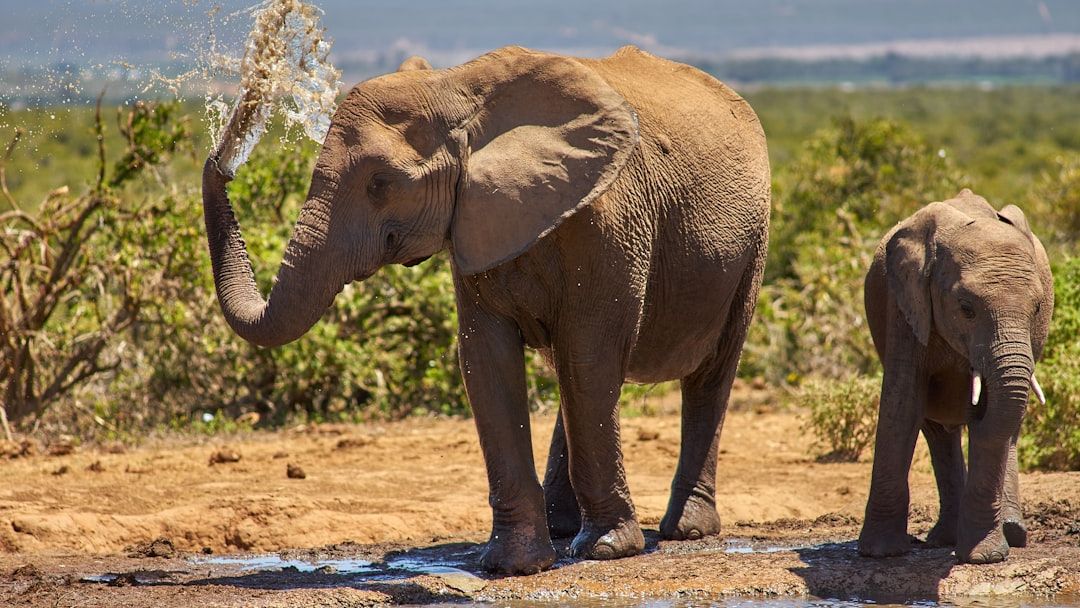
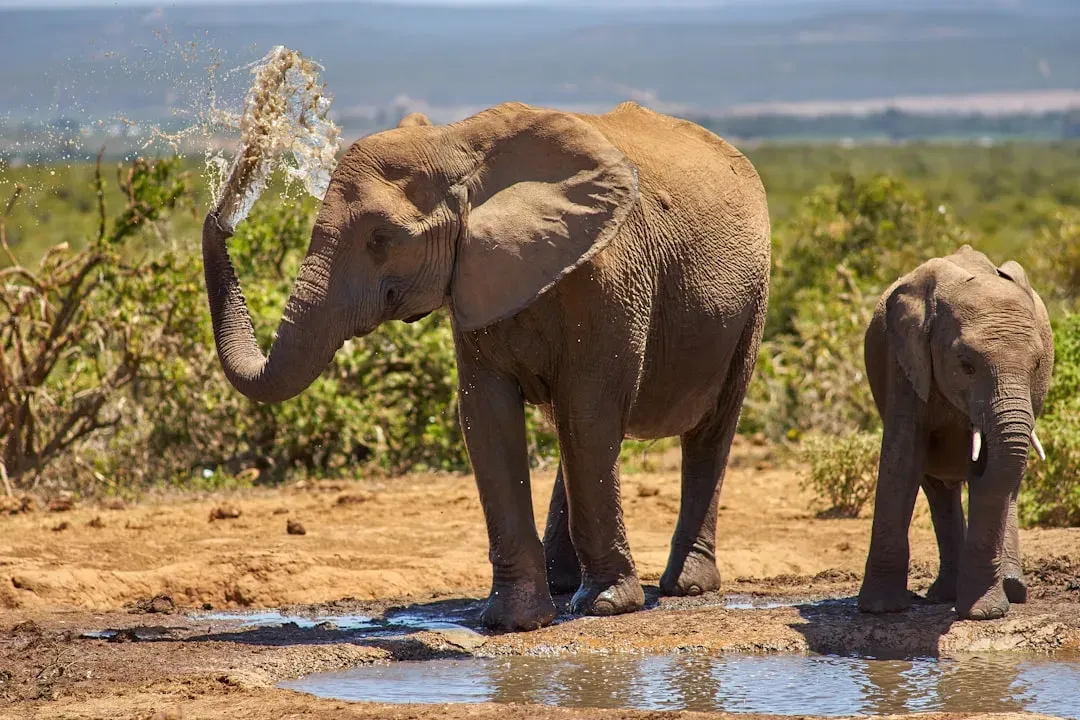
Elephants also modify the water source itself – digging, splashing, and churning the edges – and this actually creates access points for smaller animals that might otherwise struggle to reach the water safely. So in a weird twist, the biggest animal at the party is also, inadvertently, a kind of infrastructure builder for the others.
Baboons: The Social Glue of the Waterhole Community
Baboons are endlessly fascinating at water sources. They’re noisy, chaotic, and seemingly unpredictable, but dig beneath the surface and there’s genuine social intelligence happening. Their troop-based vigilance means there are always multiple sets of eyes scanning for predators while others drink.
Other species have learned to lean on this. Antelopes and waterbucks are frequently observed positioning themselves near baboon groups at water sources, almost certainly benefiting from the alarm calls baboons produce when danger approaches. It’s a low-cost security arrangement and, honestly, a pretty smart one.
The relationship isn’t entirely harmonious, of course. Baboons can be disruptive and even aggressive when resources feel contested. Still, on balance, their presence at shared water points seems to generate a net positive for the broader animal community gathered there.
Waterbucks and Antelopes: The Quiet Adapters
Waterbucks and various antelope species often get overshadowed in these studies by the more dramatic presence of elephants or baboons. That’s a shame, because their behavioral adaptations at shared water points are quietly remarkable. These animals tend to time their visits with a precision that reflects both predator avoidance and social hierarchy awareness.
Waterbucks, in particular, seem to navigate the presence of larger species with a kind of patience that borders on strategic. They’ll wait at the edges, linger in partial cover, and often approach only after a dominant species has moved on. It’s the wildlife equivalent of waiting for the rowdiest person to leave the bar before you settle in comfortably.
Antelopes, meanwhile, often rely on group visits for safety, coming in loose clusters rather than alone. Their approach to shared water is arguably more socially sophisticated than it looks on the surface.
The Human Factor: When People and Wildlife Share the Same Wells
Here’s where the study gets genuinely thought-provoking. In many parts of Africa, local human communities rely on the same water sources as the wildlife around them. This isn’t a new situation historically, but the pressures have intensified as both human populations and conservation needs have grown.
The research highlights that human presence at water points significantly alters animal behavior. Animals tend to visit at times when human activity is lower, essentially scheduling around people in ways that reflect a learned avoidance. This is a coping mechanism, but it comes at a cost – compressed visit windows can increase competition between species and stress around the resource.
What’s hopeful, though, is that the study also points toward workable solutions. Communities and wildlife managers who understand these behavioral patterns can design water access infrastructure and management schedules that reduce conflict and support both human and animal needs. It’s a concrete, practical takeaway from what could have stayed as purely academic research.
Competition, Coexistence, and the Delicate Balance
Shared water sources are, at their core, a lens through which we can study competition and coexistence in real time. The dynamics observed in this research reveal that interspecies tolerance at waterholes is not unconditional – it shifts with season, drought severity, and the number of animals competing for a limited resource.
During dry seasons, when water is scarce, the stakes rise sharply. Interactions that are relatively peaceful in wetter periods can become tense or outright aggressive when a single waterhole serves as the only option for miles around. Elephants may monopolize access for longer. Smaller species may be displaced entirely during peak hours.
Understanding these pressure points matters enormously for conservation planning. If wildlife managers know exactly when and why conflict spikes, they can intervene with targeted solutions – whether that’s creating additional water points, adjusting fencing, or coordinating with local communities on shared access. The data doesn’t just describe the problem; it helps solve it.
What This Research Means for Conservation Going Forward
I think one of the most underappreciated aspects of this kind of research is how practical it can be when applied thoughtfully. Behavioral ecology studies like this one don’t just add to the academic record – they translate directly into conservation policy, land management, and human-wildlife conflict mitigation strategies.
The finding that multiple large mammal species, including ones as different as elephants and baboons, can share water resources within a structured behavioral framework suggests that coexistence is achievable even in high-pressure environments. It requires understanding, planning, and a genuine respect for the fact that animals are not random in their behavior.
For communities living alongside these animals, the research also carries a message worth hearing: the wildlife around them is paying close attention to their routines, their presence, and their patterns. Coexistence is not passive – it’s an ongoing negotiation.
A Closing Thought Worth Sitting With
What strikes me most about this research is how it reframes the waterhole from a backdrop to an ecosystem in its own right. It’s not just a place where animals happen to meet. It’s a social arena, a conflict zone, a community hub, and sometimes a lifeline – all at once.
The fact that elephants inadvertently help smaller animals access water, that baboons provide free security services to antelopes, and that human communities can co-design solutions alongside wildlife behavior data – all of it points to a more interconnected world than we sometimes give nature credit for.
Coexistence isn’t a soft concept. It’s a measurable, observable, manageable reality. The question is whether we’re willing to pay close enough attention to make the most of it. What do you think – does knowing animals schedule around human activity change how you see your relationship with wildlife? Share your thoughts in the comments.

- Urban Coyotes Show Remarkable Adaptability, Learning to Thrive in City Environments - July 22, 2026
- Beavers Are Nature’s Engineers, Creating Vital Habitats for Other Wildlife Species - July 21, 2026
- The Recovery of the California Condor Offers Hope for Other Critically Endangered Birds - July 21, 2026