
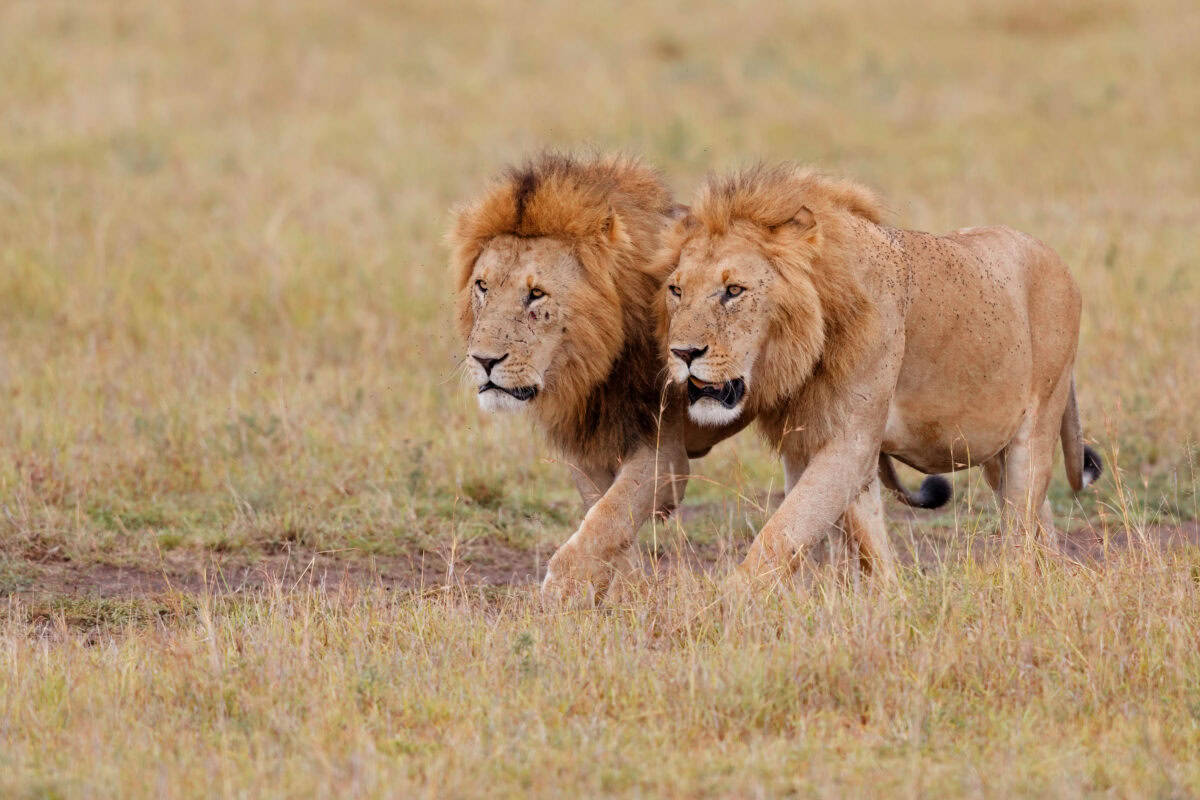
In Tanzania’s Ruaha National Park, the lion—once sovereign over vast Savannah’s—is now cornered. Encroaching farms, expanding villages, and rising infrastructure have turned former hunting grounds into human terrain. What remains of the lion’s territory is a jigsaw puzzle of survival.
Ruaha is home to East Africa’s second-largest lion population, yet the numbers are slipping. Lions are moving beyond park boundaries more frequently, entering spaces where they are no longer safe, no longer welcome.
Lines That Kill

Outside the park, fences rise like flags—markers of ownership, not conservation. Herders defend their cattle fiercely. Poisoned carcasses and steel traps dot the outskirts of the reserve. In 2024 alone, over 40 lions were killed in retaliatory acts near the Iringa and Mbeya regions.
“They don’t attack because they’re bloodthirsty,” says Samuel Mwita, a local guide and longtime Ruaha resident. “They attack because they’re hungry—and their territory is gone.”
As bushland becomes pasture, prey disappears. With warthogs and antelope harder to find, livestock become targets of necessity, not preference.
Breaking the Pride

Lions are social hunters, but their hierarchy depends on stability. Young males typically disperse from their natal prides to establish new territory. But these dispersals now end in road crossings, village borders, or poacher snares.
Researchers have tracked several dispersing lions as far as the outskirts of Dodoma, Tanzania’s capital. “It’s displacement, not expansion,” says Dr. Asha Mollel, a carnivore ecologist at the Ruaha Carnivore Project. “They’re searching for what no longer exists.”
Fragmentation leads to weakened prides, isolated individuals, and a spike in human-lion conflict. It is a slow unraveling.
Coexistence or Collapse?

Efforts to reduce conflict include predator-proof bomas, community education, and early-warning systems using motion sensors and lights. These have shown promise—livestock losses have decreased in some pilot areas—but they are expensive and limited in reach.
Meanwhile, tourism remains a double-edged sword. The promise of lion sightings draws international revenue, yet few tourists understand that many of those lions live on shrinking islands of territory, not boundless wilderness.
The Edge of the Roar

As Ruaha’s lions adapt to the human frontier, their future hangs in the balance. Genetic bottlenecks are a looming risk, as prides become isolated. Disease, inbreeding, and stress follow close behind.
“If the lions disappear, it won’t be with a roar—it’ll be with a whisper,” Dr. Mollel says. “And it’ll be because we took more than our share of the land.”
For now, lions continue to pace the borders—silent, watchful, and fewer with each season. The territory they once ruled now rules them, one boundary at a time.

Please send any feedback to Feedback@animalsaroundtheglobe.com
- Five Fascinating Species Thriving at the Ocean’s Bottom - July 19, 2026
- Discovering the Fascinating Animals of the Amazon Rainforest - July 19, 2026
- CGI Wonders: Hollywood’s Animal Evolution - July 19, 2026