


Deep in the lush forests of Southeast Asia resides one of nature’s most peculiar and fascinating creatures – the tarsier. With eyes so large they can’t move in their sockets and a head that can rotate nearly 180 degrees, these diminutive primates seem almost otherworldly. Despite weighing less than a smartphone, tarsiers have captivated scientists and animal enthusiasts alike with their unique adaptations and mysterious nocturnal lifestyle. Their enormous, luminous eyes – proportionally the largest of any mammal – give them an unmistakable appearance that has earned them nicknames like “little space aliens” among locals. This article explores the remarkable world of tarsiers, delving into their biology, behavior, and the conservation challenges they face in an increasingly threatened habitat.
The Remarkable Anatomy of Tarsiers

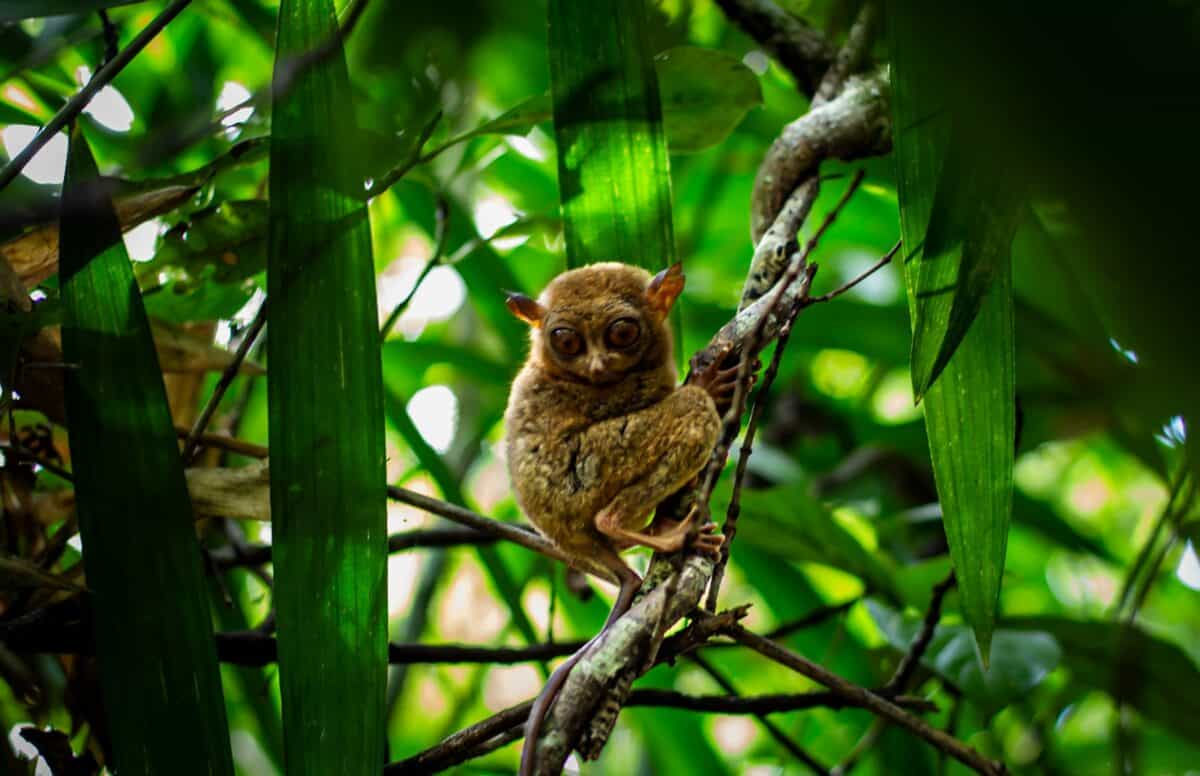
Tarsiers are among the smallest primates in the world, typically measuring just 10-15 centimeters (4-6 inches) in body length, with an additional tail length of about 20-25 centimeters (8-10 inches). Despite their tiny stature, weighing between 80-150 grams (about 3-5 ounces), their most striking feature is undoubtedly their enormous eyes. Each eyeball is approximately 16 mm in diameter—about the size of their entire brain—and if humans had eyes of the same proportional size, they would be as large as grapefruits. Unlike most mammals, tarsiers cannot move their eyes within their sockets. To compensate, they have evolved the ability to rotate their heads nearly 180 degrees in either direction, reminiscent of owls.
Their name derives from their elongated tarsal (ankle) bones, which give them extraordinary leaping abilities. The tarsier’s hind limbs are twice the length of their forelimbs, with their “tarsus” section particularly elongated. This adaptation allows them to leap distances of up to 3 meters (10 feet) between trees—equivalent to a human jumping the length of a basketball court in a single bound. Their digits end in unique, pad-like structures that secrete a sticky substance, enabling them to cling effectively to vertical surfaces, a crucial adaptation for their arboreal lifestyle.
Evolutionary History and Classification
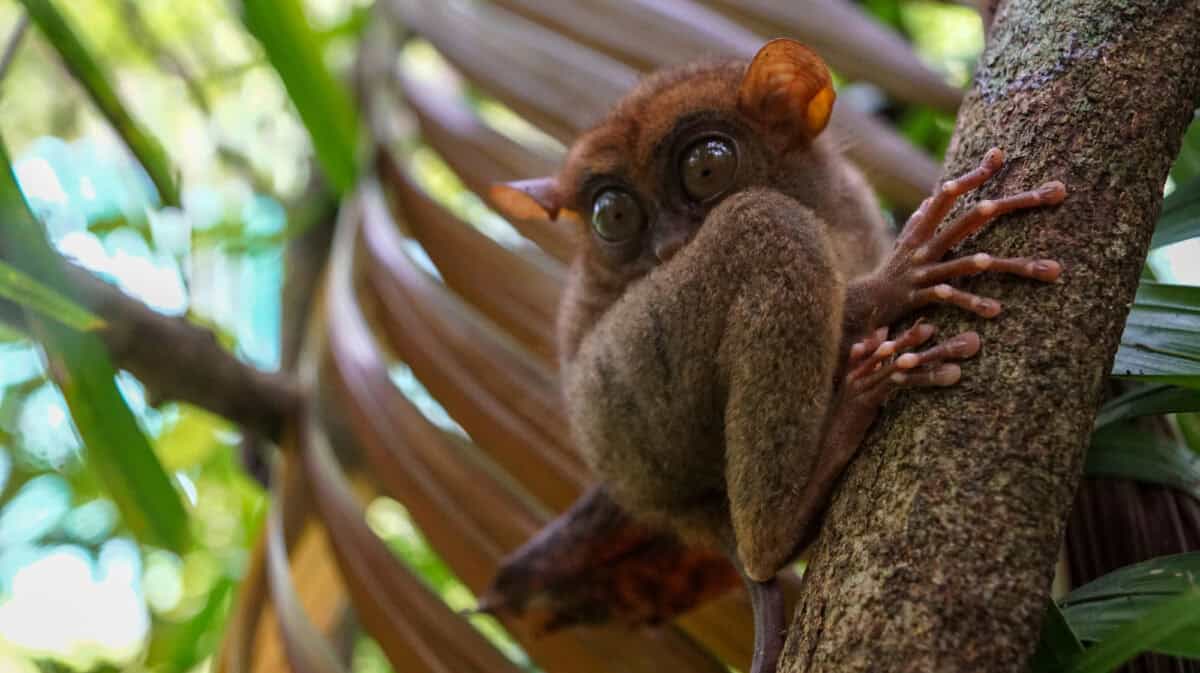
Tarsiers represent a fascinating branch in primate evolution. They belong to the family Tarsiidae, which is the only surviving family in the infraorder Tarsiiformes. These peculiar primates sit at an evolutionary crossroads between prosimians (primitive primates like lemurs and lorises) and anthropoids (monkeys, apes, and humans). This unique position has made them particularly valuable for understanding primate evolution. Fossil evidence suggests that tarsier-like primates existed as far back as 45 million years ago during the Eocene epoch, making them one of the oldest continuous lineages of primates.
Currently, scientists recognize at least 11 species of tarsiers, all belonging to the genus Tarsius, though new species continue to be identified. They are geographically restricted to the islands of Southeast Asia, specifically the Philippines, Borneo, Sumatra, Sulawesi, and smaller surrounding islands. This isolation has led to significant speciation, with each island often hosting distinct species or subspecies. Recent molecular genetic studies have helped clarify their evolutionary relationships, confirming tarsiers’ position as a sister group to anthropoids, having diverged from the prosimian line approximately 58-60 million years ago.
The Visual Superpowers of Tarsiers
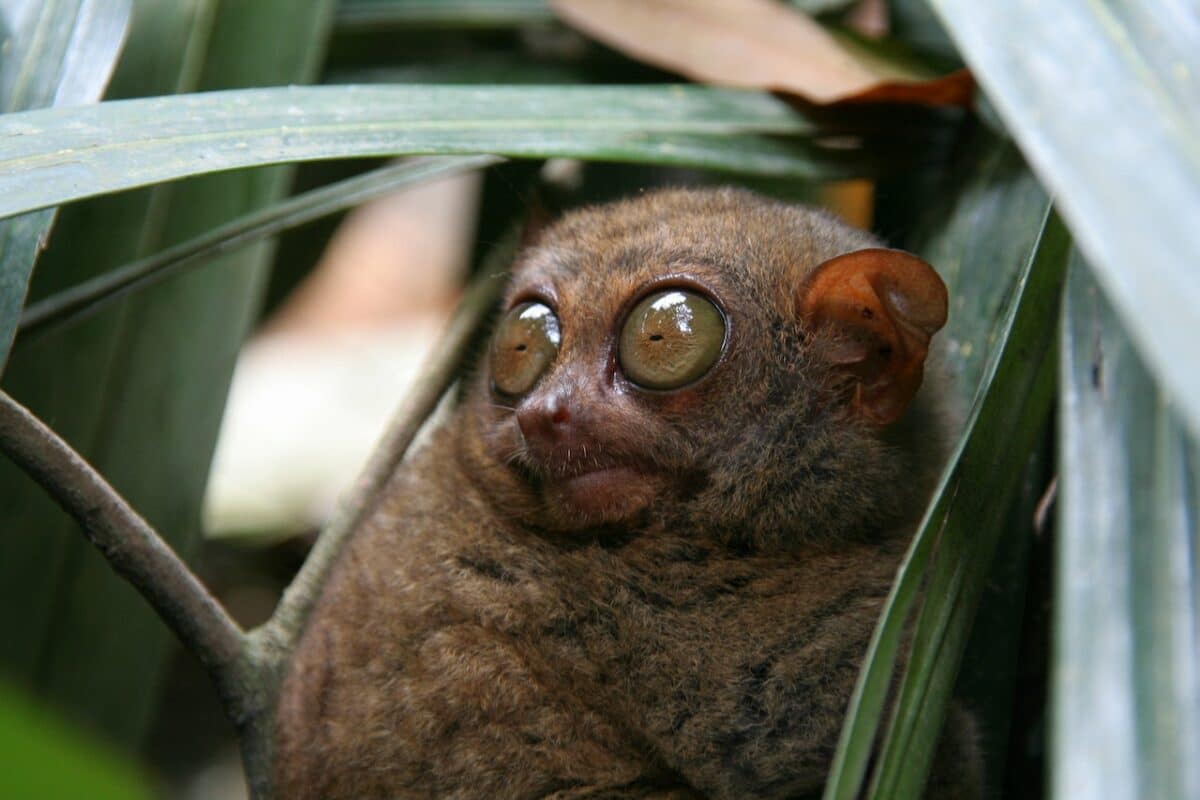
The tarsier’s enormous eyes represent one of the most extreme sensory adaptations in the mammal world. These gigantic orbs are not just for show—they’re sophisticated visual instruments that provide exceptional night vision capabilities. Unlike many nocturnal mammals that rely on a reflective layer (tapetum lucidum) behind the retina, tarsiers have evolved immense eyes packed with an unusually high density of rod cells—the photoreceptors responsible for light detection in dim conditions. These eyes cannot move within their sockets due to their massive size relative to the skull, necessitating the tarsier’s extraordinary neck rotation abilities.
What makes tarsier vision even more remarkable is that they are the only entirely carnivorous primates that lack a tapetum lucidum yet still possess excellent night vision. Their visual acuity in low light is estimated to be about 100 times more sensitive than human vision. Additionally, tarsiers have full-color vision—unusual for nocturnal mammals—which helps them detect subtle movement and distinguish prey against the backdrop of dense vegetation. Their unusual fovea (the central part of the retina responsible for sharp vision) is adapted for detecting movement rather than fine detail, perfect for spotting insects and small vertebrates in the darkness of the forest understory.
Tarsiers: The Carnivorous Primates
Unlike most primates that primarily consume plants, fruits, or have omnivorous diets, tarsiers stand apart as the only exclusively carnivorous primates. Their diet consists entirely of animal matter, predominantly insects, but also includes small vertebrates such as lizards, birds, bats, and even venomous snakes. A typical tarsier consumes approximately 10% of its body weight daily, which translates to roughly 8-10 grams of food—equivalent to about 500 insects. Their predatory skills are exceptional, with the ability to capture prey using only their hands and mouths, without prior stunning.
The tarsier hunting technique is a marvel of evolutionary adaptation. They remain motionless for long periods, scanning their surroundings with their enormous eyes and swiveling head. When prey is detected, they precisely calculate the distance and launch themselves with explosive force, catching their target with remarkable accuracy. Their specialized digestive system includes a relatively simple stomach and short intestine—adaptations consistent with their carnivorous diet that doesn’t require processing complex plant materials. This unique dietary specialization has shaped not only their digestive physiology but also their hunting behavior, sensory adaptations, and even their social structure.
Nocturnal Lifestyle and Behavior

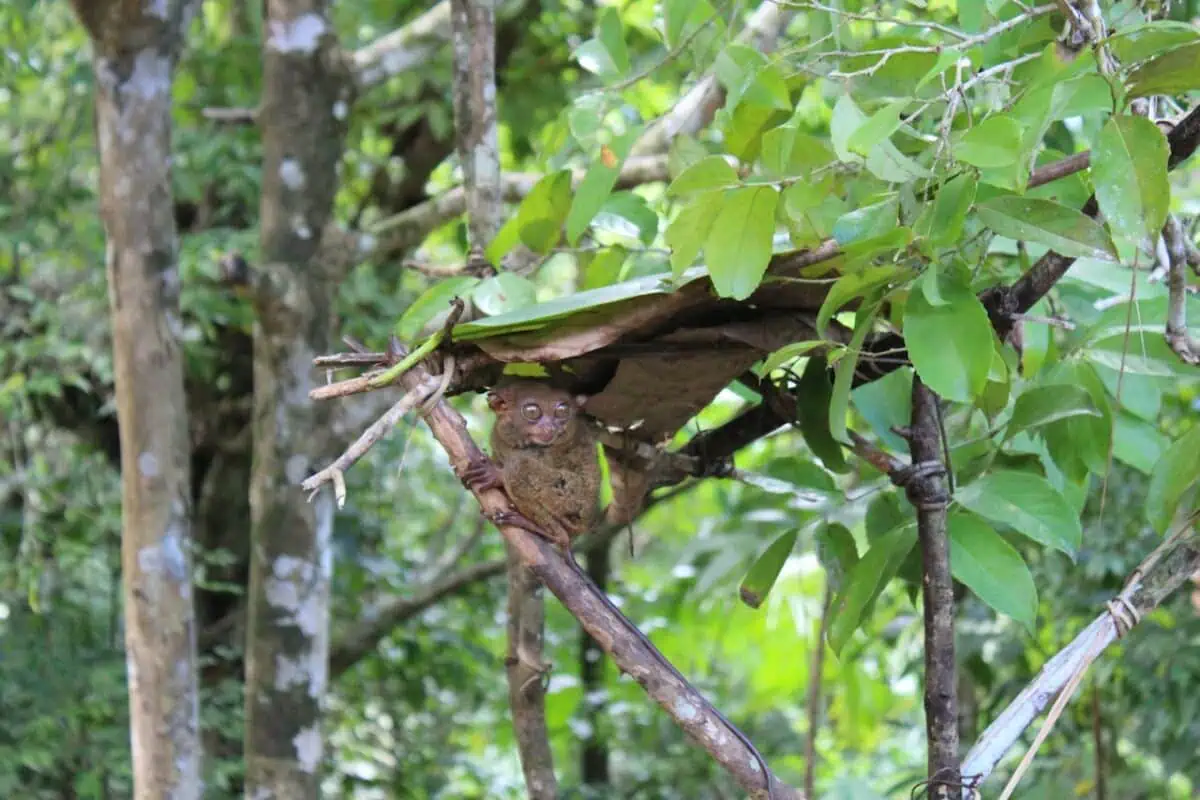
Tarsiers are quintessentially nocturnal, with their entire physiology and behavior optimized for nighttime activity. They typically sleep during the day, clinging vertically to trees or hidden in dense vegetation, often in family groups. At dusk, they become active, starting with grooming rituals before dispersing to hunt individually. Their movements through the forest are characterized by a distinctive form of locomotion that combines vertical clinging and leaping. Rather than running along branches like many primates, tarsiers jump from one vertical support to another, using their powerful legs to propel themselves and their adhesive finger pads to secure precise landings.
Their social structure varies somewhat by species, but most tarsiers live in small family groups consisting of a mated pair and their offspring. They maintain territories ranging from 1-2 hectares, which they mark using scent glands and vocal displays. Communication between tarsiers involves a repertoire of vocalizations, with different species producing distinctive calls. The Philippine tarsier (Carlito syrichta) is known for its ultrasonic vocalizations that fall beyond human hearing range, while the spectral tarsier (Tarsius spectrum) of Sulawesi produces loud, piercing calls audible to humans. These calls serve multiple functions, including territory defense, mate attraction, and maintaining contact between family members during nighttime foraging.
Reproduction and Development
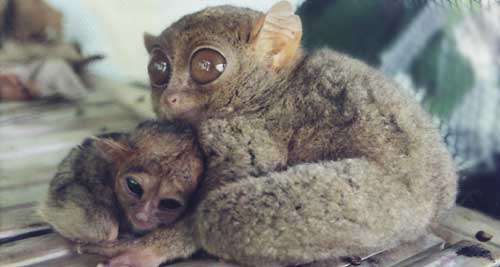
Tarsier reproduction reflects their primatological heritage with several unique adaptations. Most species are monogamous, forming long-term pair bonds, although some observations suggest potential polygyny in certain populations. Female tarsiers experience estrous cycles of approximately 24 days, with gestation periods lasting about 6 months—remarkably long for such small mammals. This extended pregnancy allows for substantial brain and sensory system development before birth. Most species produce single offspring, with twins being exceptionally rare—another typical primate characteristic that distinguishes them from many similarly-sized mammals that produce larger litters.
Tarsier infants are born in an advanced state of development compared to many primates. Their eyes are already open, their bodies are fully furred, and they can cling to branches almost immediately. Despite this precocial development, young tarsiers remain dependent on their mothers for several months. Mothers don’t carry their young while foraging; instead, they “park” infants in secure locations, returning periodically to nurse. Young tarsiers begin practicing leaping and hunting skills at about one month of age and are typically weaned by three months. Sexual maturity is reached at 1-2 years, and their lifespan in the wild averages 8-12 years. This reproductive strategy—producing few, well-developed offspring with extended parental care—is characteristic of primates and represents a significant investment in each individual offspring.
Geographic Distribution and Habitat

Tarsiers are endemic to the islands of Southeast Asia, with their distribution limited to the Philippines, Borneo, Sumatra, Sulawesi, and smaller surrounding islands. This geographic restriction is the result of their evolutionary history and specialized ecological requirements. Their distribution across these islands isn’t uniform—different species occupy specific regions, often with little overlap. For instance, the Philippine tarsier is found primarily in the southern islands of the Philippines, while Sulawesi hosts several species including the spectral tarsier and Diana’s tarsier, each adapted to particular microhabitats within the island.
Their preferred habitats include primary and secondary forests with dense vegetation, particularly in lowland and mid-elevation tropical rainforests with abundant vertical supports for their leaping locomotion. Some species show remarkable adaptability, inhabiting disturbed forests and even agricultural areas like plantations, provided there’s sufficient insect prey and appropriate vegetation structure. Tarsiers require specific habitat features: dense undergrowth for daytime sleeping sites, vertical supports for their locomotion style, and abundant prey. They typically avoid open areas without vertical supports and cannot survive in heavily degraded landscapes. This habitat specificity makes them particularly vulnerable to deforestation and habitat fragmentation, contributing significantly to their conservation challenges.
Unique Vocalizations and Communication

Tarsiers possess one of the most sophisticated vocal communication systems among small primates, with different species exhibiting distinctive vocal signatures. The Philippine tarsier produces ultrasonic vocalizations at frequencies above 20 kHz—beyond human hearing range—making it unique among primates. These high-frequency calls may help them communicate without alerting predators. In contrast, Sulawesi tarsiers emit loud, audible calls, with males producing distinctive duets that help maintain territories and strengthen pair bonds. These vocalizations often occur at dawn and dusk during what researchers term “chorusing periods,” when multiple family groups call simultaneously across the forest.
Beyond vocalizations, tarsiers communicate through scent marking, facial expressions, and tactile interactions. They possess specialized scent glands that they use to mark territories and communicate reproductive status. During face-to-face encounters, they display subtle facial expressions, including eye-widening and mouth movements that convey emotional states. Physical contact plays an important role in social bonding, particularly between mates and between mothers and offspring. Grooming sessions strengthen social bonds and help maintain hygiene. This multilayered communication system—combining vocalizations, scent, visual signals, and touch—reflects the complexity of tarsier social life and their evolutionary relationship to higher primates, despite their diminutive size.
Conservation Challenges

Tarsiers face numerous conservation challenges that have led to several species being classified as vulnerable, endangered, or critically endangered on the IUCN Red List. Habitat destruction represents their greatest threat, with Southeast Asia experiencing some of the world’s highest deforestation rates. Between 1990 and 2020, the region lost approximately 80 million hectares of forest—an area larger than Germany. For tarsiers, whose specialized locomotion and hunting strategies require intact forest structure, this habitat fragmentation can isolate populations and reduce genetic diversity. Additionally, the conversion of forests to agricultural plantations directly reduces suitable habitat and disrupts the insect populations tarsiers depend on for food.
The illegal wildlife trade presents another significant threat. Tarsiers are captured for the exotic pet trade and for display in tourist attractions, particularly in regions like North Sulawesi and parts of the Philippines. This practice is especially harmful because tarsiers rarely survive in captivity due to their specialized dietary requirements and stress sensitivity. Indeed, captive tarsiers often develop stereotypic behaviors indicating severe stress, with some even committing suicide by repeatedly hitting their heads against hard surfaces. Climate change poses an emerging threat by altering rainfall patterns and temperature regimes in their native habitats, potentially disrupting the insect life cycles they depend on. Conservation efforts include habitat protection initiatives, education programs for local communities, and breeding programs for certain species, but these measures face challenges due to limited resources and competing economic interests in rapidly developing regions.
Scientific Importance and Research
Tarsiers hold exceptional scientific importance across multiple disciplines. Evolutionarily, they represent a critical “missing link” between lower and higher primates, offering unique insights into primate evolution. Their position at this evolutionary crossroads has made them valuable subjects for comparative genomics, with the tarsier genome sequence helping researchers understand the genetic basis of primate adaptations. Their unique sensory adaptations—particularly their visual system—provide neuroscientists with opportunities to study specialized sensory processing. Research on tarsier eyes has contributed to understanding night vision mechanisms and the evolution of color vision in primates.
Recent scientific breakthroughs involving tarsiers include the discovery of previously unknown species through genetic analysis, challenging our understanding of biodiversity patterns in Southeast Asia. Bioacoustic research has revealed their remarkable vocalization capabilities, including the ultrasonic communication of Philippine tarsiers. Field studies using radio tracking and infrared cameras have provided new insights into their natural behaviors and social structures, which were previously poorly understood due to their nocturnal, cryptic nature. Ongoing research focuses on tarsier conservation biology, using population genetics to understand connectivity between fragmented populations and developing habitat corridors to maintain genetic diversity. These scientific efforts face logistical challenges due to the tarsiers’ nocturnal habits and remote habitats, but technological advances in camera trapping, passive acoustic monitoring, and genetic sampling are yielding valuable new data about these enigmatic primates.
Cultural Significance and Folklore

Throughout their range, tarsiers have featured prominently in local folklore and cultural narratives. In parts of the Philippines, particularly on Bohol Island, the Philippine tarsier (locally known as “mawmag”) has become a cultural icon and tourism symbol. Traditional beliefs among some indigenous Filipino communities regarded tarsiers as forest spirits or harbingers of good fortune when seen near homes. Conversely, in certain Sulawesi cultures, tarsiers were sometimes associated with dark forest magic due to their nocturnal habits and eerie vocalizations. Some local legends claimed they could steal souls if looked at directly, perhaps explaining why they were often left undisturbed despite being potential prey items.
In contemporary culture, tarsiers have gained international recognition through nature documentaries, becoming ambassadors for biodiversity conservation in Southeast Asia. Their distinctive appearance has inspired characters in popular media, including animated films and wildlife literature. Tourism centered around tarsier viewing has developed economic significance in regions like Bohol, Philippines, where the Philippine Tarsier Sanctuary has become a major attraction. This cultural significance has created complex conservation dynamics—while raising awareness about tarsiers, tourism can also create pressures on wild populations if not managed sustainably. Conservation organizations increasingly work with local communities to incorporate traditional knowledge and cultural values into protection strategies, recognizing that successful conservation must respect and build upon local cultural connections to these unique primates.
Tarsiers stand as remarkable examples of evolutionary specialization, with their enormous eyes, carnivorous diet, and extraordinary locomotion representing millions of years of adaptation to their unique ecological niche. Their position as living representatives of an ancient primate lineage makes them invaluable windows into our own evolutionary past, while their specialized adaptations continue to yield scientific insights across multiple disciplines. Yet these fascinating creatures face an uncertain future, threatened by habitat loss, climate change, and human exploitation across their limited Southeast Asian range. Conservation efforts, while growing, remain insufficient to fully protect all tarsier species, with several already classified as endangered or critically endangered. The fate of these tiny, wide-eyed primates ultimately depends on our collective ability to value and protect the biodiversity they represent, preserving not just their physical habitats but also the ecological relationships they depend upon for survival.

- How Leafcutter Ants Use Fungus to Grow Their Own Food - June 30, 2026
- The Role of Animals in Mexican Folklore and Culture - June 30, 2026
- 9 Times Dogs Showed Unbelievable Loyalty to Their Owners - June 30, 2026